





Blog

All New Inventory Winnsboro Chevrolet Dealer Pre-Owned Inventory Parts Social Finance Service Green News Technology Winnsboro Chevrolet Service Wilson Chevrolet Service Body Shop Winnsboro Used Cars Rental
2026 Chevrolet Trax RS on a South Carolina road during back-to-school season in Fairfield County

The 2026 Chevy Trax Is Built for Fairfield County's Back-to-School Commute (and There's a Financing Program Most Buyers Miss)

In this article What Do the Trax's Specs Actually Mean for a Fairfield County Driver? The FWD-Only Tradeoff: The Honest Answer Before You Fall in Love with the Trim The GM College Discount: A Program Most Buyers in Fairfield County Don't Think to Ask About Who the 2026 Trax Actually Fits in Fairfield County Fairfield County schools opened July 30 this year, the earliest start date in the entire SC Midlands. So new drivers and college students heading down I-77 toward Columbia have already logged a month behind the wheel. If you're still shopping, here's the honest case for the 2026 Chevrolet Trax, plus how to approach the financing without leaving anything on the table. Chevrolet lists the 2026 Trax's ECOTEC 1.2L Turbo engine as EPA-rated at 30 MPG combined, making it one of the most fuel-efficient gas-powered vehicles in Chevy's entire lineup. What Do the Trax's Specs Actually Mean for a Fairfield County Driver? The specs read modest on paper, but they turn into fewer fuel stops and lower running costs across a school year, which is exactly what a student commuter feels week to week. We'll run the numbers straight, the flattering ones and the one limitation worth naming. Spec 2026 Chevrolet Trax Engine 1.2L ECOTEC Turbo 3-cylinder Horsepower 137 hp Torque 162 lb-ft Transmission 6-speed automatic Drivetrain Front-wheel drive (FWD only) EPA City MPG 28 mpg EPA Highway MPG 32 mpg EPA Combined MPG 30 mpg Fuel Tank 13.2 gallons AWD Available No Trim Lineup LS, LT, 1RS, 2RS, ACTIV The EPA rates this powertrain at 30 MPG combined. Pair that with the 13.2-gallon tank and you're looking at roughly 396 miles of range on a full fill. For a student commuting from Winnsboro down I-77 to Midlands Technical College's Fairfield Campus, or all the way to USC Columbia, fewer stops at the pump over a school year is real money. One thing the table calls out right away, no AWD on any trim. That's the tradeoff we need to name directly, since it shapes who this vehicle actually fits. Browse our current Trax inventory at Wilson Chevrolet The FWD-Only Tradeoff: The Honest Answer Before You Fall in Love with the Trim The 2026 Trax comes front-wheel drive only, and Chevrolet has confirmed there's no AWD option on any trim, so the choice really comes down to where you drive rather than which badge you pick. Not optional, not on the higher trims. FWD, across the whole lineup. For most of Fairfield County's daily commute, this isn't a dealbreaker. Our winters along the I-77 corridor stay mild. Ice shows up now and then, but it's short-lived and rare. On a typical January morning, the Trax's traction control handles a damp US 321 on-ramp just fine. But if you're hauling loads on unpaved property roads out in the back of the county, or you want a rig that can reach trail access toward Carolina Adventure World, this is the wrong vehicle, and our team will tell you that plainly. The Chevrolet Colorado suits that better. So does the Trailblazer ACTIV, which offers AWD as an option. "The 2026 Chevy Trax is EPA-rated at 28 mpg city and 32 mpg highway with the standard front-wheel drive configuration." (Chevrolet / EPA official ratings) For a pavement-first commuter, the efficiency edge matters. The savings at the pump build up over a school year. Before you decide: Ask yourself whether your regular routes include unpaved roads. If yes, we'll steer you toward something with AWD. If it's I-77 and surface streets, keep reading. See Current Trax Offers at Wilson Chevrolet The GM College Discount: A Program Most Buyers in Fairfield County Don't Think to Ask About The GM College Discount is one of the easiest programs to overlook, yet its eligibility runs wider than the name suggests, and it can stack with other offers, which is where our finance team saves you real effort. Chevrolet runs the program year-round. It's easy to walk past, either not knowing it exists or assuming you don't qualify. Per GM's published program guidelines, these buyers qualify. Current students enrolled at any accredited two-year or four-year school Graduate students and nursing students in eligible programs Recent graduates who completed a degree within the past two years Sponsored spouses of eligible students or graduates That's a wide net. Midlands Technical College draws students from across Fairfield, Richland, and Lexington counties, and those students qualify. A recent graduate of a Fairfield County school who moved on to a two-year or four-year program and finished within the last two years qualifies too. Even a parent buying alongside a qualifying student's spouse may be eligible. The mechanics are simple. Request an authorization number through GM's College Discount portal before you come in, then bring that number along with proof of enrollment or a diploma dated within two years. Our finance team takes it from there, forms and all. One more thing worth knowing, Chevrolet confirms the College Discount can be combined with most current offers running at the same time. It stacks, which changes the math against treating it as a standalone program. Who the 2026 Trax Actually Fits in Fairfield County The Trax fits the commuter far better than the adventurer, and that's the plain summary. Compact and efficient, it sits in a segment where the budget math tends to work for first-time buyers and families setting a student up with dependable daily transportation. It fits well if you are any of these: A student heading to MTC or Columbia who needs reliable, fuel-efficient transportation on I-77 without overextending on a monthly budget A first-time buyer building credit where GM Financial's prequalification check (no credit impact to look) gives you a real starting point before you step on the lot An empty-nester or secondary-vehicle buyer who wants something smaller and more efficient alongside the truck or larger SUV already in the driveway A recent graduate within two years of finishing a two- or four-year program, eligible to combine the College Discount with whatever incentives are currently running It does not fit if you need cargo towing, unpaved trail clearance, or a three-row cabin. For those situations, our team will point you toward the Traverse or the Colorado. We'd rather match you to the right vehicle than put you in one that doesn't serve your actual needs. Back-to-school season is a real buying moment in Fairfield County, and the financing conversation is front of mind for families and recent grads right now. Come into Wilson Chevrolet on US 321, and we'll walk through the College Discount eligibility check, the GM Financial prequalification process, and whatever specials are live on our lot that day. Straight conversation, no pressure. By the Wilson Chevrolet Team | August 2026 Frequently Asked Questions Does the 2026 Chevy Trax offer AWD for South Carolina road conditions? No. The 2026 Chevrolet Trax is FWD only across all trim levels, including the LS, LT, 1RS, 2RS, and ACTIV. Chevrolet does not offer an AWD configuration on the Trax for the 2026 model year. For Fairfield County's typical mild winters and pavement-primary commutes along the I-77 corridor, FWD handles the job reliably for most drivers. If you need AWD for off-pavement access or want that added capability, the 2026 Chevrolet Trailblazer is available with AWD and is worth comparing. Who qualifies for the GM College Discount when buying a Trax at Wilson Chevrolet? GM's College Discount Program is open to current students at any accredited two-year or four-year school, graduate and nursing students, and recent graduates who completed their degree within the past two years. Sponsored spouses of eligible participants also qualify. To use it, you'll request an authorization number through GM's official program portal and bring proof of enrollment or a diploma dated within two years to the dealership. The discount can be combined with most other current Chevrolet offers, so ask our finance team at Wilson Chevrolet what's stackable at the time you're ready to buy. Start Your Financing Application at Wilson Chevrolet Wilson Chevrolet 798 us hwy 321 N BUSINESS, Winnsboro, SC 29180 (803) 402-4233

Read More
2026 Chevrolet Silverado 1500 at a Winnsboro SC dealership during August trade-in season

August Is One of the Best Windows to Trade In Your Vehicle in Winnsboro

In this article What's the Plan at a Glance? The Model-Year Clock Is Already Running Why Fairfield County Truck and SUV Owners Have a Specific Edge Right Now Getting Into the Right Chevrolet Before the Year Turns Right now is one of the strongest moments of the year to hand over your keys, and the reason is mechanical. The 2027 Chevrolet model year arrives at dealerships before year's end, which means the 2026 models on our lot need to move, and that dynamic makes dealers more motivated to write a strong trade appraisal than they'll be come November. If you've been sitting on an upgrade idea, August is the month to stop sitting. The summer heat doesn't just bake the asphalt on US 321. It bakes urgency into the car market. A well-maintained Silverado 1500 or family SUV traded in today still carries its summer-condition value, before the fall shift in market attention changes what appraisers are weighing. What's the Plan at a Glance? Here's how the August trade-in sequence plays out from start to finish at Wilson Chevrolet, and the timing column matters as much as the step itself. Step What to Do Best Timing What to Bring Get your appraisal Bring the vehicle in clean; our team walks it in person Early-to-mid August, before Labor Day Title, registration, any service records Review new inventory Compare 2026 models while changeover incentive pressure is live Same visit or within a week Trade offer in hand Apply your trade credit SC calculates its purchase fee on the net price after trade Before signing paperwork Your appraisal sheet Finalize and take delivery Confirm trim and features, drive home Before 2027 stock lands and shifts the conversation Valid ID, proof of insurance Get Your August Trade-In Appraisal The Model-Year Clock Is Already Running Chevrolet revealed the fully redesigned 2027 Silverado 1500 on June 16, 2026, with production scheduled to begin around October 2026 and dealership deliveries expected before year's end. That's not a distant rumor. This is a confirmed, public timeline that's already reshaping how appraisers think about 2026 trucks. Consider the tradeoff plainly. Trading in during August means your 2026 vehicle gets appraised while it's still the current generation, not the outgoing one. Wait until late fall, and the narrative has already shifted in the market. The 2026 Silverado is an excellent truck right now. Once 2027 units sit on lots for side-by-side comparisons, that framing changes, and trade values tend to follow perception downward before they correct. The broader calendar reinforces this. Industry data consistently shows that August through October is when outgoing and incoming model years overlap on showroom floors, creating the widest window of dealer clearing pressure. That pressure is your leverage as a seller. Why Fairfield County Truck and SUV Owners Have a Specific Edge Right Now August demand for trucks and SUVs in this market stays active because construction season, back-to-school runs, and the final stretch of Lake Wateree recreation all overlap. A well-kept truck that comes onto the lot in late August lands in front of buyers who need it right now, not buyers who are Christmas shopping. Active demand means a more competitive appraisal, and that's the edge. A three-row Traverse returning to the used lot this month catches families who missed the July window. A truck that trades in before Labor Day is ready for someone who needs it for fall job sites. The market is awake. Use it. Now the caveat worth saying out loud. If your vehicle has deferred maintenance, an August appraisal reflects that. A check-engine light, unaddressed body damage, or high mileage with no service history all subtract from what we can offer. Getting ahead of those issues before you visit (or being upfront so we can price accurately) produces a better result than hoping they go unnoticed. They won't. Trade-in tip for South Carolina buyers: SC calculates its vehicle purchase fee on the net price after your trade-in is applied, not on the full sticker price of the new vehicle. Your trade credit doesn't just reduce what you owe on the upgrade. It reduces the base the fee is calculated on. That's a real financial advantage compared to selling private-party and buying separately, where you pay the full fee on the entire purchase price. Next step: Before your appraisal visit, gather your service records, pull your payoff amount if you're still financing, and give the vehicle a thorough clean inside and out. A clean vehicle signals care to an appraiser, and care is priced into the offer. Getting Into the Right Chevrolet Before the Year Turns Once your trade value is established, August gives you the widest selection of 2026 Chevy models at the highest incentive-pressure point of the year. The 2026 inventory is the deal. The 2027 Silverado, which Chevrolet announced will feature all-new V8 engines and a 16.3-inch touchscreen standard across all trims, is the next chapter, and it'll carry next-chapter pricing when it arrives. Want the redesigned 2027? Locking in a trade appraisal now puts that credit ready to apply the moment order banks open. If a 2026 model at its most favorable moment is the goal, this is the window. Either path starts the same way, by knowing what your current vehicle is worth before the calendar moves past you. The 2026 Chevy lineup, from the compact Trailblazer on up through full-size trucks and three-row SUVs, sits on the lot at Wilson Chevrolet on US 321. Our team can walk you through what actually makes sense for how you use a vehicle in Fairfield County. Come see us before the season changes. View Current Chevrolet Specials Wilson Chevrolet 798 us hwy 321 N BUSINESS, Winnsboro, SC 29180 (803) 402-4233
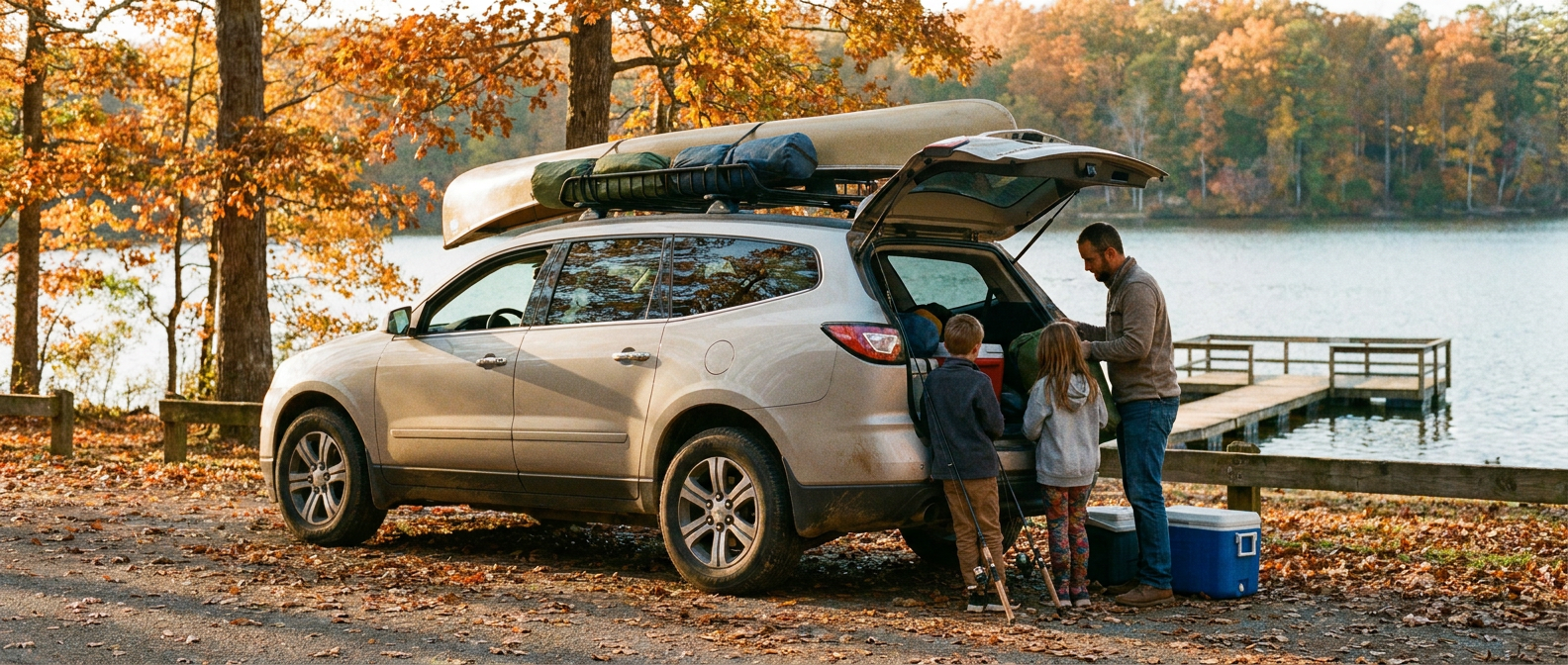
2026 Chevrolet Silverado 1500 at a Chevrolet service center ahead of Labor Day travel in Winnsboro, SC

How to Pick the Right Service Appointment for Your Chevy Before Labor Day Travel

Labor Day weekend falls on September 7, 2026. We're twelve days out, and every service bay in the Midlands is about to fill up. If your Chevrolet has spent the summer doing short Winnsboro-to-Columbia runs on I-77, the heat alone has been working against your battery, your tires, and your fluids since June. None of those systems announce a problem until they're already failing. This guide breaks down which service items matter most for a Fairfield County driver heading out this weekend, which ones you can skip if you're in a time crunch, and when to call us so you can grab a slot before the rush. The short version Oil and filter: Book if your Oil Life Monitor reads below 40% or you haven't changed it since spring. Full-synthetic dexos1 oil is required on all 2026 Silverados, Traverses, and Tahoes. Tires: Check pressure manually before you leave. Your TPMS light won't come on until you're roughly 25% below the recommended PSI. Already in dangerous territory for a loaded highway run. Battery: Three or more years old with a lot of short summer trips? Get it load-tested now. Summer heat is harder on batteries than winter cold. Coolant and brakes: Quick visual checks your technician can fold into a multi-point inspection. Timing: Call or book online by August 29 to reliably get a pre-Labor Day slot. Schedule your pre-trip service at Wilson Chevrolet What Actually Matters When Choosing a Pre-Trip Service? Not every line on a generic road-trip checklist deserves the same urgency, and the items that matter most for a Fairfield County driver share one trait, which is that South Carolina's late-summer conditions have been wearing your Chevy down since June. Sort by that and the short list writes itself. Service Item Best For Key Spec / Trigger Real Tradeoff Oil and filter change Trucks towing, loaded SUVs, anyone within their service window Chevrolet specifies dexos1 full-synthetic; 2026 Traverse 2.5L turbo and Silverado 5.3L both take 0W-20 dexos1; up to 7,500-mile interval under normal conditions Monitor may show 30% (a full-load August highway run burns hotter than your typical commute) Tire pressure check and rotation All vehicles, especially loaded trucks and three-row SUVs TPMS warning light triggers at roughly 25% below recommended PSI; correct PSI is on your driver-door jamb sticker, not the sidewall Rotation is urgent only if you're within 1,000 miles of your 7,500-mile rotation interval Battery load test Any Chevy with a battery 3 or more years old; vehicles used mainly for short trips Heat accelerates internal corrosion and fluid evaporation; a marginal August battery can fail completely by October Load tests take about 10 minutes; if it passes, you're done Brake inspection Anyone noticing a soft pedal, pulling, or squealing; Silverado and Tahoe owners who tow Brake fluid is hygroscopic and its boiling point drops as it absorbs summer humidity; pad replacement typically needed between 40,000 and 60,000 miles If your pedal feels normal and you have no noise, a visual at your oil change is enough Coolant check Any vehicle without a coolant service in the last two or more years Reservoir should sit between MIN and MAX marks cold; fluid should hold its original color (not brown or rusty) Full flush is only necessary if fluid is degraded or the system hasn't been serviced in roughly two years or 30,000 miles Wiper blades Anyone driving into afternoon storm territory along the SC coast or Appalachian foothills Chevrolet recommends replacement every 6 to 12 months Fast and low cost (no reason to skip it if yours are already streaking) The Oil Life Monitor Is Smart. It Doesn't Know You're Towing a Camper. Chevrolet's Oil Life Monitor is genuinely useful technology, and it calculates when oil needs changing from engine temperature, driving style, and trip length rather than a plain mileage counter. On the 2026 Silverado 1500, 2026 Tahoe, and Traverse, Chevrolet recommends oil and filter service at up to 7,500-mile intervals under normal driving conditions using the correct dexos1 full-synthetic. Under severe conditions (heavy towing, dusty roads, lots of short stop-and-go runs), the system can call for service as early as 3,000 to 5,000 miles. The monitor is calibrated to your usual driving pattern, and it can't feel a trailer on the hitch. Pack three adults and a week of gear, hook up for a Lake Wateree camping run, and push the truck on I-77 in August heat for a couple of hours, and you've handed the engine a completely different duty cycle. If your monitor sits below 40% right now, do the oil change before the trip. Finding out what the bottom of that range feels like on a jammed holiday highway isn't worth it. For the 2026 Chevrolet Traverse specifically, the 2.5L turbocharged engine requires dexos1 Gen 3 full-synthetic SAE 0W-20. Don't approximate that one. Turbochargers run hot, and conventional oil can't reliably protect the turbo bearings at sustained highway temperatures. Tire pressure reality check: The recommended PSI for your Chevy is printed on the driver-side door jamb sticker, not on the tire sidewall. The sidewall number is the tire's maximum rated pressure (a different figure entirely). Inflating to the sidewall number overinflates most tires and reduces the contact patch you need for safe braking on a loaded vehicle. Don't skip the tire section because you figure your TPMS would have warned you by now. It probably hasn't, and the reason is worth a minute. The TPMS light typically doesn't activate until a tire is roughly 25% below the recommended PSI A Silverado running a recommended 35 PSI could drop to around 26 PSI before the dashboard says anything A tire that low on a loaded truck at highway speed is a handling and blowout risk Check pressure with a handheld gauge when tires are cold (vehicle parked at least three hours or driven fewer than a mile) Rotate at the 7,500-mile rhythm. On AWD vehicles, skipping rotations puts real strain on the drivetrain system. Match Your Service to How You're Actually Traveling Different trips call for different prep, and the smart move is matching the work to what you're doing this weekend rather than to a one-size checklist. We'll walk it by trip type. Short highway run to visit family in Charlotte? A 75-mile cruise north on I-77 in a healthy Equinox needs oil, tire pressure, and wiper blades, and that's genuinely the whole list. You don't need to chase every item on a truck-towing checklist when you aren't towing a thing. Pull a camper or a boat trailer, though, and the scope changes. Transmission fluid, a brake inspection, and a battery load test all earn their place. Vehicles under towing loads build extra heat in the transmission, and Chevrolet advises that under hard-use conditions the transmission fluid should be changed around 45,000 miles rather than at the standard interval. Heavy loads also shift weight during braking in ways that drive more heat into the pads and rotors. Pay real attention to the battery if you've mostly used your Chevy for short Winnsboro-area errands all summer (quick commutes down US 321, school pickups, grocery runs). Short trips don't give the alternator enough time to fully recharge after startup. Add South Carolina's sustained heat from June through August, which speeds up internal corrosion and fluid evaporation inside the cells, and a battery that tested fine in spring may have little reserve left. Three or more years old? A 10-minute load test settles it. It either passes or it doesn't. Frequently Asked Questions How far in advance should I schedule Chevrolet service before a Labor Day road trip? At least seven to ten days before the holiday weekend. Labor Day 2026 falls on Monday, September 7, which means service bays in the Winnsboro and Columbia area start filling up significantly the week before. Calling or booking online by August 29 gives you a realistic shot at a morning appointment with enough time to pick up your vehicle the same day. Waiting until the week of the holiday usually means taking whatever slot is left. Does Chevrolet's Oil Life Monitor replace the need to check oil before a long trip? The monitor is reliable for routine driving but it doesn't automatically adjust for a sudden change in duty cycle. If you're about to tow for the first time since your last change, or you're loading significantly more weight than usual, check both the percentage on the display and the actual level on the dipstick before you leave. A reading of 30% or below combined with a full load on an August highway is a reasonable trigger to schedule a fresh oil change. The system calculates wear based on how you typically drive (not how you're about to drive). Book Your Pre-Labor Day Service Appointment Wilson Chevrolet 798 us hwy 321 N BUSINESS, Winnsboro, SC 29180 (803) 402-4233

2026 Chevrolet Trailblazer driving south on I-77 in South Carolina at dawn with morning mist on the road

The Winnsboro-to-Columbia Commute: Choosing the Right Chevy for a Nurse's Shift Schedule

In this article What the I-77 Corridor Actually Throws at Commuters Do This, Not That on This Commute The Safety Tech That Earns Its Keep on Shift-Schedule Driving Your Commute Starts Right Here on US 321 If you're driving from Winnsboro down I-77 to Columbia for a 7 AM hospital shift, or crawling home after a 12-hour night run in the dark on an empty tank, the car under you matters more than most shoppers realize. The route runs 33 miles and looks easy on a map. What the map hides is August heat that regularly tops 95 degrees, afternoon thunderstorms that drop your visibility fast, and the fatigue that piles up when you drive that corridor five or six days a week. Three Chevrolet models earn a hard look for this specific commute. We mean the Chevy Trax, the Trailblazer, and the Equinox. Each fits a different version of that drive, and here's how to read the differences straight. What the I-77 Corridor Actually Throws at Commuters I-77 between Winnsboro and Columbia isn't a mountain route, so it never demands white-knuckle skill, but it still hides real quirks a shift commuter should plan around, from lowland fog to fast-building storms. Crossing the Little Wateree Creek lowlands, the terrain dips and ground moisture hangs low in late summer. On an early-morning shift run, that means patchy fog sitting right on the pavement in the low spots, exactly the low-visibility condition Chevrolet's standard IntelliBeam automatic headlights handle better than manual toggling. Then come the afternoon storms. Out on the open stretch through Blythewood between Winnsboro and Columbia, fast-moving summer thunderstorms build quickly and leave standing water across lanes before traffic can react. A nurse heading home after a 12-hour shift doesn't need a reflex test. She needs a car that sees the hazard first. Do This, Not That on This Commute Situation Do Don't Morning fog over Little Wateree lowlands Use low beams, ease off the throttle before low spots Run high beams (they reflect off fog and cut your sight line) Fast-moving afternoon storm on open stretch Drop speed, increase following distance early Brake hard mid-lane with traffic behind you Post-12-hour night shift drive home Keep lane-keep assist active, cool the cabin before you go Switch off driver-alert features on a tired drive Low-angle August sunrise glare heading north after a night shift Visor plus polarized sunglasses, leave extra room ahead Follow closely into glare with oncoming traffic Standing water across lanes near exits Hold your line and reduce speed smoothly Jerk the wheel into another lane through standing water The Safety Tech That Earns Its Keep on Shift-Schedule Driving All three models come standard with Chevrolet's Safety Assist package, and for a shift-schedule driver that bundle does genuine work instead of sitting on the spec sheet. It packs Automatic Emergency Braking, Forward Collision Alert, Lane Keep Assist with Lane Departure Warning, Following Distance Indicator, and IntelliBeam automatic high beams. On a post-night-shift drive home in the dark, the Lane Departure Warning is no gimmick. A two-second drift at 70 mph covers nearly 200 feet before your brain catches it. Fit the 2026 Trailblazer with the 1.3L FWD engine and you're looking at an EPA-estimated 31 mpg combined (per Chevrolet). That efficiency on a 33-mile daily round trip adds up, and the Trailblazer's 9-speed automatic holds highway gears without hunting through the rolling terrain south of Winnsboro. Step down to the 2026 Trax, EPA-rated at 30 mpg combined (per Chevrolet), and its smaller footprint makes tight hospital garage parking noticeably easier. Go the other way with the 2026 Equinox FWD, EPA-estimated at 26 city and 29 highway, and you trade a few mpg for meaningfully more cabin room if you're hauling gear bags, keeping compression socks and a meal bag in the back, and wanting space to breathe on the ride home. The tradeoff shakes out cleanly. If fuel economy and parking ease top your list, the Trax wins. Its cabin is cramped, and there's no way around that. If you want a more planted highway feel with an efficiency number still strong enough for daily use, the Trailblazer is where we'd point a Winnsboro commuter first. The Equinox is the call when your life simply requires more room. One thing worth asking about when you're on the lot: Remote Start. Coming out of a Columbia hospital in August to a 110-degree cabin and then driving 33 miles home is rough. A pre-cooled car isn't a luxury on this commute. It's a real safety and comfort factor, and it's available on Trailblazer and Equinox trims worth considering. See current Trax, Trailblazer, and Equinox inventory at Wilson Chevrolet View Current Chevrolet Offers Your Commute Starts Right Here on US 321 Our team at Wilson Chevrolet in Winnsboro sits on US 321, less than five minutes from the I-77 on-ramp you take every shift, so getting behind the wheel of the right commuter never adds a detour to your day. We know this corridor. We know what it does in August. If you're a nurse commuting to Columbia and you want to talk through which configuration fits your schedule and your garage, come walk the lot with us. Explore Financing for Your Next Commuter Wilson Chevrolet 798 us hwy 321 N BUSINESS, Winnsboro, SC 29180 (803) 402-4233

2019 Chevrolet Corvette Stingray in Torch Red on a South Carolina back road near Winnsboro

Corvette by Model Year: A Used Buyer's Guide for Weekend Drivers Near Winnsboro

In this article Which Corvette generation is right for a weekend driver? Which years are the sweet spot? Which years should you watch out for? Which Corvette year fits which buyer? You want a 'Vette. You don't want a project. And you'd like to drive it on weekends without spending every Saturday diagnosing a warning light. Both are completely reasonable, and the answer depends almost entirely on which model year you buy. Wilson Chevrolet sits on US 321, and we've watched all three modern Corvette generations roll through our service center. The generation matters more than the color or the trim, and we can tell you that with confidence. Get the generation right, pick the right window of years within it, and you'll have a car that delivers that famous 'Vette grin every time you pull onto I-77 heading north toward Charlotte or south toward Columbia. Browse our current pre-owned inventory to see what we have in stock right now. The short version Sweet spot for value and reliability: 2018-2019 C7 Stingray or Grand Sport (front-engine, sorted LT1, last generation with a manual option) Sweet spot for the mid-engine era: 2022-2024 C8 Stingray (most early issues resolved by then) Years to watch carefully: 2015-2017 C7 (documented rim-cracking complaints peaking in 2017); 2020-2021 C8 (early DCT and half-shaft recalls) C6 2008-2013 is the budget hero for enthusiasts willing to do more maintenance planning Always run a VIN check at nhtsa.gov/recalls before signing anything Which Corvette generation is right for a weekend driver? Which one fits depends on what you mean by weekend driver, and both front-engine and mid-engine Corvettes can be genuinely right, so the sorting question is really how you spend the day rather than which badge sounds best on paper. A 400-mile Friday afternoon blast down to Myrtle Beach, or pulling into Carolina Adventure World for a late-season Saturday? Those are front-engine C7 situations. Showing up at a cars-and-coffee event with a car that looks like it just escaped Maranello? A C8 handles that conversation. The C7 (2014-2019) is the last front-engine Corvette, and its production run spanned 2014 through 2019, marking the final front-engine chapter in Corvette history. Think traditional American sports car in every satisfying way, with a thundering V8 up front, a stick shift available, and a cabin you can actually figure out without a tutorial. The C8 (2020-present) flipped the script entirely. In 2020, Chevrolet redesigned the Corvette into a mid-engine machine easily mistaken for a Ferrari. Different vibe. Different maintenance calculus. Both can be excellent used purchases. Neither one is universally right. The C6 (2005-2013) sits behind both in terms of technology but ahead of both in terms of acquisition accessibility, and it's still got serious performance credentials. Which years are the sweet spot? Generation Years Sweet Spot Years to Watch Why It Matters for Weekend Drivers C6 2005-2013 2008-2013 2005-2007 2008 debuted the LS3; early cars used the older LS2 and had more interior finish complaints C7 2014-2019 2018-2019 2015-2017 Rim-cracking complaints peaked at 2015-2017; 2018-2019 models reflect addressed shudder TSB and improved build C8 2020-2024 2022-2024 2020-2021 Early DCT issues and two NHTSA recalls on 2021 models; 2022+ shows meaningfully improved reliability data C6 sweet spot: 2008-2013. Among all C6 Corvette model years, 2008 is widely regarded as the sweet spot for buyers who want maximum performance, improved refinement, and long-term value. It represents the first year of the LS3 engine while also benefiting from several important mechanical and interior upgrades. The C6's front-engine, naturally aspirated character is a perfect fit for someone who wants a purely mechanical driving experience on Winnsboro's back roads. The downside is age. These cars are now 13-18 years old, and cooling systems, suspension bushings, and battery drain (a known C6 characteristic) all need to be on your pre-purchase checklist. C7 sweet spot: 2018-2019. Standard C7 Stingray and Grand Sport models are powered by the 6.2L LT1 V8, producing 455 hp (460 hp with the NPP exhaust). The 2018 and 2019 cars benefit from several years of running improvements. The 2017-2019 Grand Sport is a primary recommendation for balancing wide-body aesthetics with naturally aspirated reliability. The Grand Sport in particular gives you Z06 body width and Z06-sourced brakes with the more tractable, naturally aspirated LT1 engine. That matters for a weekend driver who isn't going to heat-soak the car on a road course. C8 sweet spot: 2022-2024. The 2022 model year is when the C8 started to grow into itself. By 2022, most of the early problems were resolved, and reliability scores from Consumer Reports and J.D. Power improved, with data showing reliability ratings jumping from 89% for 2021 models to 93% for 2022-2023 models. The mid-engine layout gives the C8 Stingray a balance of front-to-rear weight distribution that makes it remarkably composed on a long interstate stretch. You get a different experience than the C7, not categorically better for a weekend driver, just newer and more exotic in feel. Explore financing options at Wilson Chevrolet Which years should you watch out for? Most of the year-specific concerns below are minor and often already fixed by a prior owner or dealer, though a few are genuine patterns worth knowing before you hand over a check, and none of them should make you swear off a whole generation as long as you pull the NHTSA records first. Some are minor and already handled. Others are worth confirming yourself. C7: 2015-2017 wheel and hub complaints. Wheel and hub complaints make this the most documented Corvette quality story of the past decade. The highest number of owner-reported issues came from 2015, 2016, 2017, and 2019 C7 Corvettes. The 2017 Chevrolet Corvette has been ranked as the worst Corvette model year ever produced by some complaint databases, citing wheel and hub problems, with the most common complaint being cracked rims occurring with an average of 12,374 miles of use. The 2017 Grand Sport in particular, despite being a desirable car on paper, carries this baggage. NHTSA Campaign ID 19V086000: General Motors issued a recall for 6,259 model year 2017 Corvettes due to a fault in the electric power steering system. If you find a 2017, confirm that VIN-specific recall work has been completed before anything else. C7: 2015-2016 Z06 thermal issues. If a Z06 is on your list, note that early Z06 models (2015-2016) are prone to heat soak during track use; 2017 and later models feature superior secondary cooling. As a pure weekend driver who won't be running laps, this matters less, but it affects resale and long-term serviceability. C8: 2020-2021 recalls and DCT concerns. The first model year of any new platform carries risk, and the C8 is no different. About 2,000 2021 units were affected by a recall (NHTSA 21V-064) for potentially faulty driveshaft couplers that could cause power loss, with free replacement at the dealer. A 2022 recall (NHTSA 22V-045) addressed faulty rear half-shafts in about 500 2021-2022 C8s, prone to fracturing under torque loads exceeding 500 lb-ft. The dual-clutch transmission (DCT) generated ongoing forum debate. The Tremec-sourced eight-speed DCT has generated intermittent real-world concerns in early years. A clean 2020-2021 with documented recall completion is still a reasonable buy at the right number. Just verify the work. Schedule a pre-purchase service inspection at Wilson Chevrolet Get Your Trade-In Value Before You Shop A note from our service center: When a used Corvette comes in for an inspection, the first thing our team checks is the NHTSA VIN lookup. Any C7 from 2014-2019 and any C8 should have a clean recall-completion record before a buyer commits. Four minutes on nhtsa.gov/recalls can tell you a lot. Buying a Used Corvette Pros Cons C6 (2008-2013) Accessible acquisition cost, proven LS3 engine, massive enthusiast community Age means more proactive maintenance, less modern safety tech, older infotainment C7 Stingray 2018-2019 Last front-engine generation, 7-speed manual available, sorted reliability window, EPA-rated 29 mpg highway Less exotic visually than a C8, higher acquisition than earlier C7s C7 Grand Sport 2017-2019 Wide-body Z06 hardware with naturally aspirated LT1, Brembo brakes standard Confirm rim/wheel recall history specifically C8 Stingray 2022-2024 Mid-engine exotic feel, modern tech, strong resale trajectory Higher acquisition cost, DCT-only, specialty service required C8 Z06 2023-2024 Flat-plane 670-hp LT6 is genuinely extraordinary Hand-built engine early failure reports, higher maintenance cost, least forgiving of the bunch Which Corvette year fits which buyer? No single Corvette fits every buyer, so the right year depends on whether you want the car that announces itself pulling into Saturday morning breakfast on US 321 or the one you can point down I-77 on a Friday afternoon and trust to arrive cool and composed. Plenty of our Fairfield County customers lean one way, plenty lean the other. We sort it a few ways. The "front-engine forever" buyer: 2018-2019 C7 Stingray or Grand Sport. With the 8-speed automatic, the C7 Stingray can reach 60 mph in 3.7 seconds. Quick enough to matter. It still feels like a Corvette in the traditional sense, with a front V8 that you can hear and feel through the whole car. The LT1 produces 455 hp, or 460 hp with the NPP exhaust option. The 7-speed manual was still available. If you want to feel connected to every inch of road between here and Lake Wateree State Recreation Area on a Saturday morning, this is the car. The "I want the exotic" buyer: 2022-2024 C8 Stingray. The mid-engine layout and the way the C8 corners add up to a truly different experience. The 2026 Corvette Stingray carries the same LT2 6.2L V8 used in the 2022-2024 models forward, with Chevrolet listing the output at 495 horsepower. A 2022-2024 used Stingray gives you that platform with the benefit of resolved early-production issues. It does require dealer-level service for some repairs, and that's the honest tradeoff. The "value performance" buyer: 2008-2013 C6. Compared to newer mid-engine iterations, the C6 maintains classic front-engine, rear-wheel-drive proportions and a raw mechanical driving connection. Combined with excellent power-to-weight ratios, comfortable highway manners for long trips, and an immense aftermarket community, it remains a dominant contender in modern value performance. If budget matters most and you're comfortable with an older car that has a deep support network, the C6 is a legitimate path. The "last of a breed" buyer: 2019 C7 ZR1 or C7 Grand Sport Z07. The 2019 ZR1 is the most powerful front-engine Corvette ever made. The LT5 in the C7 ZR1 produced 755 horsepower and 715 lb-ft of torque, using a 2.65L supercharger along with GM's first dual-fuel-injection system combining port and direct injection. Few are on the used market, and none are inexpensive. As the definitive final statement on the front-engine Corvette, though, it's historically significant. These are collector cars as much as driver's cars. Visit Wilson Chevrolet to see what's available on our lot The right Corvette is the one that fits how you actually drive, not how you imagine you might drive it. Weekend blasts on SC back roads and long I-77 corridor runs reward a reliable, well-sorted machine over a spec-sheet trophy. Pick the sweet-spot year, pull the NHTSA records, and bring it to a Chevrolet service center before you commit. Frequently Asked Questions What is the most reliable used Corvette year to buy? For a used buyer who prioritizes reliability, the 2018-2019 C7 Stingray or Grand Sport and the 2022-2024 C8 Stingray are the strongest choices in their respective generations. The 2018-2019 C7 cleared the documented rim-cracking and transmission-shudder period that affected 2015-2017 models. The 2022-2024 C8 benefited from resolution of the early dual-clutch and half-shaft recalls that affected 2020-2021 cars. Always confirm VIN-specific recall completion at nhtsa.gov/recalls before purchasing any year. Should a weekend driver choose a C7 or a C8 Corvette? It comes down to what the weekend looks like. The C7 (2014-2019) is a front-engine car with a traditional V8 feel, a manual gearbox option, and a proven service network. The C8 (2020-present) is a mid-engine exotic with a very different driving character and more specialized service requirements. Neither is objectively better for weekend use. The C7 is simpler to own; the C8 is more modern and visually dramatic. What should I check before buying a used Corvette near Winnsboro? Pull the VIN on nhtsa.gov/recalls before anything else. On any C7 from 2015-2019, confirm the power steering recall (NHTSA 19V086000 for 2017 models) and any rim or wheel-related service bulletins have been addressed. On any C8 from 2020-2022, confirm the driveshaft coupler recall (NHTSA 21V-064 for 2021 models) and the half-shaft recall (NHTSA 22V-045 for 2021-2022 models) have been completed. A pre-purchase inspection at a Chevrolet service center can surface issues that a visual walkaround will miss. Start Your Financing Conversation Wilson Chevrolet 798 us hwy 321 N BUSINESS, Winnsboro, SC 29180 (803) 402-4233
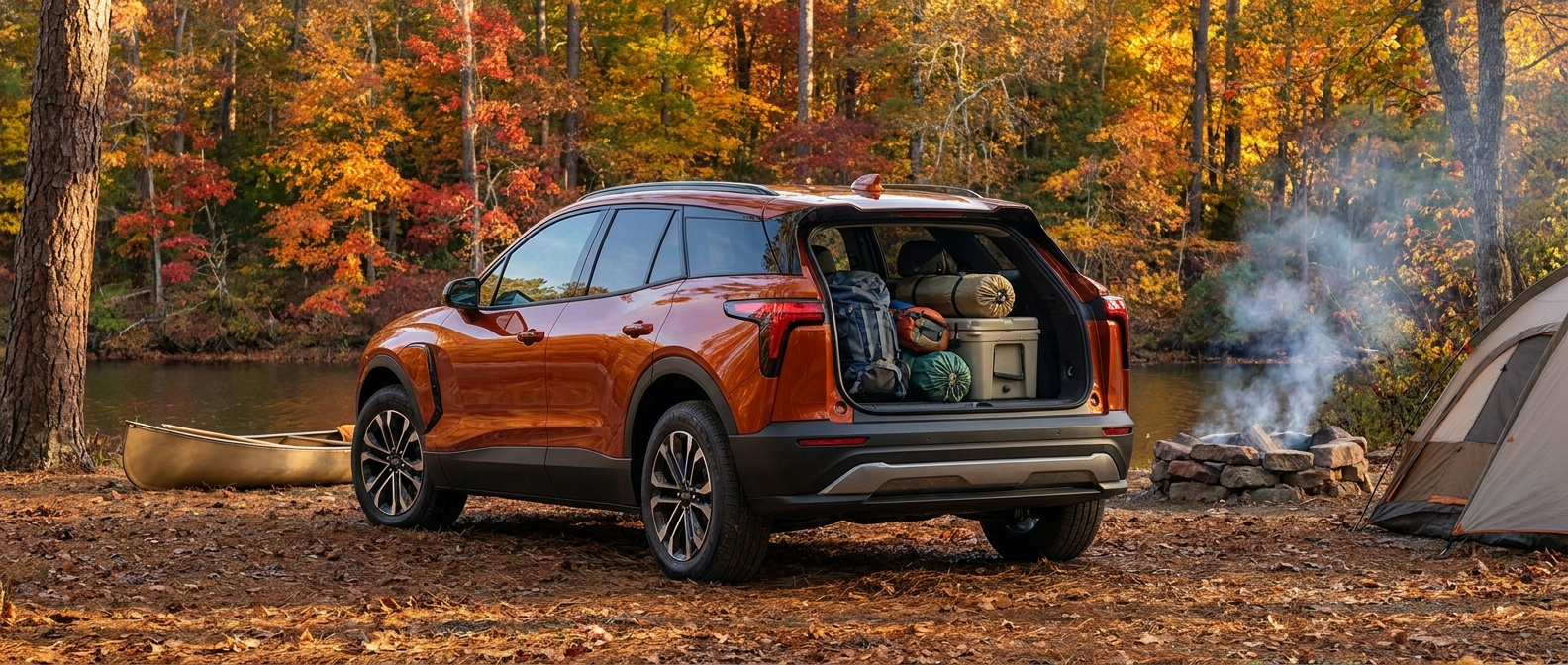
Parent configuring the 11.3-inch touchscreen in a 2026 Chevrolet Equinox before a school run in Winnsboro, SC

How to Set Up the 2026 Chevrolet Equinox Tech Your Family Will Actually Use

Plenty of families climb into a new SUV and never touch a single one of its tech features before the first school run. The seats get adjusted, the mirrors get moved, and then life takes over. Three weeks later there's a teenager borrowing the car with no speed limit set, a toddler unloaded from the back without a single reminder chime, and a parent still fighting the phone-cable tangle they meant to leave behind. The 2026 Chevrolet Equinox gives Fairfield County families a genuinely capable set of parent-focused tools. We'll walk you through the three that matter most, before the back-to-school chaos kicks in for good. Every feature covered here is standard on every 2026 Equinox trim. You don't need a package upgrade to get Teen Driver, Rear Seat Reminder, or Google built-in. They come on the LT, RS, and ACTIV out of the box. What Do You Need Before You Start? Nothing exotic goes into this setup, just your phone, your teen's key fob, a 4-digit PIN you'll invent, a live Wi-Fi or cellular signal, and about fifteen minutes with the engine running, and once you've done it you won't have to touch it again. You only run this session once. It sets the tone for every drive after. Item Why you need it Your phone (iPhone or Android) Pairs wirelessly to CarPlay or Android Auto and links your Google account to built-in Your teen's key fob Teen Driver ties settings to a specific key, not the car in general A 4-digit PIN You create this to lock Teen Driver settings so your teen can't undo them A Wi-Fi or cellular signal Google built-in downloads apps and updates maps over the air 15 minutes, engine running The 11.3-inch screen needs the car on, not just in accessory mode Chevrolet lists the 11-inch digital gauge cluster and 11.3-inch Google built-in touchscreen as standard equipment on all three 2026 Equinox trims, which means the setup process is identical no matter which trim you bought. The Setup Steps: Teen Driver, Rear Seat Reminder, and Google Built-In These three features each solve a different parent problem, and while none of them takes long on its own, running all three in one sitting saves you from rediscovering the menus every time a new need shows up. Teen Driver is for the high schooler who starts borrowing the car. Rear Seat Reminder is for the toddler years. Google built-in is for every parent who's tried to tap a navigation app one-handed on I-77 while merging toward Columbia. Set them in this order. Step 1: Turn on the vehicle and open Settings Press the start button (or key start on your trim) and wait for the 11.3-inch touchscreen to load fully. Tap the settings gear icon in the upper-right corner of the home screen. You'll land in the main vehicle settings menu, where everything we're doing today lives. Step 2: Configure Teen Driver Tap Vehicle in the settings menu, then scroll to Teen Driver. The system asks you to create a 4-digit PIN on first use. Write it down somewhere your teenager won't find it. Once you're inside Teen Driver settings, do these three things in order: Set a speed alert. This isn't a hard limiter, more a persistent chime that starts when the vehicle hits a speed you choose. We'd suggest somewhere around highway legal for SC (the car doesn't stop going faster, but the alert is hard to tune out). Cap the audio volume. Chevrolet lets you set a maximum volume level. A teen doing 70 on I-77 with the stereo at full tilt is a distracted teen. Set it meaningfully lower than max. Block SiriusXM content filters and confirm the Buckle to Drive setting. Per Chevrolet's Teen Driver documentation, the system prevents the car from shifting out of Park until the driver's seatbelt is buckled. The setting is on by default. Make sure it stayed on. Families comparing the Equinox to the smaller Chevy Trax should know Teen Driver is standard on that model too, but the Equinox's larger footprint and longer rear legroom make it the more realistic school-run vehicle for families with three kids and gear. When your teen returns home, tap Teen Driver in settings again and select Report Card. Chevrolet's in-vehicle report card shows maximum speed reached, distance driven, and how many times safety systems like Forward Collision Alert or Automatic Emergency Braking were triggered. Use it as your conversation starter. Step 3: Enable Rear Seat Reminder Still in the Vehicle section of settings, find Rear Seat Reminder. Toggle it on. You're done. In practice it works like this. If a rear door opens at any point before or during a trip, the system logs that event. When you park and shut the car off, a chime sounds and a message appears on the driver display telling you to check the back seat. It's built for the exact scenario every Fairfield County parent fears (a rushed school drop-off or a grocery run where the baby fell asleep and the routine broke down). Parents who need a third row should also look at the Chevrolet Traverse, which carries the same Rear Seat Reminder and Teen Driver suite across a considerably larger cabin. Step 4: Set Up Google Built-In Google built-in runs natively on the 11.3-inch screen. It doesn't require your phone to be connected or even in the car. That matters on the I-77 run south to Columbia, where Google Maps in the dashboard updates live without draining your phone battery or leaning on Bluetooth. Getting it running takes four steps: Connect your Google account. Tap the Google icon on the home screen. Sign in once, and the system saves the login. Set home and school addresses. In Google Maps (on the touchscreen), save your home address and your most common school or activity location as favorites. One tap from the home screen starts navigation, no typing mid-drive. Set up a driver profile. In the main settings menu, create a profile for yourself and a separate one for your co-parent or your teen. Profiles save seat position, climate, and app layout preferences. The right profile loads on its own when that key fob is detected. Try a voice command before you leave the driveway. Say "Hey Google, navigate to " and confirm the system responds. The microphone button sits on the steering wheel too, so you never need to touch the screen. Wireless Apple CarPlay and Android Auto connect the same way. The 2026 Equinox pairs wirelessly, so drop your phone in the cupholder or on the available wireless charging pad on RS and ACTIV trims. No cable needed. Tech setup tip: The step that's easiest to skip is creating a separate driver profile for each adult in the house. If you both share one profile, every time the other person drives, the seat slides and the apps rearrange. Take the extra three minutes on day one. You'll thank yourself on every school morning. Hands-free liftgate note: If your Equinox has the available AutoSense Power Liftgate, the activation sensitivity is adjustable in the same settings menu under Vehicle then Liftgate. Set it higher than default if you find it triggers too easily in a parking lot. Quick-Reference Recap: What You Set and Where Print this table or screenshot it, because it condenses everything above into the full setup path without the explanation, and keeping it on your phone means you can double-check any menu later without hunting back through the whole guide. You did the work once. Now you just confirm. Feature Menu path Key choice to make Teen Driver PIN Settings > Vehicle > Teen Driver Create a PIN your teen doesn't know Speed alert Settings > Vehicle > Teen Driver > Speed Alert Set a consistent alert threshold Volume cap Settings > Vehicle > Teen Driver > Audio Volume Lower than you think is necessary Buckle to Drive Settings > Vehicle > Teen Driver Confirm it's toggled on Report Card Settings > Vehicle > Teen Driver > Report Card Review after every teen-driven trip Rear Seat Reminder Settings > Vehicle > Rear Seat Reminder Toggle on Google account Google icon on home screen Sign in once and save Driver profiles Settings > Profile Create one per driver in the household Power Liftgate sensitivity Settings > Vehicle > Liftgate Adjust if too sensitive in parking lots The Chevy Safety Assist suite backs all of this up on every drive. Browse our current Equinox inventory at Wilson Chevrolet to see which trims and packages are on the lot right now. Chevrolet lists Automatic Emergency Braking, Front Pedestrian Braking, Lane Keep Assist with Lane Departure Warning, Forward Collision Alert, Following Distance Indicator, and IntelliBeam automatic high beams as the six standard features in every 2026 Equinox's Chevy Safety Assist package. No extra cost, no package required. The honest tradeoff worth naming is straightforward. The Equinox is a five-passenger compact SUV, not a three-row. If your family regularly runs five people plus gear, the tech is excellent but the cargo situation behind the third row of a larger SUV may suit you better. For two kids and a realistic amount of school gear, the Equinox's 29.8 cubic feet behind the rear seat (63.5 cubic feet with the seats folded) handles it without drama. Frequently Asked Questions Does Teen Driver work on any key fob, or does it have to be a specific one? Teen Driver ties to a designated key fob, not to the vehicle as a whole, so you'll set it up using your teen's specific fob. When that fob is used to start the car, the restrictions and monitoring activate automatically. When an adult fob starts the car, the system runs without restrictions. Can Google built-in work without my phone being in the car? Yes. Google built-in runs natively on the Equinox's 11.3-inch system. It connects to the internet through the vehicle's available 5G Wi-Fi hotspot (subscription required) or through your tethered phone, but Google Maps, Google Assistant, and downloaded Google Play apps all keep working without Apple CarPlay or Android Auto active. No phone required. By the Wilson Chevrolet Team | August 2026 See Current Equinox Offers at Wilson Chevrolet Wilson Chevrolet 798 us hwy 321 N BUSINESS, Winnsboro, SC 29180 (803) 402-4233
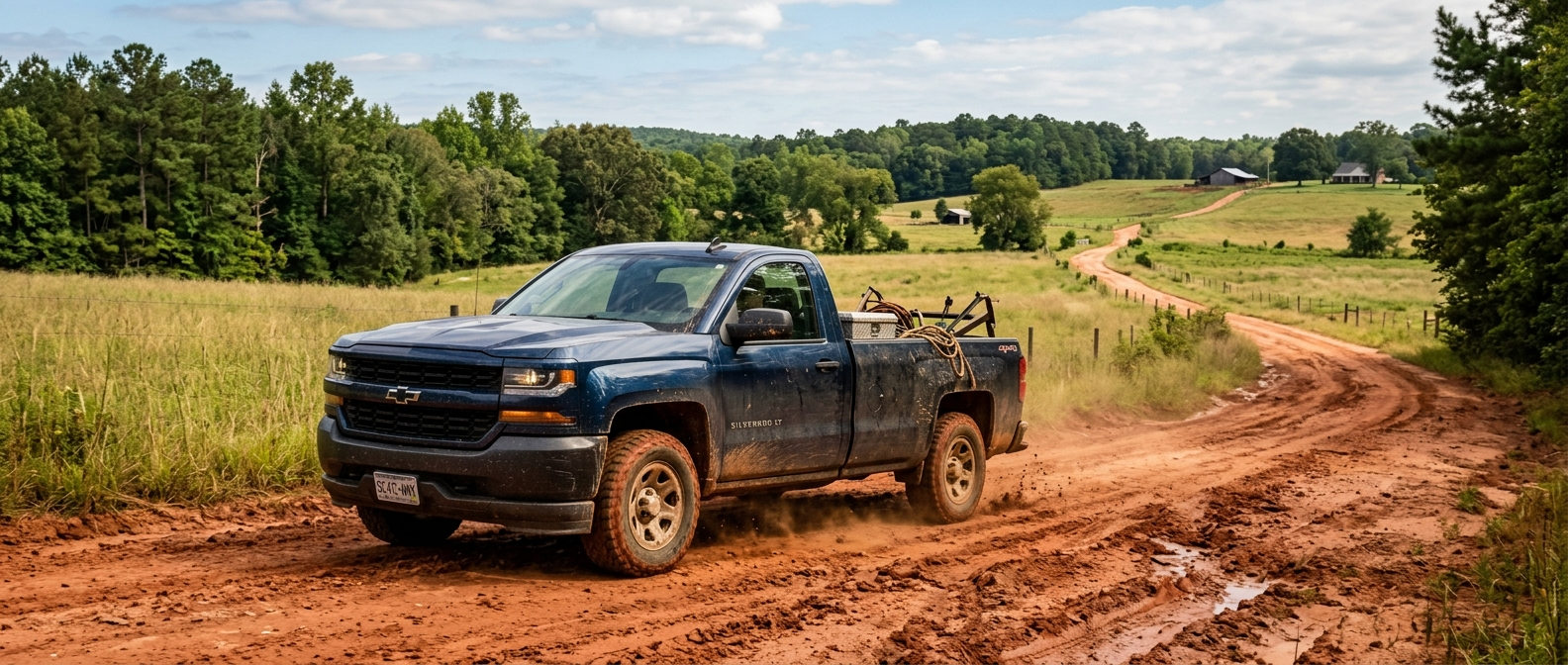
A Saturday in Fairfield County: 4 Stops, One Big Family, Two Chevys to Consider

School started July 30th in Fairfield County. You've already run registration, hauled supplies, and scrambled through that first week down US-321. Now you're standing in our lot at Wilson Chevrolet, wondering whether a 2026 Chevrolet Tahoe or a 2026 Suburban really fits a household this busy. The straight answer is simple. They're the same truck in almost every way that matters, except for 15 inches of length and one number that changes everything for a large family. So which number matters most? Cargo behind the third row. The Tahoe gives you 25.5 cubic feet with all three rows occupied. The Suburban gives you 41.5 cubic feet in the same configuration. That's the difference between fitting backpacks and gear bags, and having to choose between them. We built a one-Saturday itinerary through Fairfield County to show you exactly where those 15 inches show up in real life. Walk it stop by stop. What's the Route? Four stops, roughly south to north along the US-321 corridor and out to Lake Wateree. The whole plan lays out below. Stop Drive from Previous What You're Doing What to Pack 1. School drop-off, US-321 Start here After-school gear swap (sports bags, instruments) Cleats, backpacks, violin case 2. South Carolina Railroad Museum 5 min from US-321 schools Saturday outing, Fairfield County's anchor attraction Stroller or wagon, snack bag 3. Historic Town Clock and Court House 5 min across downtown Quick walk through Winnsboro's Robert Mills architecture Nothing extra (just your crew) 4. Lake Wateree State Recreation Area 25 min east on SC-200 Afternoon on 13,000+ acres of water and shoreline Kayak gear, cooler, towels, lifejackets Total round-trip driving runs roughly 60 miles. Call it a full Fairfield County Saturday. The Stops, One by One Stop 1: The School Gear Swap The 15-inch difference announces itself loudly right here. Fairfield Central High, Fairfield Middle, and the elementary campuses all cluster along the US-321 Bypass, less than a mile from our dealership. When three kids pile out and a fourth activity's worth of gear needs to load in, the Tahoe's 25.5 cubic feet behind the third row handles everyday backpacks fine. Add a tuba, a lacrosse stick bag, and cleats for two kids, and you're stacking things on laps. The 2026 Chevrolet Suburban starts that same stop with 41.5 cubic feet of trunk space and those seats still fully upright. That extra 16 cubic feet is real, not marketing. Gear stays off laps. One tradeoff is worth naming. The Suburban is 226.3 inches long. The Tahoe is 211.3 inches. If your garage is a standard 20-footer or your school's pickup lane involves a sharp exit turn, the Tahoe's shorter footprint is a genuine daily-life convenience, not a trivial footnote. See Current Chevrolet Offers Stop 2: South Carolina Railroad Museum Five minutes from the school loop, the Railroad Museum is Fairfield County's flagship attraction and a legitimately fun stop for kids of any age. You're not hauling cargo here (you're hauling people). Both the Tahoe and Suburban seat up to nine passengers and share identical front- and second-row dimensions, so rows one and two feel the same in either truck. The difference shows up in row three. Chevrolet lists 36.7 inches of third-row legroom in the Suburban versus 34.9 inches in the Tahoe. For younger kids that gap is irrelevant. For a teenager or a grandparent riding along for the day, 1.8 inches reads as the difference between "tolerable" and "actually fine." The 2026 Suburban's third row offers 36.7 inches of legroom versus the Tahoe's 34.9 inches, a real comfort gap for adult passengers on longer hauls. Stop 3: Historic Town Clock and Court House Stop 3 is a parking stop. The Town Clock and Court House sit in downtown Winnsboro. Downtown is tight, and both of these SUVs will make you look twice before you pull into a diagonal space. The Tahoe wins here, plain and simple, at 15 inches shorter. A shorter body pays off when you're parallel parking on a busy Main Street block or swinging a full-size SUV into a tight angle. If your week includes a lot of errand loops through Winnsboro or Columbia runs down I-77, the Tahoe's footprint is a genuine quality-of-life advantage. You'll feel it repeatedly. The Suburban isn't hard to drive. It just asks you to be a little more intentional about where you park. Timing note for Lake Wateree: South Carolina August afternoons are hot and humid. Plan your water time for 10 a.m. to 2 p.m. before peak heat, and bring shade. The South Carolina Railroad Museum typically opens at 10 a.m. on Saturdays (confirm current hours before you go). Tweak It to Your Crew Every family in Fairfield County uses these trucks differently, so the right pick depends less on the spec sheet and more on how many kids ride, how much gear rides with them, and where you park at the end of the day. The split breaks down along a few clear lines. Choose the Tahoe if: You run one school route with two or three kids and sports gear fits behind the third row without a Tetris session. Your garage is standard-depth or you navigate tight downtown Winnsboro parking regularly. You occasionally tow a boat or camper to Lake Wateree (Chevrolet rates it up to 8,400 pounds when properly equipped with the Max Trailering package and RWD, which is slightly more than the Suburban's 8,300-pound rating because the Tahoe is lighter). Your priority is a full-size Chevy that drives a little more like a normal-sized vehicle day-to-day. Choose the Suburban if: You have four or more kids and you're combining school runs with weekend activities without ever asking anyone to hold something. You carpool. You need third-row seats usable by adults regularly. You're planning road trips. Chevrolet gives the Suburban a 28-gallon fuel tank versus the Tahoe's 24 gallons, which adds meaningful range between stops when you're heading up I-77 toward Charlotte with a full load. You park in open lots at Lake Wateree, Carolina Adventure World, or the school's big pickup circle where extra length is never a problem. Both trucks run the same three powertrains. You get the standard 5.3L EcoTec3 V8 at 355 horsepower, an available 6.2L EcoTec3 V8 at 420 horsepower, and the available Duramax 3.0L turbo-diesel at 305 horsepower with 495 pound-feet of torque. The EPA rates the diesel Tahoe at 21 city and 28 highway (RWD), which is legitimately impressive for a body-on-frame SUV this size. Both share the 17.7-inch touchscreen, Google built-in, and USB ports in every row, so the tech feels identical no matter which body you pick. Our take, if you're on the fence, leans Suburban. A family that picks Tahoe for the shorter footprint rarely wishes it were longer. A family that picks Tahoe expecting the cargo to stretch far enough can end up wishing they'd sized up. The 15-inch difference looks small on a spec sheet. It does not look small when you're loading up for a Lake Wateree Saturday with four kids and their gear. Come sit in both. Walk to the back of each with all three rows up. Browse our current Tahoe and Suburban inventory and we'll get them both on the lot for you. We're right here on US-321 in Winnsboro. Explore financing options before you visit so you're ready to move when the right one shows up. Get Your Trade-In Value Wilson Chevrolet 798 us hwy 321 N BUSINESS, Winnsboro, SC 29180 (803) 402-4233
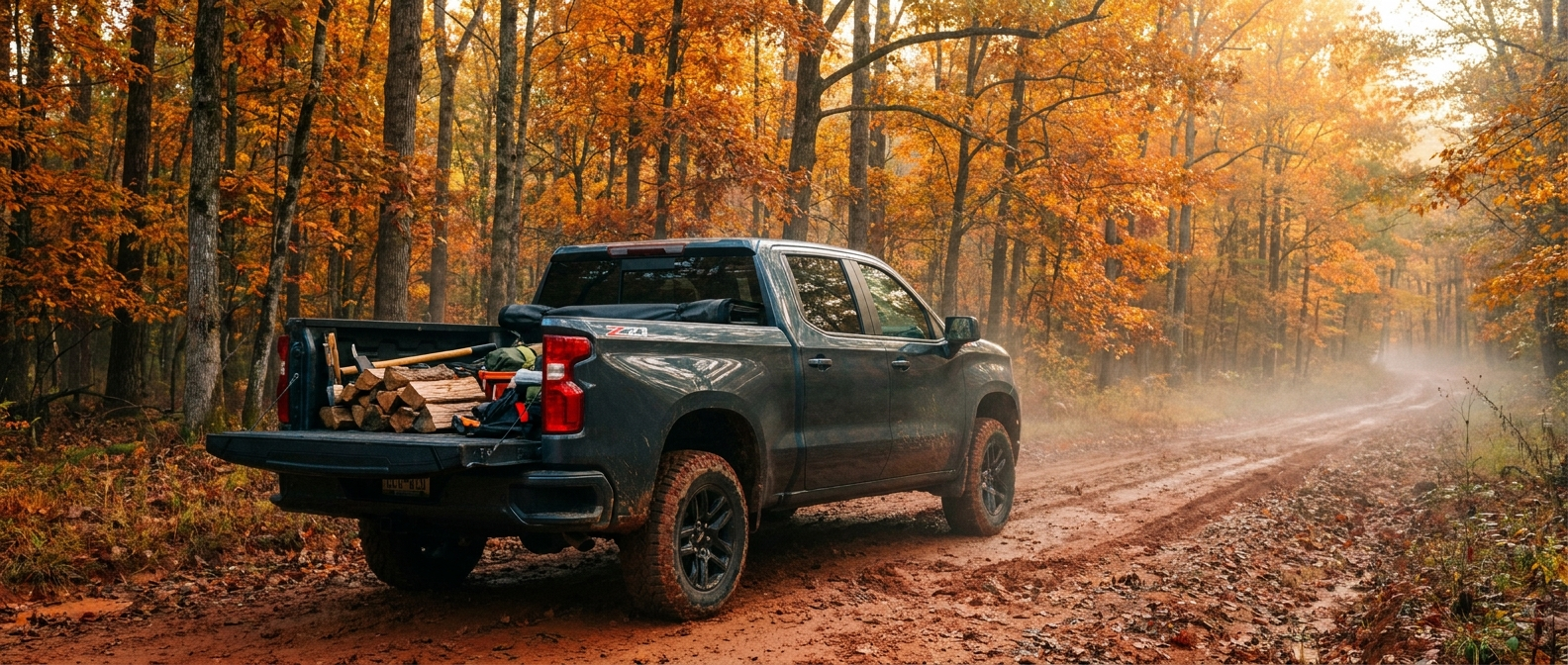
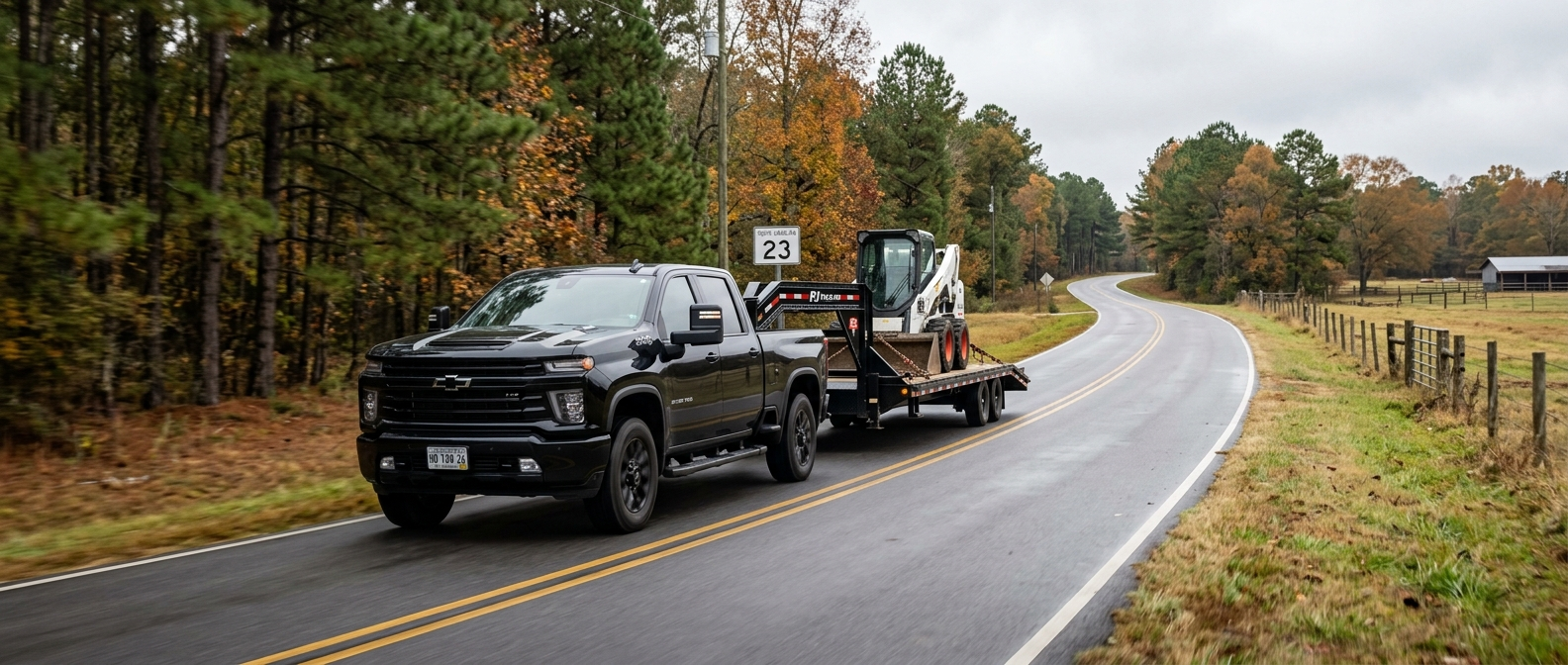
2026 Chevrolet Silverado 2500HD at a Blythewood SC construction site with a loaded equipment trailer

Does a Blythewood Construction Worker Need the Duramax (or Will Gas Do the Job)?

For jobsite work around here, the 2026 Silverado 2500HD is the right truck, and that part isn't really in doubt. The harder call is which engine fits your actual work pattern, and whether the 2026's new standard trailer brake controller changes how you should think about it. The short answer depends on what you pull. If you're pulling equipment trailers over 14,000 pounds week in and week out, or running I-77 south toward Columbia with a loaded gooseneck, the Duramax diesel earns its place. If your day is mostly in-town starts and stops, drop-offs at subdivisions off Blythewood Road, and loads under 12,000 pounds, the 6.6L gas V8 is a capable, lower-maintenance choice that most generic articles won't admit. For construction workers around Blythewood, the 2026 Silverado 2500HD's biggest practical change isn't the engine. It's that the integrated trailer brake controller is now standard on every trim, from Work Truck to High Country, for the first time. How Do the Two Engines Actually Work? The 2026 Silverado 2500HD runs two distinct powertrains, and the difference goes well beyond what you'll read on a spec sheet. Feature 6.6L Gas V8 6.6L Duramax Turbo-Diesel V8 Horsepower 401 hp 470 hp Torque 464 lb-ft 975 lb-ft Max Conventional Tow ~14,500 lbs 18,500 lbs Max Gooseneck Tow Not rated for gooseneck peak 22,070 lbs (with 5th Wheel/GN Prep) Payload (max) Up to 3,689 lbs (verify door sticker) Up to 3,689 lbs (verify door sticker) Transmission Allison 10-speed automatic Allison 10-speed automatic Best for Short hauls, jobsite variety, lower complexity Long pulls, heavy gooseneck loads, highway efficiency DEF/DPF maintenance No Yes Chevrolet lists both the gas and diesel at a maximum payload of up to 3,689 lbs, though your door-jamb sticker is the authoritative number for your specific build. Both engines pair to the Allison 10-speed automatic, and that's a genuine strength of this platform. The torque gap matters more than the payload. You get 975 lb-ft from the Duramax against 464 from the gas V8, and you feel that 511 lb-ft spread when you pull a loaded skid steer up a grade, or when you hold highway speed with a heavy trailer and the engine barely spins up. The Duramax delivers that torque low in the RPM range. Forum communities of 2500HD owners describe it as the difference between a diesel and a gas V8 on sustained pulls. The diesel pulls without drama, and the gas V8 gets the job done. You'll just hear it working harder. See which configurations we have on the lot at Wilson Chevrolet Which Engine Do You Actually Need Around Here? Which engine you need depends on your load profile, and around Blythewood the loads are anything but light right now. Scout Motors' manufacturing facility under construction in Blythewood has 500 construction workers already on the site, and a significant I-77 interchange groundbreaking ceremony was held in February to handle the project's traffic. There are 32 active development projects tracked in Blythewood right now. None of that is slow growth. It's a full construction season with real equipment moving up and down I-77. All of that context feeds straight into your engine decision. Let's sort out which engine fits. If your loads typically run under 12,000-13,000 pounds (a tandem utility trailer with a compact excavator, tools and materials for residential builds, or a landscape equipment trailer), the 6.6L gas V8 covers you. It handles approximately 14,500 lbs conventional, it doesn't require Diesel Exhaust Fluid, and an oil change is simpler and less expensive. For contractors doing short daily loops through Blythewood and back to Winnsboro, the gas engine earns its keep. If you're running gooseneck loads, heavy equipment trailers, or making regular highway runs down I-77 toward Columbia or up toward Charlotte, the Duramax changes the feel of the job. Eighteen thousand five hundred pounds conventional, 22,070 lbs with the 5th Wheel/Gooseneck Prep Package. Right there, the diesel's 975 lb-ft of torque stops being a bragging right and becomes a functional margin. The tradeoff here is real, and it's worth naming. Diesel adds maintenance complexity, including DEF fluid, DPF filter service, and higher service costs per interval. For a contractor whose truck mostly runs jobsite-to-jobsite in Richland County with loads under the gas threshold, that complexity doesn't buy you anything. For the operator pulling heavy iron consistently, it's worth every bit of it. View Current Silverado 2500HD Offers The 2026 Change That Actually Matters to You: Standard Trailer Brake Controller The standard trailer brake controller is the 2026 change that quietly reshapes the buying decision. For 2026, Chevrolet made the integrated trailer brake controller standard on every single Silverado 2500HD trim, from Work Truck through High Country. Before this year, it was a mid-to-upper trim feature or an add-on. Now the in-dash controller is factory-installed in every truck we sell. You'll have it on day one. In practice, that works simply. When you press the brake pedal, the system sends proportional brake-force signals directly to your trailer's electric brakes through the truck's own antilock brake electronics. It reads how hard you're stopping and applies the trailer brakes in proportion. It is not a fixed-gain separate box you dial in after the fact. For a construction worker hitching an equipment trailer often, the value isn't just convenience. You get consistent, calibrated trailer braking from a Work Truck spec without paying for a higher trim or buying an aftermarket Prodigy and running wiring. Term What It Means for You Integrated trailer brake controller Factory unit wired into the truck's ABS; controls trailer electric brakes proportionally DEF (Diesel Exhaust Fluid) Required additive for diesel emissions; must be kept topped up; additional service cost DPF (Diesel Particulate Filter) Exhaust filter that regenerates passively on highway runs; short-trip-only operation can cause issues Gooseneck Prep Package Factory-installed bed mounting points and wiring for 5th wheel or gooseneck hitches Allison 10-speed automatic Heavy-duty transmission used by both gas and diesel Silverado HD builds Durabed Silverado HD's steel cargo bed (83.5 cubic feet, 12 tie-down points rated at 500 lbs each) Not sure if you need the 2500HD or if the Silverado 1500 would cover it? What This Means for Your Next Work Truck Our team at Wilson Chevrolet is about 25 minutes up I-77 from Blythewood on US 321 in Winnsboro. Contractors, tradesmen, and fleet buyers all work through this same engine decision, and we're glad to talk it through. We'd frame it this way. The 2026 Silverado 2500HD is the right platform for the Blythewood construction market right now. For the majority of in-county work, the gas V8 is a capable, practical choice. The Duramax diesel is the right call the moment your load profile or your haul distances push past what the gas engine handles comfortably. The standard trailer brake controller means you're no longer forced up the trim ladder just to get proper trailer braking. For fleet buyers who want Work Truck functionality without the options cost, that's a genuine change. We'll walk through your specific trailer weights, your typical routes, and what cab and bed configuration matches your crew, or you can start with the link below. Either way, come out and see us. Frequently Asked Questions Does the 2026 Silverado 2500HD come with a trailer brake controller on the base Work Truck trim? Yes. For 2026, Chevrolet made the integrated trailer brake controller standard on every Silverado 2500HD trim, including the base Work Truck. The in-dash unit connects directly to the truck's antilock brake electronics and applies proportional braking force to your trailer's electric brakes based on how hard you press the brake pedal. Gas or Duramax diesel (which makes more sense for construction work around Blythewood)? It depends on your load profile. The 6.6L gas V8 (401 hp, 464 lb-ft of torque) handles conventional towing up to approximately 14,500 lbs and is the lower-maintenance option for shorter, in-county hauls. The 6.6L Duramax diesel (470 hp, 975 lb-ft) handles up to 18,500 lbs conventionally and 22,070 lbs gooseneck, and makes more sense if you're running heavy equipment trailers regularly or making frequent I-77 highway pulls. The diesel requires DEF fluid and higher-cost service intervals, so for lighter construction patterns, the gas engine is a honest, capable choice. Explore Financing for the Silverado 2500HD Wilson Chevrolet 798 us hwy 321 N BUSINESS, Winnsboro, SC 29180 (803) 402-4233
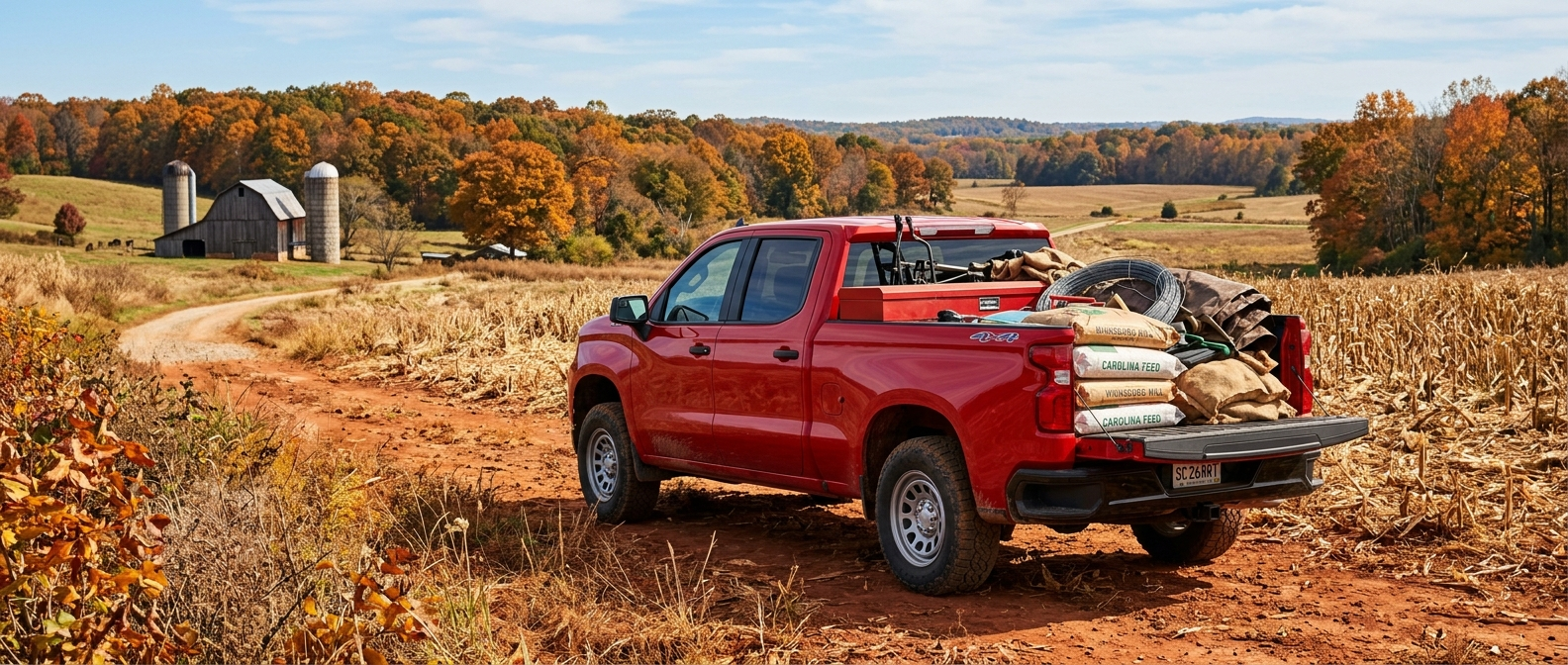
2026 Chevrolet Colorado Work Truck on US 321 in Winnsboro SC near Midlands Technical College Fairfield Campus

3 Best Chevrolet Trucks for Trade School Students Near Columbia

In this article The Ranking at a Glance The Colorado Work Truck: Right-Sized for a Student's Real Needs The Silverado 1500 Work Truck: When the Side Jobs Start Paying Silverado 1500 Double Cab: The Carpool and Off-Campus Living Pick Pros and Cons at a Glance The Bottom Line: Start With the Colorado, Grow Into the Silverado If you're starting an HVAC, welding, electrical, or construction program at a trade school near Columbia, a pickup truck isn't a lifestyle choice. It's a tool. You need a bed that swallows a compressor and a pipe cutter. You need a cab big enough for a passenger or two on a job-site run. And you need a commute down I-77 that doesn't drain your fuel budget before the semester is over. The good part is that Chevrolet makes three distinct trucks, and each one solves a different version of that problem. Our team at Wilson Chevrolet on US 321 in Winnsboro sees students from the Midlands Technical College Fairfield Campus come in asking the same question, and the answer depends on how much you haul, how far you commute, and whether you're already running a side job. The campus sits right here on our road at 1674 US 321 Business. The ranking below comes straight from what the specs actually support. The 2026 Chevrolet Colorado is our top pick for most trade-school students in this market. Read on for why. The Ranking at a Glance Rank Truck Best For Standout Spec 1 2026 Colorado WT / LT Daily commuter hauling tools and materials Up to 1,710 lb payload; 2.7L TurboMax, 310 hp 2 2026 Silverado 1500 Work Truck Students already running a side job or apprenticeship Up to 2,260 lb payload; up to 13,300 lb towing when properly equipped 3 2026 Silverado 1500 Double Cab Students carpooling or splitting housing near campus Full rear seating; same TurboMax engine, real backseat legroom The Colorado Work Truck: Right-Sized for a Student's Real Needs For most first-year trade students, the Colorado is the right-sized answer, and Chevrolet lists the 2026 Colorado's bed payload at up to 1,710 pounds in the WT and LT trims, enough for a full set of hand tools, a generator, PVC fittings, and your safety gear without sweating the math. The 2.7L TurboMax four-cylinder puts out 310 horsepower and 430 lb-ft of torque, and the 5-foot bed offers 41.9 cubic feet of cargo volume, a genuinely usable space for trade work. What's the catch? The Colorado's 5-foot bed runs tight for full sheets of plywood, so if your program regularly sends you home with 8-foot lumber or drywall, you'll be hanging a flag off the tailgate more than you'd like. That caveat aside, the Colorado is the truck we'd hand a student starting out. The midsize footprint fits a community-college parking lot without drama. The commute down I-77 from Winnsboro to Columbia and back is roughly 30 miles each way, and a Colorado in a lighter WT or LT configuration handles that more efficiently than a Silverado. Chevrolet carries forward the same TurboMax drivetrain for 2026, and prior EPA-rated figures on that engine in comparable configurations ran in the 18-20 mpg city range. That matters when you're making that run five days a week for two years. For a student not yet running formal job sites, this is the truck that doesn't overcorrect. The 2026 Silverado 1500 steps in when the workload outgrows the Colorado. The Silverado 1500 Work Truck: When the Side Jobs Start Paying The Silverado 1500 Work Truck is the honest step up once your side jobs outgrow a midsize bed, and it's the right call for a student spending weekends with a contractor and needing more payload than the Colorado can give, though it's more truck than a pure commuter needs. Some students start apprenticeships before graduating. The 2026 Silverado 1500 in a Work Truck configuration with the 2.7L TurboMax posts a maximum payload of up to 2,260 pounds in its lightest configured setup, per Chevrolet's manufacturer specs. When properly equipped with the Max Trailering Package, towing capacity reaches 13,300 pounds (a real jump over anything the Colorado offers). For a student doing HVAC installs or electrical rough-in on residential builds, hauling a full unit or pulling a material trailer on weekends is the difference between needing a second vehicle or not. The Silverado runs bigger than you need for most parking spots. It also costs more at the pump on the I-77 commute. Chevrolet lists the 2026 Silverado 1500's maximum payload at 2,260 lb and maximum towing at 13,300 lb when properly configured, per manufacturer specifications. The Work Truck trim keeps things sensible for a budget-minded buyer. A Regular Cab configuration is available, which trims the footprint a bit, and the standard 6.5-foot or 8-foot bed gives you genuine sheet-goods capacity the Colorado can't match. If you're splitting the truck between school Monday through Friday and a paying apprenticeship on weekends, the Silverado 1500 WT earns its keep in both roles. Buying caution: Payload and tow ratings on any Silverado 1500 shift a lot by cab, bed, drivetrain, and option package. The number that matters is the one on your specific truck's door-jamb sticker, not the maximum advertised figure. Our team will walk you through the build sheet before you sign anything, so you know exactly what your truck is rated for. Silverado 1500 Double Cab: The Carpool and Off-Campus Living Pick The Silverado 1500 Double Cab is the pick for moving people as well as tools, since a lot of students near Columbia share rides, share housing, or bring a coworker to job-site visits, and the Colorado's rear seat gets tight for adults over a 45-minute commute. The generic listicle never covers that side of the trade-school truck situation. The Silverado 1500 Double Cab solves it. You get full rear-seat legroom, four proper doors, and the same engine family as the Work Truck. It's the right configuration for a student who carpools or expects to add passengers on apprenticeship runs. Every 2026 Silverado 1500 comes standard with Chevy Safety Assist, which includes automatic emergency braking, lane-keep assist, and forward collision alert, according to Chevrolet. That helps when you're commuting in the pre-dawn dark an early trade-school morning schedule tends to demand. The tradeoff here is the footprint. The Double Cab with a standard bed is a full-size truck in every parking-lot sense of the word. This isn't a campus grocery run, it's a commitment. But if you need it, you need it. And for a student planning to run their own crew within five years, the Double Cab is the truck you grow into rather than out of. Browse our current Silverado 1500 inventory to see what Double Cab configurations we have on the lot right now. Pros and Cons at a Glance Pros Cons Colorado: right-sized for parking and commuting Colorado's 5-ft bed struggles with full sheets of lumber Silverado 1500 WT: payload and towing for apprenticeship work Silverado WT drinks more fuel on a long I-77 daily commute Double Cab: genuine rear seating for carpools and coworkers Double Cab footprint is a real parking challenge at busy campuses TurboMax engine standard across all three (310 hp / 430 lb-ft) Full payload and tow numbers require specific configurations (check the door sticker) All three eligible for financing through our team A first-truck buyer should expect to budget for a toolbox and tie-down hardware See Current Truck Specials The Bottom Line: Start With the Colorado, Grow Into the Silverado For the student commuting from Winnsboro down I-77 to a Midlands Tech or Columbia-area campus and starting an HVAC or electrical or welding program, the 2026 Colorado Work Truck or LT is the right call for a truck that handles tools, gear, and a real commute without breaking the bank on fuel. It's capable enough for what you need right now, it fits the parking situation, and it won't punish you at the pump five days a week. When the side jobs grow, the apprenticeship gets serious, and the payload starts mattering, the Silverado 1500 Work Truck is the next step. And if you're regularly hauling people alongside your tools, the Double Cab configuration is the one that keeps everybody comfortable through a long semester. Our team on US 321 in Winnsboro can help you sort through the configurations, check what's on the lot, and find the right financing path. Trade-school students are building real careers out here. That deserves a truck built for the actual job. Explore financing options for your next Chevy truck Get Pre-Qualified for Truck Financing Wilson Chevrolet 798 us hwy 321 N BUSINESS, Winnsboro, SC 29180 (803) 402-4233
2026 Chevrolet Trailblazer entering a University of South Carolina area parking garage in Columbia SC

Your Parking Playbook for the University of South Carolina (and Why the Trailblazer Wins It)

The 2026 Chevrolet Trailblazer measures 64 to 66 inches tall depending on drivetrain, and that single number is the reason we wrote this. If you've ever eased a full-size SUV toward a 6-foot clearance bar with your shoulders up around your ears, or circled campus hoping a spot would open, you know the wrong vehicle can turn a day at USC into a headache. The Trailblazer clears every campus garage on record. Here's how to use that. Where Do You Park, and When? Where you park depends entirely on whether you're visiting campus on an ordinary weekday or showing up for a Gamecock football Saturday, and those are two completely different animals, one solved by a parking garage and the other by an open-air lot and a smart exit plan you set before kickoff. The table below breaks down the real options, the Trailblazer's fit at each, and the one thing you should do before you leave the house. Arrive By Park Here Clearance / Fit Note Key Tip Weekday, any time Pendleton Street Garage (1501 Pendleton St.) 6'10" clearance; Trailblazer clears easily at 64 to 66 inches Hourly metered on levels 1A, 1B, 2A; enter from Pickens St. side Weekday, any time Bull Street Garage, Gate 3 (611 Bull St.) 8'0" clearance; no issue Hourly parking at Gate 3; central to main campus Weekday, any time Blossom Street Garage (1300 Blossom St.) 6'0" clearance; Trailblazer's 64 to 66 inches fits, but it's the tightest on campus Permit-only for students and faculty; check visitor availability Game day (football) LMC Fairgrounds lots on George Rogers Blvd. Open-air surface lot; no height limit Gates open 5 to 6 hours before kickoff; first-come Game day (football) Pre-purchased Athletics Dept. single-game spots Open-air; no height limit Pre-purchase strongly recommended; limited spaces sell out Game day (football) Private surface lots near Williams-Brice Open-air; no height limit Arrive early; expect a day-use fee; cash often preferred A note on the Blossom Street Garage: at exactly 6 feet of clearance, it's the tightest structure on the USC Columbia campus. The Trailblazer's 64 to 66 inch roofline fits, but only just. Carrying a roof rack or a cargo box changes the math, so skip it and use Bull Street or Pendleton instead. Maneuvering on Campus (and on Game Day) Getting around campus is easy on most weekdays and a genuine puzzle on game day, so it helps to treat the two as separate problems, one you solve with a quick garage run and one you solve with an early arrival and a planned exit long before the final whistle. On a regular weekday, getting in and out of the Pendleton Street Garage is genuinely straightforward. You come off I-77 South onto SC-277, follow Bull Street until it dead-ends at Pendleton, turn left, and the garage entrance on Pickens Street is one block up. On the same weekday run, The Chevy Trax handles it if you're shopping something even smaller, though the Trailblazer at 174.1 inches long sits well within the comfortable range for a multi-deck structure. Game day near Williams-Brice is a different conversation entirely. For the 2026 Gamecock football season, USC Athletics confirmed road changes. The three lanes of George Rogers Boulevard closest to the stadium close between Key Road and Bluff Road, and traffic runs westbound only in that stretch. So your exit strategy matters as much as your entry. Following that road pattern, we've seen that SUVs parked in the Fairgrounds lots on the west side of Assembly Street get a much cleaner post-game exit than those squeezed into street-side spots near the stadium itself. In a packed surface lot, the Trailblazer's 71.2-inch width (excluding mirrors) is a real practical ally. It fits a standard 8.5 to 9 foot parking stall without the door-ding anxiety that comes with a full-size three-row. Insider parking tip: The Pendleton Street Garage offers hourly meter parking on levels 1A, 1B, and 2A. On weekends with no conflicting campus event, USC parking enforcement still runs seven days a week, all year. Check the ParkUSC app (from USC Parking and Transportation Services) before you arrive. It shows lot availability in real time and can save you a lap around campus. Etiquette tip: In any USC campus garage, pull forward to the painted line. Compact SUVs like the Trailblazer often stop short of the stall line because the bumper clears the wheel stop easily. Pull all the way up. It gives the car behind you room to enter the row and keeps the garage flowing during busy class-change windows. Next step: Want to see the 2026 Trailblazer in person before the fall semester starts? Stop by Wilson Chevrolet on US 321 in Winnsboro. We're a short hop down I-77 from the Columbia metro, and we can get you behind the wheel without the campus parking drama. See Our Current Trailblazer Offers Your Pre-Trip Checklist for Any USC Columbia Visit You've already got the parking strategy sorted, so the only job left is ticking a short checklist before you pull out of Winnsboro or wherever you're starting from on I-77, the part that's easy to skip in a hurry and also the part that quietly turns a smooth USC day into a stressful one. Before you leave: Confirm your parking zone. USC enforces permits and meter zones 24 hours a day, seven days a week, including holidays. There's no grace for "I was only going to be five minutes." Download the ParkUSC app. It shows real-time lot availability across all campus garages and surface lots, plus shuttle routes. Browse our Trailblazer inventory before your trip to lock in a trim that fits your budget and your usual crew. Pre-purchase game-day parking. For Gamecock football, USC Athletics recommends buying single-game spaces through the official Athletics portal before you arrive. The Fairgrounds lots on George Rogers Boulevard open five hours before kickoff (no earlier than 8 a.m.), and spots in the premium Gamecock Park section go fast. Know the clearance number. The tightest USC campus garage is Blossom Street at 6'0". The Trailblazer's Chevrolet-listed height of 64 to 66 inches means it fits. If you've added a cargo carrier or roof rack, measure first. Plan your exit before kickoff. With three lanes of George Rogers Blvd. closed on game day in 2026, westbound-only traffic is the rule near the stadium. Decide which way you're heading home (toward I-77 North for Winnsboro, or another route) and map it before the final whistle. Give yourself time. A study of USC's own parking situation found the university was adding more than 1,500 spaces to address demand. That expansion helps, though a campus with 35,000-plus enrolled students and the majority living off campus stays busy on any given morning. Leave the big rig at home. The Trailblazer is purpose-sized for exactly this environment. A vehicle in the subcompact-SUV class fits metered stalls, handles tight garage ramps, and moves through the pedestrian-heavy streets around the Horseshoe without drama. Go enjoy it. Explore Financing Options Wilson Chevrolet 798 us hwy 321 N BUSINESS, Winnsboro, SC 29180 (803) 402-4233

2026 Chevrolet Traverse tire pressure check by parent in Winnsboro SC summer morning

Hauling Kids and Backpacks All Year: Your Chevrolet Tire Check Guide for Winnsboro Parents

The first week of school is a bad time to learn your tires were losing pressure all summer. Here's the fast version. Check your Chevy's cold tire pressure before 8 a.m., match it to the number on the driver's door placard, and run a quick tread test while you're crouched down there. That two-minute stop keeps you clear of the August trap, heat that makes tires look fine on a noon gauge even when they weren't aired up right at dawn. The Chevrolet Traverse hauls car seats, sports bags, and a full Fairfield County carpool. It earns tires set to the number that's genuinely right for it. Will Your Tires Handle the School-Year Load? Your Chevy's tires will handle the school-year load fine as long as you set them cold and confirm the figure, because August in Winnsboro is rough on rubber, with afternoon highs pushing into the mid-90s and pavement running hotter still. The physics is straightforward. Tire pressure rises roughly 1 PSI for every 10 degrees Fahrenheit of temperature gain, which means a tire you air up at 7 a.m. can read 4 to 6 PSI higher by the time you're doing afternoon pickup after driving I-77 in stop-and-go heat. None of that is a problem on its own. The trap catches parents who check at noon, see a number that looks fine, and figure the tires were right all along. They might not have been. For Chevy's family lineup, the table below gives you the real numbers. Chevrolet lists these as cold-tire targets, meaning the vehicle has been parked for at least three hours and driven less than a mile since sitting. Check your specific trim's door-jamb placard to confirm your exact figure. Chevy Model / Trim OEM Tire Size Recommended Cold PSI Check Method Fits the School-Run Job? Traverse LS 245/70R17 35 PSI (confirm placard) Cold gauge before 8 a.m. Yes Traverse LT 255/65R18 or 255/55R20 35 PSI (confirm placard) Cold gauge before 8 a.m. Yes Traverse LTZ / RS / High Country 255/55R20 or 275/45R22 35 PSI (confirm placard) Cold gauge before 8 a.m. Yes Equinox (most trims) Varies by trim 35 PSI (confirm placard) Cold gauge before 8 a.m. Yes Tahoe (family hauler) Varies by trim Confirm placard Cold gauge before 8 a.m. Yes (larger load means more pressure to get right) Trailblazer Varies by trim Confirm placard Cold gauge before 8 a.m. Yes *Chevrolet lists 35 PSI as the most common cold-tire target across its family SUV lineup. Your door-jamb placard is the authoritative source for your specific vehicle. Never read pressure from a hot tire and use that number to set inflation.* The TPMS warning light on your Chevy doesn't activate until pressure drops roughly 25% below the recommended spec (per FMVSS No. 138). Your tires can be meaningfully short on air before that light ever blinks. How to Load the Check Correctly (Before the Bell Rings) Doing this right takes three tools and about four minutes, and the one rule that makes or breaks it is timing, because a gauge read cold before the first drive tells the truth while a reading taken after I-77 heat runs high and fools you. In our experience, the numbers that mislead people are the ones pulled after the car has been driven. Do it cold, every time. Step 1: Time it. Check pressure before the first drive of the day, ideally before 8 a.m. in August. Once you've been on the road, heat from the engine bay, road friction, and ambient air all push the reading up. Step 2: Grab a real gauge. Your Traverse and most Chevys have a Tire Pressure Monitoring System (TPMS), but Chevrolet engineers built that system to warn you at the dangerous end. It won't fine-tune anything for you. A quality dial or digital gauge (a small investment at any auto parts store) gives you the actual PSI to work with. NHTSA notes that only 19 percent of drivers properly inflate their tires. Step 3: Check all five. Four tires plus the spare. The spare is the one every parent forgets about until they're pulled over on US 321 in a thunderstorm. Step 4: Match the placard, not the tire sidewall. The number stamped on the sidewall is the tire's maximum capacity, not your vehicle's recommended operating pressure. Open the driver's door and look for the sticker on the door jamb. That number is the one that matters. Step 5: Do the quarter test on tread. Insert a quarter into the tread groove, Washington's head going in first. If you can see the top of Washington's head, you're at approximately 4/32" of tread depth, which is the early-warning zone for wet-weather stopping. September in Fairfield County means afternoon thunderstorms. Better to catch borderline tread this week than during the first week of school. Tip from the service center: If your TPMS light came on briefly during a hot afternoon drive and then went off on its own overnight, the system may have triggered on a heat-expanded reading, not a leak. But don't ignore it. Bring it in. A sensor that cycles on and off is telling you the cold pressure was marginal in the first place. Check pressure before 8 a.m. on a day the car sat overnight Confirm target PSI from the driver's door-jamb placard Inflate or deflate to match the cold-tire target Repeat for all four tires plus the spare Insert a quarter tread-first into the shallowest-looking groove; flag it if you see Washington's head Inspect each sidewall for cracks, bulges, or embedded debris Check that the TPMS system is functional (no persistent amber light) Chevrolet Equinox owners: the same cold-check logic applies, and the 35 PSI target is the same baseline. Tire size changes by trim, so always use the placard. The Job Done: What You've Actually Accomplished Run this check the right way and you've handled a five-minute job that's easy to skip, and the payoff is real, because per NHTSA data, 511 people died in tire-related crashes in 2024. None of that is meant to scare you. Think of it as putting a five-minute driveway check in its proper place. Loaded with backpacks, a booster seat, and after-school gear, a Chevy Traverse or Tahoe is carrying real weight. Tires underinflated by 25% or more wear faster along the outer edges, reduce wet-weather traction, and extend stopping distances in a way you won't notice until a school-zone moment demands everything the tire has. South Carolina's back-to-school schedule drops right in the hottest, wettest stretch of the year. The last thing you want is to learn your tires were marginal in the middle of it. Get the check done this week. If tread depth is near the 4/32" threshold or the cold pressure doesn't hold overnight, our service center on US 321 can handle a rotation, inspection, or swap before the first bell. By the Wilson Chevrolet Team | August 2026 Schedule a Tire Inspection at Wilson Chevrolet Wilson Chevrolet 798 us hwy 321 N BUSINESS, Winnsboro, SC 29180 (803) 402-4233
Chevrolet Silverado 1500 brake inspection at Wilson Chevrolet service center in Winnsboro SC on US-321

Your Chevrolet's Brakes Are Working Harder Right Now Than They Were in July

In this article What Do the Brake Specs Actually Mean for Your Chevrolet? Stop-and-Go School Traffic and What It Does to Your Pads and Rotors What a Full Chevrolet Brake Inspection Actually Covers Who Needs a Brake Inspection Right Now? School in Fairfield County started July 30, and US-321 through Winnsboro shifted almost overnight from a relatively open summer corridor to a stop-and-go school-zone commute, twice a day, five days a week. Brake pads don't care what the calendar says, but your driving pattern absolutely changes how fast they wear. Stop-and-go traffic with frequent hard stops is one of the most demanding cycles a brake system faces. Chevrolet's own service documentation states that brake wear indicators are set to alert at approximately 2 mm of pad friction material remaining, and that pads should be replaced at or before reaching that threshold (a measurement you never see until the squeal starts). We're on US-321 N Business ourselves here at Wilson Chevrolet, so we see what this road does to vehicles. In this guide we break down exactly what a Chevrolet brake inspection covers, how stop-and-go school traffic loads your system, and which signs mean it's time to book a service appointment before a minor wear issue becomes a rotor problem. What Do the Brake Specs Actually Mean for Your Chevrolet? Chevrolet Certified Service documentation calls out 2 mm of remaining friction material as the replacement threshold for brake pads, which is thinner than two stacked pennies, and since most pads start life between 10 mm and 12 mm thick, by the time the wear indicator squeals you've used roughly 80 percent of what you had. That's late in the game. So the number is worth knowing before the noise starts. Brake Component New Condition Service Alert Threshold Chevrolet Action Brake pads (friction material) ~10-12 mm thick 2 mm remaining Replace immediately (per Chevrolet Certified Service) Brake rotors Stamped nominal thickness on casting Min. thickness stamped on rotor (typically 2-3 mm less than new) Replace before reaching minimum; do not resurface below it Brake fluid Clear to light amber Dark, cloudy, or moisture-contaminated Exchange recommended when condition warrants Wear indicator tabs Retracted Contact with rotor surface Audible squeal (schedule service promptly) Rotors are marked the same way. Chevrolet stamps the minimum acceptable thickness right into the rotor casting. Once a rotor is worn or machined below that mark, it can't safely dissipate the heat a full stop generates, and heat is the enemy of consistent braking. Why does that matter right now? Because heat builds fastest in exactly the kind of driving US-321 sees during school drop-off and pickup: repeated moderate-to-hard stops from 25-35 mph, short distances between stops, and an engine that doesn't hold the sustained highway speed needed to let things cool between applications. This is a brake-unfriendly cycle, and it compounds across five mornings and five afternoons every week. Stop-and-Go School Traffic and What It Does to Your Pads and Rotors Highway miles are actually easier on your brakes than a stop-and-go commute, because you're using the pedal less often, more gradually, and from lower relative speeds in many situations. A Silverado 1500 owner who puts 15,000 miles a year on mostly I-77 highway runs may have pads that outlast a neighbor doing the same mileage on a school-zone route with a full truck bed. Stop-and-go traffic changes the math in three specific ways. More brake applications per mile. A school-zone corridor with crosswalks, bus stops, and signal lights means far more pedal applications per mile than open-road driving. More applications equals more friction, more heat, and faster pad wear. Sustained heat buildup. Short stops don't allow rotors to shed heat between applications the way a long highway run does. Heat that stays in the rotor speeds up both pad glazing and rotor warping. Heavier-loaded vehicles. Families running carpool aren't driving with an empty vehicle. Chevrolet's own guidance notes that driving habits and vehicle load conditions directly influence how quickly brake components wear (there's no universal mileage interval because conditions vary that much). A Tahoe carrying six passengers to school and back weighs meaningfully more fully loaded than empty. The brake system stops whatever mass you give it. Service tip. Chevrolet's Multipoint Inspection includes a brake check at every visit, not just at scheduled maintenance milestones. If you're due for an oil change, that inspection is already built in, an easy way to get eyes on pad thickness without booking a separate appointment. Between service visits, here's what to listen and feel for. A high-pitched squeal during normal braking (wear indicator contacting the rotor) Grinding or metal-on-metal scraping (pad material fully worn, backing plate contacting rotor) Pulsation or vibration through the brake pedal (warped or unevenly worn rotor) A soft or spongy pedal feel (air in the brake lines or degraded brake fluid) The vehicle pulling to one side under braking (uneven pad wear or a sticking caliper) Any one of those is a reason to schedule service. A squeal is a warning. A grind means damage is happening as you drive. What a Full Chevrolet Brake Inspection Actually Covers A proper Chevrolet brake inspection covers more than a glance through the wheel spokes, because per Chevrolet Certified Service a trained technician checks front and rear brake pads (or shoes on drum-equipped rear axles), rotors, hoses, and calipers for wear, and also inspects the fluid lines for cracks and leaks. Six distinct systems get evaluated in a single service visit. Pad thickness (measured, not estimated) Rotor condition (thickness, surface scoring, heat spotting, and lateral runout) Caliper operation (checking that pistons retract properly and slides aren't seized) Brake hoses and hard lines (looking for cracks, bulges, or seepage) Brake fluid condition (color and moisture content affect how the fluid performs under heat) Wear indicators (confirming the mechanical alert tabs are functional) A Traverse running three-row family carpool load and a Silverado towing on weekends put different demands on those six systems, but the checklist doesn't change. What our team finds tells you which components need work now, which ones need watching, and which ones are fine until the next visit. Brake service isn't a fixed-schedule item the way an oil change is. There's no single mileage number that covers every driver's situation, and Chevrolet's own guidance says exactly that. A driver doing a lot of stop-and-go school-zone miles in August in Winnsboro may need pads sooner than the neighbor who drives the same Silverado mostly on I-77 between here and Columbia. Driving pattern matters more than the odometer. Schedule a Brake Inspection Who Needs a Brake Inspection Right Now? If you haven't had a brake check since spring, the answer is probably you, and here's how to self-triage before you call us. A quick honest read of your own driving usually points the way. Fairfield County's school year kicked off July 30. If you've been running school drop-offs since then, you've already put your pads through roughly two weeks of the most demanding daily cycle they'll see all year. None of that is a scare tactic. It's just what the math looks like when you add up two school runs a day on a stop-and-go stretch like US-321. You're a good candidate for a brake inspection now if any of these fit. You haven't had brakes inspected in the last 12 months You're hearing intermittent squealing during light braking Your vehicle pulls slightly left or right when you stop You've added regular carpool duty to your weekly routine since late July Your pedal feels less firm than it did six months ago The vehicles in our area that show the most varied brake wear tend to be full-size trucks and three-row SUVs (Silverados, Tahoes, Traverses), because they're doing double duty as daily commuters and weekend haulers. Heavy use across two very different driving profiles adds up. Our service center can tell you where you stand in one appointment. We're straightforward about one thing. Not every inspection ends with a parts recommendation. Sometimes pads measure at 6 mm and you've got months ahead of you. Knowing that is worth something too. Frequently Asked Questions What triggers the brake squeal on my Chevrolet, and should I ignore it? The squeal is almost always your wear indicator doing its job. Chevrolet builds metal tabs into the brake pads that contact the rotor surface when friction material reaches approximately 2 mm of remaining thickness. That contact creates the high-pitched sound. It's a designed alert, not a random noise, and you shouldn't ignore it. Continuing to drive on pads past that point means the metal backing plate will eventually contact the rotor directly, turning a pad replacement into a rotor replacement as well. Does stop-and-go school traffic really wear brakes faster than highway driving? Yes, and the difference is real. Chevrolet's service guidance explicitly states there is no fixed mileage interval for brake service because wear depends on driving habits and conditions. Stop-and-go driving with frequent moderate-to-hard stops generates more heat cycles per mile than sustained highway speeds, and heat is the primary driver of accelerated pad and rotor wear. School-zone routes with crosswalks, bus stops, and traffic signals are one of the higher-wear driving patterns your brake system encounters. Schedule a Brake Inspection Wilson Chevrolet 798 us hwy 321 N BUSINESS, Winnsboro, SC 29180 (803) 402-4233
2026 Chevrolet Silverado 1500 crew cab on a South Carolina Midlands gravel road at late summer, prepared for fall work season

Your 2026 Silverado Worked Hard All Summer. Here's What It Needs Before Fall.

In this article What Do You Actually Get at Each Trim Tier, and What Does It Cost You in Maintenance? The Heat Did Real Work on Your Fluids Smart-Buy Value: Matching Maintenance Investment to Real Work Demand The 2026 Silverado Tier That Actually Fits Your Fall Workload South Carolina's Midlands don't ease into summer. They hit hard and stay there. By the time August rolls around in Winnsboro, your Silverado 1500 has spent months hauling under 90-plus-degree heat, idling in humidity that feels like a wet blanket, and pulling enough dust and pollen through to choke a filter twice over. Most fall-prep checklists miss that reality, because they're written for drivers getting ready for cold. We're not getting ready for cold. We're recovering from heat. The bottom line is simple. A Silverado that rolls into fall unchecked, with heat-stressed fluids, a battery that barely survived August, and coolant that last saw fresh service two years ago, is a truck that'll let you down during the work push when you need it most. Which services matter most depends heavily on which trim and engine you're running, and that's what this guide sorts out. What Do You Actually Get at Each Trim Tier, and What Does It Cost You in Maintenance? Silverado 2500 HD owners and light-duty 1500 drivers sit in genuinely different maintenance categories, and even inside the 1500 lineup the four available engines shift your fall service priorities considerably, so the short answer is that what you get at each tier also decides what you owe it come fall. Let's break the tiers down by what you're actually managing under the hood. Trim Tier Engine What You Actually Get Key Fall Maintenance Priority Who It's For Work Truck / Custom 2.7L TurboMax (310 hp, 430 lb-ft) Highest payload at 2,260 lbs, 8-speed auto, rugged work focus Intercooler inspection; turbo boost hose check after summer heat cycles Tradespeople, small-fleet operators, bed haulers LT / RST / Trail Boss 2.7L TurboMax or 5.3L V8 Step up in comfort tech; Trail Boss adds 2-inch lift and Z71 hardware 5.3L: lifter oil passages; ensure no sludge from summer idling; TurboMax: same turbo check Daily-driver work truck; Carolina Adventure World weekend warriors LTZ / High Country 5.3L EcoTec3 V8 (355 hp, 383 lb-ft) standard; 6.2L V8 optional Leather, heated/ventilated seats, Bose audio, Super Cruise on High Country 5.3L DFM cylinder deactivation system: clean oil is non-negotiable after hot months Families that tow plus professionals who want comfort and capability Any trim (diesel option) 3.0L Duramax (305 hp, 495 lb-ft) 28 MPG highway (EPA, 2WD), 13,300 lbs max towing, class-exclusive diesel torque Diesel exhaust fluid (DEF) level and quality; fuel filter service critical before heavy fall towing High-mileage haulers; I-77 corridor commuters with trailers One caveat is worth flagging here, because the Duramax diesel is the towing headline but it's also the most demanding on fluid maintenance intervals. If you've run hard I-77 miles all summer and haven't touched the fuel filter, don't wait. The Heat Did Real Work on Your Fluids South Carolina summers do far more than warm your engine bay, and over a full summer of relentless heat they cook the corrosion inhibitors right out of your coolant, so the fluid can still test fine on color while the protection it was mixed to deliver has quietly faded. The National Weather Service confirms that South Carolina Midlands high temperatures run in the 80s through September before cold fronts finally show up more often as fall progresses. Call it four-plus solid months of heat stress on your cooling system. Chevrolet lists the 2026 Silverado 1500's 5.3L EcoTec3 V8 at 355 horsepower and 383 lb-ft of torque (those numbers assume clean, correctly-mixed coolant protecting the system at the operating extremes it was designed for). When a Silverado rolls in after a South Carolina summer, our service team works down a short list. We check for coolant that's slowly lost its corrosion inhibitors, the kind that tests fine on color but fails a test strip. We look at belts for the surface cracking that heat cycling leaves behind. And we run a battery load test, because a unit can technically hold a charge and still fall short under cranking load. A four-year-old battery that barely survived July is unlikely to deliver in October. Temperatures drop just as internal resistance climbs, and cranking gets harder. So if your coolant hasn't been serviced in the last two years or 30,000 miles, whichever came first, fall is the right window. Not next spring. Now, before you're pulling a trailer to the deer camp off US 321 and the temperature gauge tells you something you didn't want to hear on a Friday afternoon. Schedule Your Pre-Fall Service Appointment Smart-Buy Value: Matching Maintenance Investment to Real Work Demand Our service center team sees the same pattern hold steady across every trim level, and it comes down to owners who treat service as a planned work-season cost and budget for it well before the fall push begins. That said, not every truck needs the same fall service investment. Sort it out by how you put the truck to work. You're a bed-load hauler, not a heavy tower. If your TurboMax-equipped WT or Custom trim spends its work days with tools in the bed and never sees a trailer, your fall priorities stay simple. Think oil and filter, tire pressure and tread depth, brake inspection, air filter. The 2.7L TurboMax's 430 lb-ft of torque arrives low in the RPM range, which means it's working less hard than you'd expect under moderate bed loads. Keep the oil clean and the turbo plumbing tight, and it'll hold up fine. You tow a boat, a trailer, or a camper regularly. The 5.3L V8 is the workhorse of the lineup and earns that reputation, but its Dynamic Fuel Management cylinder deactivation system runs oil-sensitive. Degraded oil from a summer of stop-start hauling in humid air is exactly the scenario where DFM passages need attention. Get your oil changed before fall towing season starts. Waiting until after is how those passages gum up. You're running the diesel on long hauls or heavy commercial loads. The 3.0L Duramax earns its place with an EPA-rated 28 MPG highway in 2WD and 13,300 lbs of max towing when properly equipped. But its diesel-specific needs, from DEF quality to the fuel filter to the exhaust system, aren't maintenance you get to defer. We treat the diesel fuel filter the way an owner should treat tires. Don't wait to see the problem before you act. Service reality check. Tires that passed inspection in May have taken an extra summer of heat-accelerated wear by August. Winnsboro's farm roads, the gravel pull-offs around Lake Wateree, and US 321 pavement all put uneven stress on tread that won't always show up at a glance. If you're towing at or near capacity this fall, have your tires load-rated and inspected before you hook up the trailer. Thinking about trading up before fall? See what your current Silverado is worth before the work season starts (well-maintained trucks hold their value, and a service record going into an appraisal makes a real difference). The 2026 Silverado Tier That Actually Fits Your Fall Workload Browse our current Silverado inventory if you're weighing a move before the work season, but if you're staying with the truck you already own, which is often the right call, the honest read on how each tier fits Fairfield County's fall work reality comes down to how you load and tow it. TurboMax tiers, from WT through RST, are the right trucks for owners whose fall means payload and moderate towing. Chevrolet lists 2,260 lbs of max payload when properly equipped, and that's a real number for a work truck that lives in the bed. Step up to the 5.3L tiers if you tow trailers regularly and want the V8's character with a manageable fuel cost. And if you genuinely put 20,000-plus miles a year on your truck running the I-77 corridor or pulling heavy commercial loads, the diesel's 495 lb-ft of torque and 28 MPG highway rating are hard to argue with on operating economics. Just budget for the maintenance it demands in return. The honest tradeoff on the 6.2L V8 runs like this. It delivers the highest gas-engine output at 420 horsepower and 460 lb-ft of torque, and it shares the 13,300-lb max towing ceiling with the diesel when properly equipped, but it returns the worst fuel economy of the gas engines. For most Fairfield County work, the 5.3L closes most of that gap with a better daily fuel cost. Fall is when a well-maintained truck separates itself from one that's been coasting. We'd rather talk through what your truck needs now than see it stranded on I-77 in October. Frequently Asked Questions What fall maintenance does a 2026 Silverado actually need in South Carolina? Because South Carolina Midlands summers run hot and humid well into September (the National Weather Service confirms Midlands high temperatures stay in the 80s through September), the real fall-prep priorities are heat-recovery focused rather than cold-weather focused. That means a coolant system check, battery load test, air filter and cabin air filter inspection, belt condition check, and an oil change timed to the start of fall work demand rather than based on a calendar date alone. Diesel Silverado owners should also verify DEF levels and fuel filter condition before heavy towing season begins. Does the 2.7L TurboMax hold up as well as the 5.3L V8 for fall work use? It depends entirely on what "work" means for your truck. Chevrolet lists the TurboMax at 310 horsepower and 430 lb-ft of torque, with a max payload of up to 2,260 lbs when properly configured (that's actually higher payload than the 5.3L V8 in comparable configurations because of the four-cylinder's lighter weight). For bed-load work with moderate towing, the TurboMax holds up well and is generally simpler to service. The 5.3L V8 (355 hp, 383 lb-ft) has the edge in sustained heavy towing over long distances and has a longer real-world track record in demanding commercial use. Our team's practical read: if you're towing over 8,000 lbs with any regularity, the V8 is the more relaxed long-term choice. Under that threshold, the TurboMax earns its place. View Current Silverado Offers Wilson Chevrolet 798 us hwy 321 N BUSINESS, Winnsboro, SC 29180 (803) 402-4233

Contact Us

Fill out this form below and we'll contact you shortly
*Required Fields