




Blog

Used Chevy SUVs by Model Year: Which Years Are Actually Worth It for Fall Family Buyers Near Blythewood

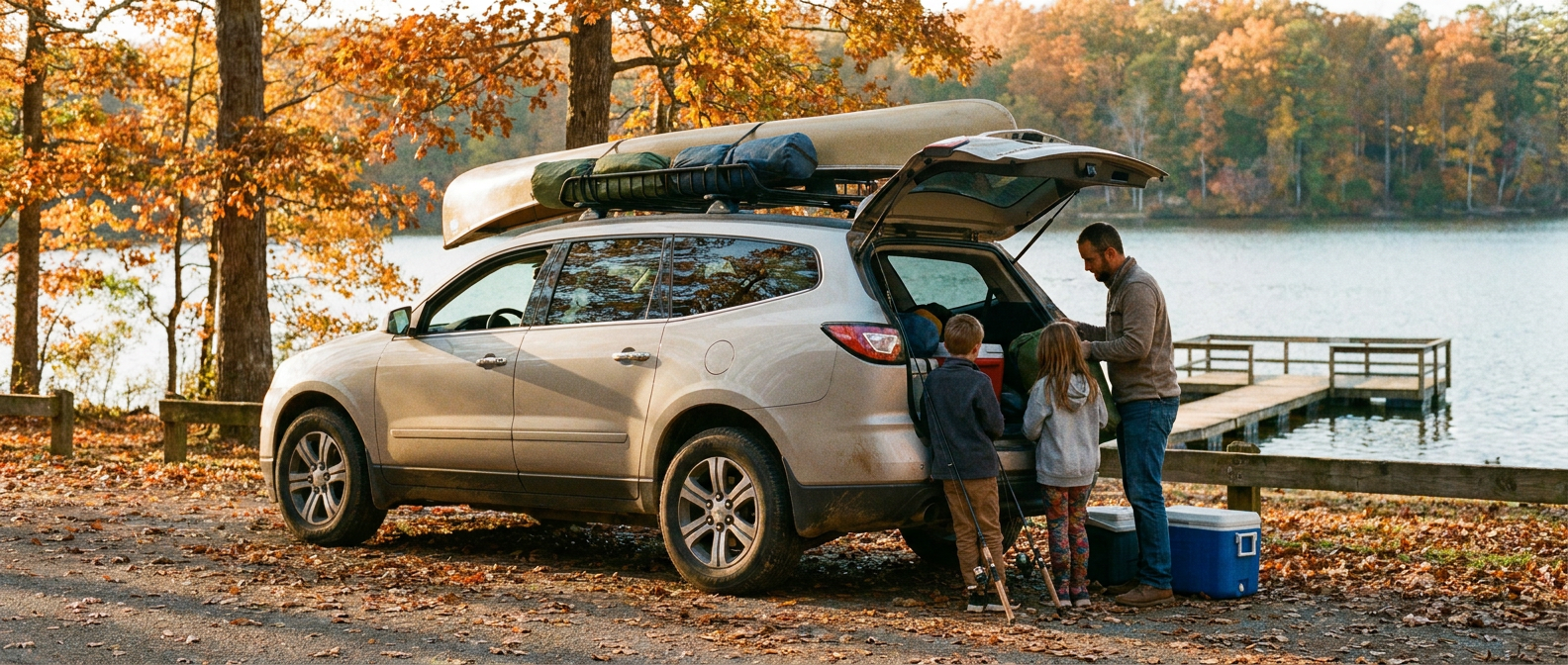
Used Chevrolet Traverse at a South Carolina lake recreation area in fall, family loading gear into the cargo area, autumn foliage in the background

If you're shopping for a used Chevrolet SUV this fall, the model year matters more than the badge on the tailgate suggests. A 2018 Traverse and a 2022 Traverse carry the same nameplate, but they're not the same purchase. Pick the right year and your family stays comfortable on the I-77 run between Blythewood and Winnsboro. Pick the wrong one and you're in a waiting room at the service center two months after you sign.

Let's start with the short answer. For a compact family crossover, target a third-generation Equinox from 2021. That year carried just 75 documented NHTSA owner complaints and earned a five-star NHTSA crash rating. For three rows on a real budget, the 2022 Traverse had only one NHTSA recall on record. For full-size room and genuine towing, the 2020 Tahoe is the documented sweet spot in the fourth-gen lineup before fifth-generation pricing takes over.

What's below explains each call.

The short version
  • Equinox sweet spot: 2021 (five-star NHTSA crash rating, 75 owner complaints on record) or 2023-2024 (lowest complaint volumes in the model's history). The 2017 earned a perfect 5/5 from Consumer Reports with zero recalls that year.
  • Years to approach carefully (Equinox): 2010 through 2013, where NHTSA documented more than 1,000 complaints for the 2010 alone, centered on engine oil consumption in the 2.4-liter four-cylinder.
  • Traverse sweet spot: 2022 (just one NHTSA recall, 76 complaints) or 2023 (two recalls, 62 complaints). Both represent a settled, mature second-generation platform.
  • Years to approach carefully (Traverse): 2018 first-year builds (9-speed shifter complaints documented) and 2019 (358 NHTSA owner complaints, the highest of any second-gen year).
  • Tahoe sweet spot: 2020 (one NHTSA recall, 38 complaints, Consumer Reports 5.0 reliability score for that model year). For fifth-gen room and cargo, the 2022 is the cleaner entry point over the 2021 launch year.
  • Always verify: Run the VIN through NHTSA's free lookup tool to confirm every open recall is resolved before you buy anything.

Which Model Years Are the Sweet Spots?

The answer runs differently for each size class, so we'll break it down by the three Chevy SUV families that make the most sense for Fairfield County and Blythewood-area buyers, from compact to three-row mid-size to full-size.

ModelSweet-Spot YearsYears to WatchMain Documented Concern
Equinox2021, 2023-20242010-2013Engine oil consumption; 2010 alone had 3 NHTSA recalls and 1,000-plus complaints
Equinox201720152015 carried documented complaints; 2017 = zero recalls, 5/5 Consumer Reports
Traverse2022-20232018, 20192018 first-year 9-speed shifter; 2019 = 358 NHTSA complaint reports
Traverse2016-2017 (1st gen)2009-2012 (1st gen)Timing chain stretch and transmission wave-plate failures in early first-gen
Tahoe2019-20202015, 2021 early builds2015 = 16 NHTSA recalls (nameplate record); 2021 = 292 complaints, 8 recalls

Equinox: Third-Generation Is Where You Want to Be

The third-generation Equinox launched for 2018 with a 1.5-liter turbocharged four-cylinder, and it cleaned up the powertrain concerns that had piled up across the second-gen years. We'd call that the meaningful break in the model's history.

Within that third gen, the 2021 is our pick for families, and it's an easy one to stand behind. NHTSA data shows just 75 documented owner complaints for that year. Chevrolet added standard surround-vision cameras and rear collision alert as standard equipment on the 2021, and the five-star NHTSA crash rating holds. The 2021 carries four NHTSA recalls, which is modest and addressed under no-charge remedies.

If your budget reaches to 2023 or 2024, those years carry even lower complaint volumes and represent a fully mature platform. The tradeoff is price, and you'll see it reflected in late-model Equinox examples with clean records that live up to their reputation.

A word on the second-gen years, 2010 through 2013. NHTSA recorded more than 1,000 owner complaints for the 2010 Equinox alone, centered on engine oil consumption tied to the 2.4-liter four-cylinder. The 2010 also drew three separate NHTSA recalls covering the electrical system, powertrain, and a seat adjuster defect. Repairs ranged from piston-ring replacements to full engine replacements. That's documented, specific, and not a risk we'd recommend for a family's primary driver.

Traverse: Skip the First Two Second-Gen Years, Aim for 2022

The second-generation Traverse arrived for 2018 with a size increase, a more refined interior, and a nine-speed automatic transmission. That first-year build came with documented shifter complaints. NHTSA's complaint file for the 2018 Traverse sits at 332 owner reports, and 2019 is the highest of any second-gen year at 358 complaints. The 2020 piled up eight NHTSA recalls outright, and that's not a number you ignore.

The data turns sharply at 2021, where complaints dropped to 72. By 2022 you're looking at the cleanest single year in the second-generation run, just one NHTSA recall and 76 complaints. The 2023 follows close behind with 62 complaints and two recalls.

See Traverse inventory at Wilson Chevrolet and look for 2022 examples with documented service history and recall completion records. Three rows, solid reliability data, and a platform that Chevrolet had four years to refine. That's a strong used-SUV combination.

For buyers who need three rows but can't stretch to a 2022, the first-generation 2016 and 2017 Traverse are worth serious consideration. By that point in the production run, Chevrolet had addressed the timing chain and transmission wave-plate concerns of the early first-gen years. These won't have the modern driver-assistance suite of a 2022, but the core mechanicals are documented as solid.

Team Observation: On late second-gen Traverses, we check the build date on the window sticker rather than leaning only on the model year label. A 2018 Traverse built late in the production year can differ from an early-production unit, because running changes landed after early complaints surfaced. It takes thirty seconds to check, and it'll tell you plenty.

Find Out What Your Current SUV Is Worth

Which Years Should You Watch Out For?

Every nameplate has a few years where the documented record gives us pause, and the fair way to say it is that none of them are automatic dealbreakers, they're just years that ask for more homework and a closer inspection before you sign anything. Here are the specific ones.

Equinox 2010-2013. The core issue was excessive oil consumption in the 2.4-liter four-cylinder. NHTSA complaint data for 2010 exceeds 1,000 reports, with similar volumes documented for 2011 and 2013. The 2010 alone drew three separate NHTSA recalls covering the electrical system and powertrain, a seat adjuster defect, and a defroster flaw. These aren't years to avoid based on reputation. They're years to approach carefully based on documented, specific mechanical patterns.

Traverse 2018 and 2019. First-year redesign issues are common across every brand, and the second-gen Traverse nine-speed transmission drew consistent owner complaints from 2018 production. The 2019 logged 358 NHTSA complaints, the highest complaint volume of any second-gen Traverse year in NHTSA's database. If you're looking at 2018 or 2019 examples, a pre-purchase inspection from a qualified technician focused on the transmission is worth the investment before you commit.

Tahoe 2015. The 2015 record is unambiguous. Per NHTSA records, the 2015 Chevrolet Tahoe accumulated 16 recalls, the highest recall count in the nameplate's modern history, covering airbag systems, power steering, brake boosters, and transmission concerns. A 2015 with full recall-completion documentation isn't impossible to vet, but it's a substantial amount of homework for a vehicle that old. The 2016 through 2020 years are meaningfully cleaner.

Tahoe 2021 (early builds specifically). The fifth-generation Tahoe is a genuinely improved vehicle over the fourth-gen. Independent rear suspension, 25.5 cubic feet of cargo behind the third row (up from just 15.3 cubic feet in the outgoing fourth gen), and more third-row legroom. But NHTSA recorded 292 complaints and eight recalls for the 2021 model year, including a seat-belt buckle assembly recall covering third-row buckles. The buckle recall is a free fix per NHTSA records. Verify it's been completed before you purchase.

Browse used inventory at Wilson Chevrolet to check what's currently available with year-specific details.

Which Year Fits Which Family?

The data narrows the field to a handful of strong years, but the winner for your household comes down to how you actually use the vehicle, the commute, the gear, the trailer behind the hitch. Match the year to the life, and you'll land on the right SUV.

Two kids, a school schedule, and the I-77 corridor to Columbia five days a week. The Equinox is your vehicle. A 2021 with documented service history hits the reliability profile you need for a high-use daily driver. The EPA rates the front-wheel-drive 2021 Equinox 1.5-liter turbo at 26 miles per gallon on the highway, a number that shows up in your real budget when you're running that corridor regularly. If a 2021 is priced above your target, the 2017 with its verified zero-recall record is the best budget alternative in the third-gen range.

Three kids, a dog, and weekend gear hauling to Lake Wateree State Recreation Area. You've got a three-row problem, and the 2022 Traverse solves it without the first- and second-year headaches. Seats up to eight, carries the gear, and represents a platform that NHTSA complaint data shows stabilizing in 2021 and settling further in 2022. Don't let moderate mileage scare you if the service records are complete, a 2022 Traverse with documented maintenance history and verified recall completion has plenty of useful life ahead.

You're towing a boat, running full-family errands, and you're not apologizing for the size. A 2020 Tahoe is the honest answer, with one NHTSA recall on record. Consumer Reports gave it a 5.0 out of 5.0 reliability score for that model year. Fourth-gen towing capacity ran up to 8,600 pounds with the 5.3-liter V8. It's the final year of the fourth generation, a mature platform priced below the fifth-gen examples that carry the independent rear suspension upgrade.

You want the fifth-gen Tahoe's cargo room and you're deciding between 2021 and 2022. Go 2022 if you can. The 2021 redesign is excellent, but the 2022 dropped from 292 NHTSA complaints to 124, and the third-row seat-belt buckle recall that covers 2021 and 2022 is documentable and resolvable. Verify it's been addressed, and the 2022 is a solid purchase.

Check Tahoe availability at Wilson Chevrolet to see what's on the lot near Blythewood right now.

Run the NHTSA VIN lookup on any used Chevy SUV before you buy. The lookup is free, takes two minutes, and shows every open recall outstanding on a specific vehicle. If a seller won't let you run it before you commit, that's worth noting.

Frequently Asked Questions

What is the most reliable used Chevy SUV for a family near Blythewood?

For a compact family crossover, the 2021 Chevrolet Equinox stands out with 75 documented NHTSA owner complaints, a five-star NHTSA crash test rating, and standard surround-vision cameras and rear collision alert. For three-row family needs, a 2022 Traverse carried just one NHTSA recall and 76 complaints, the cleanest year of the entire second-generation run. Both represent platforms that Chevrolet had time to refine well past their initial production issues, and both are typically available as used examples in the Fairfield County and Columbia metro market.

Which used Chevy Equinox years should I avoid?

The 2010 through 2013 Equinox years carry the highest documented complaint volumes in the model's history. NHTSA recorded more than 1,000 owner complaints for the 2010 model year alone, tied to engine oil consumption in the 2.4-liter four-cylinder, and that year drew three separate NHTSA recalls. The 2013 also accumulated over 1,000 complaints and two recalls. If your budget points toward a second-generation Equinox, the 2016 or 2017 are the cleaner choices within that generation, the 2017 specifically earned a perfect five out of five from Consumer Reports with zero recalls that year.

Is the 2021 Chevrolet Tahoe a good used buy?

Yes, with one specific item to verify. The 2021 Tahoe launched the fifth generation with independent rear suspension, 25.5 cubic feet of cargo behind the third row (versus 15.3 cubic feet in the outgoing fourth-gen Tahoe), and genuinely usable third-row legroom. The tradeoff is that NHTSA recorded 292 owner complaints and eight recalls for the 2021 model year, including a third-row seat-belt buckle assembly recall. That recall is a free remedy per NHTSA records. Confirm it has been completed using the NHTSA VIN lookup before you purchase. For a more settled fifth-gen entry, the 2022 logged 124 NHTSA complaints, a meaningful improvement over the launch year.

Wilson Chevrolet

798 us hwy 321 N BUSINESS, Winnsboro, SC 29180

(803) 402-4233

Recommended Posts

2026 Chevrolet Silverado 1500 on a cold Winnsboro SC morning with hood open for battery inspection

Your Chevy's Battery Is Already in Trouble. It Just Hasn't Told You Yet.

Most battery failures on a cold Winnsboro morning weren't caused by the cold. Winnsboro's July heat, averaging 92 degrees F highs according to climate records, is what actually cooks a lead-acid battery from the inside out. By the time that first November frost settles in along I-77, your battery is already weakened. The cold just delivers the verdict. We watch this play out at our service center on US 321 when the seasons turn. We'd call it a verifiable pattern tied to the chemistry, grounded in how the battery behaves. Heat accelerates internal corrosion and plate degradation inside a battery, and cold then exposes the result by demanding more from a battery that can no longer deliver it. AAA's Car Doctor John Paul has stated it plainly. A car engine needs about 30% more energy to start when temperatures drop to freezing, and at zero degrees a battery delivers only half its rated capacity. That combination is why fall battery testing is the highest-value service your Chevy can get right now. Browse available Chevrolet Equinox models AAA confirms an engine needs about 30% more starting energy at 32 degrees F, and a battery delivers only 50% of its rated capacity at 0 degrees F. Winnsboro January lows average 30 degrees F. What Do the Battery Specs Actually Mean for Your Chevy? Cold Cranking Amps, or CCA, is the spec that matters most when it's 28 degrees and you're trying to get to work, though it's only half the story without reserve capacity and the right group size behind it. CCA measures how much current a battery can deliver at 0 degrees F for 30 seconds while holding a minimum voltage of 7.2 volts. More CCA, more reserve against the cold. Spec What It Means Why It Matters in Winnsboro CCA (Cold Cranking Amps) Current deliverable at 0 degrees F for 30 seconds Winnsboro January lows average 30 degrees F; any weakness shows here Reserve Capacity (RC) Minutes of backup power at a steady draw Covers heated seats, defrost, lights on cold start Group Size Physical tray fit (Group 48 for most modern Chevys) Wrong group = won't seat correctly or make full contact AGM vs. Flooded AGM is sealed, spill-proof, handles start-stop cycling Required for Equinox and other Chevys with auto start-stop Voltage at rest Should read 12.6V fully charged Below 12.4V with engine off means the battery is partially discharged Age Average service life is 3 to 5 years After 3 years, annual testing is the right call The 2026 Chevrolet Equinox, for example, uses a BCI Group 48 (H6) AGM battery with a 760 CCA rating. That's not a coincidence. Chevrolet specifies AGM because the Equinox runs a start-stop system, which cycles the battery far more frequently than a traditional setup. A standard flooded battery will work short term, but it won't hold up to the cycling demand. Replace an AGM-equipped Chevy with a conventional flooded battery and you've created a problem you won't feel at first, but you will feel on a cold morning six months later. Silverado owners, your truck carries a large-displacement engine that requires significant cranking power. The CCA requirement varies by engine family and cab configuration, so the right move is to have our service team verify the OEM spec for your exact build rather than assume a generic number. South Carolina's Summer Is the Real Battery Killer South Carolina's summer does more damage to your battery than any cold snap, even though the failure doesn't surface until a cold January morning, which is why winter takes the blame for harm that actually began under the hood back in July. The reckoning just happens to land in the cold months. Winnsboro summers aren't mild. July averages a high of 92 degrees F, and under the hood the temperature climbs far beyond ambient. Sustained heat accelerates two destructive processes inside a lead-acid battery. It speeds up water loss from the electrolyte, and it corrodes the internal lead plates. A battery that spent three Winnsboro summers under the hood of a Silverado 1500 working a job site carries invisible structural wear. The summer warmth masked it, because the chemical reaction ran just fine in heat. Then October comes. The mornings drop into the 40s. By December, Winnsboro's overnight lows are routinely in the low 30s, with the 2026 AccuWeather forecast showing December nights reaching into the low 20s. The battery that handled summer starts with zero drama now has to deliver 30% more power while chemistry is running slower than it ever did in July. Service tip: If your Chevy's battery is three years old or older and has spent its life in Fairfield County heat, test it now, in October, well before the cold arrives. A load test in our service center takes about 15 minutes and tells you whether you're carrying a liability into winter. Schedule a service appointment at Wilson Chevrolet So what does good battery maintenance for a Winnsboro Chevy look like? In plain terms, it comes down to a handful of steps. Load test the battery. A voltage reading alone doesn't reveal the full picture. A load test measures actual output under demand, which is what exposes a battery that reads 12.5V but can't sustain it under cranking load. Check the terminals. Corrosion on the posts creates resistance, which increases the effective load on an already-strained battery. A ten-minute fix, and it matters. Inspect the charging system. A weak alternator that undercharges the battery between short trips is the second most common reason a battery in good shape still fails. The alternator and battery need to be evaluated together, same appointment if you can swing it. Confirm you have the right battery type. If your Chevy has a start-stop system and someone previously installed a conventional flooded battery, that's worth correcting now. Know the age. If you don't know when the battery was replaced, the service team can read the date code stamped on the case. Schedule Your Battery Check Before the Cold Hits Who Actually Needs to Act Right Now? Battery testing isn't a universal emergency for every Chevy owner in Winnsboro, and we'd rather be straight with you than scare the whole county into the service lane, so here is who it actually matters for most. Testing is most urgent in a few specific situations, and being direct about them beats vague worry. Act now if any of these fit your situation. You own a Chevy that's three years old or older and the battery has never been load-tested. A 3-to-5-year service life is the typical range for a lead-acid battery in this climate. Three years won't be the failure point for most, though it's when annual testing shifts from optional to worthwhile. Your Chevy has a start-stop system (the Equinox and several other models do) and the battery was replaced at some point with a standard flooded unit. AGM is required for proper function and longevity in that application. You regularly make short trips, say, running into Ridgeway or Blythewood and back without much highway time. Short trips don't give the alternator enough run time to fully recharge the battery between cold starts, and that pattern compounds fast in fall and winter. Your battery was last replaced in summer and the installation happened to come after three or more previous summers on the same battery. The timing matters because you may be carrying a new battery that replaced a badly degraded predecessor, and the alternator or terminals that drove the old one into the ground may still need attention. If you're looking at a Tahoe for a growing family or replacing a work truck, a clean battery health record is part of how we prep vehicles on our lot before they leave. But for the Chevy you're already driving, the responsibility is yours to act on, and October is the month to do it. Frequently Asked Questions Why does my Chevy battery fail in winter if it was fine all summer? The summer heat, not the cold, does the structural damage inside a lead-acid battery by accelerating water loss from the electrolyte and corroding the internal lead plates. Cold mornings are simply when that hidden damage becomes a starting failure. At 32 degrees F, a battery loses roughly 20% of its capacity while the engine simultaneously demands about 30% more starting energy, per AAA. A battery weakened by a Winnsboro summer often can't bridge that gap. Does my Chevrolet Equinox need a special type of battery? Yes. The 2026 Equinox uses a BCI Group 48 AGM (Absorbent Glass Mat) battery rather than a standard flooded battery. The AGM chemistry is required because the Equinox's auto start-stop system cycles the battery far more often than a conventional engine setup does. Installing a flooded battery in an AGM-equipped Equinox will work initially but will wear out much faster, often before the end of a normal service interval. View Current Chevy Offers at Wilson Chevrolet Wilson Chevrolet 798 us hwy 321 N BUSINESS, Winnsboro, SC 29180 (803) 402-4233

2026 Chevrolet Silverado 1500 on a rural South Carolina two-lane highway near Winnsboro

How to Pick the Right Alignment Service for Your Chevy on US-321

In this article What Actually Matters When Choosing Your Alignment Service? Toe Is the Angle That Costs You the Most Tire Tread Road Type Shapes How Often You Actually Need a Check Match the Service to How You Actually Drive Feel your steering wheel sit at a slight angle while you roll straight down US-321, and you already know the feeling. A low-grade wrongness, nothing dramatic. Left alone, it quietly costs you tread every mile you ignore it. Alignment lives in the gap between "I'll get to it" and "why am I already replacing tires?" We'll give you the decision criteria our service center uses, matched to how Fairfield County drivers actually run their Chevys on the roads around here. Browse our 2026 Silverado 1500 inventory The short version Truck (Silverado 1500, Silverado 2500 HD, Colorado): Front-only alignment in most cases, the solid rear axle isn't adjustable. Get it checked after any hard pothole or railroad crossing hit, and at every second tire rotation. Unibody SUV (Equinox, Traverse, Trailblazer, Trax): Full four-wheel alignment. Independent rear suspension means all four corners need to be set. Don't skip the rear. Top trigger on US-321: Crowned pavement on rural sections and raised railroad crossings knock alignment faster than flat highway miles. If you run those stretches regularly, bump up your check interval. New tires = alignment check, no exceptions. Installing a fresh set on a misaligned vehicle just accelerates wear on the new rubber from day one. The one symptom that isn't alignment: A pull that appears only when you let go of the wheel on a crowned road. That's road crown, not misalignment. Feel for it on a flat surface first. What Actually Matters When Choosing Your Alignment Service? The question worth asking is which type your Chevy takes and what event should trigger the check, and the answer depends almost entirely on whether you're driving a body-on-frame truck or a unibody SUV, since those two layouts take different service. Three variables run the decision. Vehicle Type Alignment Type Needed Key Spec Checked Honest Tradeoff Silverado 1500 (body-on-frame) Front-end / two-wheel Caster, camber, toe (front axle only) Rear axle is solid and non-adjustable; saves time and cost, but all the correction happens up front Silverado 2500 HD (body-on-frame) Front-end / two-wheel Caster, camber, toe (front axle); rear thrust angle checked but rarely adjustable Same solid-axle limit; heavy loads and trailer tongue weight shift specs faster Colorado (mid-size truck) Four-wheel All four angles. Independent rear suspension on newer generation More thorough but takes longer; worth every minute for a truck that doubles as a daily driver Equinox / Trax / Trailblazer Four-wheel Camber, toe front and rear; caster front Unibody + independent rear = all four corners matter equally Traverse Four-wheel Same as above; 22-inch wheel option on higher trims amplifies any toe error Larger diameter means even small toe-out chews shoulder tread visibly fast Why this table matters on US-321 specifically: US-321 mixes crowned rural two-lane sections with railroad crossings at grade and gravel pull-offs near the lake access points. Crowned pavement creates a constant lateral load that mimics a mild pull, so you can misread a road-crown effect as a camber problem. Checking alignment on a flat, level lift is the one reliable way to separate the two. Toe Is the Angle That Costs You the Most Tire Tread Toe is the alignment angle that burns through tire tread fastest on most of the driving our customers do. Camber and caster both matter, but neither chews rubber the way a toe setting that has drifted out of spec will. We'll walk all three, starting with why. See the 2026 Equinox lineup Camber is the inward or outward tilt of the tire viewed head-on. Positive camber (top of the tire leaning out) wears the outer tread edge, and negative camber wears the inner edge. Factory tolerances are tight on a Silverado or Traverse. The GM service procedure for Silverado sets a front camber target of -0.5 degrees, with -0.3 to -0.7 acceptable. Drift a quarter-degree off spec and you can see uneven wear across a set of tires. Not a lot of room. Toe is the direction the wheels point when viewed from above. Toe-in means the fronts of the tires angle slightly toward each other, and toe-out is the opposite. Too much toe in either direction feathers the tread, a scrubbing pattern that runs diagonally across each tread block. You can feel it with your fingertips before you ever spot it at a glance. Caster is the forward/backward tilt of the steering axis viewed from the side. It mostly affects steering return and highway stability rather than tire wear directly. Unequal caster side-to-side makes the truck drift toward the side with less positive caster, the kind of pull that feels like alignment on a flat road but gets misdiagnosed on crowned pavement. Heads-up for Traverse drivers: The 2026 Traverse High Country runs 275/45R22 tires. A larger-diameter tire amplifies the effect of any toe error at the contact patch. If your Traverse is showing feathered wear at the shoulder, toe is the first thing to measure, not camber. Alignment Angle Primary Effect What Bad Looks Like on a Tire Toe Tire wear (most critical) Feathered or sawtooth pattern across tread blocks Camber Tire wear + cornering One-sided wear, inside or outside edge Caster Steering stability and return Pull to one side; not a direct wear angle unless extreme Road Type Shapes How Often You Actually Need a Check How often you need an alignment check depends less on a fixed mileage number and more on the roads you cover, so a mostly-highway driver and a daily US-321 driver land on noticeably different intervals even in the same truck. We'll break it down trigger by trigger. Mostly I-77 or flat highway miles: A check every 12,000 to 15,000 miles, or about once a year, is reasonable. Smooth highway at a steady speed puts very little lateral stress on suspension geometry. Regular rural US-321 mileage, the two-lane sections between Winnsboro and the county lines: The interval shortens. Crowned pavement and the occasional rough patch at grade crossings apply low-level but repeated lateral loading that drifts alignment over time. We'd check at every second tire rotation rather than wait for a symptom to show up. After a hard hit. Pothole, railroad crossing, curb strike: Check it right then. Don't wait for the next scheduled service. One hard impact at speed can knock toe out of spec immediately. After new tires: Always, no exceptions. Mount fresh tires on a misaligned vehicle and the new rubber falls into the same wear pattern as the old set from the first mile. The tires pay for the skipped service. After suspension work: Tie rod replacement, strut replacement, control arm bushing. Any of these change the geometry. Alignment goes on the same visit. Trigger Silverado / Colorado Equinox / Traverse / Trailblazer Annual interval (mostly highway) Once per year or 12,000 mi Once per year or 12,000 mi Regular rural US-321 use Every second tire rotation Every second tire rotation Hard pothole or railroad crossing hit Check immediately Check immediately New tire installation Always Always Suspension component replaced Same visit Same visit Schedule Your Alignment Check Match the Service to How You Actually Drive Matching the service to your driving comes down to three kinds of Fairfield County driving, and each one points to a different alignment type, from a front-end check on a part-time hauler to a full four-wheel set on an SUV that lives on crowned pavement. We'll take them one at a time. The I-77 commuter who also hauls on weekends: You're logging consistent highway miles with occasional payload. Highway miles are gentler on alignment than rural roads, but payload shifts the rear suspension geometry on a Silverado every time you load up. Caster and camber up front stay more stable, and what drifts is how the rear thrust angle presents after repeated heavy loads. A front-end check once a year, plus a rear thrust-angle inspection any time you're hauling regularly, keeps you dialed in. The US-321 daily driver in a Traverse or Equinox: You're putting unibody SUV geometry through crowned pavement every day. Four-wheel alignment isn't optional here. Skip the rear and you've skipped half the job. The rear independent suspension on these vehicles is adjustable, and it does drift on imperfect roads. Our team looks at rear toe first on unibody SUVs that have been running rural miles, because that's where the wear pattern shows up earliest. The Carolina Adventure World runner in a Colorado: Carolina Adventure World sits at the end of gravel access roads. Those roads put steering geometry through real lateral stress. If you're running unpaved terrain on top of your street miles, bumping your check interval to every 8,000 to 10,000 miles keeps the Colorado's independent suspension honest. The Colorado's four-wheel alignment covers adjustable rear angles, which the Silverado's solid rear axle doesn't have. See the 2026 Colorado Pros and Cons of Four-Wheel vs. Front-Only Alignment Pros Cons Four-wheel: addresses all four contact patches equally Takes more time and is typically more involved Four-wheel: necessary for any unibody or IRS vehicle Overkill for solid-rear-axle trucks (Silverado 1500, 2500 HD) Front-only: faster, covers the adjustable angles on body-on-frame trucks Misses rear thrust angle on trucks where rear geometry has shifted Both: provide a before/after printout showing actual angle measurements Neither fixes worn suspension components. Alignment reveals them, not resolves them Skip the printout and you're guessing. One thing we always tell customers is that the before-and-after sheet matters. A good alignment service hands you actual degree measurements. If you're handing over a truck for alignment and not getting a printed report, ask for one. A printed report is the one way to see whether the adjustment moved the needle, and whether the angles started inside spec or so far out that something mechanical needs attention first. Schedule your alignment check at Wilson Chevrolet Frequently Asked Questions Does a Chevrolet Silverado 1500 need a four-wheel alignment or just a front-end alignment? The Silverado 1500 has a solid rear axle, which means the rear geometry isn't adjustable in the same way an independent rear suspension is. In most cases, a front-end alignment addresses all the adjustable angles: caster, camber, and toe at the front axle, while a rear thrust-angle check confirms the rear axle is tracking straight. A full four-wheel procedure is the right call if there's been suspension damage or significant impact, but routine alignment service on a Silverado 1500 is primarily front-end work. That's different from an Equinox or Traverse, which use independent rear suspensions and genuinely need all four corners adjusted. How do I know if my steering pull is a road-crown effect or actual misalignment? Find a flat, straight road with no visible crown or camber; a parking lot lane or a freshly paved section works well. Drive it at low speed and gently remove your hands from the wheel for a second. If the vehicle tracks straight on the flat surface but pulls on US-321's rural sections, the crowned pavement is doing the work, not the alignment. If it pulls on the flat surface too, that's a real alignment (or inflation) issue. Check tire pressure first, as a single tire that is badly under-inflated can mimic an alignment pull, then bring it in for a check if the pull persists with pressures correct. Book Service at Wilson Chevrolet Wilson Chevrolet 798 us hwy 321 N BUSINESS, Winnsboro, SC 29180 (803) 402-4233

2026 Chevrolet Blazer loaded with camping gear at a fall lakeside campsite in South Carolina

Blazer vs. Trailblazer for Fall Weekend Travel: Which One Actually Fits Your Trip?

In this article What's the Real Difference Between the Blazer and Trailblazer? Does Cargo Space Actually Matter for an Overnight Trip? Towing: The Number That Actually Changes the Answer Getting to Lake Wateree: Why the Trip Route Matters So Which One Should You Pick? October in Fairfield County is worth the drive. The question we keep coming back to is which Chevy gets you there without making you regret the choice on Monday morning. The 2026 Blazer is the one for hauling serious cargo or pulling a trailer. Full stop. But if your fall weekends lean toward easy runs down I-77 with a couple of bags in back, the 2026 Trailblazer will do it more efficiently and cost less to fill up. On paper these two look related, and they share a bow-tie badge, but they're built for genuinely different trips. The short version The 2026 Blazer carries 64.2 cubic feet of cargo (seats folded) and can tow up to 4,500 lbs when properly equipped with the V6 and Trailering Package. That's the one for bigger gear hauls or pulling a boat trailer. The 2026 Trailblazer tops out at 1,000 lbs of towing and 54.4 cubic feet, but it returns up to 31 mpg combined (EPA estimate, 1.3L FWD). A Blazer with the 2.0L engine and AWD manages 24 mpg combined. The Trailblazer wins on fuel economy. The Blazer wins on space, power, and tow rating. For a trip to Lake Wateree State Park with four adults, full camping gear, and a small utility trailer: Blazer. For a low-key leaf-peeping run or a two-person overnight: Trailblazer handles it comfortably and keeps more money in your pocket on the fuel stop. Both 2026 models are in our inventory right now on US 321 in Winnsboro. What's the Real Difference Between the Blazer and Trailblazer? No, these aren't the same SUV in two sizes; the Blazer and Trailblazer ride on different platforms, run different engines, and aim at different buyers, which means the right pick comes down to what you're hauling and how far you plan to drive it. They just look like cousins. Start with the Blazer, a midsize two-row SUV. It stretches 191.9 inches long, rides on a 113-inch wheelbase, and tips the scales at roughly 3,918 lbs. The standard engine is a 2.0-liter turbocharged four-cylinder producing 228 horsepower and 258 lb-ft of torque. Step up to the RS trim and you add a 3.6-liter V6 making 308 horsepower and 270 lb-ft. That V6 unlocks the 4,500 lb tow rating (with the Trailering Package). With the four-cylinder and the Trailering Package you're rated to tow up to 3,250 lbs. Drop the package and both engines are rated at 1,500 lbs. Now the Trailblazer, a subcompact crossover. It measures 174.1 inches long, sits on a 103.9-inch wheelbase, and weighs around 3,029 lbs in base FWD trim. Power comes from turbocharged three-cylinders, either a 1.2-liter (137 hp, 162 lb-ft) or a 1.3-liter (155 hp, 174 lb-ft). Max tow rating tops out at 1,000 lbs with the right equipment. Think a kayak on a rack, not a jon boat on a trailer. The gap between them is real, and it shows up in every dimension that matters for a weekend trip. Spec 2026 Blazer 2026 Trailblazer Overall Length 191.9 in 174.1 in Cargo (seats up) 30.5 cu ft 25.3 cu ft Cargo (seats folded) 64.2 cu ft 54.4 cu ft Max Tow Rating 4,500 lbs (V6, Trailering Pkg) 1,000 lbs EPA Combined MPG (best) 25 mpg (2.0L FWD) 31 mpg (1.3L FWD) EPA Combined MPG (AWD) 24 mpg (2.0L AWD) 27 mpg (1.3L AWD) Horsepower (base engine) 228 hp 155 hp Ground Clearance 7.5 in (2LT/3LT); 7.6 in (RS AWD) Standard ride height The single deciding factor for a fall weekend trip: if you're pulling anything heavier than a kayak or need to fold the seats flat for serious gear, the Blazer is the only answer. If you're not towing and you're traveling with two people or a tight pack, the Trailblazer's 31 mpg combined changes the math on a 150-mile round trip. Does Cargo Space Actually Matter for an Overnight Trip? Yes, cargo space matters more on an overnight than you'd expect, because the Blazer out-measures the Trailblazer in every configuration, yet the Trailblazer still swallows plenty for a two-person run and hides a long-item trick that the bigger SUV simply can't pull off. The specifics tell the story. Behind the rear seats, the Blazer's 30.5 cubic feet (seats upright) already beats the Trailblazer's maximum of 25.3. Call that your daily carry number with four people aboard. Fold the Blazer's 60/40 split rear seat and you jump to 64.2 cubic feet. Fold the Trailblazer's rear seat and you land at 54.4. The difference works out to a real 9.8 cubic feet, roughly the volume of a large duffel bag plus a camp chair. For a Lake Wateree overnight with four adults, four sleeping bags, a cooler, and two folding chairs, you're going to feel that gap. A Trailblazer still handles a two-person trip without strain. It does have one clever trick, too, the fold-flat front passenger seat lets you carry items up to 8.5 feet long inside the cabin, which comes in handy for longer gear when you're traveling solo or with one other person. The Blazer's sliding rear seats earn a mention as well. Chevrolet built them to let you trade rear legroom for cargo depth or the reverse, which is handy if you're picking up passengers on the way home from the campground. *"The 2026 Chevy Trailblazer has an EPA-estimated 31 mpg combined with the available 1.3L Turbo engine and FWD."* . Chevrolet (chevrolet.com) The 31 mpg figure explains why the Trailblazer makes sense for plenty of fall day trips and quick overnights. A 75-mile drive from Winnsboro down I-77 to Columbia and back in a Trailblazer FWD burns noticeably less fuel than the same run in a Blazer 2.0L AWD at 24 mpg combined. Browse current inventory at Wilson Chevrolet to see which trims and configurations we have on the lot right now. Towing: The Number That Actually Changes the Answer Towing is where these two stop being comparable at all, and the spread is wide enough to settle the decision on its own, with the Trailblazer topping out at 1,000 lbs and a well-equipped Blazer climbing to 3,250 or even 4,500 lbs, a different class of trailer entirely. Pull up any comparison article and you'll read that the Trailblazer "can tow." Technically true. At its 1,000-lb ceiling, it handles a loaded kayak trailer or a small cargo carrier. But if your fall weekend involves an aluminum jon boat on a trailer, a pop-up camper, or a utility trailer loaded with firewood and ATV gear, the Trailblazer isn't your vehicle. It wasn't engineered for that load, and you'll feel it the moment you pull away. The Blazer, configured right, is a different conversation. Its 2.0-liter four-cylinder with the Trailering Package tows 3,250 lbs. Add the 3.6-liter V6 (standard on the RS, available on the 3LT) with the Trailering Package and that ceiling rises to 4,500 lbs. A 14-foot aluminum fishing boat with a small outboard runs 1,200 to 1,800 lbs rigged and ready. A small boat trailer adds another 200 to 400 lbs. The V6 Blazer handles that without breaking a sweat. The Trailblazer cannot. That said, the Blazer's tradeoff is a fair one. The V6 RS returns 21 mpg combined on AWD (EPA estimate). You're paying for capability in fuel every time you fill up, even when the trailer's sitting at home. If your boat-launch days fall in May and your fall weekends are gear-free, that's worth thinking about before you option up. Getting to Lake Wateree: Why the Trip Route Matters Fall is the right season for Lake Wateree State Park, and the route out there quietly shapes which SUV you'll be happier driving, since the park sits along 13,000-plus acres of water about 15 minutes from Winnsboro and the shoulder season brings milder weather, thinner crowds, and solid fishing and hiking. The 72 campsites at the park include spots with water and electrical hookups that accommodate larger RVs. Many are lakefront. The practical part is the road itself. From Winnsboro out to the park you'll cover a stretch of county road, and depending on your site, you may be backing into a spot near the lake on a grade. The Blazer's longer wheelbase (113 inches vs. 103.9) and heavier curb weight give it a more planted, settled feel when you're maneuvering with weight in back. The Trailblazer's shorter wheelbase and lighter weight make it easier to swing around tight campground loops. Both offer available AWD for any soft shoulder or grass launch area you run into. Neither of these is an off-road vehicle in the serious sense. Ground clearance on the Blazer runs 7.5 to 7.6 inches depending on trim, which is fine for unpaved campground roads and gravel. Just don't mistake it for a lifted trail rig. The Trailblazer sits in the same boat, sharing similar on-pavement ride height. If your fall weekend involves anything rougher than a gravel access road, you're looking at the wrong column of our lineup entirely. See Current Chevy Fall Offers So Which One Should You Pick? The answer gets straightforward once you're clear on your trip, and it splits cleanly down the middle, with the Blazer built for four people, real gear, and anything worth towing, while the Trailblazer rewards the lighter two-person weekend with better fuel numbers and an easier footprint in tight spots. Pick the Blazer if: You're running with four people and full gear. You're towing anything heavier than a kayak. You want the V6's 308 horsepower for confident I-77 merges with a loaded vehicle. You value having serious cargo capacity in reserve even on trips where you don't use all of it. The Blazer is the working weekend vehicle in this comparison. Pick the Trailblazer if: Your fall weekends are typically two people with a couple of bags. You drive I-77 often and fuel economy is a real consideration. You want a smaller footprint that's easier to maneuver in campground loops and tight parking at Winnsboro spots. You're not towing anything substantial. At 31 mpg combined (EPA estimate, 1.3L FWD), the Trailblazer is genuinely efficient for a subcompact crossover, and you'll notice that on a fall weekend running up to Charlotte or down to Columbia. Our honest read from what we carry on the lot is simple. The Blazer is the better vehicle for a family of four with real gear. Talk to our finance team if you want to walk through your options on either one before you decide. The Trailblazer is the smarter choice for a couple who weekend light. Neither one is the wrong pick for fall in Fairfield County. They're just wrong for each other's trip. Frequently Asked Questions Does the Chevrolet Blazer or Trailblazer get better gas mileage? The Trailblazer wins that comparison and it's not close. The EPA rates the 2026 Trailblazer at up to 31 mpg combined with the 1.3-liter engine and front-wheel drive, and up to 27 mpg combined with AWD. The 2026 Blazer with the 2.0-liter engine and front-wheel drive returns 25 mpg combined; the AWD version of that same engine drops to 24 mpg combined. If fuel economy is your priority for fall weekend driving, the Trailblazer is the clearer answer. The Blazer's tradeoff is more cargo space, more power, and a tow rating that the Trailblazer can't match. Can the Chevrolet Trailblazer tow a boat trailer? Only a very small one. The 2026 Trailblazer is rated for a maximum of 1,000 lbs when properly equipped. A lightweight kayak or a small cargo carrier fits within that range, but a fishing boat on a trailer is almost certainly beyond it. For anything resembling a real trailering job, the 2026 Blazer is the vehicle to consider. With the Trailering Package and the 2.0-liter engine it's rated for 3,250 lbs; add the 3.6-liter V6 and that ceiling goes to 4,500 lbs. If fall weekend trips involve a boat launch, shop the Blazer. Explore Financing Options Wilson Chevrolet 798 us hwy 321 N BUSINESS, Winnsboro, SC 29180 (803) 402-4233