





Most battery failures on a cold Winnsboro morning weren't caused by the cold. Winnsboro's July heat, averaging 92 degrees F highs according to climate records, is what actually cooks a lead-acid battery from the inside out. By the time that first November frost settles in along I-77, your battery is already weakened. The cold just delivers the verdict.
We watch this play out at our service center on US 321 when the seasons turn. We'd call it a verifiable pattern tied to the chemistry, grounded in how the battery behaves. Heat accelerates internal corrosion and plate degradation inside a battery, and cold then exposes the result by demanding more from a battery that can no longer deliver it. AAA's Car Doctor John Paul has stated it plainly. A car engine needs about 30% more energy to start when temperatures drop to freezing, and at zero degrees a battery delivers only half its rated capacity.
That combination is why fall battery testing is the highest-value service your Chevy can get right now.
Browse available Chevrolet Equinox models
What Do the Battery Specs Actually Mean for Your Chevy?
Cold Cranking Amps, or CCA, is the spec that matters most when it's 28 degrees and you're trying to get to work, though it's only half the story without reserve capacity and the right group size behind it. CCA measures how much current a battery can deliver at 0 degrees F for 30 seconds while holding a minimum voltage of 7.2 volts. More CCA, more reserve against the cold.
| Spec | What It Means | Why It Matters in Winnsboro |
|---|---|---|
| CCA (Cold Cranking Amps) | Current deliverable at 0 degrees F for 30 seconds | Winnsboro January lows average 30 degrees F; any weakness shows here |
| Reserve Capacity (RC) | Minutes of backup power at a steady draw | Covers heated seats, defrost, lights on cold start |
| Group Size | Physical tray fit (Group 48 for most modern Chevys) | Wrong group = won't seat correctly or make full contact |
| AGM vs. Flooded | AGM is sealed, spill-proof, handles start-stop cycling | Required for Equinox and other Chevys with auto start-stop |
| Voltage at rest | Should read 12.6V fully charged | Below 12.4V with engine off means the battery is partially discharged |
| Age | Average service life is 3 to 5 years | After 3 years, annual testing is the right call |
The 2026 Chevrolet Equinox, for example, uses a BCI Group 48 (H6) AGM battery with a 760 CCA rating. That's not a coincidence. Chevrolet specifies AGM because the Equinox runs a start-stop system, which cycles the battery far more frequently than a traditional setup. A standard flooded battery will work short term, but it won't hold up to the cycling demand. Replace an AGM-equipped Chevy with a conventional flooded battery and you've created a problem you won't feel at first, but you will feel on a cold morning six months later.
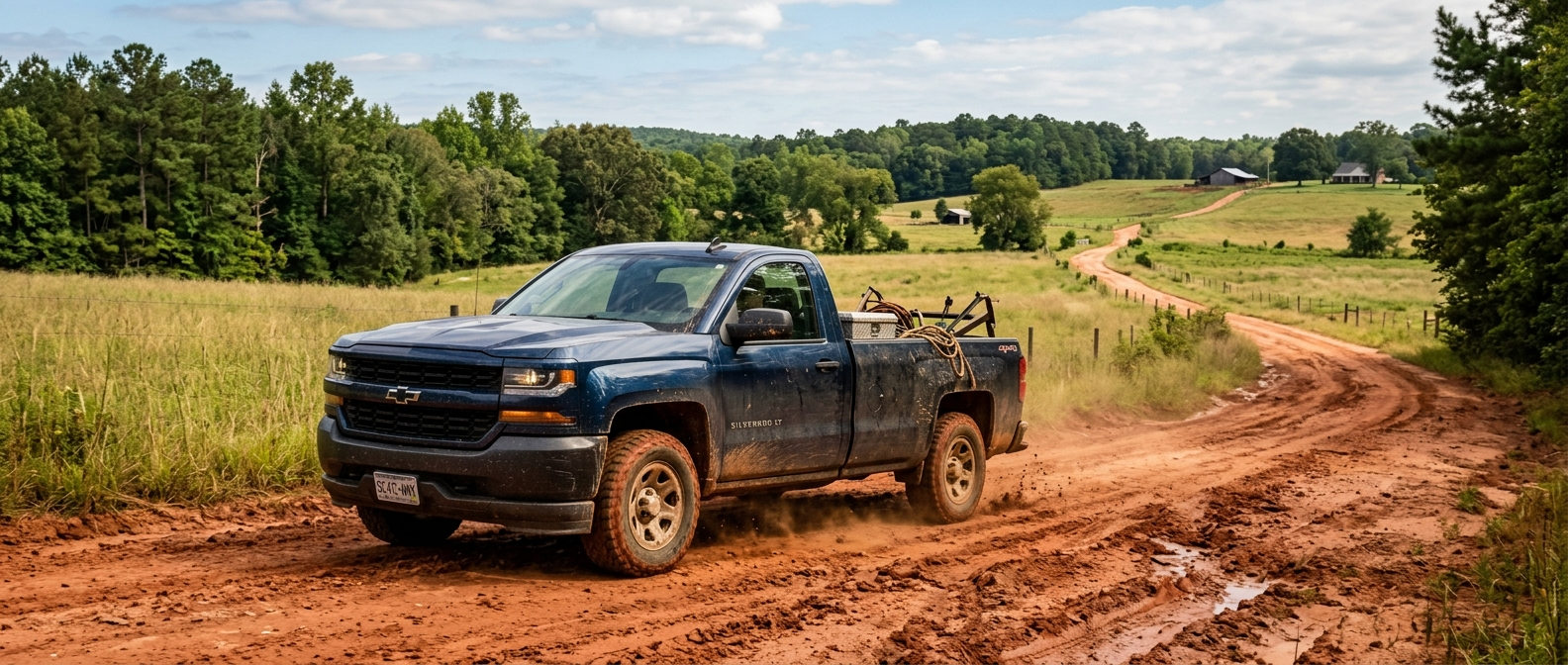
Silverado owners, your truck carries a large-displacement engine that requires significant cranking power. The CCA requirement varies by engine family and cab configuration, so the right move is to have our service team verify the OEM spec for your exact build rather than assume a generic number.
South Carolina's Summer Is the Real Battery Killer
South Carolina's summer does more damage to your battery than any cold snap, even though the failure doesn't surface until a cold January morning, which is why winter takes the blame for harm that actually began under the hood back in July. The reckoning just happens to land in the cold months.
Winnsboro summers aren't mild. July averages a high of 92 degrees F, and under the hood the temperature climbs far beyond ambient.
Sustained heat accelerates two destructive processes inside a lead-acid battery. It speeds up water loss from the electrolyte, and it corrodes the internal lead plates. A battery that spent three Winnsboro summers under the hood of a Silverado 1500 working a job site carries invisible structural wear. The summer warmth masked it, because the chemical reaction ran just fine in heat.
Then October comes. The mornings drop into the 40s. By December, Winnsboro's overnight lows are routinely in the low 30s, with the 2026 AccuWeather forecast showing December nights reaching into the low 20s. The battery that handled summer starts with zero drama now has to deliver 30% more power while chemistry is running slower than it ever did in July.
Schedule a service appointment at Wilson Chevrolet
So what does good battery maintenance for a Winnsboro Chevy look like? In plain terms, it comes down to a handful of steps.
- Load test the battery. A voltage reading alone doesn't reveal the full picture. A load test measures actual output under demand, which is what exposes a battery that reads 12.5V but can't sustain it under cranking load.
- Check the terminals. Corrosion on the posts creates resistance, which increases the effective load on an already-strained battery. A ten-minute fix, and it matters.
- Inspect the charging system. A weak alternator that undercharges the battery between short trips is the second most common reason a battery in good shape still fails. The alternator and battery need to be evaluated together, same appointment if you can swing it.
- Confirm you have the right battery type. If your Chevy has a start-stop system and someone previously installed a conventional flooded battery, that's worth correcting now.
- Know the age. If you don't know when the battery was replaced, the service team can read the date code stamped on the case.
Schedule Your Battery Check Before the Cold Hits
Who Actually Needs to Act Right Now?
Battery testing isn't a universal emergency for every Chevy owner in Winnsboro, and we'd rather be straight with you than scare the whole county into the service lane, so here is who it actually matters for most. Testing is most urgent in a few specific situations, and being direct about them beats vague worry.
Act now if any of these fit your situation.
You own a Chevy that's three years old or older and the battery has never been load-tested. A 3-to-5-year service life is the typical range for a lead-acid battery in this climate. Three years won't be the failure point for most, though it's when annual testing shifts from optional to worthwhile.
Your Chevy has a start-stop system (the Equinox and several other models do) and the battery was replaced at some point with a standard flooded unit. AGM is required for proper function and longevity in that application.
You regularly make short trips, say, running into Ridgeway or Blythewood and back without much highway time. Short trips don't give the alternator enough run time to fully recharge the battery between cold starts, and that pattern compounds fast in fall and winter.
Your battery was last replaced in summer and the installation happened to come after three or more previous summers on the same battery. The timing matters because you may be carrying a new battery that replaced a badly degraded predecessor, and the alternator or terminals that drove the old one into the ground may still need attention.
If you're looking at a Tahoe for a growing family or replacing a work truck, a clean battery health record is part of how we prep vehicles on our lot before they leave. But for the Chevy you're already driving, the responsibility is yours to act on, and October is the month to do it.
Frequently Asked Questions
Why does my Chevy battery fail in winter if it was fine all summer?
The summer heat, not the cold, does the structural damage inside a lead-acid battery by accelerating water loss from the electrolyte and corroding the internal lead plates. Cold mornings are simply when that hidden damage becomes a starting failure. At 32 degrees F, a battery loses roughly 20% of its capacity while the engine simultaneously demands about 30% more starting energy, per AAA. A battery weakened by a Winnsboro summer often can't bridge that gap.
Does my Chevrolet Equinox need a special type of battery?
Yes. The 2026 Equinox uses a BCI Group 48 AGM (Absorbent Glass Mat) battery rather than a standard flooded battery. The AGM chemistry is required because the Equinox's auto start-stop system cycles the battery far more often than a conventional engine setup does. Installing a flooded battery in an AGM-equipped Equinox will work initially but will wear out much faster, often before the end of a normal service interval.