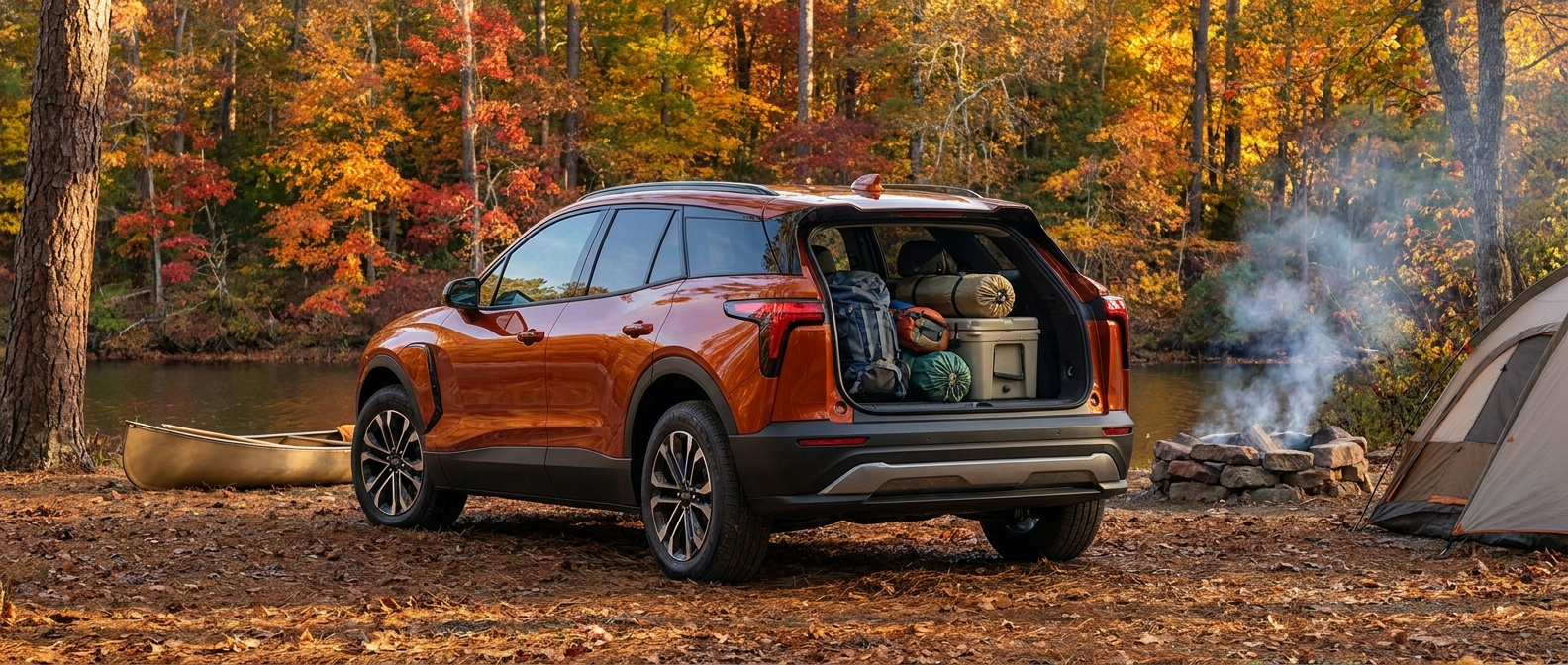
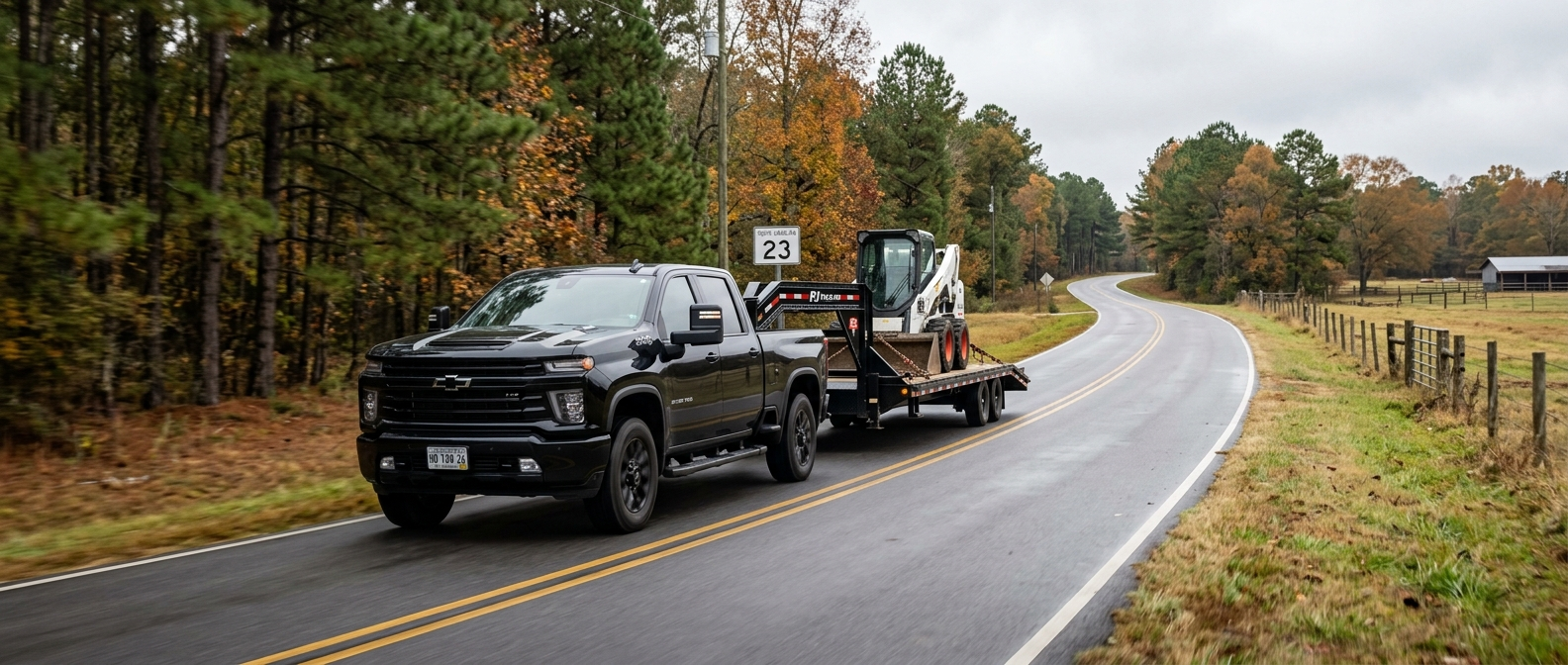
In this article What's the Real Difference Between the Blazer and Trailblazer? Does Cargo Space Actually Matter for an Overnight Trip? Towing: The Number That Actually Changes the Answer Getting to Lake Wateree: Why the Trip Route Matters So Which One Should You Pick? October in Fairfield County is worth the drive. The question we keep coming back to is which Chevy gets you there without making you regret the choice on Monday morning. The 2026 Blazer is the one for hauling serious cargo or pulling a trailer. Full stop. But if your fall weekends lean toward easy runs down I-77 with a couple of bags in back, the 2026 Trailblazer will do it more efficiently and cost less to fill up. On paper these two look related, and they share a bow-tie badge, but they're built for genuinely different trips. The short version The 2026 Blazer carries 64.2 cubic feet of cargo (seats folded) and can tow up to 4,500 lbs when properly equipped with the V6 and Trailering Package. That's the one for bigger gear hauls or pulling a boat trailer. The 2026 Trailblazer tops out at 1,000 lbs of towing and 54.4 cubic feet, but it returns up to 31 mpg combined (EPA estimate, 1.3L FWD). A Blazer with the 2.0L engine and AWD manages 24 mpg combined. The Trailblazer wins on fuel economy. The Blazer wins on space, power, and tow rating. For a trip to Lake Wateree State Park with four adults, full camping gear, and a small utility trailer: Blazer. For a low-key leaf-peeping run or a two-person overnight: Trailblazer handles it comfortably and keeps more money in your pocket on the fuel stop. Both 2026 models are in our inventory right now on US 321 in Winnsboro. What's the Real Difference Between the Blazer and Trailblazer? No, these aren't the same SUV in two sizes; the Blazer and Trailblazer ride on different platforms, run different engines, and aim at different buyers, which means the right pick comes down to what you're hauling and how far you plan to drive it. They just look like cousins. Start with the Blazer, a midsize two-row SUV. It stretches 191.9 inches long, rides on a 113-inch wheelbase, and tips the scales at roughly 3,918 lbs. The standard engine is a 2.0-liter turbocharged four-cylinder producing 228 horsepower and 258 lb-ft of torque. Step up to the RS trim and you add a 3.6-liter V6 making 308 horsepower and 270 lb-ft. That V6 unlocks the 4,500 lb tow rating (with the Trailering Package). With the four-cylinder and the Trailering Package you're rated to tow up to 3,250 lbs. Drop the package and both engines are rated at 1,500 lbs. Now the Trailblazer, a subcompact crossover. It measures 174.1 inches long, sits on a 103.9-inch wheelbase, and weighs around 3,029 lbs in base FWD trim. Power comes from turbocharged three-cylinders, either a 1.2-liter (137 hp, 162 lb-ft) or a 1.3-liter (155 hp, 174 lb-ft). Max tow rating tops out at 1,000 lbs with the right equipment. Think a kayak on a rack, not a jon boat on a trailer. The gap between them is real, and it shows up in every dimension that matters for a weekend trip. Spec 2026 Blazer 2026 Trailblazer Overall Length 191.9 in 174.1 in Cargo (seats up) 30.5 cu ft 25.3 cu ft Cargo (seats folded) 64.2 cu ft 54.4 cu ft Max Tow Rating 4,500 lbs (V6, Trailering Pkg) 1,000 lbs EPA Combined MPG (best) 25 mpg (2.0L FWD) 31 mpg (1.3L FWD) EPA Combined MPG (AWD) 24 mpg (2.0L AWD) 27 mpg (1.3L AWD) Horsepower (base engine) 228 hp 155 hp Ground Clearance 7.5 in (2LT/3LT); 7.6 in (RS AWD) Standard ride height The single deciding factor for a fall weekend trip: if you're pulling anything heavier than a kayak or need to fold the seats flat for serious gear, the Blazer is the only answer. If you're not towing and you're traveling with two people or a tight pack, the Trailblazer's 31 mpg combined changes the math on a 150-mile round trip. Does Cargo Space Actually Matter for an Overnight Trip? Yes, cargo space matters more on an overnight than you'd expect, because the Blazer out-measures the Trailblazer in every configuration, yet the Trailblazer still swallows plenty for a two-person run and hides a long-item trick that the bigger SUV simply can't pull off. The specifics tell the story. Behind the rear seats, the Blazer's 30.5 cubic feet (seats upright) already beats the Trailblazer's maximum of 25.3. Call that your daily carry number with four people aboard. Fold the Blazer's 60/40 split rear seat and you jump to 64.2 cubic feet. Fold the Trailblazer's rear seat and you land at 54.4. The difference works out to a real 9.8 cubic feet, roughly the volume of a large duffel bag plus a camp chair. For a Lake Wateree overnight with four adults, four sleeping bags, a cooler, and two folding chairs, you're going to feel that gap. A Trailblazer still handles a two-person trip without strain. It does have one clever trick, too, the fold-flat front passenger seat lets you carry items up to 8.5 feet long inside the cabin, which comes in handy for longer gear when you're traveling solo or with one other person. The Blazer's sliding rear seats earn a mention as well. Chevrolet built them to let you trade rear legroom for cargo depth or the reverse, which is handy if you're picking up passengers on the way home from the campground. *"The 2026 Chevy Trailblazer has an EPA-estimated 31 mpg combined with the available 1.3L Turbo engine and FWD."* . Chevrolet (chevrolet.com) The 31 mpg figure explains why the Trailblazer makes sense for plenty of fall day trips and quick overnights. A 75-mile drive from Winnsboro down I-77 to Columbia and back in a Trailblazer FWD burns noticeably less fuel than the same run in a Blazer 2.0L AWD at 24 mpg combined. Browse current inventory at Wilson Chevrolet to see which trims and configurations we have on the lot right now. Towing: The Number That Actually Changes the Answer Towing is where these two stop being comparable at all, and the spread is wide enough to settle the decision on its own, with the Trailblazer topping out at 1,000 lbs and a well-equipped Blazer climbing to 3,250 or even 4,500 lbs, a different class of trailer entirely. Pull up any comparison article and you'll read that the Trailblazer "can tow." Technically true. At its 1,000-lb ceiling, it handles a loaded kayak trailer or a small cargo carrier. But if your fall weekend involves an aluminum jon boat on a trailer, a pop-up camper, or a utility trailer loaded with firewood and ATV gear, the Trailblazer isn't your vehicle. It wasn't engineered for that load, and you'll feel it the moment you pull away. The Blazer, configured right, is a different conversation. Its 2.0-liter four-cylinder with the Trailering Package tows 3,250 lbs. Add the 3.6-liter V6 (standard on the RS, available on the 3LT) with the Trailering Package and that ceiling rises to 4,500 lbs. A 14-foot aluminum fishing boat with a small outboard runs 1,200 to 1,800 lbs rigged and ready. A small boat trailer adds another 200 to 400 lbs. The V6 Blazer handles that without breaking a sweat. The Trailblazer cannot. That said, the Blazer's tradeoff is a fair one. The V6 RS returns 21 mpg combined on AWD (EPA estimate). You're paying for capability in fuel every time you fill up, even when the trailer's sitting at home. If your boat-launch days fall in May and your fall weekends are gear-free, that's worth thinking about before you option up. Getting to Lake Wateree: Why the Trip Route Matters Fall is the right season for Lake Wateree State Park, and the route out there quietly shapes which SUV you'll be happier driving, since the park sits along 13,000-plus acres of water about 15 minutes from Winnsboro and the shoulder season brings milder weather, thinner crowds, and solid fishing and hiking. The 72 campsites at the park include spots with water and electrical hookups that accommodate larger RVs. Many are lakefront. The practical part is the road itself. From Winnsboro out to the park you'll cover a stretch of county road, and depending on your site, you may be backing into a spot near the lake on a grade. The Blazer's longer wheelbase (113 inches vs. 103.9) and heavier curb weight give it a more planted, settled feel when you're maneuvering with weight in back. The Trailblazer's shorter wheelbase and lighter weight make it easier to swing around tight campground loops. Both offer available AWD for any soft shoulder or grass launch area you run into. Neither of these is an off-road vehicle in the serious sense. Ground clearance on the Blazer runs 7.5 to 7.6 inches depending on trim, which is fine for unpaved campground roads and gravel. Just don't mistake it for a lifted trail rig. The Trailblazer sits in the same boat, sharing similar on-pavement ride height. If your fall weekend involves anything rougher than a gravel access road, you're looking at the wrong column of our lineup entirely. See Current Chevy Fall Offers So Which One Should You Pick? The answer gets straightforward once you're clear on your trip, and it splits cleanly down the middle, with the Blazer built for four people, real gear, and anything worth towing, while the Trailblazer rewards the lighter two-person weekend with better fuel numbers and an easier footprint in tight spots. Pick the Blazer if: You're running with four people and full gear. You're towing anything heavier than a kayak. You want the V6's 308 horsepower for confident I-77 merges with a loaded vehicle. You value having serious cargo capacity in reserve even on trips where you don't use all of it. The Blazer is the working weekend vehicle in this comparison. Pick the Trailblazer if: Your fall weekends are typically two people with a couple of bags. You drive I-77 often and fuel economy is a real consideration. You want a smaller footprint that's easier to maneuver in campground loops and tight parking at Winnsboro spots. You're not towing anything substantial. At 31 mpg combined (EPA estimate, 1.3L FWD), the Trailblazer is genuinely efficient for a subcompact crossover, and you'll notice that on a fall weekend running up to Charlotte or down to Columbia. Our honest read from what we carry on the lot is simple. The Blazer is the better vehicle for a family of four with real gear. Talk to our finance team if you want to walk through your options on either one before you decide. The Trailblazer is the smarter choice for a couple who weekend light. Neither one is the wrong pick for fall in Fairfield County. They're just wrong for each other's trip. Frequently Asked Questions Does the Chevrolet Blazer or Trailblazer get better gas mileage? The Trailblazer wins that comparison and it's not close. The EPA rates the 2026 Trailblazer at up to 31 mpg combined with the 1.3-liter engine and front-wheel drive, and up to 27 mpg combined with AWD. The 2026 Blazer with the 2.0-liter engine and front-wheel drive returns 25 mpg combined; the AWD version of that same engine drops to 24 mpg combined. If fuel economy is your priority for fall weekend driving, the Trailblazer is the clearer answer. The Blazer's tradeoff is more cargo space, more power, and a tow rating that the Trailblazer can't match. Can the Chevrolet Trailblazer tow a boat trailer? Only a very small one. The 2026 Trailblazer is rated for a maximum of 1,000 lbs when properly equipped. A lightweight kayak or a small cargo carrier fits within that range, but a fishing boat on a trailer is almost certainly beyond it. For anything resembling a real trailering job, the 2026 Blazer is the vehicle to consider. With the Trailering Package and the 2.0-liter engine it's rated for 3,250 lbs; add the 3.6-liter V6 and that ceiling goes to 4,500 lbs. If fall weekend trips involve a boat launch, shop the Blazer. Explore Financing Options Wilson Chevrolet 798 us hwy 321 N BUSINESS, Winnsboro, SC 29180 (803) 402-4233