





In this article Will It Fit? The Back-to-School Payload Table How to Load It for a Smooth School Morning The Honest Case for the Traverse Instead Job Done: Everything Fits, Everyone Rides Picture a Tuesday morning in early August. You've got three kids, two sport bags, four plastic supply bins, a rolling backpack that somehow grew to carry-on size over the summer, and a carpool buddy who needs a ride. The 2026 Chevrolet Suburban fits all of that with every seat up, and the numbers on the window sticker back that up in a hurry. Families cross-shopping the Tahoe often land here, and we'll be straight about why they hesitate. The Tahoe is genuinely easier to maneuver in a tight school pickup lane. But if your back-to-school run means hauling everyone and everything at once, the Suburban's extra real estate behind the third row changes the whole daily equation. Will It Fit? The Back-to-School Payload Table Yes, a full back-to-school haul fits behind a standing third row with room to spare, and the answer comes down to one cargo number that most full-size sedans can't touch even with their own seats folded flat. Chevrolet lists 41.5 cubic feet directly behind the third row on the 2026 Suburban. The third row stays up, everyone rides, the gear rides too. Below is how a real Fairfield County family's back-to-school load maps against those numbers: Item or Load Approximate Dimension / Weight Fits? Notes Standard school backpack (3 kids) ~20 x 13 x 7 in each Yes (stack three, row 3 up) Rolling carry-on backpack ~21 x 14 x 9 in Yes (lays flat, no folding needed) Plastic supply bin, medium (4) ~16 x 11 x 6 in, ~8 lbs each Yes (four bins stack cleanly) Youth baseball / softball bag ~36 x 14 x 12 in Yes (stands upright behind row 3) Folded stroller (younger sibling) ~42 x 17 x 12 in, ~22 lbs Yes (uses roughly 15 cu ft, row 3 stays up) Full instrument case (tenor sax) ~24 x 9 x 9 in, ~12 lbs Yes (stands on end or lays flat in corner) All of the above combined ~38-41 cu ft total Yes (tight but confirmed in the 41.5 cu ft hold) Chevrolet's official specs put the Suburban's overall length at 225.7 inches. That extra length (16 inches more than the Tahoe) is what produces the deep cargo floor behind row 3, and why that number sits at 41.5 cubic feet versus the Tahoe's 25.5. Fold the third row and the Suburban opens to 93.8 cubic feet. Drop both rear rows flat and you hit 144.7 cubic feet, enough for a dorm move-in run when August gets to that stage. How to Load It for a Smooth School Morning Loading sequence matters almost as much as raw space here, and getting the order right is the difference between a clean drop-off and rearranging bins at the curb with a car idling behind you. Load it in the right sequence and you keep row 3 usable while everything still fits. Browse what we currently have in stock to see available seating configurations. The choice between second-row bench and captain's chairs affects your daily loading strategy more than the brochure lets on when you're loading bins at dawn. Decide whether row 3 is a seat or a shelf that morning. Five passengers don't need the third row upright. Drop it and gain the full 93.8 cubic feet with rows 1 and 2 seated normally. Heavy items go in first, against the seatback. Sport bags and supply bins load against the rear seatback, which keeps mass low and forward. You'll feel the difference merging onto I-77 toward Columbia with a full load. Stand tubular items upright in the corners. Bat bags, instrument cases, and poster-board tubes stand on their ends in the corners of the cargo hold. The Suburban's square cargo floor (not the tapered shape of car-based crossovers) makes this work reliably. Slide soft bags under and around the bins. Gym clothes, lunch bags, and soft-sided totes compress and fill the gaps that rigid bins leave. You recover three to five cubic feet just by filling those voids. Use the underfloor storage well. The 2026 Suburban includes an underfloor storage compartment beneath the cargo area. Charging cables, an emergency kit, and valuables you don't want sliding around all fit here. It holds them out of sight and secured. Let the power liftgate do the work at school. Your hands are full of a kindergartner and a supply box. On trims with the hands-free AutoSense liftgate, a kick under the rear bumper opens it without setting anything down on a hot August parking lot. Load order tip: Stand the instrument case on end in the driver-side corner of the cargo hold first. The sport bag drops flat beside it. Neither item requires a folded seat, and the third row rides normally for whatever passengers need it. Chevrolet's interior specs put third-row legroom at 36.7 inches. A lanky middle-schooler or a carpool teenager isn't crammed back there. See Current Chevrolet Offers The Honest Case for the Traverse Instead Sometimes the smarter buy for a Winnsboro family isn't the Suburban at all, and we'd rather tell you that up front than sell you more vehicle than your driveway and school lot want. The part that doesn't show up in the Suburban brochure is how its length plays in real parking lots. The Suburban is 225.7 inches long, almost 19 feet. School pickup lanes in Fairfield County were not designed for a 19-foot vehicle, and anyone who's wrestled an older Winnsboro campus lot knows exactly what that means in practice. The Chevrolet Traverse is shorter, seats seven, and handles tight lots without a three-point turn. For a family running one school, two kids, and a reasonable supply load, the Traverse does the job and parks far more easily. Call that a genuine advantage, not a small one. Once you're consistently moving three-to-four kids, a carpool addition, sports gear, and a full week of school supplies in a single trip with everyone seated, the Suburban earns its footprint. The Tahoe's 25.5 cubic feet behind row 3 eventually forces a seat fold when the load hits a certain point. The Suburban's 41.5 means you never have to make that call. The 2026 Suburban has 16 more cubic feet behind the third row than the Tahoe (the difference between folding a seat and not, on a full back-to-school load). Fuel deserves one straight note. The standard 5.3L V8 in rear-wheel-drive configuration carries an EPA-estimated 15 mpg city and 20 mpg highway. On short Winnsboro school runs with plenty of stop-and-go, you'll live closer to the city number. Families putting real miles on I-77 toward Columbia or Charlotte should look at the available Duramax 3.0L turbo-diesel. Chevrolet rates it at up to 728 miles of EPA-estimated maximum highway range per tank on the 28-gallon fuel system. That shifts the math for a commuter family. Job Done: Everything Fits, Everyone Rides The 2026 Suburban handles the full back-to-school haul because 41.5 cubic feet behind a standing third row is a genuine, Chevrolet-verified number, and that holds true even when every seat is filled and the load is at its heaviest. No folded seats. No bags left at home. No second trip. Chevrolet lists a 5-Star overall safety rating from NHTSA for the Suburban, and that matters at 7:45 in the morning when you're running a carpool of four kids down US 321. The 2026 model runs a standard 17.7-inch diagonal infotainment screen with wireless Apple CarPlay and Android Auto. The playlist argument between rows 2 and 3 gets resolved before you hit the on-ramp. Available dual 12.6-inch rear-seat entertainment screens on the headrests take care of the longer drives. The Suburban seats up to nine passengers when the LS is configured with the optional front bench, or a standard eight with captain's chairs in row 2. The third row stays genuinely usable for adults at 36.7 inches of legroom. And with a maximum towing capacity of up to 8,200 pounds when properly equipped, it handles the weekend boat run to Lake Wateree after the school week ends. We're glad to walk Winnsboro and Fairfield County families through this decision on the lot. Stop in and see what's available, or start by checking our financing options online. By the Wilson Chevrolet Team | August 2026 Value Your Trade-In Wilson Chevrolet 798 us hwy 321 N BUSINESS, Winnsboro, SC 29180 (803) 402-4233
3 Chevrolet Options Compared for Sports Gear Hauling Around Winnsboro
In this article How Do the Three Stack Up on Cargo? Does the Tahoe Actually Fit Sports Gear With the Family Inside? Which Option Wins When You're Towing to Lake Wateree? Which Chevy Fits Your Sports Gear Lifestyle in Fairfield County? You're trying to fit kayaks, coolers, and a full family into one vehicle for a run down to Lake Wateree, or you're loading ATV gear for a weekend at Carolina Adventure World and you need every cubic foot to count. The right Chevy comes down to a question the spec sheet never asks. How many seats do you need standing up while the gear rides along? The short version Tahoe (pick for most families): 72.5 cu ft with the third row folded, seats still up front and in row 2. This is the gear-and-people balance winner for Fairfield County families who do both. Traverse (pick for crossover comfort): 97.6 cu ft maximum is class-leading for a midsize SUV, but towing tops out at 5,000 lbs and the step-in is lower and easier for kids. Colorado (pick for gear that gets wet or dirty): Open bed handles bikes, muddy ATVs, and gear that can't go inside. Payload up to 1,710 lbs. But seat five, not seven. Towing a boat or trailer: The Tahoe reaches 8,400 lbs max; the Colorado reaches 7,700 lbs; the Traverse is not the choice here. The tradeoff you need to hear: The Tahoe's behind-the-third-row space (25.5 cu ft with all seats up) is tighter than it sounds. Plan to fold that row for any serious gear run. The 2026 Chevrolet Tahoe sits at the center of this comparison for a reason, though it isn't the automatic winner for every load you'll throw at it. How Do the Three Stack Up on Cargo? On paper the answer flips with the load, because the Colorado's open bed wins for wet and dirty gear while the Tahoe's folded-flat interior wins on raw volume, and the side-by-side below sorts it out using figures drawn straight from Chevrolet-published specifications. Configuration 2026 Tahoe 2026 Traverse 2026 Colorado Cargo (all seats up / 3rd row up) 25.5 cu ft 22.9 cu ft 41.9 cu ft (open bed) Cargo (3rd row folded) 72.5 cu ft 56.6 cu ft Not applicable Maximum cargo (all rows flat) 122.7 cu ft 97.6 cu ft Not applicable Max towing capacity 8,400 lbs 5,000 lbs 7,700 lbs Payload (truck bed) Not applicable Not applicable Up to 1,710 lbs Seating capacity Up to 9 Up to 8 5 Load floor Flat (IRS) Flat Open bed Best for Gear + full crew Family comfort + max interior Wet/dirty gear, boats, ATVs Check the load floor, not just the cubic-foot total. The Tahoe's independent rear suspension creates a genuinely flat load floor, which matters when you're sliding two 10-foot kayaks into a 211-inch vehicle. A crossover platform gives the Traverse a lower step-in height. And the Colorado's open bed keeps your fishing rods and muddy trail bikes out of the same air as the crew. Load shape matters as much as volume. Does the Tahoe Actually Fit Sports Gear With the Family Inside? Yes, the Tahoe fits sports gear with the family inside, as long as you fold the third row, because the figure that trips people up is the all-seats-up number, and the working setup gets a lot roomier once row three drops out of the way. The 2026 Tahoe lists 122.7 cu ft maximum, and that's real, but it takes all seats folded flat. For Winnsboro families driving to Lake Wateree with a full crew, the working number is 72.5 cu ft when you fold just the third row and keep rows one and two up. Call it the realistic gear-hauling configuration when you're carrying five or six people. The 2026 Traverse maxes at 97.6 cu ft, also with all rear seats down. Its more useful comparison point is 56.6 cu ft with the third row folded, notably less than the Tahoe in the same configuration. With the third row folded and rows one and two occupied, the 2026 Tahoe provides 72.5 cubic feet of gear space. That holds four large duffel bags, two coolers, and a pair of kayak paddles, with the kayaks themselves secured to the standard roof rails. On hot South Carolina summer runs, we lean hard on those standard roof rails. Strap the kayaks or paddleboards up top, keep the interior for the crew and the cooler, and you've handled the space equation without folding a single seat. See Current Tahoe Offers Which Option Wins When You're Towing to Lake Wateree? When you're towing to the Lake Wateree ramp, the Tahoe and Colorado pull cleanly away from the Traverse, and the winner between them comes down mostly to trailer weight rather than anything you'll read in a cargo chart. Chevrolet rates the 2026 Tahoe at up to 8,400 lbs maximum towing capacity and the 2026 Colorado at up to 7,700 lbs. The Colorado is the better call when the gear goes in the bed and the boat goes on the hitch, and it's sized right for parking at the boat ramp and on the trail. Carolina Adventure World is in Winnsboro. The Traverse's 5,000 lb towing rating handles a small personal watercraft trailer on calm lake days, but we'd steer you toward the Tahoe or Colorado the moment that trailer gets heavier. Roof rail note: Chevrolet lists roof rails as standard on the 2026 Tahoe across all trims, with crossbars available separately. If your kayaks or paddleboards ride up top, budget for a crossbar kit (they are not included by default) and verify the add-on fits your chosen trim before purchase. Which Chevy Fits Your Sports Gear Lifestyle in Fairfield County? Pick by what your weekend actually looks like, because each of these Chevys wins a different job and none of them wins all three, so match the vehicle to your real load and your real crew before you fall for a single headline number. You need the 2026 Tahoe if: Your crew runs five or more, your gear includes kayaks, paddleboards, or camping equipment, and you want to tow a boat while keeping everyone comfortable on the I-77 run down to Lake Wateree. The flat load floor (Chevrolet's independent rear suspension earns its keep here) and the roof rails make gear management straightforward. Accept the honest tradeoff, though. With all three rows up, 25.5 cu ft isn't a lot of room for a full gear haul, so you'll fold that third row and plan accordingly. You need the 2026 Traverse if: Your household runs two or three kids, their sports bags, and a couple of bikes, you're not towing anything heavy, and the outdoor adventures stay land-based. The lower step-in is easier for younger kids, the maximum 97.6 cu ft beats any other three-row crossover in the segment, and the 60/40 split third row lets you fold one side while keeping a seat on the other. You need the 2026 Colorado if: The gear is bulky, muddy, or wet (mountain bikes, ramp-loaded ATVs, kayaks that won't fit inside anything) and your crew is four or five people, not six or seven. Skip the idea of a sealed cargo area, because the 5'2" crew-cab bed at 41.9 cu ft is open-air by design and rain will hit your gear. Plan for bed covers or dry bags. Payload up to 1,710 lbs means real capacity for serious loads, and 7,700 lbs of towing headroom covers most recreational trailers on the market. Frequently Asked Questions Will a full-size kayak fit inside a 2026 Tahoe? A standard 10-foot recreational kayak won't fit fully inside the Tahoe's cargo area with the hatch closed, even with every seat folded, because the interior cargo length runs shorter than the hull. The practical solution is those standard roof rails. Strap the kayak on top, carry paddles and gear bags inside, and put the 72.5 cu ft (third row folded) to work on everything else. Chevrolet lists crossbars as an available accessory; they are not included standard, so add them before the first Lake Wateree run. Does the Traverse tow enough for a small boat? The 2026 Traverse is rated by Chevrolet for up to 5,000 lbs maximum towing capacity, which covers a small aluminum fishing boat or a single-seat personal watercraft on a light trailer. Larger ski boats and pontoons run heavier, so they sit outside that number. For anything you'd regularly pull to Lake Wateree with a full crew on board, the 2026 Tahoe's 8,400 lb rating or the Colorado's 7,700 lb rating gives you more headroom and peace of mind. Value Your Trade-In Wilson Chevrolet 798 us hwy 321 N BUSINESS, Winnsboro, SC 29180 (803) 402-4233
Your Pig on the Ridge Parking and Logistics Guide for Ridgeway Drivers
Pig on the Ridge is South Carolina's largest BBQ festival, and it packs downtown Ridgeway on the first weekend of November. Over 3,000 people show up for roughly two blocks of South Dogwood Avenue, and the BBQ sells out by midmorning on Saturday. Parking is the part that trips folks up. Ignore it and you'll spend more time circling than you spent driving over. Our play is simple. Arrive before 8:30 a.m. on Saturday, park on the residential streets north and east of downtown, and drive something you can actually maneuver in a crowd. The rest of this guide walks you through the how. If you're thinking about an upgrade before the season, we're right on US-321 in Winnsboro (12 miles north of the festival grounds). Where Do You Park and When? Park on the residential streets north and east of downtown, and get there before 8:30 on Saturday if you want a short walk in. Downtown Ridgeway is genuinely small, which is part of the charm and also why parking fills from the inside out. The lots closest to the vendors go first, then the side streets, then you're walking in from the edge of town. Arrive By Best Parking Zone Vehicle Fit Note Key Tip 8:00 a.m. Dogwood Ave. adjacent lots Any size still open Best selection, best energy 9:00 a.m. Residential side streets N of Main Compact and mid-size SUVs best Cook-off judging starts at 9:30, BBQ goes fast 10:00 a.m. Outer residential blocks, edge of town All sizes workable, longer walk Budget 10 to 12 min walk each way After 11:00 a.m. Roadside grass on town approaches Trucks and larger SUVs fine on grass BBQ typically sold out or nearly gone by noon Cook-off judging starts at 9:30 a.m. Saturday and the festival advises arriving early. BBQ sell-out is documented, not a rumor. Downtown Ridgeway centers on South Dogwood Avenue. The drive across town to the site is short, but traffic backs up toward the I-77 exit ramp side, not away from it. You'll want to approach from the south side of Dogwood Avenue if you can. One less turn against the crowd. The Maneuvering and Fit Play Bring the vehicle you can place cleanly in a tight spot, because South Dogwood Avenue parks cars on both sides during the festival and that narrows the travel lane to almost nothing. Getting in and out when vendors are loading and families are crossing mid-block goes smoother with a short turning radius and sightlines you'll actually use. So which Chevy makes the day easier? Your crew size and how early you arrive decide it, and we'd steer you toward two of ours. The 2026 Chevrolet Equinox is the right call if you're rolling in with a full crew. Chevrolet lists it at 183.2 inches long, 74.9 inches wide, and EPA-estimated at 25 city / 29 highway MPG. With up to 63.5 cubic feet of cargo space when the rear seats fold, it swallows coolers, camp chairs, and five adults without a second thought. Arrive by 9:00 a.m., claim a real parking space, and the Equinox is no trouble in Ridgeway. The 2026 Trax runs a different calculation for tighter situations. At 178.6 inches long and 71.7 inches wide (Chevrolet lists ground clearance at 7.3 inches), it fits a standard parallel spot cleanly, you can judge the vehicle's corners from your seat, and you won't need a seven-point turn to exit when foot traffic is three-wide. Show up at 10:30 hoping to squeeze a 183-inch vehicle into a gap on a residential street, and you'll wish you'd brought something shorter. That compact footprint buys you more options once downtown fills up. Our honest bottom line is short. Get there early and you'll be fine in either one, but arrive late and size starts to matter. Insider Parking: The residential blocks east of South Dogwood fill slower than the streets directly west of the venue. If the nearest lots are gone, you'll do better heading one block east first and working your way in. Festival Etiquette: Pig on the Ridge is a community fundraiser for Ridgeway's local churches and civic organizations. Leave clearance for vendor trucks unloading Friday night, be patient with slow lane flow, and don't block driveways. The residents are home that weekend. If you're weighing a new Chevy before fall, our financing team can walk you through the options any day through Friday. Your Print-and-Go Pre-Festival Checklist Use this checklist for Saturday morning, which is the tight window, since Friday night runs easier on parking with a smaller crowd and setup still underway. Friday is the "No Pigs Allowed" street dance with non-pork food vendors, and you'll find parking calmer while everything's still getting built. Set your alarm for 7:45 a.m. if you want a prime spot; 8:00 a.m. arrival still parks you right Bring cash for festival tickets (tickets are the purchase currency at the cook-off booths on Saturday) Know your cargo before you load, since the 2026 Trax holds 54.1 cu ft with rear seats folded and the 2026 Equinox holds 63.5 cu ft (confirm your gear fits before the morning rush) Download an offline map before you leave; cell signal slows in downtown Ridgeway at peak crowd hours Plan your exit before you park, not after (know which direction you're pulling out) Check the weather forecast Friday night; a warm November Saturday draws bigger crowds and grass lots soften after rain If you're staying for the hog calling contest and vintage car show, plan to leave after the 2:00 p.m. announcement rush settles down See Current Chevy Specials Before Fall Season Pig on the Ridge has run since 1999. The festival draws competitors and guests from across the South, serves vinegar-based, mustard-based, and ketchup-based BBQ across the same two blocks, and puts on a legitimate classic car parade alongside the cook-off. The logistics are worth it. Browse our new Chevrolet inventory before fall arrives and see what we've got ready on the lot. Go enjoy the festival. Get a Trade-In Offer on Your Current Vehicle Wilson Chevrolet 798 us hwy 321 N BUSINESS, Winnsboro, SC 29180 (803) 402-4233
How to Actually Pack a 2026 Traverse for a Family Road Trip Out of Winnsboro
The 2026 Chevrolet Traverse holds 97.6 cubic feet of cargo when both rear rows fold flat. Chevrolet publishes that number, and it holds up. As planning information for a family running all three rows, though, it's close to useless. You've got kids in the second row, maybe a teenager in the third, and a pile of gear that still has to fit somewhere. Passengers versus cargo is the actual road-trip puzzle, and no spec sheet solves it for you. We walk families through this at Wilson Chevrolet every summer. The ones who load up most efficiently aren't the ones with the biggest vehicle. They're the ones who understand how the Traverse cabin divides, and what each zone actually holds. So here's the row-by-row framework, built on the numbers this truck really delivers. With all three rows occupied, the 2026 Traverse still holds 22.9 cubic feet of cargo behind the third row (roughly a full-size rolling suitcase plus a soft duffel), per Chevrolet's published specifications. What Do the Specs Actually Mean for a Real Family Load? Those cargo numbers only mean something once you can picture them against an actual family load, so we've turned each figure into what it does on your trip, with every number verified against Chevrolet's specs and EPA ratings. Numbers land better when you can see them. Spec Verified Figure What It Means on Your Trip Cargo (all seats up) 22.9 cu ft One rolling suitcase + a soft duffel behind row 3 Cargo (row 3 folded) 56.6 cu ft Two large suitcases + a cooler + kids' backpacks Cargo (rows 2+3 folded) 97.6 cu ft Full camping haul, bikes with wheels off, or lake gear Engine 2.5L turbo, 328 hp / 326 lb-ft torque Handles a loaded cabin on I-77 grades without laboring Towing Up to 5,000 lbs (properly equipped) Covers a Lake Wateree fishing boat or utility trailer Fuel economy (FWD) EPA-est. 20 city / 26 hwy mpg 19.4-gallon tank; solid highway range between stops Fuel economy (AWD) EPA-est. 20 city / 24 hwy mpg 21.7-gallon tank partly offsets the efficiency difference Third-row legroom 32+ inches Usable for adults, not just a kids-only row Touchscreen 17.7 inches, standard Wireless CarPlay and Android Auto, no cable hunting USB ports 6 throughout the cabin Enough for every seat, practically speaking Here's the blunt tradeoff. With a family of six across all three rows, that 22.9 cubic feet behind row three is your entire working cargo zone. Cargo room gets genuinely tight. It fits more than the number suggests on paper, and it still leaves a gap for a full week of gear, which is the planning problem this guide solves. Packing the Traverse Row by Row The smartest way to pack a Traverse is to treat it as three separate zones rather than one big bin, since each zone has a specific job and matching your gear to the right zone is how you fit passengers and cargo without repacking at the trailhead. Browse our current Traverse models and you'll notice the standard Smart Slide second-row seats right away. They slide forward without removing a child seat, so third-row access stays open even with a car seat locked into row two. That mechanical detail is what makes the row-by-row system work. Zone 1: Behind the third row (22.9 cu ft, all seats up) Check this layer first, because it's your grab-on-arrival zone. Pack it with the snack bag, a small soft cooler, the kids' entertainment totes, and any shoes coming off for the drive. Soft-sided bags belong here because they compress into odd spaces. A rigid hard-shell suitcase fits too (around 20 to 22 inches of cargo depth clears behind row three), but it fills the entire zone on its own. Keep this layer flexible and low so your rear sight lines stay clear. Zone 2: The third-row floor and seat-back pockets Third-row passengers get door pockets plus the row-two seat-back storage. Give each one a slim tablet sleeve, a set of headphones, and a water bottle, and that space earns its keep. Fold the third row down for a gear-heavy trip (a Lake Wateree weekend with kayaks, or a cooler that rivals a small refrigerator) and you open up that 56.6-cubic-foot zone, enough to lay a proper cooler, a large duffel, and a folded camp chair flat without Tetris-level effort. Zone 3: The second-row floor and console Run your snack rotation from the second-row floor and console. One collapsible fabric crate between rear-seat feet corrals the snack bag, the tissues, and the cable tangle that otherwise migrates under every seat on the I-77 run south toward Columbia. The 2026 Traverse ships with six USB ports spread through the cabin, which works out to one per seat. Bring one short cable per row and you're covered. The standard wireless charging pad on the front console handles the driver and passenger with no cable at all. The 2026 Chevrolet Traverse comes standard with Chevy Safety Assist, which includes Automatic Emergency Braking, Lane Keep Assist with Lane Departure Warning, and Forward Collision Alert. (Chevrolet) The safety suite pays off on summer road trips. The I-77 stretch between Winnsboro and Columbia runs through active construction zones in peak summer, and lane shifts happen fast. Lane Keep Assist keeps the Traverse from drifting when your attention swings to the back seat for a second, and Forward Collision Alert gives you an early heads-up when a gap closes quicker than expected. Every trim gets it standard. Not an upgrade. Not a package. Packing tip: The standard AutoSense hands-free power liftgate opens when you wave your foot under the rear bumper. Handy when your hands are full of a cooler and a camp bag at once. One detail worth knowing is that the sensor needs about ten feet of clearance behind the vehicle, so pull forward from the campsite wall or tailgate before you trigger it. See Current Traverse Offers Who the 2026 Traverse Fits Best (and One Honest Limitation) The 2026 Traverse fits Winnsboro families who run all three rows on a regular basis, and it holds its own against both bigger and smaller Chevrolets in that job, even if it won't be the right answer for every household. On raw volume, it won't match a Chevy Tahoe. The Tahoe stretches to 122.7 cubic feet max cargo on a full-size body-on-frame platform, but the Traverse is also a full foot shorter in overall length and slots into a standard garage bay without a tape measure. That matters in Fairfield County, where plenty of driveways and garages went up before three-row SUVs became standard family equipment. If you're running two kids or fewer and the third row stays folded more than it's used, the Chevy Equinox earns a serious look. Smaller footprint, sharper fuel economy, easier to park at the crowded summer lot at Carolina Adventure World. But move four or more people plus a weekend of gear (especially with a boat trailer or a kayak haul for Lake Wateree in the mix), and the Traverse is sized for exactly that job. On the AWD question for South Carolina summer driving, you don't need it for July. The EPA-estimated 26-mpg highway on the FWD model is two miles per gallon better than the AWD version, and the flat Midlands roads between Winnsboro and the lake don't demand all-wheel traction in dry summer conditions. Our team's read is simple. Go AWD if you're towing near the 5,000-pound limit or running this vehicle year-round through January ice on US 321. Go FWD for summer road trips, where the highway efficiency and the slightly longer tank range make more practical sense. Stop in and we'll walk you through the cargo bay on an actual vehicle before you decide anything. We've seen it clear up a decision fast, and it's worth doing. Bring a measuring tape. Frequently Asked Questions Does the 2026 Traverse have enough USB ports for a family of five or six? Yes. Chevrolet distributes six USB ports through the 2026 Traverse's three-row cabin, which works out to roughly one per seat. The front row also gets a standard wireless charging pad, so the driver and passenger don't need a cable at all. For a family of five or six on a long drive, one short USB-C cable per row covers every device without hunting for ports. Is front-wheel drive enough for summer road trips around Winnsboro, SC? For summer driving on I-77 and the Midlands roads around Fairfield County, front-wheel drive handles it cleanly. The EPA rates the 2026 Traverse FWD at 20 city and 26 highway miles per gallon, which is two miles per gallon better on the highway than the AWD version. South Carolina's summer roads don't demand AWD traction. The stronger case for AWD is winter ice and near-capacity towing. If the vehicle runs primarily in summer and your tow weight stays well under the 5,000-pound ceiling, FWD is the smarter fuel-economy choice for this market. Value Your Trade-In Wilson Chevrolet 798 us hwy 321 N BUSINESS, Winnsboro, SC 29180 (803) 402-4233
4 Best Chevrolet Models for Military Families Moving to Fort Jackson and Columbia, SC
In this article At a Glance: How These Four Stack Up The Traverse Is Built for the Family That Packed Everything The Silverado 1500 Is the Right Answer If You Actually Tow What to Know Before You Choose: A Quick Checklist The Equinox Fits the Commuter Family Who Doesn't Tow Much The Trax Is the Smartest Move for Single Soldiers and Junior Enlisted Wilson Chevrolet Is 30 Miles Up I-77 From Fort Jackson PCS orders to Fort Jackson call for a vehicle that hauls a loaded trailer down I-77, seats the whole family through a hot South Carolina summer, and won't punish your fuel budget on the daily run between post and wherever you land off-base. Our team at Wilson Chevrolet in Winnsboro sits right on US 321 at the I-77 corridor, so we see Fort Jackson families come through every season. Up front, the 2026 Chevrolet Traverse is our top pick for most military families, since its three-row cabin and 5,000-pound tow rating cover the widest range of what PCS life actually demands. The right Chevy for your family comes down to how many kids, how much gear, and whether that tow hitch is decorative or load-bearing. At a Glance: How These Four Stack Up Rank Model Best For Standout Spec 1 Traverse Families of 4-8 with trailers Up to 5,000 lbs towing, seats 8 2 Silverado 1500 Heavy towers, boat owners, ranchers Up to 13,300 lbs towing (properly equipped) 3 Equinox One- or two-person households, commuters EPA-est. 26-29 mpg, AWD available 4 Trax Junior enlisted, single soldiers, tight budgets Compact footprint, strong fuel economy The Traverse Is Built for the Family That Packed Everything The 2026 Traverse earns our top spot because it pairs three usable rows with a legitimate tow rating and cabin tech that keeps tired kids quiet on a long drive, though its size asks something back when you park it. Chevrolet lists the Traverse with a maximum towing capacity of 5,000 pounds, which clears most enclosed cargo trailers, a mid-size boat, or a couple of ATVs stacked on a tandem axle. The 2.5L turbocharged engine produces 328 horsepower, so merging onto I-77 with a loaded trailer doesn't feel like a prayer. You can configure it for seven passengers with captain's chairs or eight with a second-row bench, and the Z71 trim adds standard AWD plus aggressive styling if you want off-road capability for weekends at Lake Wateree. It handles a lot. The Traverse is a big vehicle, and that size is the tradeoff you accept. On-base housing and some Columbia-area apartment complexes have tighter parking, and a longer wheelbase shows there. It isn't a truck either, so if your move involves a fifth-wheel or heavy equipment trailer, you'll want our next pick. For the staff-sergeant family with three kids, a kayak trailer, and a dog, it's hard to beat. Browse the 2026 Traverse at Wilson Chevrolet See Current Chevrolet Offers The Silverado 1500 Is the Right Answer If You Actually Tow If your move actually involves serious weight, the Silverado 1500 answers what the Traverse simply can't, since plenty of families haul a motorcycle, a side-by-side, or a 24-foot camper trailer that a three-row crossover was never meant to pull on I-77. When properly equipped with the Duramax 3.0L Turbo-Diesel and the Max Trailering Package, the 2026 Silverado 1500 tows up to 13,300 pounds, as confirmed by the 2026 Chevrolet Trailering Guide. The 5.3L EcoTec3 V8 handles up to 11,300 pounds for the majority of towing needs. The diesel also earns up to 28 mpg highway per EPA estimates, and that mileage adds up when you're driving I-77 between Winnsboro and post several times a week. We want Fort Jackson families to know how that number works. Maximum tow ratings on the Silverado require specific combinations of engine, cab style, bed length, and the Max Trailering Package. The number on the window sticker won't automatically read 13,300 pounds. Tell us what you actually tow, and we'll match you to the right build before you sign. The Silverado is a work truck that doubles as a daily driver, not a three-row family shuttle. If you've got four kids and a spouse, you'll be running two vehicles. Or you'll live in the back seat. See Silverado 1500 Inventory at Wilson Chevrolet Buying Caution: Tow ratings on any truck depend on the exact engine, cab, bed, and package combination. A Silverado 1500 without the Max Trailering Package can't hit the headline 13,300-pound rating. Confirm the actual GVWR and trailer weight before you hitch up. Our team can pull the specific door-pillar sticker data for any truck on our lot. What to Know Before You Choose: A Quick Checklist Confirm your actual trailer weight before shopping, not the trailer's advertised limit Military families may keep home-state plates in South Carolina under MSRRA (verify with your legal assistance office) On-base housing at Fort Jackson has managed parking; measure your garage or assigned spot before committing to a long-wheelbase vehicle The I-77 commute from Winnsboro to Fort Jackson runs roughly 30 miles each way; fuel economy compounds quickly over a 12-month tour AWD on the Equinox and Traverse costs you a few mpg but adds Snow and Off-Road drive modes, which are genuinely useful in South Carolina's occasional ice storms and on unpaved recreation roads The Equinox Fits the Commuter Family Who Doesn't Tow Much The 2026 Chevrolet Equinox suits the commuter household that needs room for car seats, everyday gear, and a reasonable grocery run without committing to a full-size footprint, so long as you're not counting on it to tow much weight. Its 1.5L turbocharged engine produces 175 horsepower, and AWD models bump torque to 203 lb-ft. The EPA rates the AWD Equinox at 25 mpg city and 29 mpg highway, and that saves real money on the daily Columbia commute. AWD also unlocks a maximum tow rating of 1,500 pounds, per Chevrolet's specifications, enough for a jet ski, a small utility trailer, or a canoe-and-kayak rack without drama. The Equinox won't replace a truck if you have serious cargo. That 1,500-pound AWD tow limit closes the door on most campers and larger recreational equipment. But for a dual-income household where one partner commutes to post and the other heads to a Columbia employer, two Equinoxes might be the smarter pair than a Silverado and a compact. It seats five comfortably, and the cargo area opens to 63.5 cubic feet with the rear seats folded, room enough for a Costco run and a set of ALICE packs. Browse the 2026 Equinox at Wilson Chevrolet The Trax Is the Smartest Move for Single Soldiers and Junior Enlisted The Trax makes the smartest sense for single soldiers and junior enlisted because it blends compact practicality with an approachable cost, even if it plainly gives up the towing and passenger room the bigger models bring. It runs a turbocharged engine and keeps a footprint that fits tight parking anywhere from a Fort Jackson barracks lot to a Northeast Columbia apartment garage. Are three rows and a trailer hitch worth it on your first tour? Probably not. If you're a single soldier setting up your first off-post household, you need something that gets you to formation on time, handles the occasional weekend road trip, and doesn't drain your BAH on fuel. The tradeoffs with the Trax are plain. It won't tow, it won't haul a family of five, and it won't project "I have two decades and a pension coming." Think of it as a first-tour vehicle or an off-post-parking second car, and it's the right fit if you're PCS-ing solo and shipping your personal vehicle separately. Small, capable on the highway, and easy to maneuver in Columbia traffic. Wilson Chevrolet Is 30 Miles Up I-77 From Fort Jackson We're a small-town dealership on US 321 in Winnsboro, roughly 30 miles up I-77 from Fort Jackson, and Fort Jackson families have been part of our everyday business since long before we ever counted them, and our advice always runs practical over flashy. Buy to your actual life, not to the life you think you should have. The Traverse covers the widest range of real military-family needs, from the PCS haul itself to a decade of youth sports carpools and Lake Wateree weekends. Start there. If your trailer pushes past 5,000 pounds, step up to the Silverado 1500 and configure it right. We'll help. Explore Financing Options Wilson Chevrolet 798 us hwy 321 N BUSINESS, Winnsboro, SC 29180 (803) 402-4233
Suburban vs. Expedition for Winnsboro Families: Where the Real Value Hides
In this article What Do You Actually Get at Each Tier? Towing: The Real Comparison for South Carolina Families Fuel Economy and the Engine You Might Not Have Considered The Smart Choice for Fairfield County Families Start with the straight bottom line before the numbers. The 2026 Expedition tows more on paper, and that matters if you're regularly hauling loads near the top of the weight range. For most Winnsboro families pulling a boat to Lake Wateree, making an I-77 run to Columbia or Charlotte, or simply keeping all seven seats warm while carrying a real gear pile, the 2026 Suburban delivers more usable space without asking anyone to fold out. The tradeoff is worth working through, because value in this class depends on which problem you're solving. The Chevrolet Tahoe sits one step below the Suburban in the same lineup, sharing the engine options but giving up about 16 inches of cargo length. For families who ride full most days, that's a meaningful difference to weigh before you choose between the two Chevy options. What Do You Actually Get at Each Tier? The feature tables in this class look similar until you dig into the numbers that change how you load a vehicle. Below is a tier-by-tier look at what each build delivers, with no dollar figures, because value isn't only about price. Tier 2026 Suburban 2026 Expedition Who It's For Entry (LS / Active) 355 hp 5.3L V8, 17.7-inch touchscreen, Apple CarPlay, up to 9-passenger seating, 41.5 cu ft behind row 3 400 hp 3.5L EcoBoost V6, Ford Co-Pilot360, Pro Trailer Backup Assist standard, 8-passenger seating, 21.6 cu ft behind row 3 Suburban: families who ride full and still need the cargo bay. Expedition: tech-forward buyers who prioritize max tow ratings. Mid (LT / XLT) Power-folding third row, heated seats, available 4WD, available Super Cruise Enhanced infotainment, available BlueCruise, captain's chairs option Suburban: everyday family comfort at the middle tier. Expedition: hands-free highway capability. Off-road (Z71 / Tremor) Skid plates, all-terrain tires, off-road suspension tuning; Duramax diesel now available on Z71 for the first time 33-inch all-terrain tires, skid plates, wider track Suburban Z71: trail-capable family hauler. Expedition Tremor: more aggressive off-road focus. Top (High Country / Platinum, King Ranch) 420 hp 6.2L V8, massage seats, available Super Cruise hands-free driving 440 hp high-output EcoBoost, BlueCruise standard, premium materials Buyers who want maximum capability and comfort in a single build. That behind-row-3 cargo figure in the entry tier tells the whole story. Chevrolet lists 41.5 cubic feet behind the third row on the Suburban. Ford lists 21.6 on the standard Expedition. Rounding doesn't explain a gap like that. One number means a full cooler, two duffels, and a folding chair fit without a conversation. The other means a game of Tetris every time you load for a weekend trip. The Expedition MAX stretches the Ford's cargo to around 36 cubic feet in the same spot, a real improvement. The Suburban is already there at its standard length. Towing: The Real Comparison for South Carolina Families For South Carolina families weighing these two, the straight answer is that the Expedition wins the headline tow number while the Suburban still covers the loads a typical boat or camper puts behind you. The right pick comes down to your trailer. Ford rates the 4x4 Expedition at up to 9,600 lbs when equipped with the Heavy-Duty Trailer Tow Package. Chevrolet rates the Suburban at up to 8,300 lbs with the Max Trailering Package on a 2WD configuration. That's a 1,300-pound gap, and we won't soft-pedal it. The question that actually matters is what you're pulling. A pontoon or ski boat for a summer run down to Lake Wateree typically runs between 2,500 and 4,500 lbs loaded on the trailer. A single-axle camper lands in the same range. Both vehicles cover that load with headroom to spare. The Expedition's higher ceiling turns into a genuine advantage once you're regularly pulling a dual-axle camper, an enclosed gear hauler, or a heavier commercial trailer. If that's your setup, the Expedition earns every pound of its rating. For the family doing lake weekends and the occasional camping trip, the Suburban's towing technology isn't a compromise. The 2026 model added Boat Ramp Assist, Hitch Guidance with Hitch View, and trailer tire pressure and temperature monitoring. Serious tech for a real-world job. The Traverse is worth a mention here as a reference point, a three-row Chevy with a lower tow rating and a smaller footprint, and it's the right answer for families who don't tow at all. Buy either the Suburban or the Expedition and you're buying real towing capability. A note on tow ratings: Your actual capacity depends on the exact configuration, drivetrain, and package on the specific vehicle you're considering. Pull the door-jamb sticker and confirm the tow rating for that build before you commit to a trailer purchase. Fuel Economy and the Engine You Might Not Have Considered Both vehicles are full-size body-on-frame SUVs, so neither is kind at the pump in town. The EPA figures hand the gas Expedition a highway edge, while the Suburban's available diesel flips the comparison. That's the part most write-ups skip. The EPA rates the standard 4WD Expedition at 17 city and 22 highway. The EPA rates the 4WD Suburban with the 5.3L V8 at 14 city and 19 highway. That three-mpg highway gap favors the Expedition, and over a year of I-77 commuting it adds up in a real way. What changes the calculation is the Suburban's available 3.0L Duramax diesel. Chevrolet rates the diesel Suburban in 4WD trim at 20 city and 24 highway per EPA figures. That edges the Expedition's gas numbers at highway speeds and delivers 495 lb-ft of torque for towing. If your family runs consistent high-mileage highway miles and occasional trailer work, the diesel build is a serious option most comparison articles skip right past. The 2026 Suburban's 3.0L Duramax diesel is EPA-rated at 20 city and 24 highway in 4WD trim, which actually exceeds the Expedition's highway figure in that drivetrain configuration. The Smart Choice for Fairfield County Families Our honest recommendation, since a numbers table only carries you so far, is this. The Expedition suits the heavy-tow, tech-first buyer, while the Suburban fits the family that fills every seat and still needs the cargo bay to ride along. The right answer really does track how your week actually looks. Choose the Expedition if you need the highest tow rating in the segment, if the turbo V6's fuel efficiency matters day to day, and if your third row seats adults only now and then. The standard Expedition's third row fits two adults in a pinch, not in comfort. The Expedition MAX handles the cargo problem well, though it runs longer than the standard Suburban, which creates its own headaches in tight parking around Winnsboro. Choose the Suburban if your family fills seven or more seats week after week and needs the cargo bay to come along too. Chevrolet lists 41.5 cubic feet behind the third row with all seats up, and 144.7 cubic feet with both rear rows folded flat. The NHTSA awarded the 2026 Suburban a five-star overall safety rating. It seats up to nine on the LS trim with the front bench seat, and it covers more engine choices, including the diesel. Winnsboro is the county seat of Fairfield County. For families living on the I-77 corridor, pulling a boat on weekends, and moving a full household's worth of people and gear, the Suburban stacks up as the more complete value. Our team at Wilson Chevrolet keeps both Suburbans and crossover options on the lot, and we can walk you through the real-world cargo difference in person. Reading cubic feet is one thing. Standing behind both open liftgates is another. See Current Suburban Offers If you're ready to talk trade or want to know what your current vehicle is worth toward either of these, we can get that started right now. Frequently Asked Questions Does the 2026 Suburban tow enough for a typical South Carolina boat trailer? For the vast majority of boats running on Lake Wateree and similar South Carolina waters, yes. Chevrolet rates the 2026 Suburban at up to 8,300 lbs with the Max Trailering Package, which covers pontoon boats, ski boats, and single-axle campers with plenty of headroom. If you're routinely pulling a dual-axle camper or enclosed equipment trailer that pushes past 8,500 lbs loaded, the Expedition's higher rating becomes the deciding factor. Is the fuel economy gap between the Expedition and the Suburban as large as the EPA numbers suggest? In the standard 4WD gas configuration, the Expedition holds a three-mpg combined edge, and that's real. The Suburban's available 3.0L Duramax diesel, which the EPA rates at 20 city and 24 highway in 4WD trim, closes that gap and beats the Expedition at highway speeds. If fuel economy drives your daily decision, ask our team to walk you through the diesel Suburban build specifically. Value Your Current Vehicle Wilson Chevrolet 798 us hwy 321 N BUSINESS, Winnsboro, SC 29180 (803) 402-4233
Chevrolet Tahoe by Model Year: Which Used Years Are Actually Worth It for Family Travel
Summer road trips don't forgive a bad vehicle choice. If you're shopping a used Tahoe right now for family travel, we'll give you the honest answer up front. The 2021 redesign is the cleanest dividing line in the model's history, and almost everything you care about as a family buyer changed on that side of it. Browse our current pre-owned Chevrolet Tahoe inventory and then come back here to understand exactly what each generation delivers and where each one can bite you. The short version Sweet spot for most family buyers: 2022 to 2024, which lets the 2021 first-year build issues shake out while keeping the redesign's third-row space and independent rear suspension Budget-conscious sweet spot: 2018 to 2020, with the caveat that you verify the AFM lifter history before you buy Years to approach with extra caution: 2007 to 2009 (highest documented complaint volumes), 2015 to 2017 (two separate brake and steering recalls to verify), and 2021 first-run builds (early quality reports) The single biggest upgrade in Tahoe history for families: the 2021 switch to independent rear suspension, which added 10.1 inches of third-row legroom and nearly doubled cargo space behind row three Always run the VIN through NHTSA's recall database before purchase. Open recalls are free to fix at any Chevrolet dealership, but only if you know they exist. Which Tahoe Years Hit the Sweet Spot for Families? For most family buyers the sweet spot lands on 2022 to 2024, since those years pair the 2021 redesign with a full production cycle of build refinement, and that's why this generation earns the top spot in our book. We'll walk each range and where it fits. The 2021 Tahoe was a genuine generational leap. Chevrolet moved to independent rear suspension for the first time in the nameplate's history, stretching the third row by 10.1 inches (to 34.9 inches of legroom) and pushing cargo space behind the third row from 15.3 cubic feet to 25.5. On a two-day drive that matters enormously, because adults can actually sit in row three without their knees in their chins. Fold everything flat and you get 122.9 cubic feet (enough for a full week's gear for five, plus a cooler). We nudge buyers toward 2022 to 2024 rather than the 2021 launch year for one plain reason. A new generation of a mass-produced vehicle tends to iron out its build-quality wrinkles by year two, and on a purchase this size that patience costs very little while saving real headaches. Year Range Generation Sweet Spot? Key Notes 2007 to 2009 4th gen (early) Avoid Highest documented complaint volumes; AFM lifter failures begin 2010 to 2014 4th gen (mid-late) Acceptable Solid towing; AFM present (verify lifter history); piston-ring TSB on 5.3L 2015 to 2017 4th gen (refresh) Caution Two NHTSA recalls (brake vacuum pump, electric power steering); confirm completed 2018 to 2020 4th gen (final) Good value Refreshed transmission; up to 8,600 lbs towing; AFM risk still present 2021 5th gen (launch) Good, watch build quality IRS, 25.5 cu ft cargo, 34.9 in. third-row legroom (but early production reports mixed) 2022 to 2024 5th gen (settled) Sweet Spot Same specs as 2021 redesign, build quality more consistent Which Years Should You Watch Out For? Before you hand over a check for any fourth-generation Tahoe (2007 to 2020), the AFM lifter issue is the one thing you need to understand, and it isn't a dealbreaker on a well-maintained truck, but it's the item that separates a smart buy from an expensive lesson. Chevrolet's Active Fuel Management system (designed to cut fuel use by shutting down four cylinders under light load) uses specialized hydraulic lifters that are a documented weak point. NHTSA Technical Service Bulletin PIP4568R, issued by GM and covering 2007 to 2014 Tahoes, addresses tick noise and misfires on AFM cylinders. The symptom shows up as a rhythmic engine tick that worsens under acceleration, followed by misfire codes. When a lifter collapses and isn't addressed quickly, it can damage the camshaft and push metal debris through the engine. The resulting repair is a major teardown. None of that is a reason to avoid these trucks entirely, but it's a reason to ask for complete oil-change records and listen carefully on a test drive. A few specific ranges deserve extra attention. 2007 to 2009. These years carry the highest documented complaint volumes in the Tahoe's history. The AFM system had just launched and the calibration problems were at their worst. We'd only recommend them if the price reflects the risk. Line up a trusted pre-purchase inspection first. 2015 to 2017. Two separate NHTSA recall campaigns affected these years. One (NHTSA campaign 18V586) addressed intermittent electric power steering assist loss. The other addressed brake vacuum pump output that could reduce braking assist. Both are corrected free of charge at any Chevrolet dealership, but only if the work was already done, so you'll want proof. Before you buy, run the VIN. Confirm both remedies show as completed. 2021 (first-run builds). The redesign itself is excellent. Some early 2021 production vehicles showed paint and panel quality inconsistencies, and a seat belt buckle assembly recall affected 2021 to 2022 Tahoes (NHTSA, covering third-row buckle rivet formation). The buckle recall is a free fix. Confirm it's been addressed. If three-row space matters but the Tahoe budget is a stretch, the Chevrolet Traverse is worth putting side by side. It gives up the body-on-frame towing muscle in exchange for a more manageable footprint and better fuel economy. The single biggest dividing line in Tahoe history for a family buyer is 2021: independent rear suspension added 10.1 inches of third-row legroom and nearly doubled cargo space behind the third row, from 15.3 to 25.5 cubic feet. Which Year Fits Which Buyer? Not every family needs a 2022 to 2024, and matching the right year to your driving comes down to being straight about how you'll really use the truck, so we'll sort buyers into a few real-world profiles and point each one at the range that fits. You're heading to Lake Wateree or loading up for a long I-77 haul and you need a trailer behind you. Lake Wateree sits in central South Carolina. Get a 2021 or newer. Chevrolet rates the 5.3L V8 (2WD, properly equipped) at up to 8,400 pounds of towing. The independent rear suspension makes the highway miles more livable for the people not driving. If you're pulling a boat or a camper through the Midlands summer heat, you want the newer transmission calibrations and the more settled build. You need three real rows, not two and a cargo shelf. Again, 2021+. The 10.1-inch gain in third-row legroom isn't marketing math. The gap shows up as the difference between teenagers refusing to get in and teenagers finally fitting. Before 2021, the solid rear axle ate into that floor space. The IRS erased it. You're working with a tighter budget and you're comfortable doing your homework. A 2018 to 2020 Tahoe with documented service records, completed recalls, and a pre-purchase inspection can be a smart buy. Towing on those years ran up to 8,600 pounds (5.3L V8, in fact slightly above the 2021+ spec). The AFM risk is real but manageable if maintenance was consistent and oil changes came every 5,000 miles or less. Records make or break that year. You want to get in and out without worrying about AFM lifters at all. Target 2022 and up. Chevrolet moved from AFM to Dynamic Fuel Management on the newer fifth-generation trucks, and the DFM system's different architecture has a shorter track record of the same catastrophic failure pattern. You're not completely clear of lifter territory with DFM, but the documented complaint profile is substantially lower so far. The peace of mind is worth it. One honest tradeoff is worth naming. The fifth-generation Tahoe is a big vehicle. At 210.7 inches long, it's not small-town-parking-lot friendly. If most of your driving is local Winnsboro errands and the trip to the lake is seasonal, that size can feel like a lot. The Traverse handles daily-driver duty with less real estate and similar three-row space for buyers who don't regularly need that 8,400-pound tow rating. Explore Financing Options Bring the VIN to our service center before you finalize anything. Once you've landed on a year range, our team can check for open NHTSA recalls on that specific vehicle and put eyes on the AFM-related items a quick test drive won't always surface. Schedule a pre-purchase inspection with our service team and we'll tell you what we see, not what a listing says. Frequently Asked Questions Is the 2021 Chevrolet Tahoe a good used buy, or should I wait for a 2022? The 2021 redesign brought genuine, measurable improvements. It added 10.1 inches of third-row legroom (to 34.9 inches total), pushed cargo space behind the third row from 15.3 to 25.5 cubic feet, and switched to independent rear suspension. It's a good truck. Still, first-year production of any new generation tends to carry more early-build variability, and a 2021 to 2022 NHTSA recall covering third-row seat belt buckle assemblies means you should confirm the remedy was completed before purchase. A 2022 gives you the same platform with an extra production year of refinement. What is the AFM lifter issue and which Tahoe years are affected? AFM stands for Active Fuel Management, Chevrolet's system for deactivating cylinders under light load to save fuel. The specialized hydraulic lifters that enable it are a documented failure point in 2007 to 2020 Tahoes. NHTSA Technical Service Bulletin PIP4568R covers the tick-noise-and-misfire symptom on 2007 to 2014 models specifically. The failure pattern continued into later fourth-generation trucks. Symptoms include a rhythmic ticking from the engine and misfire codes (P0300 range). If you're considering any 2007 to 2020 Tahoe, request complete oil change records, listen for tick on a warm engine, and factor a pre-purchase inspection into the decision. How much can a used Chevrolet Tahoe tow for pulling a boat or camper? It depends on the generation, and you'll want to match the number to your trailer. Chevrolet rates 2021-and-newer Tahoes (5.3L V8, 2WD, properly equipped) at up to 8,400 pounds of towing capacity. The outgoing 2020 generation (5.3L V8) was rated slightly higher at 8,600 pounds. The 2015 to 2020 range ran 7,900 to 8,600 pounds depending on configuration. For a typical pontoon boat and trailer in the 4,500 to 6,000-pound range, any Tahoe from 2015 onward configured for towing has the capability. The bigger question is maintenance history on the transmission and cooling system. Get Your Trade-In Value Wilson Chevrolet 798 us hwy 321 N BUSINESS, Winnsboro, SC 29180 (803) 402-4233
Chevrolet Trailblazer vs. Kia Seltos: Which One Actually Works for Winnsboro Drivers?
In this article What's the Real Difference Between These Two? Which One Actually Hauls More for Fairfield County Life? How Do They Compare on the I-77 Commute? Safety: Both Are Solid, and Here's the Detail That Matters So Which Should You Pick? The Trailblazer wins this comparison for the way most Winnsboro and Fairfield County weeks actually run, though not for the reason the usual comparison write-ups give. Forget the badge and the price entry point. One specific, deeply practical feature decides it, something the Seltos simply can't replicate, and it matters a lot if you ever make a hardware-store run without a truck in the driveway. The 2026 Chevrolet Trailblazer is the right call for buyers who want a daily driver that can occasionally haul something long, run I-77 to Columbia, and seat four adults without anyone's knees in the headrest. The Seltos earns its spot too, no argument there. Below is how they actually stack up. The short version The 2026 Trailblazer is the stronger all-around pick for most Winnsboro buyers: a 5-star NHTSA safety rating, an 11-inch touchscreen standard across all trims, and a fold-flat front passenger seat that opens up 8.5 feet of load length. The Seltos has more raw cargo volume (62.8 cu-ft seats folded vs. 54.4) and the SX turbo pumps out 190 horsepower. Those are real advantages if power and max cargo are your priorities. Both offer AWD, but the Seltos AWD trims deliver slightly better EPA fuel economy (29 mpg combined on base AWD trims) than the Trailblazer AWD (26 mpg combined per EPA estimates). For I-77 commuters who also need weekend versatility, the Trailblazer's standard tech suite and its unique cargo trick give it a clear practical edge. If you want the most horsepower in this class, the Seltos SX is a legitimate counter-argument. What's the Real Difference Between These Two? Both SUVs sit in the same compact class and chase roughly the same buyer, so on a spec sheet they look like near twins, yet dig into the verified numbers and the separation shows up fast, mostly in cargo shape, standard screen size, and how each one swallows a long load. Read the table before you read the marketing. Spec 2026 Trailblazer (1.3L FWD) 2026 Seltos (2.0L AWD base) Horsepower 155 hp 147 hp EPA Combined MPG 31 mpg 29 mpg Cargo (seats up) 25.3 cu-ft 26.6 cu-ft Cargo (seats folded) 54.4 cu-ft 62.8 cu-ft Max Load Length 8.5 ft (front seat flat) Rear-fold only Rear Legroom 39.4 in 38.0 in Standard Screen 11 in 8 in (LX) / 10.25 in (S+) NHTSA Overall 5-Star 5-Star Standard Safety Suite Chevy Safety Assist (6 systems) Standard driver assists The Seltos carries more raw volume once the seats fold flat. The Trailblazer answers with 1.4 more inches of rear legroom and a standard 11-inch screen on every trim. Neither number decides this. What settles it is the cargo-length story, and we'll get there in a minute. The fold-flat front passenger seat in the Trailblazer creates up to 8.5 feet of continuous load floor, a capability the Seltos does not offer. That single feature changes what this SUV can do on a Saturday. Which One Actually Hauls More for Fairfield County Life? The Trailblazer hauls more of what actually gives people trouble, meaning long items, even though the Seltos wins the raw-volume count, because that 8.5-foot fold-flat load length is the figure the coastal-market comparison write-ups tend to skip, and it's the one that earns its keep on a rural property. Browse what's on our lot and you'll see why it keeps coming up around here. Fairfield County is not downtown Columbia. People here own property. They visit Carolina Adventure World, they make Lake Wateree runs, and sometimes they need to bring home a pressure-treated 2x8 or a rolled area rug without calling in a favor from whoever has the truck. The Seltos offers 62.8 cubic feet of cargo space with the rear seats folded, more than the Trailblazer's 54.4. On paper, advantage Seltos. Fold down the Trailblazer's rear seats and the front passenger seat, and Chevrolet lists a continuous load floor that stretches 8.5 feet. The Seltos cannot come close to that in any seat configuration. If you're hauling something longer than a folded sofa cushion, the Trailblazer is the only one of these two that gets it done without a truck. None of that is marketing talk. The architecture of the vehicle simply allows it. The Seltos genuinely wins on cargo in one area, with a higher floor and a hidden dual-level storage compartment underneath, plus the larger folded volume for bulkier but shorter gear. Camping equipment, stroller, dog crate. It fits. We're not going to pretend otherwise. See Current Trailblazer Offers How Do They Compare on the I-77 Commute? For Winnsboro drivers running I-77 south to Columbia or north toward Charlotte, the two trade blows on the commute, with the front-drive Trailblazer holding the fuel-economy edge on paper while the Seltos claws some back once you add all-wheel drive, so your right pick hinges on whether you value efficiency or traction more. The numbers tell it plainly. The EPA rates the 2026 Trailblazer's 1.3L FWD configuration at 31 mpg combined, strong for this segment. Step up to AWD and the EPA figure settles at 26 mpg combined. The 2026 Seltos with the base 2.0L AWD lands at 29 mpg combined per EPA ratings, a meaningful difference if you're doing 30,000 miles per year on the interstate. We give folks the straight tradeoff here. If you want AWD for peace of mind during an ice event on I-77 (it happens in January and February, even down here in the Midlands), the Seltos AWD base trims return a touch better fuel economy than the Trailblazer's AWD setup. Reason enough to look at the Kia. Worth knowing too, the Seltos SX trim steps up to a 1.6L turbocharged four-cylinder making 190 horsepower. The Trailblazer tops out at 155 hp. If confident on-ramp power on the highway matters to you, that gap is real. The Chevrolet Equinox is worth a look if you want more Chevy horsepower and a larger platform for the same commute. The Trailblazer counters with a standard 11-inch touchscreen on every trim. Every trim. The Seltos LX, its base configuration, ships with an 8-inch screen. You've got to step to the S trim or above to get the 10.25-inch display. For buyers who care about wireless Apple CarPlay and a large infotainment interface without speccing up, the Trailblazer is already there on the base LS. Safety: Both Are Solid, and Here's the Detail That Matters Both SUVs earn the top federal marks you'd want in a family vehicle, so safety alone won't break this tie for most shoppers, but the Trailblazer edges ahead on one specific structural detail the Seltos doesn't advertise and that any careful buyer should confirm on the unit in front of them. Look for it before you sign. NHTSA awarded the 2026 Trailblazer its highest overall 5-star safety rating. The IIHS awarded the Trailblazer its "Good" score in all crashworthiness categories. Importantly, per the IIHS, Chevrolet updated the 2026 Trailblazer's side structure and thorax side airbag on models built after February 2026 to improve occupant protection in side impacts. A mid-cycle improvement, made on an already strong performer, and worth confirming on any specific unit when you're shopping. The Seltos also carries a 5-star NHTSA overall rating and comes with a solid driver-assistance suite. Blind-spot monitoring is standard on the S trim and above (not the LX base). On the Trailblazer, Chevy Safety Assist bundles six active systems as standard equipment across all trims, covering forward collision alert, automatic emergency braking, lane keep assist with lane departure warning, following distance indicator, front pedestrian braking, and high-beam assist. A significant standard-feature advantage at the base trim level. Pros and Cons: 2026 Trailblazer vs. 2026 Seltos Trailblazer Pros Trailblazer Cons 8.5-ft fold-flat front seat cargo length Less raw folded cargo volume (54.4 vs. 62.8 cu-ft) 11-in touchscreen standard on all trims Tops out at 155 hp (vs. 190 hp Seltos SX) 6-system safety suite standard AWD MPG dips to 26 combined 39.4 in rear legroom Smaller base engine (3-cyl vs. 4-cyl) NHTSA 5-star, IIHS "Good" crashworthiness Seltos Pros Seltos Cons 62.8 cu-ft max cargo volume No fold-flat front seat for long loads 190 hp available on SX turbo Base trim gets only 8-in screen Slightly better AWD fuel economy (29 combined) 38.0 in rear legroom (vs. 39.4 in Trailblazer) Hidden dual-level cargo floor storage Blind-spot monitoring not standard on LX So Which Should You Pick? Your pick comes down to what your week actually looks like rather than what you imagine it might, so the Trailblazer fits the buyer who wants standard tech and that long-load trick, while the Seltos rewards the buyer chasing power or maximum bulky-cargo room above all else. Both answers are defensible. Pick the Trailblazer if: you want a Chevy you can service right here in Winnsboro at our service center on US 321, you value standard full-size infotainment and safety systems without speccing up, and you occasionally need to slide something long into the vehicle. Young families with a car seat and a stroller, commuters wanting proven I-77 efficiency on FWD, and buyers who want a well-sorted Chevy at a competitive entry point all land here naturally. Pick the Seltos if: you need genuine highway punch (the SX turbo's 190 horsepower is the most power in this comparison), you want maximum folded cargo for short-but-bulky gear, and you're comfortable buying from a brand that sells no vehicles in Winnsboro. Your nearest Kia service would be Columbia or Rock Hill. None of that kills the deal. Just a real-world consideration worth knowing before you sign. We'll be direct. The Seltos is a good vehicle. It's not the wrong choice for every buyer who walks in cross-shopping. But for the way most weeks run around Fairfield County, the Trailblazer's combination of standard tech, verified safety credentials, and that one irreplaceable cargo trick makes it the better everyday tool. And when it needs service, we're right here on US 321, Monday through Saturday. Frequently Asked Questions Does the 2026 Kia Seltos have better cargo space than the Trailblazer? It depends on what you're carrying. The 2026 Seltos offers 26.6 cubic feet behind the rear seats and 62.8 cubic feet with seats folded, which is more raw volume than the Trailblazer's 25.3 and 54.4 cubic feet respectively. However, the Trailblazer has a fold-flat front passenger seat that creates up to 8.5 feet of continuous load length, which the Seltos cannot match. If you need to carry longer items like lumber, kayaks, or furniture, the Trailblazer's load floor arrangement is the more capable solution. Is the Chevrolet Trailblazer underpowered compared to the Kia Seltos? The base 2026 Trailblazer produces 137 horsepower with the standard 1.2L engine, and 155 horsepower with the available 1.3L turbo. The base Seltos makes 147 horsepower. The Seltos SX trim jumps to 190 horsepower with a 1.6L turbocharged four-cylinder. For typical Winnsboro-to-Columbia commuting, the Trailblazer's 1.3L turbo is adequate and delivers better EPA-estimated fuel economy on FWD trims. If highway on-ramp acceleration is a priority, the Seltos SX's turbo engine is the stronger performer in this comparison. Explore Financing Options Wilson Chevrolet 798 us hwy 321 N BUSINESS, Winnsboro, SC 29180 (803) 402-4233
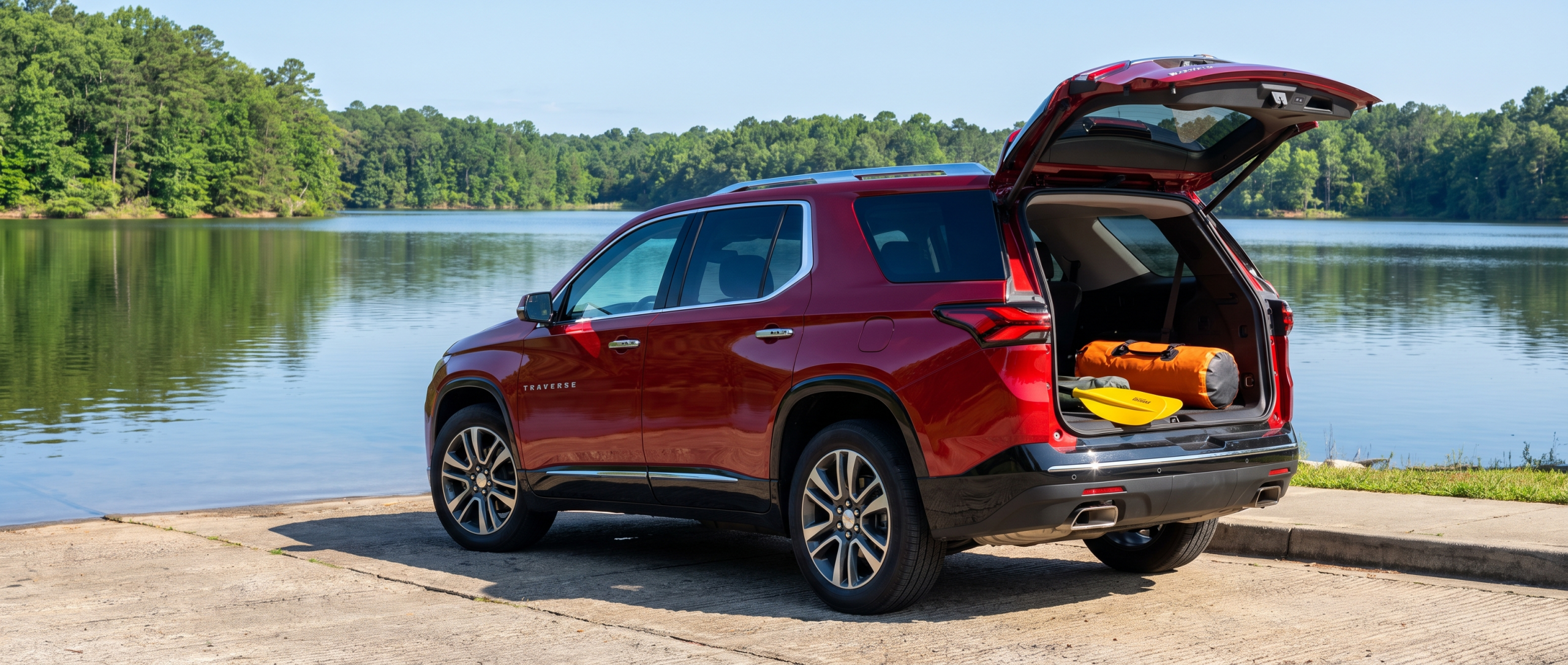
A Day at Lake Wateree Is Better in the Right-Sized Chevy
In this article What's the Plan at a Glance? The Traverse Is Built for a Boat Day at the Ramp When the Equinox or Trailblazer Fits the Life Better Let the Lake Tell You Which Chevy to Take Now that it's just the two of you, Lake Wateree opens up 13,000 acres of open water less than 20 minutes from Winnsboro. Go. The trip works when you match the SUV to what you're actually loading (the three-row hauler that moved a soccer team's worth of kids may not serve you best anymore, and the smallest crossover in the lineup might surprise you with how much it holds). The 2026 Chevrolet Traverse is the right call if a boat trailer is coming along. Pack kayaks, a cooler, and a camp chair instead, and it's a different conversation entirely. What's the Plan at a Glance? Stop What to Do Best Time Parking Note Lake Wateree State Park boat ramp Launch a fishing boat or motorized vessel (two-lane ramp means shorter waits) Weekday mornings or early Saturday Dedicated boat trailer parking on-site Day-use area and nature trail 2.3-mile trail, picnic tables, bald eagle and osprey sightings Early morning for wildlife; any time for the trail Paved lot near day-use area Park tackle shop Rent kayaks or canoes year-round; buy fishing licenses, bait, ice Park store hours; confirm on arrival Steps from the boat ramp Ridgeway, SC Small-town lunch stop, about 15 miles from the park Midday Easy street parking in town The Traverse Is Built for a Boat Day at the Ramp If you've got a fishing boat or a small pontoon, the Traverse is the one to take to the water, and Chevrolet rates the 2026 Traverse at up to 5,000 pounds of towing capacity when properly equipped, which is more than enough for most trailers around here. That rating covers most of what folks in Fairfield County actually trailer to the lake's two-lane ramp. The engine behind that number is a turbocharged 2.5-liter four-cylinder producing 328 horsepower and 326 lb-ft of torque, running on regular 87-octane fuel (so it won't demand premium on top of everything else). The Equinox can't match that tow rating (AWD models are rated at 1,500 pounds), so with a trailer involved this isn't a close call. The Traverse is a big vehicle. On I-77 down toward Columbia it stays relaxed and comfortable, and easy at highway speeds. But if you spent years wishing for something that didn't feel like piloting a school bus through a parking lot, that's worth weighing before you default to the largest SUV on the lot. Decide whether a boat is part of your lake routine or just a theoretical possibility. The 2026 Traverse tows up to 5,000 pounds when properly equipped (enough for most fishing boats and small pontoons that launch at Lake Wateree's two-lane state park ramp). Local insider note: Lake Wateree State Park runs a two-lane boat ramp with dedicated trailer parking on-site. The park tackle shop has an in-water refueling dock, kayak rentals year-round, and sells fishing licenses. You can arrive with less pre-planning and more lake time. When the Equinox or Trailblazer Fits the Life Better Not every lake day involves a trailer, and when it doesn't, the Equinox or Trailblazer carries your gear comfortably without the length and fuel of a three-row SUV, though neither will tow a boat the way the Traverse does. For a two-person household that still wants room for gear, the Equinox and the 2026 Trailblazer earn their place. The Equinox is the practical choice for most two-person households. The EPA rates the AWD model at 25 city and 29 highway mpg, and 63.5 cubic feet of maximum cargo space handles kayaks, a weekend bag, and a full cooler without drama. It still seats five, so when the grown kids make it down for a weekend at the lake you're not turning anyone away. The limitation is straightforward. If towing is part of your plan even occasionally, you want the Traverse. The Trailblazer is a different animal entirely. Chevrolet's own specifications list the available 1.3-liter turbo at up to 31 mpg combined with FWD (a meaningful number for a vehicle this capable). Its cargo floor folds to 54.4 cubic feet, and the flat-folding front passenger seat creates an 8.5-foot interior cargo lane when you need to slide in something long. It's a strong fit if you're renting kayaks from the park's tackle shop or strapping bikes on the rack rather than towing. Parking in Ridgeway stays tight, and this one's easy to parallel park. Just right when the kids do lake weekends with their own rigs now and you don't need to carry the whole party anymore. South Carolina summers don't require AWD the way the mountain states do. FWD works well for the drive out from Winnsboro and for the paved park roads. If you occasionally head toward Sumter National Forest on rougher access roads, AWD on either model adds real grip without a steep efficiency penalty. Next step: If the big family hauler has been sitting half-empty since the youngest moved out, it still has solid trade-in value. That equity goes a long way toward right-sizing into the Traverse, Equinox, or Trailblazer that fits the two of you. Let the Lake Tell You Which Chevy to Take None of these three is a wrong answer, so let the way you use the lake make the call for you, and line up your real routine against what each one does best. The pick gets obvious quickly, whether you're backing a trailer down the ramp or just tossing a paddle in the back. Towing a boat to the two-lane ramp at Lake Wateree State Park? The 2026 Traverse at 5,000 pounds towing capacity is the only one of these three that does it confidently. No contest. Renting kayaks from the tackle shop or bringing your own on a roof rack? The Equinox or Trailblazer carries everything you need with better fuel economy and an easier footprint. The Equinox gives you more passenger room for visits from family, while the Trailblazer gives you the sharpest mpg numbers for the drive down US 321. Planning a longer weekend at one of the park's 72 campsites? The campground accommodates larger vehicles, and a Traverse loaded for two is genuinely easier to navigate on campsite access roads than it ever was loaded for the whole family. Any of these three works. The truth is that none of these is a wrong answer. Each one is sized for a different version of the same lake day. What shifts after the kids leave isn't the destination. It's the math on what you truly need to get there. Browse our current new inventory to see what's on the lot right now. By the Wilson Chevrolet Team | July 2026 See Current Chevy Specials Wilson Chevrolet 798 us hwy 321 N BUSINESS, Winnsboro, SC 29180 (803) 402-4233
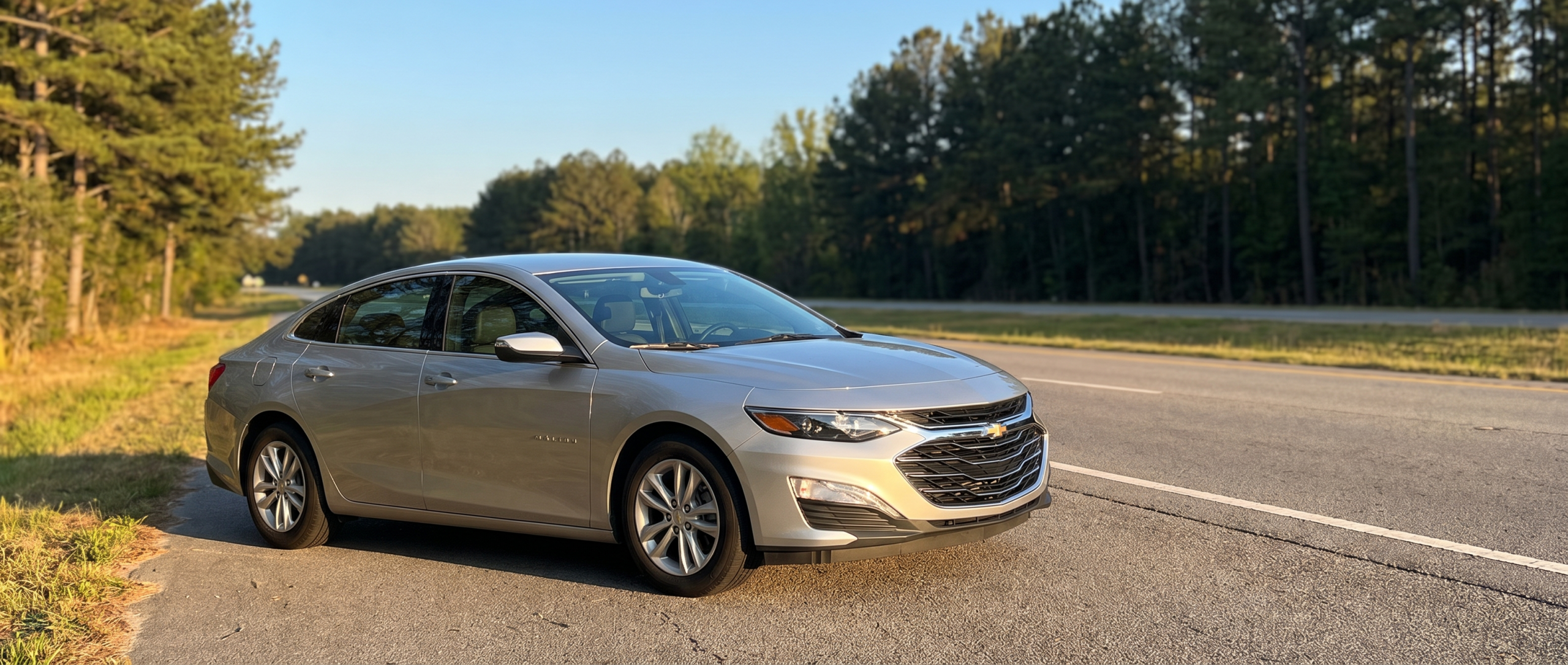
Sedans Are Dead: Why the 2025 Malibu Proves That Wrong for Winnsboro Commuters
If you drive I-77 toward Columbia five days a week, you already know the rhythm. Forty-some miles of highway, exit traffic, road drone, and a car that either soaks all of it up or reminds you of every inch. Plenty of folks hear "the Malibu is discontinued" and figure the conversation ends there. It doesn't. The 2025 Chevrolet Malibu is the final model year of one of Chevy's longest-running nameplates, and yes, Chevrolet ended production in November 2024. A handful of 2025 models are still sitting on dealer lots right now, and they carry a set of comfort and safety features that genuinely hold up on a daily I-77 run. The myth says discontinued means defective or undesirable. In reality, some of these cars are still new, and for a certain kind of buyer the timing might actually work in their favor. The short version The 2025 Malibu is discontinued but not gone: leftover new units are available at dealer lots The EPA rates the 2025 Malibu at 29 MPG city and 36 MPG highway (no hybrid system required) A standard acoustic-laminated windshield cuts road noise noticeably compared to a base-trim SUV in the same range Rear legroom is 38.1 inches, which means the Fairfield County carpool fits comfortably NHTSA awarded the 2025 Malibu a five-star overall safety rating Is It Really True That a Discontinued Car Is a Bad Buy? No, a discontinued car isn't automatically a bad buy, though the label does carry one real limitation worth naming, so it helps to separate what "discontinued" actually means from what buyers fear it means before you rule the car out. "Discontinued" means GM stopped building new ones. It doesn't mean the car is flawed or that parts vanish tomorrow. A leftover 2025 Malibu on a dealer lot is, legally and mechanically, a brand-new vehicle. Let's set the common claims next to what the verified record shows. What People Assume What's Actually True "Discontinued means there are known problems with it" No active recall on the 2025 Malibu; NHTSA awarded it a five-star overall safety rating (NHTSA.gov) "Parts will be impossible to find" The 2025 uses the same 1.5L turbo platform in production since 2016; the parts ecosystem is established "It's practically a used car now" A new, unregistered 2025 Malibu is sold and titled as a brand-new vehicle with zero miles "Fuel economy can't compete with newer options" The EPA rates the 2025 Malibu at 29 city, 36 highway MPG, comparable to current non-hybrid competitors "You won't get a quiet, comfortable ride from a sedan in this range" The 2025 Malibu comes standard with an acoustic-laminated windshield on every trim "Technology is outdated" Wireless Apple CarPlay, Android Auto, 4G LTE Wi-Fi hotspot, and remote start are all standard on the base LS Is the interior a letdown? A little, if you're chasing the newest screens. The design is conservative, and the 8-inch touchscreen feels modest next to the larger displays competitors now offer. If display size is what you care about, that's a fair tradeoff. But if your priority is a smooth, quiet commute with practical connectivity, the screen holds up. It does the job. What the Comfort Package Actually Delivers on the I-77 Run Over forty miles of interstate the 2025 Malibu earns its keep on ride comfort, and while the cabin styling stays plain and the screen stays modest, the piece that actually changes your daily drive is a standard windshield that most drivers never stop to think about. Financing options aside, what a Fairfield County commuter really wants to know is whether this car feels good on the long haul. The short answer is yes, and it isn't by accident. Chevrolet built the 2025 Malibu with an acoustic-laminated windshield as standard equipment on every single trim, and that shows on I-77. Road noise on a long, open interstate is cumulative. By the time you've crossed into Columbia or turned back north toward Winnsboro, the gap between a windshield that dampens high-frequency road and wind noise and one that doesn't is the gap between arriving alert and arriving worn out. Beyond the windshield, comfort climbs as you move up the trim ladder. LS (base): Remote start (standard), 8-inch touchscreen with wireless CarPlay and Android Auto, 4G LTE Wi-Fi hotspot, six-speaker audio, cloth seating RS: Eight-way power driver's seat, wrapped steering wheel, 18-inch aluminum wheels, dual exhaust outlets LT: Adds heated front seats, dual-zone automatic climate control, LED daytime running lights (this is the sweet spot for a daily commuter) 2LT: Ventilated front seats, perforated leather, Bose nine-speaker audio system, heated steering wheel, wireless charging, adaptive cruise control The 2LT trim's ventilated seats matter in a South Carolina July. Sitting in a hot car at a Blythewood on-ramp for ten minutes before the A/C catches up is a real thing. Ventilated seats move air through the cushion itself, which is a different level of relief than cold air blowing from a vent. None of that is marketing language (it's a physical difference that shows up on the first afternoon commute in summer). The 2025 Malibu LT adds dual-zone automatic climate control and heated front seats over the base LS, making it the trim level best matched to year-round Fairfield County commuting. See Current Malibu Offers "The 2025 Chevrolet Malibu earned a five-star overall safety rating from the National Highway Traffic Safety Administration (NHTSA)." (NHTSA.gov) So What Should You Actually Do Before the Remaining Inventory Is Gone? If you want a brand-new 2025 Malibu rather than a used one, the smart move is to act fairly soon, because used listings will keep growing for years while the supply of unregistered new units is already thinning out and won't come back once it's gone. Used Malibu listings will only grow as these cars cycle through. But a new 2025 Malibu, if one is still available, comes with something a used unit doesn't. Zero miles and a known history. Walk through the decision like this if you're commuting from Winnsboro or Ridgeway. Step 1. Know what you're getting. The 2025 is the ninth generation of the Malibu, the same platform that launched in 2016. No guesswork there. The 1.5L turbocharged four-cylinder producing 163 horsepower and 184 lb-ft of torque has been refined across nearly a decade of production. Paired with a continuously variable transmission and front-wheel drive, the car handles the straight I-77 corridor comfortably without asking anything unusual of the drivetrain. Step 2. Match the trim to your actual commute. If you're solo most days, the LT gives you dual-zone climate control and heated seats without paying up to the 2LT. If you carpool and need rear-seat adults comfortable, the 38.1 inches of rear legroom in the 2025 Malibu handles that. Nobody rides scrunched. Step 3. Check availability now, not later. As of July 2026, the remaining new 2025 Malibu inventory across the United States has narrowed. Once those units are gone, new is gone. If you want one, this is a genuine time sensitivity. Not manufactured urgency, just arithmetic. Step 4. Compare honestly against a similarly equipped SUV. The comfort features on the Malibu LT and 2LT, especially the acoustic windshield and available ventilated seats, aren't automatically present on a base-to-mid-trim crossover in the same segment. Run that comparison before you assume the SUV is the better commuter. Get your trade-in appraised before you come in. You'll walk in with a clearer position on the numbers. Our team can walk you through what's still in stock and what trim matches your daily routine, with no pressure to upgrade past what you need. Frequently Asked Questions Is a leftover 2025 Chevrolet Malibu sold as a new vehicle? Yes. A new, unregistered 2025 Malibu is sold and titled as a brand-new vehicle with zero miles. For details on what a new-vehicle purchase includes, check Chevrolet's official website or ask our team directly. What comfort features come standard on every 2025 Malibu trim, not just the upper levels? Three comfort and convenience features are standard on every 2025 Malibu regardless of trim: the acoustic-laminated windshield (which reduces road and wind noise), remote start, and wireless Apple CarPlay and Android Auto connectivity. The 4G LTE Wi-Fi hotspot and a six-speaker audio system are also standard across all trims. Heated seats and dual-zone climate control step in at the LT trim; ventilated seats and Bose audio arrive on the 2LT. Why should I buy the 2025 Malibu if it's being discontinued? The discontinuation status doesn't affect the car's quality, reliability, or availability of parts and service. Leftover 2025 models are brand-new vehicles with the same features and safety ratings as when they were in production. If you need a quiet, fuel-efficient sedan with strong comfort features for daily commuting, the timing may work in your favor. Value Your Trade-In Wilson Chevrolet 798 us hwy 321 N BUSINESS, Winnsboro, SC 29180 (803) 402-4233
How to Check Your Chevrolet for Battery Warning Signs Before South Carolina Summer Strands You
In this article What Do You Need Before You Start? The 6-Step Battery Warning Sign Check The Part Nobody Explains: Summer Kills, Winter Gets the Blame Your Print-and-Go Summer Battery Recap Pull up to a gas station anywhere along I-77 on a July afternoon and you'll spot one. A Chevy truck or SUV sitting idle, hood up, owner staring at the engine bay with that look. A dead battery in 93-degree heat is a genuinely miserable situation, and it's almost always preventable. The good news is your Chevy will tell you it's coming, if you know where to look. So run a quick visual and functional check right now, before the hottest weeks of the Winnsboro summer turn a weak battery into a crisis. South Carolina's July heat averages 91.6 degrees Fahrenheit in Winnsboro, and AAA notes that under-hood temperatures can exceed 150 degrees Fahrenheit during summer driving. Battery fluid evaporates, internal corrosion accelerates, and a battery that passed a January test can be gone by August. Catch the signs now. Our Silverado 1500 inventory shows this more than any other model in summer, but every Chevy on the road is dealing with the same South Carolina heat. What Do You Need Before You Start? You need very little for this check, and most of it's already in your house or your cab, with one optional tool if you want an actual voltage number instead of a visual guess. The whole thing takes about ten minutes. Grab what you can before you head out. Item Why You Need It Where to Get It Safety glasses Battery acid is corrosive Any hardware store Nitrile gloves Same reason Any hardware store Flashlight or phone light Terminal corrosion hides in shadow You already have it Clean dry rag or paper towel Wipe down terminals for a clear look Grab from the cab Multimeter (optional) Measures resting voltage Auto parts store And that's the entire kit. No special tools required. Want to go further? A proper load test at our service center takes about five minutes when we run it, and it settles what the visual check can only hint at. The 6-Step Battery Warning Sign Check South Carolina summers are hard on a battery in a way the outside temperature never fully shows, because the worst of the heat concentrates under the hood rather than out in the open air. The ideal operating temperature for a lead-acid battery is around 77 degrees Fahrenheit. Winnsboro's July average high is 91.6 degrees Fahrenheit outside. Under the hood, especially after a run down US 321 or a longer I-77 stretch, that under-hood air can exceed 150 degrees Fahrenheit. Per AAA, batteries in southern US states last an average of 17 months less than the same battery would in cooler northern climates. The damage is invisible and it stacks up all season. You can catch it in six steps, and here's each one. Step 1: Check the age first. Find the manufacture date sticker on the top or side of the battery case. A code like "7/23" means July 2023. That battery's three years old this month. Most Chevy batteries last between three and five years, and in South Carolina heat, that window runs closer to the three-year end. If it's past four years and you haven't tested it this season, you've got your answer right there. Traverse owners and Tahoe owners have higher electrical loads to manage (three rows, powered running boards, rear entertainment systems), which shortens that window further under sustained summer driving. Step 2: Look at the terminals. Pop the hood and put on your gloves. Look at the positive (red) and negative (black) terminals where the cables clamp to the battery posts. A light gray or white powdery crust is ordinary, slow-building corrosion. Blue-green residue or a thick crusty buildup is a problem. Per AAA service guidance, terminal corrosion increases electrical resistance and can prevent your battery from fully charging even when the alternator is working fine. You get an invisible drain nobody catches until the morning the truck won't crank. Step 3: Inspect the battery case. Look at the battery housing itself. It should be a clean rectangular box with flat sides. If the sides are bulging outward or the case looks swollen, you're looking at a heat damage flag. Excess under-hood heat causes internal gas pressure to build, physically distorting the casing. A swollen battery is not a "probably fine for now" situation. It needs to come out. Battery Case: The Step Most People Skip: The terminals sit right there in plain view, so the case is the part that gets skipped. The case inspection takes ten more seconds. A swollen case is one of the clearest physical signs that a battery has already sustained heat damage internally and is operating on borrowed time. Don't skip it. Step 4: Smell around the battery. This sounds strange, but do it. A rotten-egg or sulfur smell near the battery (not elsewhere in the engine bay) means the battery is off-gassing hydrogen sulfide, which happens when it overheats or develops an internal short. In Winnsboro heat in July, that's a fire and safety concern. Not a start-it-and-hope-for-the-best situation. Step 5: Test the cranking feel. Sit in the cab and start the engine. Pay attention to what happens in the first second. A healthy battery fires the starter fast, with no hesitation. A weak battery produces a slower, more labored crank, sometimes with a brief delay before the engine turns over. On push-button Chevy models, listen for a rapid clicking from the starter solenoid without the engine catching. That click is the solenoid trying to engage with insufficient current. You're hearing a near-dead battery, not a problem that'll "warm up." Step 6: Watch for electrical misbehavior. After the engine starts, observe your instrument cluster and accessories over the first 60 seconds. Flickering dashboard lights, a dimmer-than-usual cluster display, an infotainment system that reboots on startup, or power windows that move slowly all point to a battery struggling to maintain stable output voltage. On newer Chevys with large touchscreens and driver-assist systems, a marginal battery causes electronics to glitch before the battery ever fails to start the vehicle. That glitching is the warning shot. Take it seriously. Schedule a Battery Check at Our Service Center The Part Nobody Explains: Summer Kills, Winter Gets the Blame The failure you notice and the damage that caused it happen in different seasons, which is what most battery articles leave out. Your Chevy is most likely to fail to start on a cold December morning, but the damage was done in July. Heat accelerates internal chemical reactions, evaporates electrolyte fluid in standard flooded batteries, and corrodes the internal lead plates at a rate cold weather alone would never match. By October, a heat-damaged battery may still start your truck every morning without complaint. Then the first cold snap hits, and it can't produce enough cold-cranking amps to turn the engine. Winter takes the blame for what August did. So we check batteries twice, once before peak summer and once before temperatures consistently drop below 50 degrees Fahrenheit. One inspection protects both seasons. Book your pre-fall battery inspection here when the time comes. Short and worth it. Your Print-and-Go Summer Battery Recap This recap gathers every warning sign into one glance so you don't have to hold the entire sequence in your head at the engine bay, though a photo on your phone beats memory every time. Take a picture of the list before you go outside, and work down it in order. Age over 3 years? Have it tested this week, not this month. Blue-green crust on terminals? Clean or replace (that buildup is actively blocking charging). Swollen or bulging case? Replace immediately. No debate. Rotten-egg smell near the battery? Come see us today. Sluggish or clicking crank? Load test needed; do not wait. Flickering dash lights or infotainment reboot on startup? Marginal battery, flag it. AC load check: With the engine running, turn on the AC on max. If the headlights dim noticeably, the battery and alternator are struggling under combined load. The tradeoff is worth stating plainly. This visual and functional check will catch most heat-damaged batteries before they fail completely, but it won't catch every marginal battery that's borderline and not yet showing symptoms. A professional load test, which draws current at rated amperage while measuring voltage drop, is the definitive confirmation. Our service center runs that test with Chevrolet-specific equipment. If your battery's three years old or older, the visual check is a good start and the load test is the actual answer. Equinox drivers doing a lot of short-trip driving around Ridgeway or Blythewood should know that frequent short trips are particularly hard on a battery in summer. The alternator needs sustained driving time to fully recharge after each startup, and in heat that's already stressing the battery, the math runs out faster than a few short hops can keep up with. Frequently Asked Questions Does South Carolina summer heat really damage car batteries faster than winter cold does? Yes. AAA reports that batteries in the southern United States last an average of 17 months less than in cooler northern climates. Under-hood temperatures during summer driving can exceed 150 degrees Fahrenheit, which evaporates electrolyte fluid and accelerates internal corrosion. What voltage should a healthy Chevy battery show? A fully charged battery at rest should read between 12.6 and 12.8 volts. With the engine running, the alternator should bring the reading up to between 13.7 and 14.7 volts. Readings outside that range point to either a failing battery or alternator. By the Wilson Chevrolet Team | July 2026 See Current Chevrolet Offers Wilson Chevrolet 798 us hwy 321 N BUSINESS, Winnsboro, SC 29180 (803) 402-4233
How to Pick the Right Chevrolet Service for Winnsboro's July Heat
In this article What Actually Matters When Choosing Summer Service for a Chevy? The Cooling System Is the One We Take Seriously on Trucks Does the Heat Really Hurt Your Battery? Match the Service to How You're Actually Using the Truck This Summer Winnsboro gets serious in July. The average heat index climbs to roughly 111 degrees Fahrenheit, daily highs push into the low 90s, and afternoon thunderstorms roll through several times a week. That combination does specific, measurable damage to specific systems on your Chevy. The question isn't really "should I service it?" It's which services matter most for your truck or SUV right now, and why mid-July is a better window than waiting until August when everyone else is scrambling. Here's the short version. Then we'll walk through each call. The short version Battery first. AAA confirms heat, not cold, is the leading cause of battery failure. If yours is past three years old, get it tested before August. Coolant and cooling system. Engines above 90 degrees Fahrenheit ambient push coolant harder. Towing a boat to Lake Wateree on a 93-degree Fahrenheit afternoon is a real stress test. AC and cabin air filter together. A clogged cabin filter chokes your compressor. Replacing both at the same visit is the efficient move. Tire pressure is active. AAA notes that every 10-degree rise in temperature adds about 1 PSI. July's swings matter. Mid-July timing advantage. Service centers fill up fast as summer deepens. Scheduling now generally means shorter waits and more appointment flexibility than late August. Book a service appointment at Wilson Chevrolet What Actually Matters When Choosing Summer Service for a Chevy? July heat targets specific weak points, and a generic "summer checklist" treats a Silverado 1500 towing a camper the same as a Trax running school pickups. Those aren't the same vehicle under the same load, and the services that pay off in July aren't the ones that pay off in January. Below is a direct comparison of the main July service categories, what drives the urgency, and the honest tradeoffs: Service Best For Key Driver Honest Tradeoff Battery load test Any Chevy 3+ years old AAA data: heat is the top cause of battery failure; heat causes battery fluid to evaporate A passing test today doesn't guarantee fall performance if the battery is borderline Cooling system inspection Silverado 1500/2500 HD towing, Tahoe with heavy loads Ambient temps above 90 degrees Fahrenheit push the system toward its limits Not urgent if vehicle is newer and coolant was recently flushed AC diagnostic + cabin air filter Traverse, Equinox, Trailblazer, Trax Clogged cabin filter reduces airflow and strains the compressor If the system is blowing cold and the filter is recent, this can wait Tire pressure check + rotation All models, especially trucks towing Each 10-degree temp rise adds roughly 1 PSI; over-inflation raises blowout risk Rotation alone is low urgency unless you're near the 7,500-mile mark Fluid check (oil, transmission, brake) Silverado HD towing, any vehicle near service interval Heat thins oil faster; transmission fluid darkens under load heat Purely calendar-based unless the Oil Life Monitor or dipstick tells you otherwise Multi-point inspection Any vehicle without a recent checkup Catches belts, hoses, and brake fluid condition before they fail in heat Adds time to the visit; worth combining with another service Not every vehicle needs every row. Our service team starts by looking at your mileage, your service history, and what you're actually doing with the truck this summer. The Cooling System Is the One We Take Seriously on Trucks Silverado 1500 and Silverado 2500 HD owners towing through July are running their cooling systems at elevated demand. When ambient air is already in the low 90s, the engine's cooling loop has less thermal headroom. Coolant absorbs heat and sheds it through the radiator, and that process becomes less efficient as the fluid ages and its chemical properties break down. Two things we check consistently on trucks: the coolant level against the "full cold" mark (low coolant lets air pockets form, which causes localized overheating that can warp components), and the condition of the fluid itself. Fresh Chevrolet DEX-COOL should be orange-tinted and translucent. Dark, murky fluid has lost its corrosion inhibitors, and no amount of topping off fixes that. Service reality: If you're using your Silverado 2500 HD with the Duramax diesel for summer hauling, the transmission cooler deserves a look alongside the coolant. Heavy loads heat the gearbox, and fresh transmission fluid is what stands between you and accelerated clutch wear. We'll be straight about the tradeoff: if your vehicle is under two years old and coolant was factory-fresh, a full flush probably isn't the priority this visit. A visual inspection to confirm levels and hose condition is the sensible starting point. The Tahoe running full passenger loads faces a similar version of this. Larger passenger count means more heat sources inside the cabin, and the cooling system also manages transmission heat on longer highway runs up I-77 toward Charlotte or down toward Columbia. Tip from our team: When we see hoses that are soft or spongy rather than firm, that's a warning worth acting on before they fail. Rubber degrades faster in sustained heat, and a burst hose on the side of US 321 in July is a bad afternoon. Does the Heat Really Hurt Your Battery? AAA's data is clear on this: heat is the leading cause of battery failure, accounting for roughly 25 percent of summer roadside calls. Many drivers assume winter is the battery killer. It's not. High temperatures accelerate the chemical reactions inside the battery and cause battery fluid to evaporate, weakening its ability to hold a charge. A battery that passes a quick test in May can still deteriorate through June and July as heat accumulates. The three-year mark is the practical trigger. Before it, a load test is a good idea but not urgent. After it, the conversation changes. A battery that struggles during a test in the service lane rarely improves when August heat and heavy AC demand pile on. For customers running up and down I-77 for work commutes to Columbia, a dead battery at an exit ramp is a worse situation than a service appointment now. Worth thinking about. Scenario Pros Cons Test and replace proactively (3+ year battery) Peace of mind through the rest of summer and fall; no stranded risk Cost of replacement before failure Test and monitor (2-3 year battery, passing load test) Avoids unnecessary replacement; technician sets a baseline reading Requires a follow-up test in fall before cold weather Skip testing No appointment needed now Real risk of sudden failure in peak summer heat The second row is where we land with a lot of customers. A clean passing test gives our team a baseline reading, we note the result, and we recommend retesting before November when cold-crank performance becomes the variable. Equinox owners specifically: your battery also powers a heavier AC compressor load during South Carolina summers. If you're running the AC continuously on a long commute, that's more sustained draw than the battery sees in spring. Match the Service to How You're Actually Using the Truck This Summer A question that comes up regularly at the service counter is "Do I need all of this, or just some?" The answer depends on three things: your mileage, your actual use, and whether your Chevy is giving you any signals. Chevrolet's Oil Life Monitoring System on 2026 models watches engine revolutions, operating temperatures, and miles driven together, not just the odometer. It's designed to alert you within 600 miles of a needed oil change. If that light is on, the system has already accounted for the heat load you've been generating. Don't override it. A practical breakdown by use pattern: If you're towing to Lake Wateree or hauling to a job site: Coolant system inspection, transmission fluid check, and tire pressure adjustment are all relevant. Towing adds thermal load to multiple systems simultaneously. If you're mostly doing school runs and commutes in an Equinox or Traverse: The AC diagnostic and cabin air filter replacement matter more. A clogged cabin filter chokes airflow, forcing the compressor to work harder to cool the same space. Replacing it is a simple visit with a real payoff in cabin comfort and compressor life. If you're driving a Silverado 1500 or Colorado for mixed use: Battery test, tire pressure check, and a multi-point inspection cover the relevant ground efficiently. Combine them with your next oil change if the mileage lines up. If you haven't been to the service center since last fall: A full multi-point inspection now is the honest recommendation. It surfaces anything that's been quietly developing through spring, and mid-July is still more manageable than the August crunch. Scheduling friction is the real downside of waiting. Lanes get fuller as summer progresses. Booking online now at Wilson Chevrolet is the practical workaround. Frequently Asked Questions Does summer heat really hurt car batteries more than winter cold? Yes. AAA data shows heat is the leading cause of battery failure, not cold. High temperatures accelerate chemical reactions inside the battery and cause the fluid to evaporate, reducing its ability to hold a charge. A battery that appears functional in spring can degrade meaningfully through a South Carolina July. AAA advises that batteries typically last three to five years and should be tested regularly after the three-year mark, with testing becoming more urgent as summer heat accumulates. How do I know if my Chevy's AC system needs service versus just a cabin air filter change? Start with the cabin air filter. A clogged filter restricts airflow through the blower and forces the AC compressor to run harder to cool the cabin. Replacing a dirty filter is a straightforward service that often restores cooling performance noticeably. If the system is blowing warm air despite good airflow, or you hear unusual noises from the compressor, that points to the AC system itself, and a diagnostic check is the right next step. Our service team at Wilson Chevrolet runs both checks at the same visit so you don't guess at which problem you actually have. Why should I service my Chevy in mid-July rather than wait until later in summer? Service centers experience heavy demand as summer progresses. Booking appointments in mid-July typically means shorter wait times and more appointment flexibility compared to late August. Scheduling now helps you address cooling system and battery concerns before peak heat stress arrives in late summer. Wilson Chevrolet 798 us hwy 321 N BUSINESS, Winnsboro, SC 29180 (803) 402-4233