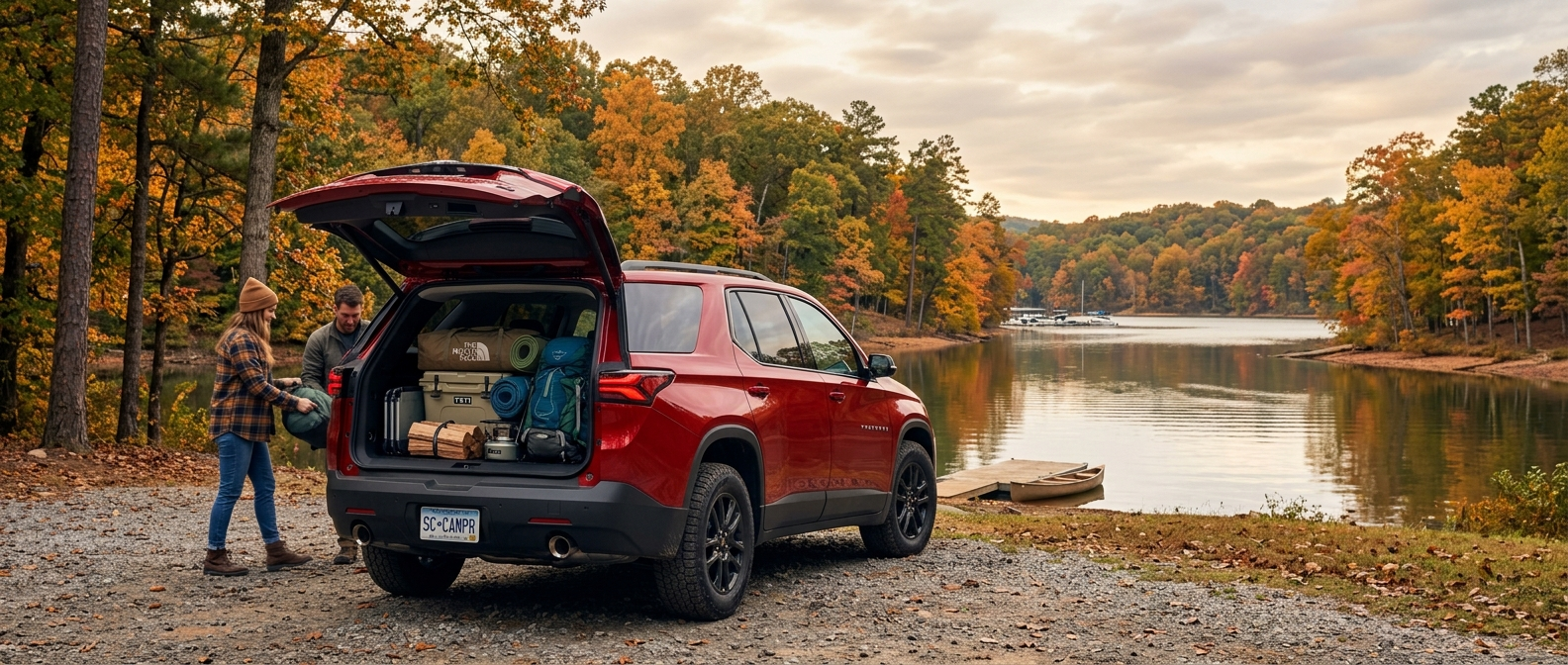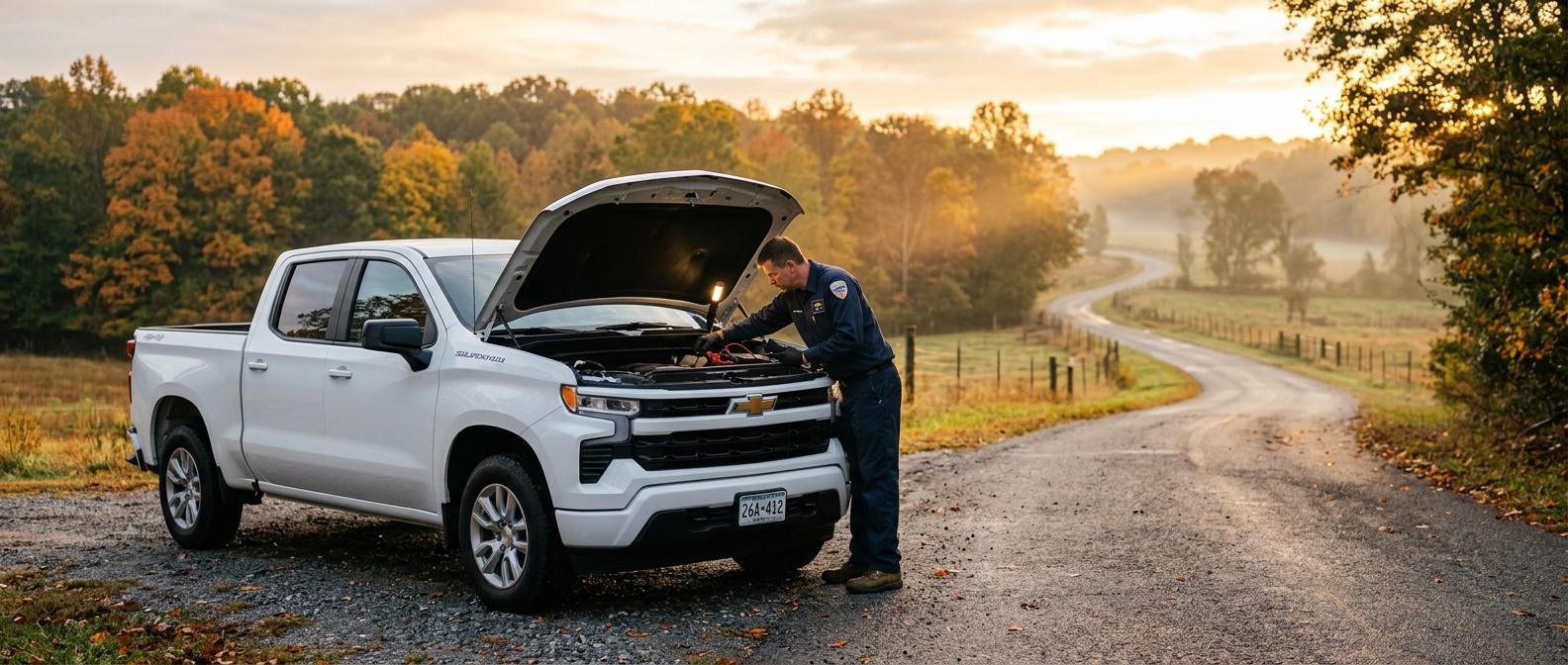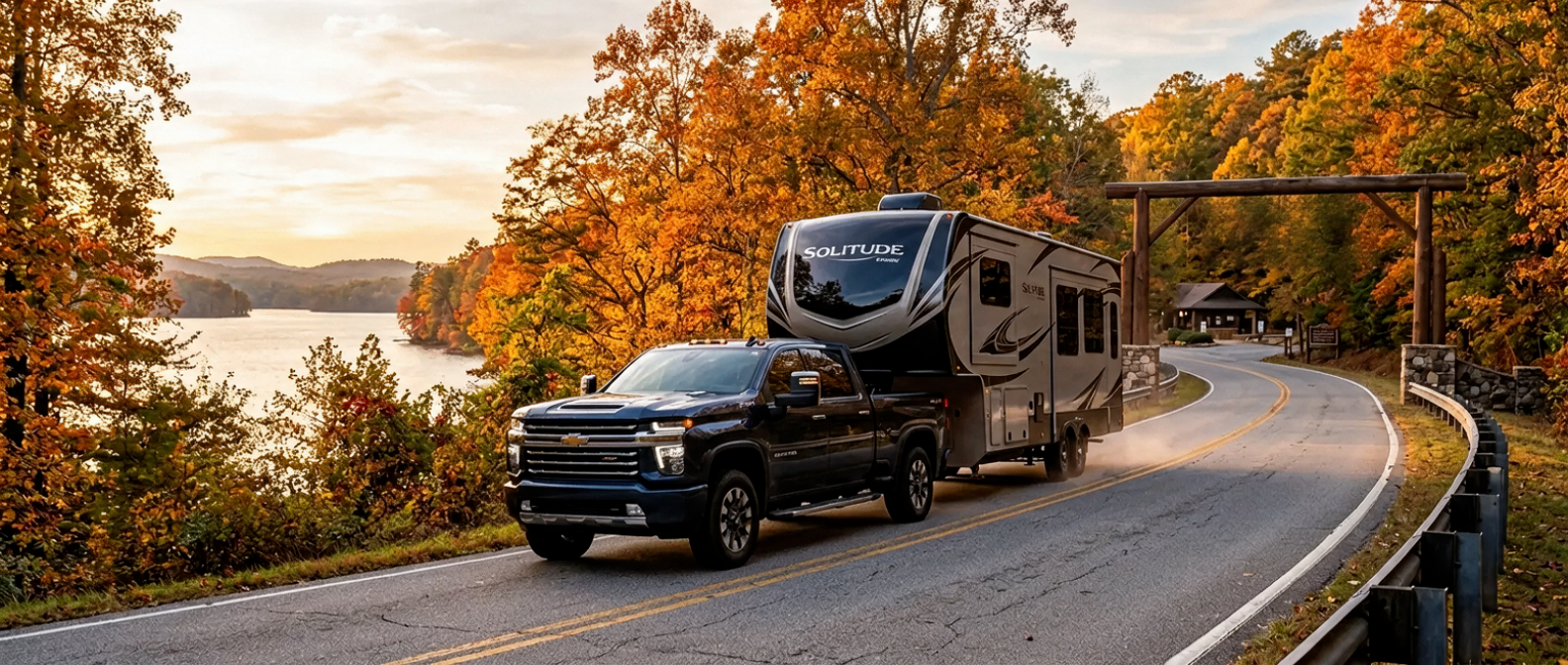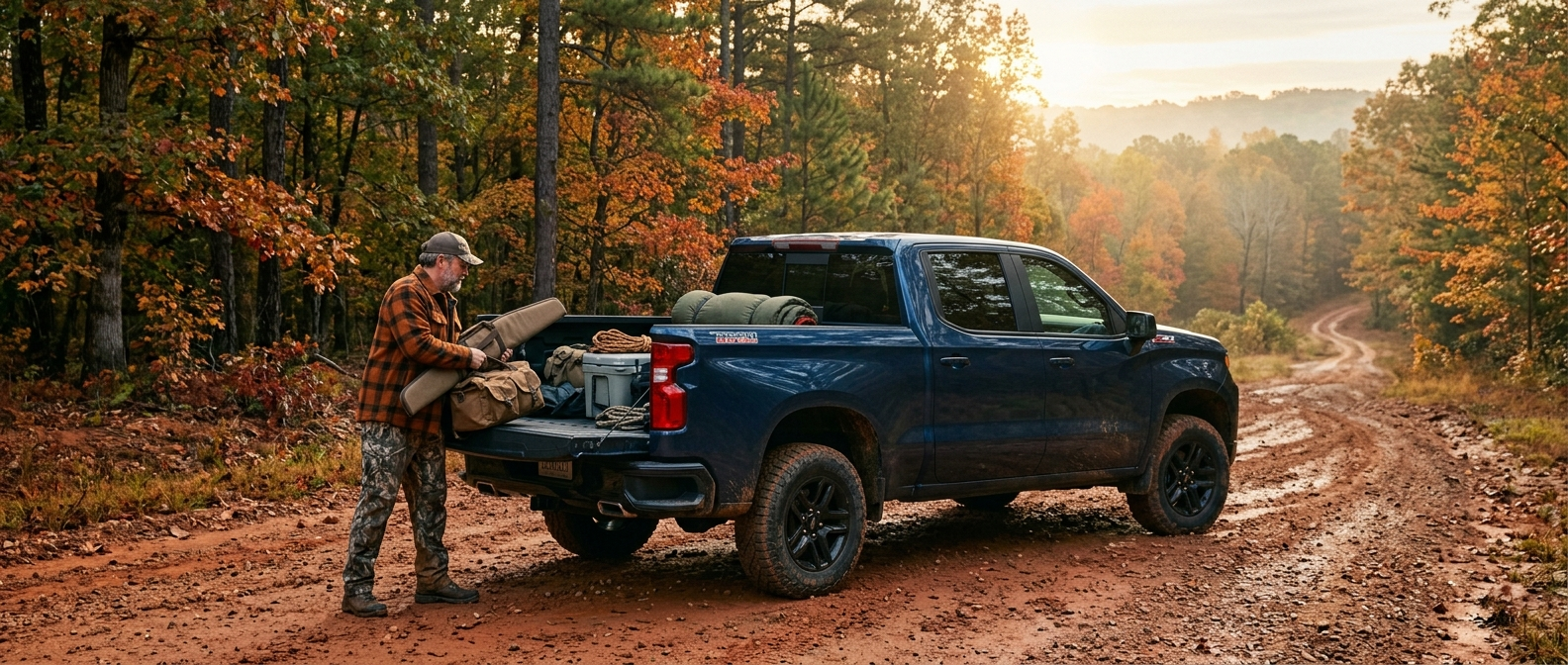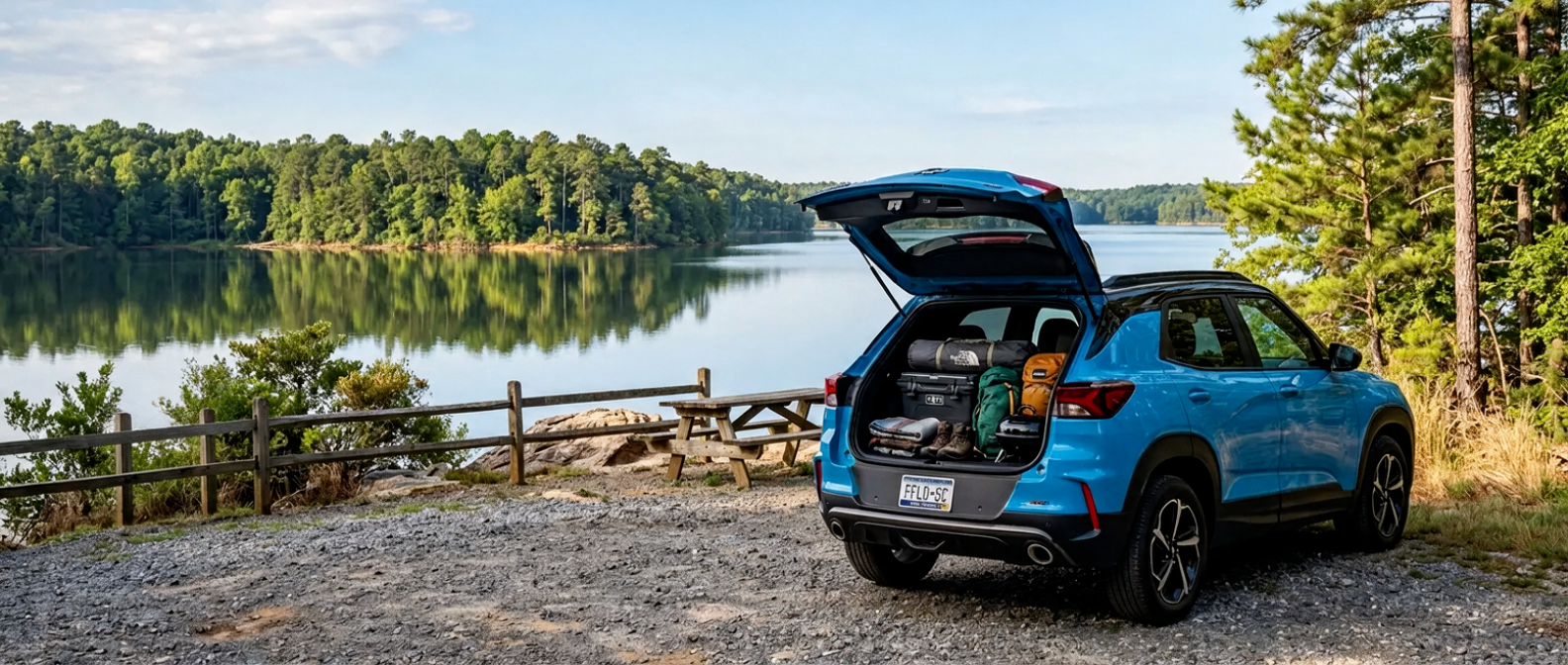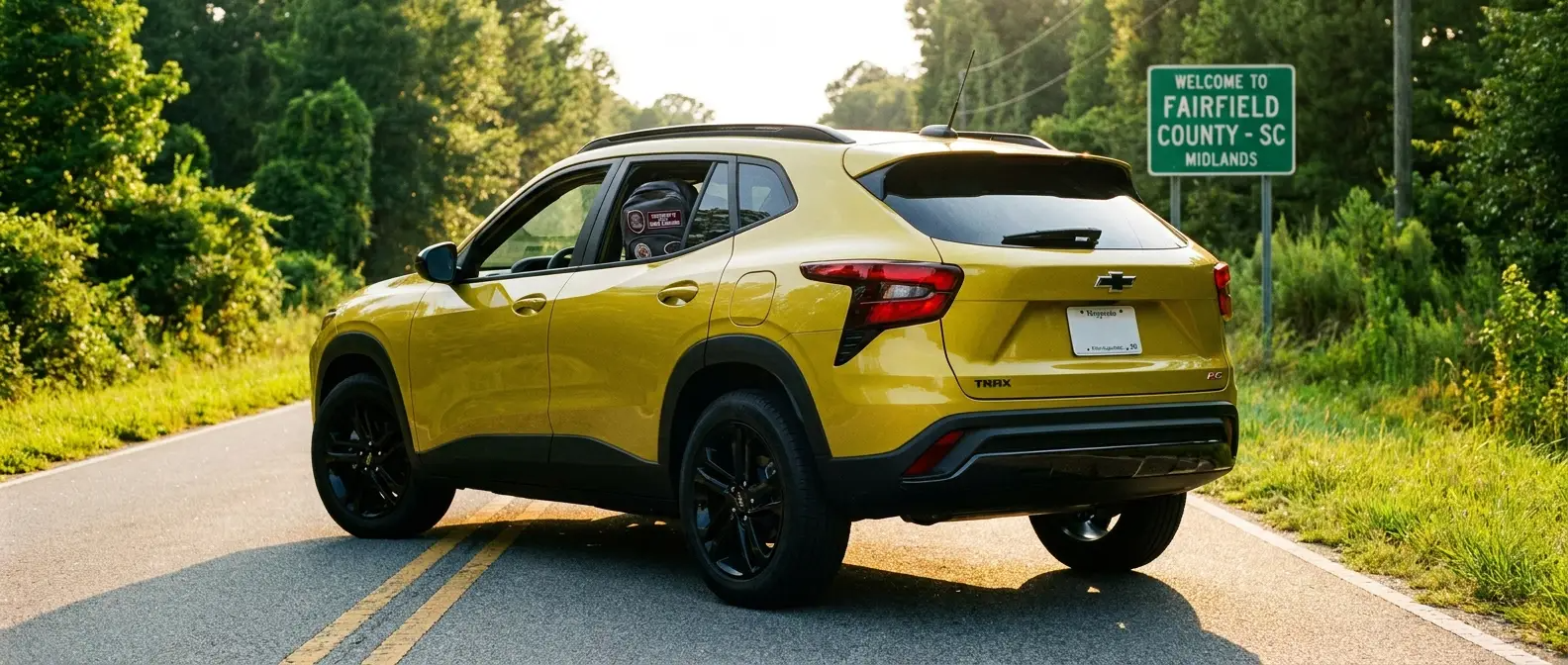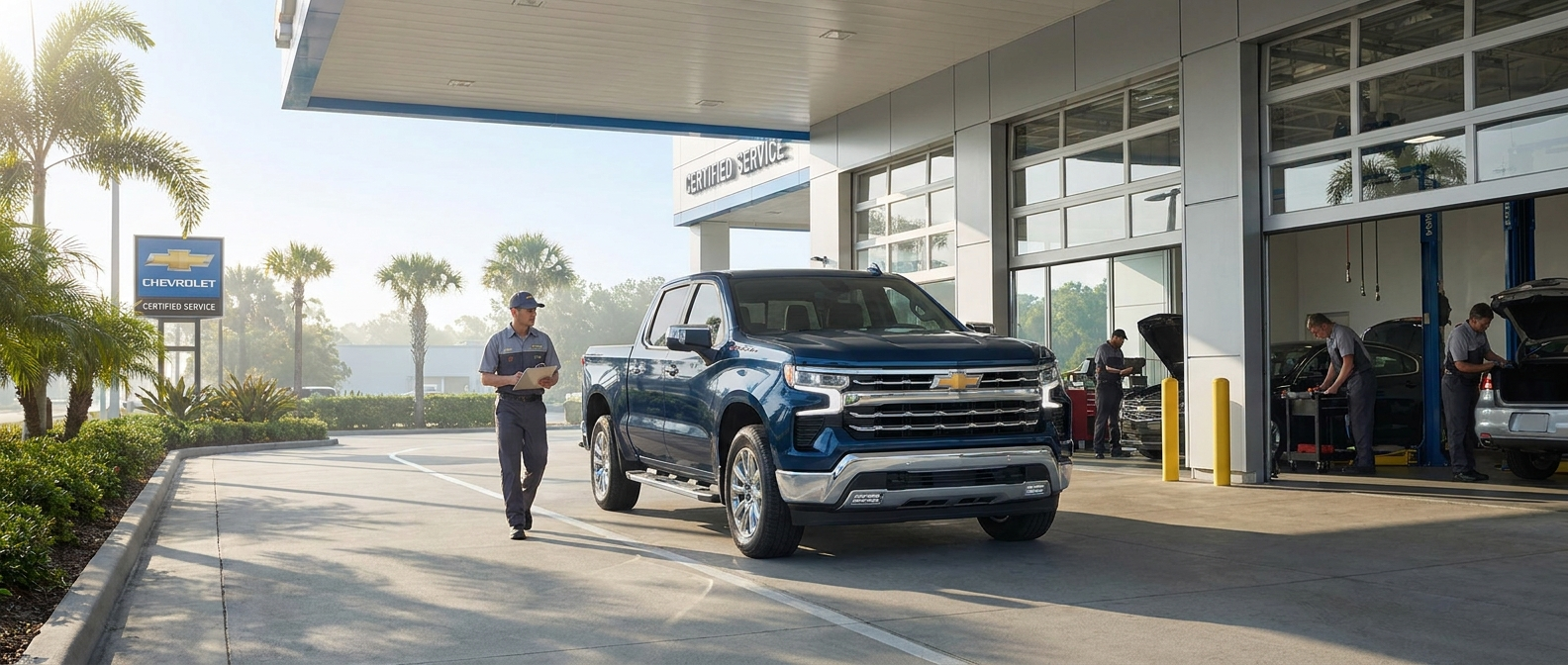





Winnsboro gets serious in July. The average heat index climbs to roughly 111 degrees Fahrenheit, daily highs push into the low 90s, and afternoon thunderstorms roll through several times a week. That combination does specific, measurable damage to specific systems on your Chevy. The question isn’t really “should I service it?” It’s which services matter most for your truck or SUV right now, and why mid-July is a better window than waiting until August when everyone else is scrambling.
Here’s the short version. Then we’ll walk through each call.
- Battery first. AAA confirms heat, not cold, is the leading cause of battery failure. If yours is past three years old, get it tested before August.
- Coolant and cooling system. Engines above 90 degrees Fahrenheit ambient push coolant harder. Towing a boat to Lake Wateree on a 93-degree Fahrenheit afternoon is a real stress test.
- AC and cabin air filter together. A clogged cabin filter chokes your compressor. Replacing both at the same visit is the efficient move.
- Tire pressure is active. AAA notes that every 10-degree rise in temperature adds about 1 PSI. July’s swings matter.
- Mid-July timing advantage. Service centers fill up fast as summer deepens. Scheduling now generally means shorter waits and more appointment flexibility than late August.
Book a service appointment at Wilson Chevrolet
What Actually Matters When Choosing Summer Service for a Chevy?
July heat targets specific weak points, and a generic “summer checklist” treats a Silverado 1500 towing a camper the same as a Trax running school pickups. Those aren’t the same vehicle under the same load, and the services that pay off in July aren’t the ones that pay off in January.
Below is a direct comparison of the main July service categories, what drives the urgency, and the honest tradeoffs:
| Service | Best For | Key Driver | Honest Tradeoff |
|---|---|---|---|
| Battery load test | Any Chevy 3+ years old | AAA data: heat is the top cause of battery failure; heat causes battery fluid to evaporate | A passing test today doesn’t guarantee fall performance if the battery is borderline |
| Cooling system inspection | Silverado 1500/2500 HD towing, Tahoe with heavy loads | Ambient temps above 90 degrees Fahrenheit push the system toward its limits | Not urgent if vehicle is newer and coolant was recently flushed |
| AC diagnostic + cabin air filter | Traverse, Equinox, Trailblazer, Trax | Clogged cabin filter reduces airflow and strains the compressor | If the system is blowing cold and the filter is recent, this can wait |
| Tire pressure check + rotation | All models, especially trucks towing | Each 10-degree temp rise adds roughly 1 PSI; over-inflation raises blowout risk | Rotation alone is low urgency unless you’re near the 7,500-mile mark |
| Fluid check (oil, transmission, brake) | Silverado HD towing, any vehicle near service interval | Heat thins oil faster; transmission fluid darkens under load heat | Purely calendar-based unless the Oil Life Monitor or dipstick tells you otherwise |
| Multi-point inspection | Any vehicle without a recent checkup | Catches belts, hoses, and brake fluid condition before they fail in heat | Adds time to the visit; worth combining with another service |
Not every vehicle needs every row. Our service team starts by looking at your mileage, your service history, and what you’re actually doing with the truck this summer.
The Cooling System Is the One We Take Seriously on Trucks
Silverado 1500 and Silverado 2500 HD owners towing through July are running their cooling systems at elevated demand. When ambient air is already in the low 90s, the engine’s cooling loop has less thermal headroom. Coolant absorbs heat and sheds it through the radiator, and that process becomes less efficient as the fluid ages and its chemical properties break down.
Two things we check consistently on trucks: the coolant level against the “full cold” mark (low coolant lets air pockets form, which causes localized overheating that can warp components), and the condition of the fluid itself. Fresh Chevrolet DEX-COOL should be orange-tinted and translucent. Dark, murky fluid has lost its corrosion inhibitors, and no amount of topping off fixes that.
We’ll be straight about the tradeoff: if your vehicle is under two years old and coolant was factory-fresh, a full flush probably isn’t the priority this visit. A visual inspection to confirm levels and hose condition is the sensible starting point.
The Tahoe running full passenger loads faces a similar version of this. Larger passenger count means more heat sources inside the cabin, and the cooling system also manages transmission heat on longer highway runs up I-77 toward Charlotte or down toward Columbia.
Does the Heat Really Hurt Your Battery?
AAA’s data is clear on this: heat is the leading cause of battery failure, accounting for roughly 25 percent of summer roadside calls. Many drivers assume winter is the battery killer. It’s not. High temperatures accelerate the chemical reactions inside the battery and cause battery fluid to evaporate, weakening its ability to hold a charge. A battery that passes a quick test in May can still deteriorate through June and July as heat accumulates.
The three-year mark is the practical trigger. Before it, a load test is a good idea but not urgent. After it, the conversation changes. A battery that struggles during a test in the service lane rarely improves when August heat and heavy AC demand pile on.
For customers running up and down I-77 for work commutes to Columbia, a dead battery at an exit ramp is a worse situation than a service appointment now. Worth thinking about.
| Scenario | Pros | Cons |
|---|---|---|
| Test and replace proactively (3+ year battery) | Peace of mind through the rest of summer and fall; no stranded risk | Cost of replacement before failure |
| Test and monitor (2-3 year battery, passing load test) | Avoids unnecessary replacement; technician sets a baseline reading | Requires a follow-up test in fall before cold weather |
| Skip testing | No appointment needed now | Real risk of sudden failure in peak summer heat |
The second row is where we land with a lot of customers. A clean passing test gives our team a baseline reading, we note the result, and we recommend retesting before November when cold-crank performance becomes the variable.
Equinox owners specifically: your battery also powers a heavier AC compressor load during South Carolina summers. If you’re running the AC continuously on a long commute, that’s more sustained draw than the battery sees in spring.
Match the Service to How You’re Actually Using the Truck This Summer
A question that comes up regularly at the service counter is “Do I need all of this, or just some?” The answer depends on three things: your mileage, your actual use, and whether your Chevy is giving you any signals.
Chevrolet’s Oil Life Monitoring System on 2026 models watches engine revolutions, operating temperatures, and miles driven together, not just the odometer. It’s designed to alert you within 600 miles of a needed oil change. If that light is on, the system has already accounted for the heat load you’ve been generating. Don’t override it.
A practical breakdown by use pattern:
- If you’re towing to Lake Wateree or hauling to a job site: Coolant system inspection, transmission fluid check, and tire pressure adjustment are all relevant. Towing adds thermal load to multiple systems simultaneously.
- If you’re mostly doing school runs and commutes in an Equinox or Traverse: The AC diagnostic and cabin air filter replacement matter more. A clogged cabin filter chokes airflow, forcing the compressor to work harder to cool the same space. Replacing it is a simple visit with a real payoff in cabin comfort and compressor life.
- If you’re driving a Silverado 1500 or Colorado for mixed use: Battery test, tire pressure check, and a multi-point inspection cover the relevant ground efficiently. Combine them with your next oil change if the mileage lines up.
- If you haven’t been to the service center since last fall: A full multi-point inspection now is the honest recommendation. It surfaces anything that’s been quietly developing through spring, and mid-July is still more manageable than the August crunch.
Scheduling friction is the real downside of waiting. Lanes get fuller as summer progresses. Booking online now at Wilson Chevrolet is the practical workaround.
Frequently Asked Questions
Does summer heat really hurt car batteries more than winter cold?
Yes. AAA data shows heat is the leading cause of battery failure, not cold. High temperatures accelerate chemical reactions inside the battery and cause the fluid to evaporate, reducing its ability to hold a charge. A battery that appears functional in spring can degrade meaningfully through a South Carolina July. AAA advises that batteries typically last three to five years and should be tested regularly after the three-year mark, with testing becoming more urgent as summer heat accumulates.
How do I know if my Chevy’s AC system needs service versus just a cabin air filter change?
Start with the cabin air filter. A clogged filter restricts airflow through the blower and forces the AC compressor to run harder to cool the cabin. Replacing a dirty filter is a straightforward service that often restores cooling performance noticeably. If the system is blowing warm air despite good airflow, or you hear unusual noises from the compressor, that points to the AC system itself, and a diagnostic check is the right next step. Our service team at Wilson Chevrolet runs both checks at the same visit so you don’t guess at which problem you actually have.
Why should I service my Chevy in mid-July rather than wait until later in summer?
Service centers experience heavy demand as summer progresses. Booking appointments in mid-July typically means shorter wait times and more appointment flexibility compared to late August. Scheduling now helps you address cooling system and battery concerns before peak heat stress arrives in late summer.
If you’re hauling a boat from Winnsboro down to Lake Murray, the question that actually matters isn’t which model looks good sitting in the driveway. It’s whether the truck or SUV you choose can move your rig without straining, because the lake doesn’t adjust for brand loyalty or wishful thinking.
For most boats heading to Lake Murray, the 2026 Silverado 1500 is the right call, with up to 13,300 lbs of towing capacity when properly equipped. That said, three other Chevy models make a legitimate case depending on what you’re pulling and how many people are riding along. Here’s how we rank them for this specific trip.
How the Four Models Stack Up
The ranking below is built on one question: what does this model do on the run from Winnsboro to Lake Murray, with your actual boat, your actual family, and your actual gear?
| Rank | Model | Best For | Standout Spec |
|---|---|---|---|
| 1 | Silverado 1500 | Pontoons, heavy bass boats, camper combos | Up to 13,300 lbs towing (properly equipped) |
| 2 | Colorado | Solo or couples fishing trips, lighter boats | Up to 7,700 lbs towing (with Advanced Trailering Package) |
| 3 | Tahoe | Families who tow light and need 8 seats | Up to 8,400 lbs towing (with Max Trailering Package) |
| 4 | Traverse | Day-trip families with no trailer | Up to 5,000 lbs towing; 98.2 cu ft max cargo |
Silverado 1500: The One That Handles Anything Murray Throws at You
Pontoon boats rigged for a full day on Lake Murray commonly run between 3,500 and 5,500 lbs on the trailer. Add a cooler, gear, and two adults in the cab, and you’re managing a serious load before you’ve even left Winnsboro. Chevrolet rates the 2026 Silverado 1500’s 5.3L EcoTec3 V8 at 11,500 lbs towing, and the 6.2L V8 or the 3.0L Duramax Turbo-Diesel reach that 13,300 lb ceiling when properly equipped with the Max Trailering Package.
There’s an honest tradeoff here worth naming. If the only thing you ever pull is a small aluminum fishing rig, the Silverado is more truck than that job calls for, and you’ll notice it at the fuel pump. But the moment you upgrade to a pontoon, hook up a camper between lake runs, or need to haul equipment for work during the week, that extra capacity stops feeling like excess. It starts feeling like the right call.
Lake Murray has 11 public boat ramps spread across 650 miles of shoreline, per the South Carolina Department of Natural Resources. Some of those ramps are tight and get crowded on summer weekends. The Silverado’s trailer camera system (up to 15 views, including a see-through transparent trailer option) earns its keep on a busy ramp. We’ve watched that camera system save more than a few backing maneuvers from going sideways on a packed Saturday morning.
The drive from Winnsboro heads south on I-77, cuts through Columbia, and runs west on US-378 to the lake. It’s a highway run, not a backroads crawl. That means the Silverado’s highway stability under load is exactly what the trip needs. Fully boxed high-strength steel frame. Trailer Sway Control standard.
See Current Silverado Specials
Colorado: The Smarter Pick for the Solo Angler
The 2026 Colorado tops out at 7,700 lbs towing when equipped with the Advanced Trailering Package, per Chevrolet’s specifications. A bass boat and trailer typically lands in the 2,500 to 4,500 lb range. The math works, and it works comfortably.
Every Colorado trim runs the 2.7L TurboMax four-cylinder, producing 310 horsepower and 430 lb-ft of torque. That torque number does more for you merging onto I-77 with a boat behind you than the horsepower figure does. It pulls cleanly and confidently for the fishing rigs Lake Murray anglers are actually using.
The case for the Colorado comes down to size. It’s a shorter, more maneuverable truck than the Silverado, and tight parking at a crowded marina on a Saturday in July is a real condition worth planning for. The Colorado navigates that without drama. It’s also a reasonable daily driver for someone who doesn’t need a full-size truck the other six days of the week.
Where the Colorado stops making sense is the pontoon scenario. At 3,500 lbs and up on the trailer, plus the wind resistance a flat-deck pontoon generates at highway speed, you’re eating into margin fast. Chevrolet doesn’t rate the Colorado for that job, and we don’t recommend pushing it there either.
Colorado vs. Tahoe: What the Rotation Slot Tells You
Before we get to the Tahoe, here’s a quick way to narrow the decision between these two:
- You fish alone or with one other person most trips: Colorado wins on size and value
- Your kids are always coming along and you need real rear-seat legroom: Tahoe wins
- You’re pulling under 4,000 lbs every time: either one works; pick based on passenger count
- You need to occasionally tow a heavier boat or a single-axle camper: Tahoe has the margin
- You want the lowest possible ownership footprint day-to-day: Colorado is the easier vehicle to park and drive
Tahoe: When the Family Comes and So Does the Boat
The 2026 Tahoe is the only full-size SUV on this list, and it earns its spot for a specific buyer: the family that wants eight seats, towing capacity, and cargo room without stepping into a pickup truck. Chevrolet rates the Tahoe at up to 8,400 lbs towing when equipped with the 5.3L V8 and Max Trailering Package.
That capacity handles most bass boats and smaller pontoons. It doesn’t handle the bigger pontoon rigs, a loaded dual-axle camper, or a heavy ski boat. Know that ceiling before you walk onto the lot, because it shapes which boats you can realistically pair with this vehicle.
What the Tahoe brings that neither truck on this list offers: three rows of real passenger seating plus up to 94.7 cubic feet of cargo space when the rear seats fold. A lake trip with four kids, a dog, coolers, and life jackets doesn’t leave you playing Tetris in the bed. You’ll actually fit everyone and their gear.
The I-77 run south from Winnsboro is where the Tahoe’s ride quality shows up in a way spec sheets don’t capture. It’s a comfortable, composed highway cruiser with the boat behind it.
Traverse: The Lake Day Vehicle for Families Who Aren’t Towing
The 2026 Traverse doesn’t compete on towing. Chevrolet rates it at up to 5,000 lbs, which covers a personal watercraft or a small utility trailer, but a real boat setup is a different conversation. Pushing the Traverse into that role isn’t worth it.
Where the Traverse earns its spot on this list is carrying people and gear. Three rows, up to 98.2 cubic feet of maximum cargo space with seats folded, and a comfortable ride for the 50-plus mile run from Winnsboro to Lake Murray. If your Lake Murray trip means renting a pontoon at the marina, meeting friends who already have the boat, or spending a day at Dreher Island State Park without a trailer attached, the Traverse fits that plan well.
It’s also the straightforward answer for buyers who want a family hauler that can tow a jet ski when the occasion calls for it. If you’re never actually pulling a trailer on these trips, spending up to the Silverado is money the trip didn’t require.
Which engine is under your hood shapes almost everything about how this car behaves in summer heat. Not every sixth-gen Camaro makes the same demands once temperatures in the Columbia area climb past 90 and the heat index pushes toward what NOAA data pegs at around 109 degrees Fahrenheit in July. Getting the details wrong costs you either performance or, in the ZL1’s case, real mechanical wear that won’t announce itself until the damage is already done.
If you’re driving a 2016 through 2024 Camaro from our used lot or keeping your final-generation car in fighting shape, this guide breaks down what “hot-weather value” actually means for your trim level, and where the real tradeoffs live.
What Do You Actually Get at Each Tier When South Carolina Heat Kicks In?
The sixth-gen Camaro’s summer maintenance story splits cleanly across three powertrain tiers, and the differences aren’t cosmetic. They reflect genuine engineering complexity, and understanding them tells you where your money and attention are actually going.
| Trim / Engine | What You Actually Get | The Real Summer Demand | Who It’s For |
|---|---|---|---|
| V6 (1LT / 2LT / 3LT) | 3.6L, 335 hp, 284 lb-ft | Conventional coolant loop; standard oil interval; summer tires optional | Daily driver who wants Camaro style with manageable upkeep |
| LT1 V8 (LT1 trim) | 6.2L LT1, 455 hp, 445 lb-ft | Dexos 1 Gen 2 full-synthetic required; heat cycling shortens real-world oil life; no intercooler system to manage | Enthusiast who wants V8 punch without the ZL1’s added mechanical checklist |
| SS (1SS / 2SS) | 6.2L LT1 engine, same 455 hp | Same oil and cooling demands as LT1 trim; 1LE package adds Brembo brakes that need DOT 4 fluid attention in heat | Performance buyer who drives the car hard on the road but not on track every weekend |
| ZL1 / ZL1 1LE | Supercharged 6.2L LT4, 650 hp, 650 lb-ft | Water-to-air intercooler with a dedicated coolant reservoir; supercharger gear oil; heat soak is the primary summer risk | Driver who uses all of the car and treats service as part of performance, not just maintenance |
Worth saying plainly: the V6 trims are genuinely honest daily-drive machines. Respectable power and a simpler cooling architecture mean summer in Winnsboro is no more complicated than it is for any other modern car.
Smart Summer Ownership: Where the V8 Tiers Diverge
The distinction between the LT1 and the LT4 matters more in South Carolina heat than most guides take the time to explain. Both are 6.2-liter V8s. The service calendars they produce are quite different.
The LT1 (SS and LT1 trim) story: Chevrolet specifies 0W-40 or 5W-30 Dexos 1 Gen 2 full-synthetic oil for the LT1 6.2L engine, with a normal street interval around 7,500 miles. What that interval doesn’t account for is heat cycling. Extended running in high ambient temperatures (think sitting in traffic on US 321 in July with the A/C working hard) degrades oil faster than miles do. If you’re pushing the car on warm days and running it hard, treat the interval as a guide rather than a rule, and lean toward the shorter end.
The ZL1 story is a different chapter entirely. The LT4’s supercharged setup uses a water-to-air intercooler with its own small coolant reservoir, separate from the engine’s main cooling circuit. The brochure won’t tell you this part: when that reservoir runs low, heat soak increases dramatically. The intercooler’s job is to cool the compressed air coming out of the supercharger before it hits the combustion chamber. In South Carolina’s July heat, that job is already harder than it would be in a mild climate. Low fluid makes it harder still, and you feel it as a real reduction in power consistency rather than a dramatic failure. Annual inspection of that reservoir, topped up with distilled water and GM’s ICE coolant, is not optional if you want the ZL1 to perform the way it was engineered to.
Thinking about financing a used Camaro? Check what we have available and let our team walk you through the options.
The Eaton TVS supercharger on the ZL1 also carries a self-contained gear oil reservoir. Inspect it for leaks at every oil change. Chevrolet recommends replacement at 60,000 miles. This is the kind of service record that separates a well-documented ZL1 from one that’s been driven hard and serviced casually, and it matters for the car’s long-term value.
Schedule Your Camaro’s Summer Service
The Tire Question Is the One Most Camaro Owners Skip
Summer tires on a sixth-gen Camaro are worth an honest conversation. The 1LE package on both the SS and ZL1 comes factory-fitted with Goodyear Eagle F1 Supercar 3R tires (or Michelin Pilot Sport Cup 2 depending on the build). These are genuinely track-biased compounds that get better as they warm up. In a South Carolina July, you’ll have no shortage of heat to wake them up.
The tradeoff is real. The Cup 2 and 3R tires wear faster if you have any alignment issues, and they’re sensitive to wet roads. Fairfield County gets meaningful afternoon thunderstorms all summer long. If you’re using the car as a daily driver, the tire on the car may be working harder than the conditions it was designed around.
Our service center can check camber and alignment wear patterns at your next rotation. With sticky summer tires, small camber errors translate to fast, uneven wear.
Making the Smart Choice: Which Tier Actually Earns Its Complexity
Three genuinely different ownership propositions came out of the sixth-gen Camaro’s final run, not just trim levels wearing different badges. Understanding which one fits your driving life is worth the time before you commit to a service plan or a purchase.
The V6 delivers Camaro presence and 335 horsepower with a straightforward summer maintenance rhythm. That’s real value if you want the look and the daily-drive reliability without the performance-oriented upkeep calendar.
The LT1 V8 trims (the LT1 and SS) give you a 455-horsepower engine that Chevrolet built to be one of its most durable V8 platforms. Summer demands are real but manageable: correct oil spec, a shorter interval when you’re driving it hard in heat, and brake fluid attention on 1LE cars. We’ve seen alignment issues quietly chew through performance tires on cars where the owner was doing everything else right. Get the full picture at each service visit.
The ZL1 earns its complexity only when you’re using the car. The intercooler, the supercharger fluid, the high-performance tires and brakes add up to a maintenance calendar, not a burden, for the right owner. For the wrong one, that list represents real money and real performance left on the table.
If you’re thinking about what’s next in your garage, our current Chevrolet lineup has options worth a look, performance and utility built for the roads around Winnsboro and up I-77 toward Charlotte.
Frequently Asked Questions
Does a sixth-gen Camaro SS overheat in stop-and-go traffic during a South Carolina summer?
The SS with the LT1 V8 uses a conventional cooling circuit that’s well-engineered for its power output, and it handles hot-day traffic better than that reputation might suggest. Sitting in traffic on a hot day puts more load on the system than highway driving does, because ram-air cooling drops at low speeds and the engine’s heat output stays constant. Keeping the coolant fresh, the radiator cap sealing at proper pressure, and the system at its correct fill level handles this scenario in a stock car. The real oil and thermal concern with the LT1 in SC heat is extended spirited driving, not simple traffic.
How often should a ZL1 intercooler reservoir be checked in a hot climate?
Chevrolet’s guidance is to inspect the ZL1’s water-to-air intercooler reservoir at minimum annually. In a climate like Fairfield County’s, where July average highs sit in the low-to-mid 90s and the car is driven in sustained heat, inspecting it twice per year is a reasonable practice. Top it with distilled water and GM’s ICE coolant only. An intercooler system running low on fluid allows heat soak to build in the compressed air charge, which the driver will usually notice as reduced throttle response consistency rather than a clear warning light.
What makes summer tire choice critical for a sixth-gen Camaro?
The 1LE package tires (Goodyear Eagle F1 Supercar 3R or Michelin Pilot Sport Cup 2) are track-biased compounds that perform best when warm but wear faster if alignment is off. Fairfield County’s frequent afternoon thunderstorms mean these performance tires on a daily-driver Camaro face wet-road conditions they weren’t designed for. Regular alignment checks at each rotation protect both performance and tire life.
Early Morning Corvette Drive Checklist Near Columbia
The window is real and it closes fast. By 7:30 AM on a July morning in Fairfield County, I-77 is filling with Columbia commuters and the asphalt is already radiating last night’s heat back up at you. But at 5:45 AM, SC 34 heading east out of Winnsboro is empty, straight, and framed by longleaf pines catching the first flat light of the day — exactly the kind of road the 2026 Corvette Stingray was built to enjoy. The catch: a cold mid-engine sports car on summer-only performance tires at dawn is not the same animal as a warmed-up Stingray at noon, and skipping a few minutes of preparation turns a great drive into a frustrating one. Run this checklist before you leave the driveway and you will make the most of every mile.
See the 2026 Corvette Stingrays in our current inventory
What Goes on the Corvette Pre-Drive Checklist?
A properly prepped early morning run on Fairfield County roads covers five categories: tire condition and temperature, Performance Traction Management mode selection, fluid and visibility checks, route awareness, and safety essentials. Here is the full list, ready to print:
Tire and Suspension
- [ ] Check tire pressure cold — Chevrolet specifies the correct cold-inflation figures in the driver’s door jamb sticker; pressures drop overnight and the Michelin Pilot Sport 4S tires on Z51-equipped cars are sensitive to even a few PSI
- [ ] Inspect sidewalls and tread for road debris from the previous run
- [ ] Confirm no warning lights on the 14-inch digital gauge cluster before leaving the driveway
Performance Traction Management (PTM) Mode
- [ ] Select Tour mode for the first 5-10 minutes of driving while tires reach operating temperature
- [ ] Note ambient air temperature — the Performance App on the 12.7-inch infotainment screen displays it; below 50 degrees Fahrenheit the Michelin summer tires lose grip significantly (rare in a SC July, but relevant in spring and fall)
- [ ] Choose your target mode (Sport, Track, or PTM Pro Mode) only after tires are warmed
Fluid and Visibility
- [ ] Check engine oil level via the digital display; the 6.2L LT2 V8 holds 8.5 quarts and a spirited run is hard on cold oil
- [ ] Confirm washer fluid is full — early morning means bugs and dew spray on a low windshield
- [ ] Verify brake fluid reservoir is at the correct level (the Brembo brakes on Z51 cars work their hardest on the first few hard stops)
Route Awareness
- [ ] Check SCDOT 511 for any overnight road work or closures on your planned route
- [ ] Note the sun angle — eastbound on SC 34 in early morning puts direct sunrise glare straight into the low cabin; polarized sunglasses are not optional
- [ ] Confirm fuel level; the 2026 Stingray’s 18.5-gallon tank is generous, but an early morning run on an isolated Fairfield County road is not the place to discover you are on reserve
Safety and Convenience
- [ ] Water bottle and phone charger in the front cargo area (the Stingray’s cabin runs warm with the roof panel removed in July heat)
- [ ] Confirm emergency contact knows your route and return time
- [ ] Carry your license, registration, and proof of insurance in the glovebox — a Corvette on a quiet country road at dawn draws attention from law enforcement
View Current Corvette Specials
Why Each Item Earns Its Place on the List
The checklist above is not boilerplate caution — each item is there because the 2026 Stingray’s engineering creates specific real-world conditions that bite hardest on early morning public-road runs.
Tire temperature is the biggest variable. The Z51 Performance Package fits Michelin Pilot Sport 4S summer tires in a staggered 245/35ZR19 front and 305/30ZR20 rear configuration. Michelin rates these as high-performance summer-only tires — they are not designed for cold-morning grip below about 45 degrees Fahrenheit. In a South Carolina July that is not your concern, but the tires still need several minutes of normal driving to reach the temperature at which the rubber compounds grip properly. Chevrolet lists Tour mode as the recommended starting point precisely because it keeps traction control fully active while the tires come up to temperature.
PTM Pro Mode is powerful and specific. For 2026, Chevrolet added a new PTM Pro Mode to the Stingray’s Performance Traction Management system — a driver-selectable setting that gives experienced enthusiasts finer control over power delivery and stability. On an empty, dry SC 34 in full morning light, Pro Mode opens up the car in a way that rewards skill. It is not a setting to engage while tires are cold or while you are still orienting to the road.
The 6.2L LT2 V8 is a mid-engine layout. The engine sits behind the cabin, which loads the rear tires and shifts weight distribution rearward — fantastic for cornering balance, but it means the rear tires are carrying both propulsive and lateral load simultaneously. Checking oil and brake fluid before a hard run is basic practice for any performance car, and the digital readouts on the 14-inch gauge cluster make the check take about 30 seconds.
Keep your Corvette dialed in with a Wilson Chevrolet service appointment
Sun glare is genuinely dangerous on SC 34 eastbound. The road runs nearly due east from Winnsboro toward the I-77 interchange near Ridgeway, and in July the sun is already above the tree line well before 7 AM. The Stingray’s low seating position — Chevrolet lists front headroom at 37.9 inches — puts your eye line lower than in any truck or SUV, which means a slightly higher sun angle hits the windshield more directly than drivers of taller vehicles expect.
Explore financing options for a 2026 Corvette
| Item | Why It Matters |
|---|---|
| Cold tire pressure check | Summer performance tires lose grip and handling accuracy when underinflated; pressures drop overnight |
| Tour mode for first miles | Keeps full traction control active while Michelin summer compounds reach operating temperature |
| Oil level confirmation | Mid-engine V8 oil is cold at dawn; a spirited run on cold oil accelerates wear |
| Washer fluid full | Low-slung windshield catches morning dew spray and insects at highway speed |
| Brembo brake fluid check | First hard braking stop of the day stresses cold fluid; proper level ensures consistent pedal |
| SCDOT 511 route check | Overnight road work on SC 34 or I-77 is common in summer construction season |
| Sunrise angle awareness | Eastbound SC 34 puts direct glare at Corvette cabin height; polarized eyewear is load-bearing |
| Fuel level | 18.5-gallon tank is ample, but isolated Fairfield County roads have no quick fuel stops |
Your Print-and-Go Recap Before You Turn the Key
You do not need an hour. The whole checklist above runs in about eight minutes in the driveway. Tire pressure, washer fluid, oil level, and brake fluid are under-two-minute checks on the 2026 Stingray because the digital gauge cluster surfaces most of it before you ever open the hood. PTM mode is a single button press. Sunglasses and water take ten seconds.
The reward is 30 to 40 minutes of empty South Carolina roads — SC 34’s long straight sections west of Winnsboro, the gentle sweepers on the approach to I-77, the quiet stretch of US 321 at first light — in a car that Chevrolet rates at 490 horsepower, a 2.9-second 0-60 sprint, and 194 mph at top track speed. That is a car that absolutely warrants eight minutes of preparation before you ask it to perform.
When you are ready to put a 2026 Corvette in your driveway, the Wilson Chevrolet team in Winnsboro is the Chevy dealer on US 321 closest to these roads.
Get a trade-in value for your current vehicle
Frequently Asked Questions
What driving mode should I use first thing in the morning in a 2026 Corvette?
Start in Tour mode for the first five to ten minutes of any early morning run. Tour keeps the full Performance Traction Management system — including stability and traction control — fully active while your Michelin Pilot Sport 4S tires come up to operating temperature. Once the tires are warm and the car is responding predictably, you can step up to Sport, Track, or the new PTM Pro Mode that Chevrolet added for 2026.
Are the Z51 summer tires on the 2026 Corvette Stingray okay for early morning driving in South Carolina?
Yes, in summer. The Michelin Pilot Sport 4S tires included in the Z51 Performance Package are rated for South Carolina’s warm months and perform well once warmed. The key qualifier is temperature: these are summer-only tires designed to grip best above approximately 45 degrees Fahrenheit. In July in Fairfield County, morning temperatures almost never approach that threshold, so grip is not the concern — warming the compound from overnight ambient temperature to full operating temperature still takes a few minutes of normal driving, which is why Tour mode for the first miles is the correct starting approach.
Picked the Wrong Chevy SUV for a Road Trip? Here Is How to Know Before You Leave Winnsboro
Summer road-trip planning has a way of exposing the gap between “the SUV I drive every day” and “the SUV I actually needed for this trip.” The cooler barely fits, the kayak trailer registration is iffy, and the back-seat crew is negotiating territory. If you are weighing the 2026 Chevrolet Blazer against the 2026 Chevy Equinox and the difference still feels fuzzy, that is the symptom. The diagnosis is straightforward: these two share a platform and a brand badge, but they are built for different road-trip profiles. The fix is knowing which profile is yours before you pack the car.
Bottom line: The Equinox wins on city fuel economy and everyday size. The Blazer wins on towing, power, and road-trip cargo width. On the highway — the stretch that matters most for a summer run — they are nearly identical at the pump.
What Is Actually Different Between These Two SUVs?
The spec sheets look deceptively similar until you dig into the numbers that matter for a long drive. Here is the honest comparison:
| Category | 2026 Chevy Blazer (2.0L FWD) | 2026 Chevy Equinox (1.5L FWD) |
|---|---|---|
| Engine | 2.0L turbo, 228 hp / 258 lb-ft | 1.5L turbo, 175 hp / 184 lb-ft |
| City MPG | 22 mpg | 26 mpg |
| Highway MPG | 29 mpg | 29 mpg |
| Cargo (seats up) | 30.5 cu ft | 29.8 cu ft |
| Cargo (seats folded) | 64.2 cu ft | 63.5 cu ft |
| Max Towing | 4,500 lbs (properly equipped) | 1,500 lbs |
| Length | 191.8 in | 183.2 in |
| Touchscreen | 10.2-inch standard | 11.3-inch standard |
The headline number that surprises most Fairfield County shoppers: the EPA rates both at 29 mpg on the highway with front-wheel drive. The Equinox’s fuel efficiency advantage lives almost entirely in city and stop-and-go driving. Once you merge onto I-77 heading south toward Columbia or north toward Charlotte, the gap closes to zero.
What does not close: the towing gap. Chevrolet rates the Equinox at 1,500 pounds maximum. The Blazer, when properly equipped, handles up to 4,500 pounds. That is the difference between pulling a loaded jet ski trailer to Lake Wateree and pulling a pontoon.
The Towing and Power Gap Is the Real Diagnosis
For most Fairfield County families, this is where the decision gets made — not in the cargo specs, but in what you plan to hitch to the back.
A packed jet ski on a single-axle trailer typically runs 1,000 to 1,200 pounds. The Equinox handles that within its 1,500-pound rating, but it leaves almost no margin and puts a 175-horsepower engine under real strain on the grades south of Rock Hill. The Blazer’s 2.0L turbo produces 228 horsepower and 258 pound-feet of torque — Chevrolet lists that at standard across every trim. The RS adds an optional 3.6-liter V6 producing 308 horsepower and 270 pound-feet of torque for buyers who want a genuine towing margin with room to breathe.
Cargo width matters too, in a way the raw cubic-foot numbers obscure. The Blazer is 7.8 inches longer than the Equinox and carries a noticeably wider load floor. Coolers, camp chairs, and gear bags that would ride single-file in the Equinox sit side-by-side in the Blazer. For a family of four heading to a campsite at browse our current Blazer and Equinox inventory — that extra elbow room is felt on hour three of the drive, not just at the trailhead.
The Blazer’s sliding second-row seats also give rear passengers the choice of extra legroom or extra cargo depth — a feature the Equinox does not offer. On a 300-mile summer day, that adjustability is not a brochure bullet point; it is the reason the kids stop asking “are we there yet” an hour earlier.
When to Choose the Equinox — and When to Talk to the Wilson Chevrolet Team
The Equinox earns its spot in the lineup because it is genuinely better at certain things. If you are a couple or a small family whose summer travel means weekend drives on US 321, day trips without a trailer, and a lot of school-run mileage the rest of the year, the Equinox’s 26 mpg city rating and more compact footprint pay real dividends week over week. The 11.3-inch touchscreen with Google built-in is also larger than the Blazer’s standard 10.2-inch display — a detail that matters when you are navigating unfamiliar two-lane roads.
The Blazer earns its spot when your summers include towing, when you regularly carry gear for four adults, or when you want the V6’s 308-horsepower reserve for confident highway passing. It costs more up front and drinks more fuel in town, but on the highway runs that make up a South Carolina summer, the efficiency gap disappears.
Here is a simple read on which conversation to have with the Wilson Chevrolet team on US 321:
- Choose the Equinox if: Your tow list is empty or very light, you prioritize city MPG, and your crew is two to three people.
- Choose the Blazer if: You plan to tow a trailer, you carry four adults regularly, or you want the V6’s reserve on long hauls.
- Worth a conversation either way: Both models are available in AWD, which adds grip on South Carolina’s occasional wet-pavement summer storms without the penalty you might expect — the Blazer AWD drops from 29 to 27 highway mpg, still competitive for a midsize SUV.
Frequently Asked Questions
Does the 2026 Chevy Equinox get better gas mileage than the Blazer on road trips?
The Equinox leads on city driving — the EPA rates it at 26 mpg city versus the Blazer’s 22 mpg city with the 2.0L engine and front-wheel drive. On the highway, however, both vehicles reach 29 mpg with front-wheel drive. For a summer road trip that is mostly interstate miles, the fuel economy difference between the two essentially disappears. Where the Equinox consistently saves fuel is in the stop-and-go mileage you log the other 49 weeks of the year.
Can the 2026 Chevy Equinox tow a boat or jet ski to Lake Wateree?
The 2026 Equinox is rated at 1,500 pounds maximum towing capacity. A loaded single jet ski on a trailer typically falls within that range, though with limited margin. A pontoon boat or larger dual-axle trailer exceeds it. The 2026 Blazer, when properly equipped, is rated to tow up to 4,500 pounds — enough for most recreational boats and camper trailers common at Lake Wateree. If towing is part of your summer plans, the Blazer is the correct tool; if it is not, the Equinox covers every other road-trip need at a lower running cost in town.
If you’re shopping for a used Chevy SUV near Chester or anywhere along the I-77 corridor this summer, the single most important question isn’t which model to pick — it’s which model year. The wrong year of an otherwise solid SUV can mean inheriting someone else’s NHTSA recall headaches or documented engine trouble. The right year, chosen deliberately, puts a proven, low-drama vehicle in your driveway before the next Lake Wateree weekend rolls around.
This guide covers three Chevrolet SUV tiers that move regularly through the used market here in Fairfield County: the compact Chevrolet Equinox, the three-row Chevrolet Traverse, and the full-size Chevrolet Tahoe. For each one, you’ll find the verified sweet-spot years, the years worth extra scrutiny, and exactly what makes the difference.
- Equinox sweet spot: 2019-2021. The 1.5L turbo is broken in, lane-keep assist and automatic emergency braking are standard, and NHTSA complaint volume dropped sharply from the 2018 first-year model.
- Equinox years to watch: 2010-2013 and 2018. The 2.4L four-cylinder in those older years has a well-documented excessive oil consumption problem; the 2018 carried early-production driveshaft and brake recall campaigns.
- Traverse sweet spot: 2021-2023. Fewest complaints in the second generation, the 2022 had only one NHTSA recall. Avoid 2019-2020 — 8 recalls and 188 complaints filed for the 2020 alone.
- Tahoe sweet spot: 2021 and newer (fifth generation). The 2021 redesign brought independent rear suspension, more cargo space, and available diesel. Earlier fourth-gen years (2015-2020) work on a tighter budget.
- Run a VIN check on any used vehicle before you buy — recalls transferred to a second owner are still your responsibility to close.
Which Equinox years are actually worth buying?
The 2019, 2020, and 2021 Equinox are the strongest recommendations for most used buyers near Chester. By 2019, Chevrolet had resolved the first-year growing pains of the 2018 third-generation launch — specifically a documented driveshaft recall (NHTSA 17V516000) and rear brake caliper issues that appeared in early 2018 production. The 2019 and 2020 models carry Lane Keep Assist and Automatic Emergency Braking as standard, and NHTSA complaint volume is notably lower than the first-year model.
The EPA rates the 2021 Equinox FWD with the 1.5L turbo at 26 city / 31 highway, which matters on a summer run from Winnsboro down I-77 into Columbia and back. That efficiency holds up under heat load better than you might expect from a turbocharged engine, provided maintenance is current.
| Model Year | Generation | NHTSA Notes | Sweet Spot? |
|---|---|---|---|
| 2010-2013 | 2nd Gen | 1,000+ complaints (oil consumption, timing chain) | Avoid |
| 2018 | 3rd Gen | 5 recalls, driveshaft + brake campaigns | Proceed carefully |
| 2019-2021 | 3rd Gen | Low complaint volume, AEB standard | Yes |
| 2022-2023 | 3rd Gen | 5 recalls on 2022 (seat bolt, fuel pump, child-seat LATCH) | Good, verify recalls closed |
| 2024-2025 | 4th Gen | Latest generation, clean record so far | Strong if in budget |
The 2022 Equinox is mechanically sound, but it accumulated five NHTSA recall campaigns — including a fuel pump module that could cause an engine stall (NHTSA campaign N222372310 for 2021-2022 models) and a child-seat LATCH anchorage coating issue (campaign N232403240 for 2020-2023 models). None of these are reasons to walk away from a 2022 if the specific VIN shows all campaigns closed, but they are reasons to verify before you sign.
Browse Wilson Chevrolet’s current pre-owned inventory to see which model years and trims are available right now.
Which Equinox and Traverse years should give you pause?
Equinox: 2010-2013 is the generation to treat with the most caution. NHTSA data shows the 2010 and 2011 Equinox each logged more than 1,100 complaints — the highest volumes across all Equinox model years on record. The 2.4L four-cylinder engine used across 2010-2013 had documented excessive oil consumption tied to defective piston rings. In the worst cases, owners reported needing to top off oil every 1,000 miles, which can lead to engine damage long before scheduled service intervals catch it. Timing chain failures were also reported on V6 versions from 2010-2012.
The fix for a 2010-2013 Equinox with active oil consumption is an engine replacement — one of the costliest outcomes in used-SUV ownership. If a seller cannot show consistent oil-change records at closer-than-factory intervals, that is a real flag on these years.
Traverse: 2019 and 2020 are the years to approach carefully. Both score below the second-generation average in NHTSA-sourced reliability data. The 2020 Traverse had 8 recalls and 188 NHTSA complaints on file, with the dominant problem categories being engine and powertrain. The 2019 also showed early transmission concerns from owners — a “shift to park” detection fault that appeared in several of the first second-generation Traverse examples.
The 2021 Traverse had three recalls, largely addressing a roof rail airbag connector issue and a potential transmission fluid leak — both are the kind of documented, addressed campaigns that a VIN check can confirm closed. The 2022 had just one recall. That year-over-year improvement is real and significant for used buyers.
Pros and Cons of Buying Used vs. New for Each Tier
The used market for Chevy SUVs near Chester sits in a genuinely interesting spot right now. Enough 2020-2023 inventory has cycled through that buyers can find solid recent examples without the premium of a brand-new vehicle. Here is the honest trade-off by size tier:
| Pros of Buying Used | Cons / Watch Points | |
|---|---|---|
| Equinox (compact) | High supply keeps prices accessible; proven 1.5L turbo reliability on 2019-2021; full tech suite available | 2022 had active fuel system recall; 2018 first-year issues still circulating |
| Traverse (3-row) | 3-row seating at a lower entry point than new; 2021-2023 sweet spot well-documented | 2019-2020 carry above-average complaint volume; early second-gen transmission concerns |
| Tahoe (full-size) | Fifth-generation (2021+) IRS ride quality is genuinely better than prior gen; diesel option available used | 2021 first year had numerous recalls — confirm VIN is clear before purchase |
Which Tahoe years deserve a second look on the used lot?
The 2021 model year marked a true generational leap for the Tahoe. Chevrolet swapped the old solid rear axle for an independent rear suspension, which improved the ride meaningfully on the kinds of roads you find between Winnsboro and points north toward Rock Hill. Cargo space expanded to a maximum of 144.7 cubic feet, and the fifth generation introduced a 3.0L Duramax diesel option rated at 24 mpg combined — a real number if long hauls are part of the picture.
The fourth-generation Tahoe (2015-2020) is not a bad vehicle, but be aware that the 2021 first-year model carried numerous NHTSA recalls, including campaigns on the roof rail airbag, transmission fluid containment, and other items. Verify any 2021 Tahoe VIN on NHTSA.gov before purchase to confirm all open campaigns are resolved.
For buyers who want the fifth-generation improvements without paying close to current pricing, a clean 2022 or 2023 Tahoe represents the best of both worlds — the updated platform has more time for any first-year items to surface and get addressed.
Which year is right for which buyer?
Three distinct buyer profiles tend to walk onto the lot at Wilson Chevrolet when the used Chevy SUV conversation comes up, and each one maps to a different answer.
The budget-focused daily driver: A 2019 or 2020 Equinox LT with the 1.5L turbo and a clean service record is the call here. The third-generation platform is proven, the EPA fuel economy of 26/31 FWD holds up on the I-77 Columbia commute, and parts are widely available at any Chevrolet service center. Inspect the oil condition before you buy — turbocharged engines reward consistent maintenance.
The family with a full back seat: A 2021 or 2022 Traverse with the 3.6L V6 is where to look. The 2021 earned the second generation’s highest J.D. Power quality score, and the 38.4 inches of second-row legroom means actual adults fit back there. Check that the 2021’s NHTSA recalls are closed — they are addressed by a simple dealer service visit, not a complicated fix.
The hauler or trail-runner headed for Carolina Adventure World: A 2021 or newer Tahoe with the Z71 package gives you the independent rear suspension, the truck-based frame for trailering, and off-road gear ratios that the Traverse and Equinox do not offer. Budget for the fuel cost accordingly — the 5.3L V8 is rated at 16 city / 22 highway in EPA testing. If the diesel is available in a clean used example, the 24 mpg combined figure changes the ownership math considerably on longer trips.
No matter which tier fits your situation, an independent inspection and a VIN lookup on NHTSA.gov are worth doing on any used SUV. Recalls follow the vehicle, not the original owner.
Frequently Asked Questions
What are the best used Chevrolet Equinox years to buy near Chester, SC?
The 2019, 2020, and 2021 model years are the most straightforward recommendations. These third-generation Equinoxes carry standard Lane Keep Assist and Automatic Emergency Braking, the 1.5L turbo had time to mature past the 2018 first-year issues, and NHTSA complaint volume is low for all three years. A clean 2019 or 2020 with documented service history is one of the more reliable compact SUV purchases in the current used market.
Which used Chevrolet Traverse years should I avoid?
The 2019 and 2020 Traverse are the years to approach most carefully. The 2020 in particular had 8 NHTSA recalls and 188 owner complaints on file — more than double the 2021’s tally. The dominant issues were engine and powertrain related. The 2018 also carried early transmission trouble in the first year of the second generation. If you are shopping a Traverse, target 2021 or newer.
Does buying a used SUV with an open recall create a problem for the buyer?
Yes. A safety recall travels with the vehicle’s VIN regardless of ownership history. If a previous owner never completed a recall repair, the issue is still open when you take title. Always run the VIN on NHTSA.gov before purchasing any used vehicle. Recall repairs at an authorized Chevrolet service center are completed at no charge, but an open campaign is still a safety item that needs attention.
Sunshade vs. Window Tint: Which One Actually Protects Your Chevy Interior from South Carolina Sun
A parked car under South Carolina’s July sun can hit interior temperatures above 130 degrees Fahrenheit — sometimes well above it. That heat is cooking your dashboard, drying out your leather, and fading your upholstery every day your Chevy sits in a parking lot. The question Fairfield County drivers face is a practical one: reach for a windshield sunshade, or invest in window tint? Both protect, but they work differently, cost differently, and matter more or less depending on which Chevy you drive and how you use it.
- A reflective windshield sunshade is the fastest, most flexible protection — deploy it every time you park in direct sun and your dashboard and front seats get meaningful heat relief immediately.
- Window tint (legally 27% VLT or lighter on side windows for passenger cars in South Carolina) provides continuous, all-glass UV blocking without any action required after installation.
- Leather interiors found in higher Silverado and Tahoe trims need both: tint handles the constant UV load; a sunshade covers the windshield, which SC law generally limits to above the AS-1 line only.
- South Carolina’s climate runs hot from roughly April through October — protection applied only in peak summer still leaves your interior exposed during months with plenty of UV intensity.
- The smartest approach for most Winnsboro drivers is tint first, sunshade as a daily backup — especially if your Chevy parks outdoors most of the day.
What Is the Real Difference Between These Two Options?
Sunshades and window tint both reduce UV damage, but they protect your Chevy by entirely different mechanisms — and neither one alone does the complete job.
| Factor | Windshield Sunshade | Window Tint (27% VLT) |
|---|---|---|
| How it works | Reflects solar energy before it enters the cabin | Film blocks UV and infrared heat through the glass permanently |
| Coverage | Windshield only (when deployed) | All tinted windows, continuously |
| SC legal limit | No restriction (stays above AS-1 line on windshield) | 27% VLT minimum for side/rear windows on passenger cars |
| Action required | Must be deployed every time you park | None after professional installation |
| Ideal for | Daily parking protection, leather seats, quick wins | Continuous UV blocking on side windows while driving |
| Works while driving | No | Yes |
UV rays break down the molecular structure of plastic, leather, and vinyl over time — causing colors to fade, materials to yellow, and surfaces to crack. The damage begins well before it is visible. A sunshade physically reflects that energy before it reaches your dash. Window tint blocks UV from entering through your side and rear glass around the clock. Because South Carolina limits windshield tint to above the manufacturer’s AS-1 line (a narrow strip near the top), the windshield is always a sunshade’s territory.
Does Your Chevy’s Interior Type Change the Answer?
Yes — and this is the decision point most generic articles skip entirely. The surface materials in your specific Chevy matter a great deal.
Higher-trim Silverado 1500 configurations with leather seating are the Chevy interior most vulnerable to South Carolina sun. Leather dries out and cracks when natural oils evaporate faster than they can be replenished under repeated heat cycling. Dark leather absorbs more heat, accelerating that process. For any leather-equipped Chevy — a loaded Silverado LTZ, a Tahoe Premier, or an upper-tier Traverse — the case for window tint on side windows is strong: it provides the continuous UV blocking that keeps leather supple between conditioning applications.
Cloth or vinyl interiors (common in work-spec Silverado WT trims or entry Equinox grades) hold up somewhat better, but fabric still loses color and develops worn texture under sustained UV exposure. For these vehicles, a quality windshield sunshade deployed consistently is the most cost-effective first step, with tint as a meaningful upgrade for anyone parking outdoors all day.
The Tahoe and Traverse deserve a specific note: both have large side glass areas that admit significant solar energy even when you are parked and the sunshade is up. Window tint on those rear passenger windows — where South Carolina allows any VLT darkness on multipurpose vehicles — gives families real protection for the back-seat occupants and cargo on runs to Lake Wateree.
Schedule a Service Appointment
The South Carolina Tint Law Details Most People Get Wrong
South Carolina’s tint law has one of the more straightforward frameworks in the Southeast, but there are two details that trip up Chevy owners and sometimes lead to a misdemeanor citation.
Passenger cars vs. multipurpose vehicles (MPVs). Trucks like the Silverado are NOT classified as multipurpose vehicles in South Carolina. That means every window — front, rear sides, and rear windshield — must meet the 27% VLT standard. If you drive an SUV (Equinox, Tahoe, Traverse, Trailblazer), the rear side windows and rear windshield can go darker, any VLT, as long as rear side windows leave a clear strip at the top.
The windshield rule. No tint film below the AS-1 line on any vehicle. That line, etched by the manufacturer near the top of the windshield, marks where legal tint coverage ends. Everything below it is the sunshade’s job.
Certification stickers are required. SC law requires a sticker on every tinted window identifying the film as compliant. Your installer should handle this, but ask explicitly. A missing sticker during a traffic stop costs as much as the tint itself in fines.
Protecting the Surfaces That Take the Most Abuse
The windshield receives the most direct sun while parked, making it both the highest-heat entry point and the one window tint cannot fully address under SC law.
Dashboard plastics begin to fade from black toward gray as UV radiation destroys pigment molecules. Steering wheels develop sticky surfaces when heat breaks down polyurethane coatings. These are not cosmetic inconveniences — once the protective layer of a plastic dashboard has failed, it cannot be meaningfully restored. A reflective windshield sunshade, deployed every time you park outside, is the single most effective weapon against dashboard degradation.
For side glass and rear glass, the combination of UV inhibitors in window film and consistent leather conditioning (applied every one to two months during Fairfield County’s hot season, which runs effectively from April through October) is what keeps leather-trimmed Chevy interiors looking sharp for years rather than months.
Two more habits that add up: remove heat-sensitive items — electronics, sunscreen tubes, and plastic bottles — from the dash and front seat before locking up. And crack a window slightly if safely possible while parked; that small pressure equalization meaningfully reduces the greenhouse effect that traps peak heat inside the cabin.
So Which Should You Choose for Your Chevy?
Choose a sunshade first if you are primarily protecting against dashboard and front-seat damage, you want zero installation cost or legal compliance questions, or your Chevy has cloth seating and parks outdoors for shorter periods. A quality custom-fit sunshade deployed consistently handles the windshield — the biggest heat-entry point — with no permanence and no permit.
Choose window tint first if you drive a Chevy with leather seating, your vehicle parks all day in full sun along US 321 or an exposed lot, you have rear-seat passengers (especially children) who need consistent UV protection while the vehicle is moving, or you own an SUV where SC law allows darker rear windows. Tint works while you drive and requires nothing from you after installation.
For most Winnsboro and Fairfield County Chevy owners, the answer is both — professionally installed window tint at the legal 27% VLT on side windows, plus a windshield sunshade you reach for every time you park outside. Neither solution alone is complete, and together they cover all four glass faces of your vehicle across every hour it spends in the South Carolina sun.
Frequently Asked Questions
Does window tint work on Chevy trucks the same as on SUVs in South Carolina?
Not exactly. South Carolina classifies pickup trucks like the Silverado 1500 and Silverado 2500 HD as passenger vehicles, not multipurpose vehicles. That means all windows — front sides, rear sides, and the rear windshield — must meet the same 27% VLT minimum. Chevy SUVs (Equinox, Traverse, Tahoe, Trailblazer) are classified as multipurpose vehicles, so their rear side windows and rear windshield can be tinted darker, any VLT percentage, as long as rear side windows have a clear strip at the top. The practical result: a Tahoe owner has more tint flexibility than a Silverado owner under SC law.
Will a windshield sunshade really make a noticeable difference on a hot Winnsboro afternoon?
Yes. A parked car’s interior can exceed 130 degrees Fahrenheit in direct summer sun. A reflective windshield sunshade reduces the solar energy entering through the largest single piece of glass on your Chevy. The effect is most noticeable on the dashboard surface temperature and the front seats — the areas that receive the most direct radiation through the windshield. The catch is consistency: the sunshade only works when it is deployed. Drivers who use one every single time they park in the sun accumulate significantly less dashboard fading and leather drying over a Chevy’s lifetime than those who use it occasionally.
Hauling Big Loads This Summer Near Winnsboro: What the 2026 Silverado 2500HD Actually Fits
If you’re moving equipment, landscaping materials, or a loaded trailer around Fairfield County this July, the short answer is: the 2026 Silverado 2500HD was built for exactly this. It carries up to 3,979 lbs in the bed, tows up to 18,500 lbs conventionally with the gas V8 (and up to 22,070 lbs gooseneck with the Duramax diesel), and — new for 2026 — comes with an integrated trailer brake controller standard on every trim. South Carolina summer heat is no reason to leave the heavy work for cooler months.
Will It Fit? Payload and Bed Dimensions at a Glance
The 2026 Silverado 2500HD gives you two bed choices, and the numbers are specific enough to plan a real load around.
| Load Item | Dimension / Weight | Fits? | Notes |
|---|---|---|---|
| Standard 4×8 plywood sheets | 48 in wide | Yes — flat | HD bed: 51.85 in between wheelhousings |
| Full pallet of concrete bags (40x 60-lb bags) | ~2,400 lbs | Yes — within payload | Max payload up to 3,979 lbs (Chevrolet); check door-jamb sticker for your config |
| Riding lawnmower (avg. ~600 lbs) + work gear (~400 lbs) | ~1,000 lbs combined | Yes, comfortably | Leaves room for tools and crew supplies |
| Bass boat on trailer (~3,200 lbs) + gear in bed (~400 lbs) | Trailer: 3,200 lbs tow / 400 lbs bed | Yes | Tongue weight target: 320-480 lbs (10-15% of trailer weight) |
| Utility/cargo trailer (8,000 lbs) + bed load (500 lbs) | Tongue: ~800-1,200 lbs | Yes — gas V8 rated to 18,500 lbs conv. | Pin weight counts against payload ceiling |
| Two ATVs on enclosed trailer (~7,000 lbs) | Trailer: 7,000 lbs | Yes | Diesel unlocks higher reserve for long I-77 hauls |
| Long lumber (8 ft) | 98.18 in (long bed) | Yes — flat | Standard bed is 82.25 in; long lumber needs the long bed |
Chevrolet lists maximum 2026 Silverado 2500HD payload at up to 3,979 lbs depending on configuration. Your truck’s door-jamb sticker is the authoritative number for your specific build — not the advertisement maximum. The HD Durabed is built from high-strength roll-formed steel with 12 tie-down points, and the 51.85-inch span between wheelhousings means a standard 4×8 sheet lays flat without angling it in.
See Current Silverado 2500HD Offers
Loading It Right for a Fairfield County Summer Haul
July in Winnsboro means temperatures that regularly push past 90 degrees with the humidity to match. That combination raises the stakes on how you distribute the load, not just how much you pile in.
Unlike a half-ton Silverado 1500, the 2500HD’s fully boxed high-strength steel frame and heavy-duty suspension are engineered for loads that would stress a lighter truck. But the physics of weight distribution still apply to every haul.
Start with tongue weight. Chevrolet’s guidance and standard hauling practice both point to the same target: keep tongue weight at 10-15% of total trailer weight. On a 6,000-lb landscape trailer, that means 600-900 lbs at the hitch — enough to keep the rear planted without nosing the front down and cutting airflow to the radiator. Get it wrong in either direction and you feel it at highway speed on I-77.
Distribute bed cargo forward. Load the heaviest items over or just ahead of the rear axle, not against the tailgate. This keeps the truck level under load, which matters when you’re merging from a side road onto a busy corridor with a loaded trailer behind you.
Check your total. Add passengers, fuel, tools in the cab, bed cargo weight, and tongue weight from the trailer. That sum cannot exceed the number on the door-jamb sticker. It is a hard limit, not a suggestion.
Schedule a Pre-Haul Service Check
Gas V8 or Duramax Diesel: Which One for Summer Hauling Near Winnsboro?
Most Fairfield County haulers land in one of two camps, and the split usually comes down to how often and how heavy.
The 6.6L gas V8 puts out 401 hp and 464 lb-ft of torque, rated to 18,500 lbs conventional towing. It handles a boat to Lake Wateree, a loaded landscape trailer, or a weekend equipment run without drama. Simpler maintenance, lower upfront investment, and still a serious step up from any half-ton.
The 6.6L Duramax turbo-diesel produces 470 hp and 975 lb-ft of torque — more than double the gas engine’s twist. That torque peak arrives low in the rev range, which matters when you’re pulling a heavy gooseneck trailer from a dead stop at a red light or climbing a grade with a full bed. Max gooseneck/5th-wheel towing reaches 22,070 lbs when properly equipped. For contractors who run heavy loads frequently, or anyone whose standard haul pushes past 14,000 lbs, the diesel’s efficiency under sustained load also tends to offset its upfront cost over time.
Both engines pair with a 10-speed Allison automatic transmission with tow/haul calibration.
The quick decision rule: if your heaviest regular trailer weighs under 10,000 lbs and you haul occasionally, the gas V8 is the right fit. If you’re running serious loads week in and week out — think multi-axle equipment trailers, heavy horse trailers, or gooseneck builds — the Duramax earns its keep.
Job Done: Your 2026 Silverado 2500HD Summer Haul Checklist
Before you pull out of the driveway this summer, run through this quick setup:
- Confirm your door-jamb payload sticker. The advertisement max is the ceiling; your specific truck’s number is the rule.
- Weigh your trailer. A certified truck scale (many feed stores and grain elevators in Fairfield County have them) gives you the actual number, not a guess.
- Calculate tongue weight. 10-15% of trailer weight. Balance your trailer load front-to-back to hit that range.
- Load bed cargo forward. Heavy items over the rear axle or slightly ahead, not against the tailgate.
- Set your trailer brake gain. The 2026’s standard in-dash integrated brake controller lets you dial it in for the trailer’s actual weight.
- Check coolant and transmission fluid. A quick look before a long SC summer haul costs nothing; a roadside breakdown costs everything.
- Test trailer lights before you leave the driveway. Every time, every haul.
The Wilson Chevrolet team on US 321 in Winnsboro can walk through configuration options and answer specific payload questions for your haul — because the right setup on paper is the one that matches what you’re actually pulling.
July in Fairfield County means one thing: the boat is coming out. The 2026 Chevrolet Silverado 1500 is built to handle every mile of that Saturday run — from the driveway hitch-up on US 321 to the last wake on Lake Wateree. Here is the full day plan, including the towing numbers that actually matter, the South Carolina trailer rule most boaters overlook, and exactly what to verify before you leave the house.
What Does the Route Look Like?
The plan covers four stops: gear-check at home, the Lake Wateree State Park ramp, open water, and a tailgate at the park’s refueling dock before the drive back. Total round-trip time, launch to pullout, runs about eight to nine hours. The truck is working the whole time — so match your Silverado’s configuration to your real loaded trailer weight before you pull out of the driveway.
| Stop | Drive Time from Winnsboro | What Happens | What to Pack / Check |
|---|---|---|---|
| 1. Home / Driveway | — | Hitch up, run trailer-lights check, fill coolers | Verify tongue weight, check tire pressure on truck + trailer |
| 2. Lake Wateree State Park Ramp | ~25 min via US 321 S | Two-lane ramp launch, park truck + trailer | Day-use fee, valid SC fishing or boat registration |
| 3. Open Water | On the lake | Fish, tube, wakeboard — your call | Sunscreen, life jackets, anchor, SC boat safety card |
| 4. Refueling Dock / Tailgate | On-site at the park | Top off, pack up, queue for ramp pullout | Dry bag, tow strap, drain the livewell before you load |
The Stops, One by One
Stop 1 — The Driveway (the most important stop of the day)
Most towing problems start in the driveway, not on the ramp. Before the truck moves an inch, do three things: confirm your actual loaded trailer weight, verify the 2026 Silverado 1500’s door-jamb payload sticker, and check SC trailer brake law.
Know your real trailer weight. Chevrolet lists the 2026 Silverado 1500’s towing capacity at up to 13,300 lbs when properly equipped. Most family fishing boats with a trailer run between 3,500 and 6,500 lbs dry — but “dry” is the brochure weight, not the ramp weight. Add a full livewell, a loaded cooler, tackle, passengers, and outboard fuel, and the real number climbs several hundred pounds past the spec sheet. Weigh your rig at a truck stop scale if you have any doubt.
Know which engine you have. Per Chevrolet’s 2026 Trailering Guide, ratings by engine shake out this way:
| Engine | Max Tow (conventional) | Torque | Good For |
|---|---|---|---|
| 2.7L TurboMax I4 | 9,500 lbs | 430 lb-ft | Day boats, jet skis, pontoons under 4,500 lbs |
| 5.3L EcoTec3 V8 | 11,300 lbs | 383 lb-ft | Bass boats, ski boats, pontoons up to 5,500 lbs |
| 6.2L EcoTec3 V8 | up to 13,300 lbs* | 460 lb-ft | Larger bass boats, loaded tandem-axle rigs |
| 3.0L Duramax Diesel | up to 13,300 lbs* | 495 lb-ft | Long hauls, heavy pontoons — best mpg under load |
*Requires Max Trailering Package and specific cab/bed/drivetrain configuration. Confirm your truck’s exact rating on the door-jamb sticker.
SC trailer brake rule — know it before you launch. South Carolina law (SC Code Section 56-5-4850) requires brakes on any trailer with a gross weight of 3,000 lbs or more. Most boats on a tandem-axle trailer clear that threshold easily. An SCDNR officer may check your rig at the ramp — and does, especially on busy July weekends. If your trailer has brakes, make sure they are adjusted and connected before you leave the driveway.
Browse current Silverado 1500 inventory at Wilson Chevrolet to see which engine and package fits your trailer.
Stop 2 — Lake Wateree State Park Ramp
Lake Wateree covers 13,025 surface acres across Fairfield, Kershaw, and Lancaster counties, with 620 miles of shoreline. The State Park ramp on Desportes Island runs two lanes and includes a courtesy dock, tackle shop, and a fuel dock — rare features that make loading and launching a lot smoother than a single-lane county ramp. In peak July, the ramp queue can build quickly after 8 a.m. Plan to arrive by 7:30 a.m. if you want to beat the line.
Silverado tech that earns its keep here. The 2026 Silverado’s available Hitch Guidance camera system gives you a live view of the hitch ball and trailer tongue from the cab — no spotter needed. The available Transparent Trailer View shows a composite image behind the trailer so you can back into the lane without guessing. On a two-lane ramp crowded with other rigs and kids running around, that camera package is not a gimmick — it is the difference between a clean launch in three minutes and a 10-minute ordeal.
Activate Tow/Haul Mode as soon as the trailer is on. Per Chevrolet, this mode holds gears longer, adds engine braking on the way back down to the ramp, and reduces unnecessary shifting — it also keeps the transmission cooler on a hot July day when the pavement at the ramp is radiating heat back up into the drivetrain.
Stop 3 — Open Water
Lake Wateree’s 620 miles of shoreline and an average depth of 6.9 feet make it a serious fishing and watersports destination. The SC DNR stocks striped bass regularly, and the lake holds strong populations of crappie, largemouth bass, and catfish. If you are running a wakeboard or tube setup rather than fishing, stick to the deeper channel sections — shallow coves mid-July can get crowded fast.
While you are on the water, two Silverado systems are quietly earning their keep back on the ramp: keeping up with your trailer hitch service matters here. The trailer tongue weight — ideally 10 to 15 percent of your total trailer weight — should be distributed evenly so the truck’s rear doesn’t squat on the ramp approach. The 2026 Silverado 1500’s available in-vehicle Trailering App stores up to five trailer profiles and runs a pre-departure checklist, so you can confirm all of it from the cab before you ever back down.
One thing boaters underestimate: the heat factor. Pulling a loaded trailer back up a boat ramp on a 95-degree July afternoon in the Midlands is not the same as flat-highway towing. The Max Trailering Package adds an upgraded radiator and transmission cooler specifically for sustained high-heat towing. If you run the 5.3L or 6.2L V8 on a regular summer schedule, that package is worth adding to your spec sheet.
For larger trailers and loaded pontoons, the Silverado 2500 HD is the next step up for serious towing capability.
- [ ] Life jackets accounted for and accessible (required by SC law)
- [ ] Fire extinguisher on board
- [ ] Registration and boat title in the glove box
- [ ] Trailer lights tested before departure
- [ ] Tongue weight verified (10-15% of loaded trailer weight)
- [ ] Trailer brakes adjusted if trailer GVW exceeds 3,000 lbs (SC law)
- [ ] Tow/Haul Mode activated on the Silverado
- [ ] Livewell drained before loading back on the ramp
Stop 4 — Refueling Dock and Pullout
The Lake Wateree State Park fuel dock gives you a chance to top off the boat, drain the livewell, and let the ramp traffic thin before you queue up. Pack up gear while you are floating at the dock — the truck will back down a lot cleaner with the weight distributed properly in the boat rather than stacked at the stern.
When you pull out, the Silverado’s Trailer Sway Control (part of StabiliTrak) is active and monitoring. If a passing truck or a crosswind on US 321 pushes the trailer sideways, the system detects the oscillation and applies individual wheel brakes to correct it before you feel the sway get out of hand. On a loaded Friday-afternoon run back toward Winnsboro with traffic picking up on I-77, that is not a marketing bullet point — it is a real safety system doing real work.
Tweak It to Your Crew
Not everyone running Lake Wateree this July is pulling the same rig. A few variations worth knowing:
Running a lighter day boat under 4,500 lbs? The 2.7L TurboMax is a surprisingly capable engine at 430 lb-ft of torque — more twist than the old 5.3L of a decade ago. You may not need the V8, which gives you better fuel economy on the run and back.
Running a larger pontoon or tandem-axle bass rig? Talk to the Wilson Chevrolet team about getting into a 5.3L or 6.2L build with the Max Trailering Package. The gap between your boat’s real loaded weight and the truck’s rated capacity should be comfortable — not razor-thin.
Camping at the park after? Lake Wateree State Park’s 72 campsites fill fast in July. Book well in advance. The truck bed doubles as a gear hauler for the weekend, and the Silverado’s Durabed includes 12 tie-downs rated at 500 lbs each to keep everything secure overnight.
Driving from Blythewood or Ridgeway? Both communities are an easy run up or down I-77 to the US 321 corridor. The trip from Blythewood to the ramp is under 40 minutes, making a morning launch and afternoon pullout entirely realistic without an overnight stay.
Whatever your setup, the key is matching the truck to the real weight — not the advertised weight — and making sure the trailer’s braking system is sorted before you leave. The 2026 Silverado 1500 has the capability to handle a serious Lake Wateree boat season. Get the configuration right and it will handle it quietly.
By the Wilson Chevrolet Team | July 2026
South Carolina summers do something most drivers don’t realize: they can quietly cut your fuel economy by more than 25 percent before you’ve even reached the I-77 on-ramp. If you commute from Blythewood into Columbia and back every day in a 2026 Chevrolet Trailblazer, understanding exactly where those miles per gallon go — and how to keep them — is worth knowing now.
The core answer is straightforward. The EPA rates the 2026 Trailblazer with the 1.3L turbo and front-wheel drive at 29 city and 33 highway mpg. The summer AC penalty, per fueleconomy.gov, can shave more than 25 percent off that figure on short, hot starts. Your biggest fuel-economy lever on this run is not which engine you chose — it is how you manage the cabin and your speed before you merge onto I-77.
Summer Heat vs. Your Trailblazer: What to Do and What to Skip
The table below maps the most common summer-commute habits to their real effect on fuel economy on the Blythewood corridor. Do the left column; avoid the right.
| Do This | Skip This |
|---|---|
| Crack windows and let heat escape for 60-90 seconds before starting the AC | Jump in, blast the AC to maximum immediately on a sun-baked cabin |
| Set AC to recirculate cabin air once the interior cools | Leave the vent set to pull in hot, humid outside air the whole trip |
| Maintain 65-70 mph steady on the open stretch of I-77 | Surge past 75 mph; aerodynamic drag rises sharply above that speed |
| Use cruise control on the flat I-77 section south of the US 21 interchange | Accelerate and coast repeatedly through the interchange merge zone |
| Park in shade or use a windshield sun shade when possible | Leave the Trailblazer parked in direct midday sun all day |
| Check tire pressure weekly in summer heat (heat expands air, pressure changes) | Ignore tires until a season-end service visit |
See Current Trailblazer Offers
The Single Technique That Pays Off Most on This Run
The Blythewood-to-Columbia segment on I-77 South runs approximately 15 miles and takes 20 to 25 minutes under normal morning conditions. That is long enough for the cabin to cool completely — which is exactly why the pre-ventilation habit in the table above matters so much.
Per fueleconomy.gov, AC demand is highest during the first several minutes of a trip when the system is fighting to pull down a fully heat-soaked interior. A cabin that has been venting for 60 to 90 seconds before you switch to recirculate mode reaches a comfortable temperature far faster and lets the compressor cycle down sooner. On a 20-minute commute, that first minute of pre-venting can meaningfully reduce how long the system runs at peak load.
The second highest-payoff habit on this specific route is steady-speed driving through the US 21 interchange area. A 2026 traffic pattern update added a new single left-turn lane and ramp at US 21 southbound, and that merge point still creates bunching during the morning rush. Trailblazers with the 1.3L engine and the 9-speed automatic manage stop-and-go more smoothly than the CVT-equipped 1.2L models do — so if you drive this route in the AWD trim, you already have that advantage. The FWD 1.3L (29 city / 33 highway) still beats the AWD 1.3L (26 city / 29 highway) on pure numbers, but both drivetrains reward the same smooth technique at the merge.
Drivers who want a step up in cabin space and carry more cargo daily may find the Equinox a natural comparison, though the Trailblazer’s compact footprint makes it notably easier to navigate the tighter ramp geometry at the US 21 interchange.
Keep the Trailblazer Running Right All Summer
The Blythewood run is gentle on mechanicals — flat, paved, short — but summer heat stresses coolant systems, AC refrigerant charge, and tires in ways that compound over a full season. A mid-summer service check keeps those systems at their rated efficiency and protects the fuel economy figures Chevrolet engineered into the 2026 model. Schedule a service appointment at Wilson Chevrolet’s service center in Winnsboro before the heat of August sets in.