



Blog

The Grand Wagoneer Wins on Towing (Until You Load Your Family In)

2026 Chevrolet Tahoe towing a boat trailer at a South Carolina lake ramp

One number shows up in practically every comparison of these two full-size SUVs. 10,000 pounds is the Grand Wagoneer's maximum tow rating, and it's a real figure. The Tahoe tops out at 8,400 lbs with the Max Trailering Package. On paper, the Jeep wins. So, case closed, right?

The reality is not quite that clean. At Wilson Chevrolet we talk with Fairfield County families who've done their homework and arrive convinced the Grand Wagoneer is the obvious hauler. Then we walk through what those numbers mean once five people, luggage, and a boat tongue enter the equation, and the conversation gets a lot more interesting.

The 2026 Chevrolet Tahoe is the vehicle we sell here, so we're clearly not a neutral party. We also won't pretend the Wagoneer lacks real strengths, because it has them. What we can do is show you where each myth lives and what the verified specs actually say.

The short version
  • The Grand Wagoneer's 10,000-lb tow rating is real, but its 1,470-lb payload means a full family load significantly eats into what you can safely pull.
  • The Tahoe's payload sits around 2,020 lbs, giving it more working headroom once passengers and gear are aboard.
  • The Grand Wagoneer requires premium fuel on its Hurricane Twin-Turbo engine. The Tahoe's base 5.3L V8 runs on regular 87 octane.
  • The Tahoe's independent rear suspension produces a flat load floor and 122.7 cu ft of maximum cargo space, more than the standard-wheelbase Grand Wagoneer's 116.7 cu ft.
  • The Grand Wagoneer's third row genuinely is more spacious (36.6 in of legroom vs. the Tahoe's 34.9 in), and its cabin refinement is a real advantage.

Is the Grand Wagoneer Really the Better Family Hauler?

The Grand Wagoneer really does tow more on paper, yet it isn't automatically the better family hauler once your load gets realistic, because maximum towing and what you can pull with five people and their gear aboard are two very different numbers, and that difference is exactly where the myth lives. The 10,000-lb figure comes from Jeep's own spec page for the 2026 Grand Wagoneer. It's legitimate, and it's best in class. The Tahoe's 8,400 lbs is legitimate too, verified by Chevrolet with the Max Trailering Package on a rear-wheel-drive model with the 5.3L V8.

The ClaimWhat's Actually True
"The Wagoneer tows 10,000 lbs, so it's the better hauler"Max tow is measured unloaded. The Grand Wagoneer's payload is 1,470 lbs (Jeep). Load five passengers plus luggage and you've consumed most of it before the tongue weight is counted.
"The Tahoe can't compete on towing"Chevrolet rates the 2026 Tahoe at up to 8,400 lbs properly equipped. With roughly 2,020 lbs of payload (Chevrolet), more capacity remains after passengers and cargo are aboard.
"The Wagoneer's Hurricane engine is more efficient"The Grand Wagoneer's Hurricane Twin-Turbo requires premium fuel. The Tahoe's standard 5.3L V8 runs on regular 87 octane (a real cost difference at every Fairfield County fill-up).
"The Tahoe's third row is for kids only"Chevrolet lists 34.9 inches of third-row legroom for the 2026 Tahoe, made possible by the independent rear suspension that lowered the floor. Adults fit.
"The Grand Wagoneer has more cargo space"The Tahoe's independent rear suspension creates a flat load floor and 122.7 cu ft of maximum cargo volume. The standard-wheelbase Grand Wagoneer reaches 116.7 cu ft. Behind the third row with everyone seated, the Wagoneer leads slightly (27.9 vs. 25.5 cu ft).
"Both run the same kind of fuel"They do not. The Grand Wagoneer's Hurricane Twin-Turbo is a premium-fuel engine. The Tahoe's 5.3L V8 is designed for regular unleaded.

What These Numbers Mean at Lake Wateree

Families shopping three-row SUVs in Fairfield County usually plan the purchase around one weekend scenario, loading the boat for Lake Wateree or hitching the camper for a run south on I-77, and the spec that decides that day is payload, not the tow figure on the brochure. Let's put real weight to the numbers.

A typical family of five adults averaging 175 lbs each is 875 lbs of human beings. Add luggage, a cooler, and gear for a weekend on the water and you're realistically at 1,100 to 1,200 lbs of payload before you hook a trailer. The Grand Wagoneer's 1,470-lb payload (Jeep's published figure) leaves you roughly 270 to 370 lbs for tongue weight. A standard bass boat trailer puts 200 to 400 lbs of tongue weight on the hitch. You're right at the edge.

The Tahoe's payload of approximately 2,020 lbs (Chevrolet) leaves more margin in that same scenario. None of this knocks the Wagoneer's engineering. A heavier, more luxurious truck simply carries more of its own weight.

The Grand Wagoneer's tow rating is legitimate. Its payload rating is the number that actually limits what a full family can pull, and at 1,470 lbs, it's the tighter constraint of the two.

The fuel question is just as practical. Our lot sits on US 321 in Winnsboro. The Tahoe's standard 5.3L EcoTec3 V8 is designed for regular 87 octane (Chevrolet), so every 5.3L Tahoe we send home runs on the same fuel as the rest of town. The Grand Wagoneer's Hurricane Twin-Turbo engine runs on premium instead. Premium adds up. That recurring ownership cost never shows up in a spec table.

See Current Tahoe Offers

Where the Grand Wagoneer Genuinely Wins

The Grand Wagoneer genuinely wins in a few specific places, and we'd be doing you a disservice to pretend otherwise, so here is where the extra money buys something real rather than a bigger tow figure on the window sticker. This Wagoneer earns its keep on a handful of dimensions worth naming plainly.

Third-row legroom is one of them. Jeep lists 36.6 inches in the 2026 Grand Wagoneer. Chevrolet lists 34.9 inches in the Tahoe. That's nearly two inches, and on a two-hour drive it's the difference between an adult sitting normally and an adult angling their knees sideways. If your third row carries teenagers or adults regularly, the Wagoneer's numbers are better.

Cabin refinement is the other one. The Grand Wagoneer's interior is genuine luxury territory (quilted leather, open-pore wood trim, standard front-seat ventilation and massage functions, a suede headliner on upper trims). A Tahoe High Country is a premium interior in its own right, with a 17.7-inch diagonal touchscreen standard across the lineup and available Bose audio. Still, the Wagoneer sits in a different segment for interior feel, closer to an Escalade than a loaded Tahoe. If cabin experience is the priority and your towing needs are modest (under 7,000 lbs with a full family load), the Wagoneer makes a compelling case.

The honest tradeoff is real. You pay a good deal more, you'll buy premium fuel every time, and your real-world family-loaded tow capacity is more constrained than the headline number suggests.

Per Chevrolet's published 2026 specifications, the Tahoe's independent rear suspension produces a flat cargo floor and a maximum cargo volume of 122.7 cubic feet. That figure represents an increase of approximately 10 cubic feet over the previous solid-axle generation.

Get a trade-in appraisal when you're ready to compare what each vehicle costs to own month over month, well beyond the purchase price.

So What Should a Winnsboro Family Actually Do?

Start from the weight you'll actually pull on a normal Saturday, then add a real passenger-and-gear estimate to the payload column, because that arithmetic, and not the brochure's headline tow figure, is what tells you which SUV's real-world capacity matches how your family truly uses it. Run that math before you fall for the biggest number.

Pull a 5,000-lb pontoon to Lake Wateree with the full family aboard and you'll want room to spare in the payload budget. The 2026 Tahoe's combination of towing capacity and higher payload gives you that margin. It runs 87 octane, and with the available Duramax 3.0L diesel, Chevrolet rates it for over 600 miles of highway range on a single tank, practical for I-77 runs to Charlotte or Columbia.

Carry adults in your third row every week, keep your towing under 7,000 lbs, and value cabin feel as much as capability, and the Grand Wagoneer's legroom and interior quality become genuine advantages worth having.

We carry the 2026 Tahoe here at Wilson Chevrolet on US 321 in Winnsboro. We can walk you through every trim and every engine option, and we'll be straight with you about which configuration fits your actual hauling life, not just the one with the biggest number on the spec sheet.

By the Wilson Chevrolet Team | September 2026

Frequently Asked Questions

Does the 2026 Chevrolet Tahoe's third row actually fit adults?

Yes. Chevrolet lists 34.9 inches of third-row legroom in the 2026 Tahoe. That measurement became possible when the current generation switched to an independent rear suspension, which lowered the floor and added roughly 10 cubic feet of rear cargo space compared to the previous solid-axle design. Adults fit in the third row on real road trips, not just kids.

What fuel does the 2026 Grand Wagoneer require compared to the Tahoe?

The Grand Wagoneer's Hurricane Twin-Turbo engine requires premium fuel. The Tahoe's standard 5.3L EcoTec3 V8 is designed for regular 87 octane, and the available 3.0L Duramax diesel runs on diesel fuel. For most Winnsboro families filling up regularly, the Tahoe's regular-fuel V8 is the more straightforward ownership proposition.
Wilson Chevrolet

798 us hwy 321 N BUSINESS, Winnsboro, SC 29180

(803) 402-4233

Recommended Posts

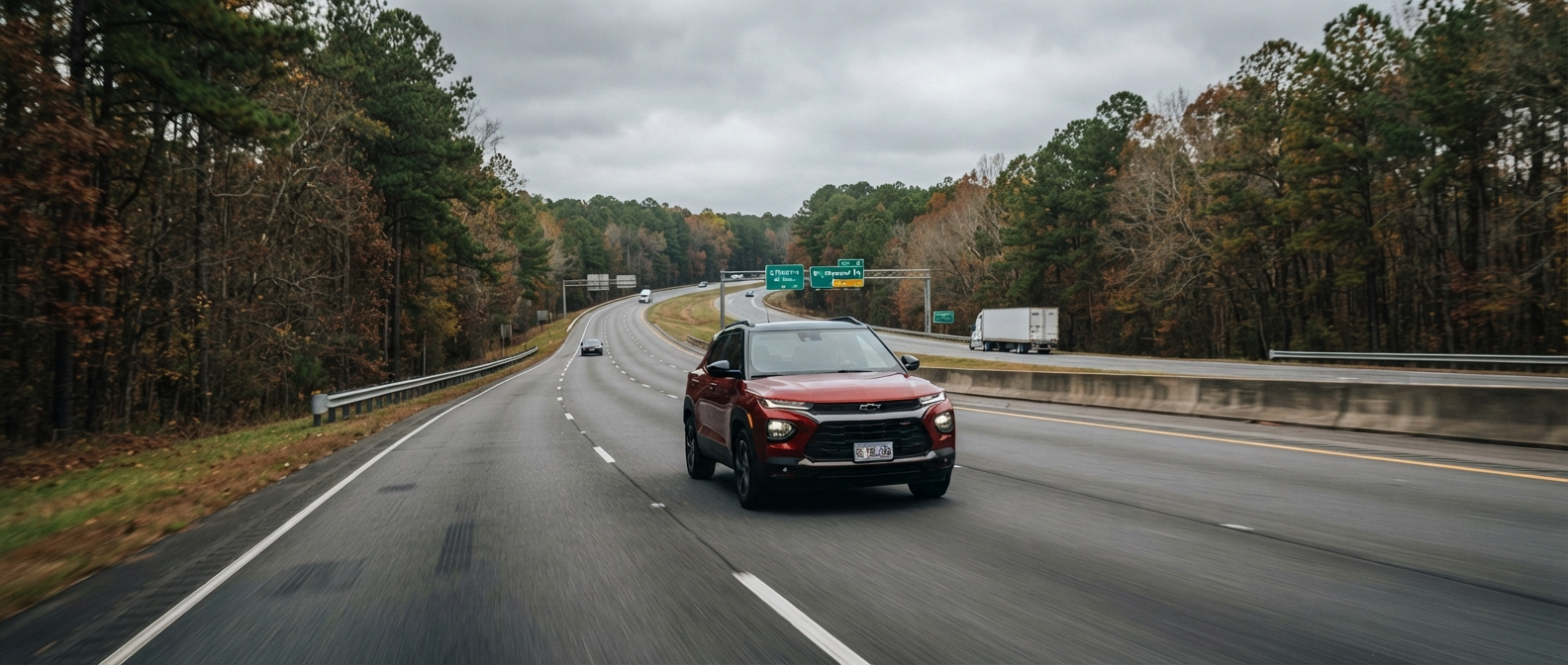
2026 Chevrolet Trailblazer on I-77 in South Carolina during a holiday shopping trip

Does the Trailblazer's Fuel Economy Actually Hold Up on Holiday Shopping Runs?

Winnsboro to Columbia on I-77 covers about 30 miles one way. Add parking, a stop-and-go loop through a crowded shopping center, and a loaded-down return trip, and that round trip tests whatever you're driving. A fair question this time of year is whether the 2026 Chevrolet Trailblazer will stretch its tank far enough to make the holiday run with fuel to spare. Yes, it will, though which Trailblazer you pick changes the math considerably. The difference between FWD and AWD isn't just a traction decision. You're swapping a transmission, raising engine load, and giving up a 4-mpg swing in combined efficiency. We'll cover what matters before you sign. The 2026 Trailblazer's 1.3L FWD is the fuel economy standout at 31 mpg combined (EPA estimate), while choosing AWD replaces the CVT with a 9-speed automatic and drops combined efficiency to 27 mpg. For most South Carolina winters, that trade-off deserves a close look. How Does the Trailblazer's Fuel Economy Actually Work? Three powertrain combinations give you three different efficiency stories, and the gap is wide enough to matter, since the 1.2L and 1.3L front-drive setups both post strong numbers while the AWD version trades a few mpg for extra grip. So the right pick depends on how you actually drive. The EPA's official 2026 ratings show the gap clearly. Configuration Engine Transmission City MPG Hwy MPG Combined MPG Tank Range (est.) 1.2L Turbo FWD (LS / LT) 1.2L turbo 3-cyl, 137 hp CVT 30 31 30 ~396 miles 1.3L Turbo FWD (RS / ACTIV FWD) 1.3L turbo 3-cyl, 155 hp CVT 29 33 31 ~435 miles 1.3L Turbo AWD (all AWD trims) 1.3L turbo 3-cyl, 155 hp 9-speed automatic 26 29 27 ~356 miles The EPA estimates are for the 2026 model year. Tank range estimates use the 13.2-gallon fuel tank at each configuration's combined mpg rating. Something counterintuitive turns up in those numbers. The larger 1.3L engine beats the smaller 1.2L on the highway, 33 mpg versus 31. Both engines run a CVT when paired with front-wheel drive, but the 1.3L's 174 lb-ft of torque arrives at just 1,500 rpm. That lower torque peak lets the CVT hold a less-stressed, more efficient engine speed at steady interstate cruising. The 1.2L works a bit harder to keep the same pace. That's why its highway number lands two mpg lower. Worth knowing: Both Trailblazer engines run on regular 87-octane. Small turbocharged engines in this class don't always allow that, and it keeps per-mile fuel costs predictable at any pump in Fairfield County. The AWD story gets interesting from here. Chevrolet doesn't simply bolt a rear axle onto the existing FWD drivetrain. Every 2026 Trailblazer with AWD gets the 1.3L engine and replaces the CVT with a 9-speed automatic gearbox. The 9-speed handles the torque demands of sending power rearward, but it steps through defined gear ratios instead of continuously optimizing rpm the way a CVT does. The gearbox change is the mechanical reason the AWD Trailblazer gives up 4 combined mpg against the identical engine in FWD, as much as the added drivetrain weight. See Current Trailblazer Offers Which Trailblazer Configuration Makes Sense for Fairfield County Driving? Browse our current Trailblazer lineup and you'll find both FWD and AWD trims in stock, and for most Fairfield County driving the front-drive 1.3L earns its keep, though AWD makes real sense when wet roads and heavy loads are a regular part of your week. Think it through on the routes our customers actually drive. Smooth Midlands pavement, steady speeds, and minimal elevation change are exactly where the 1.3L FWD's 33-mpg highway rating does its best work. The I-77 run from Winnsboro south to Columbia is essentially a highway trip. On a 60-mile round trip at steady highway speeds, the gap between FWD and AWD shows up on every fill-up, not just as a theoretical edge case. South Carolina's winter weather picture matters here. Winnsboro and Fairfield County see occasional frost and rare light snow, but prolonged icy road conditions are genuinely uncommon. Columbia's shopping districts see even less. For a buyer whose primary use is the holiday Columbia run (or a longer stretch north on I-77 toward Charlotte), AWD's traction advantage simply doesn't come into play on most December and January mornings. The trade-off is a fair one. AWD gives real confidence on the rare slick morning, and the 9-speed automatic has a more satisfying, conventional feel under hard acceleration. Those are legitimate benefits. You pay for them in fuel economy on every trip, though, even the dry ones. If you regularly carry a full cabin, stack heavy cargo after big shopping days, or drive through significant Midlands thunderstorm standing water, the AWD's rear-axle grip provides something the FWD can't match. For a driver whose calendar mostly shows dry I-77 miles, the FWD configuration keeps more money at the pump over time. Comparing to the Trax? If the holiday haul stays modest and a smaller footprint suits you, the Chevy Trax also runs a small turbocharged engine with competitive efficiency. The Trailblazer pulls ahead when cargo space is the priority. Its maximum cargo volume reaches 54.4 cubic feet, a meaningful jump when you're loading gifts in the back. Your Driving Situation Best Trailblazer Choice Combined MPG Mostly I-77 highway, dry Midlands roads, efficiency priority 1.3L FWD (RS or ACTIV FWD) 31 Mix of highway with frequent rain and occasional frost 1.3L AWD (LT AWD or RS AWD) 27 City-primary, want the highest city number 1.2L FWD (LS or LT) 30 Frequent full cabin, heaviest cargo loads 1.3L AWD 27 Quick Glossary Term What It Means in Plain Language CVT Continuously Variable Transmission. Uses a belt-and-pulley system instead of fixed gears, holding the engine at its most fuel-efficient RPM across the range. All FWD Trailblazers use this. 9-speed automatic A traditional stepped gearbox with nine defined gear ratios. All AWD Trailblazers use this. More conventional shift feel, slightly lower highway efficiency than the CVT. Combined MPG The EPA's weighted average: 55% city driving, 45% highway. The most practically useful single efficiency number. EPA rating The federal fuel economy estimate, produced under controlled laboratory conditions. Real-world results vary with speed, load, and outside temperature. What This Means When You're Ready to Decide The 2026 Trailblazer fits the kind of driving most Fairfield County families actually do, the I-77 runs to Columbia for work or shopping, weekend trips out toward Lake Wateree, and the occasional longer haul when the holiday calendar fills up, though real efficiency still hinges on your FWD-or-AWD choice. Its 13.2-gallon tank and highway numbers translate to fewer stops at the pump, not more. Our read is straightforward. If the Columbia holiday run is your primary use case and you don't face genuine traction challenges regularly, the 1.3L FWD is the efficiency-forward choice. It delivers 31 combined mpg and an estimated 435-mile highway range on regular fuel. If AWD would genuinely change how you feel on bad-weather mornings, or you haul heavier loads, it's a worthwhile step up. Just go in knowing the efficiency difference runs to 4 real combined mpg, enough to feel at the pump. Stop in on US 321 and we'll walk you through both drivetrains on the lot so the numbers line up against your actual driving habits. You can also get a head start by checking your financing options online before you come in. Frequently Asked Questions How many mpg does the 2026 Chevrolet Trailblazer get? The 2026 Trailblazer's EPA fuel economy depends on the configuration you choose. The 1.2L turbo FWD (LS and LT trims) is rated 30 city / 31 highway / 30 combined. The 1.3L turbo FWD (RS and ACTIV FWD) reaches 29 city / 33 highway / 31 combined. The 1.3L turbo with AWD (available on LT, RS, and ACTIV trims) is rated 26 city / 29 highway / 27 combined. The Trailblazer holds 13.2 gallons of regular 87-octane fuel, giving the most efficient FWD configuration an EPA-estimated highway range of roughly 435 miles. Why does choosing AWD lower the Trailblazer's fuel economy? Choosing AWD on the 2026 Trailblazer changes two things simultaneously: it adds the mechanical load of the rear drivetrain, and it replaces the CVT with a 9-speed automatic transmission. The CVT holds the engine at its most efficient RPM across the range during highway cruising, which is why FWD models reach 33 mpg on the highway. The 9-speed automatic moves through defined gear steps instead, which suits AWD's torque demands but cannot match the CVT's highway efficiency. The combined result is a 4-mpg difference between the 1.3L FWD and 1.3L AWD configurations. For most South Carolina driving, the choice comes down to whether that all-weather traction margin is worth the efficiency trade-off on your specific routes. Get Your Trade-In Value Wilson Chevrolet 798 us hwy 321 N BUSINESS, Winnsboro, SC 29180 (803) 402-4233

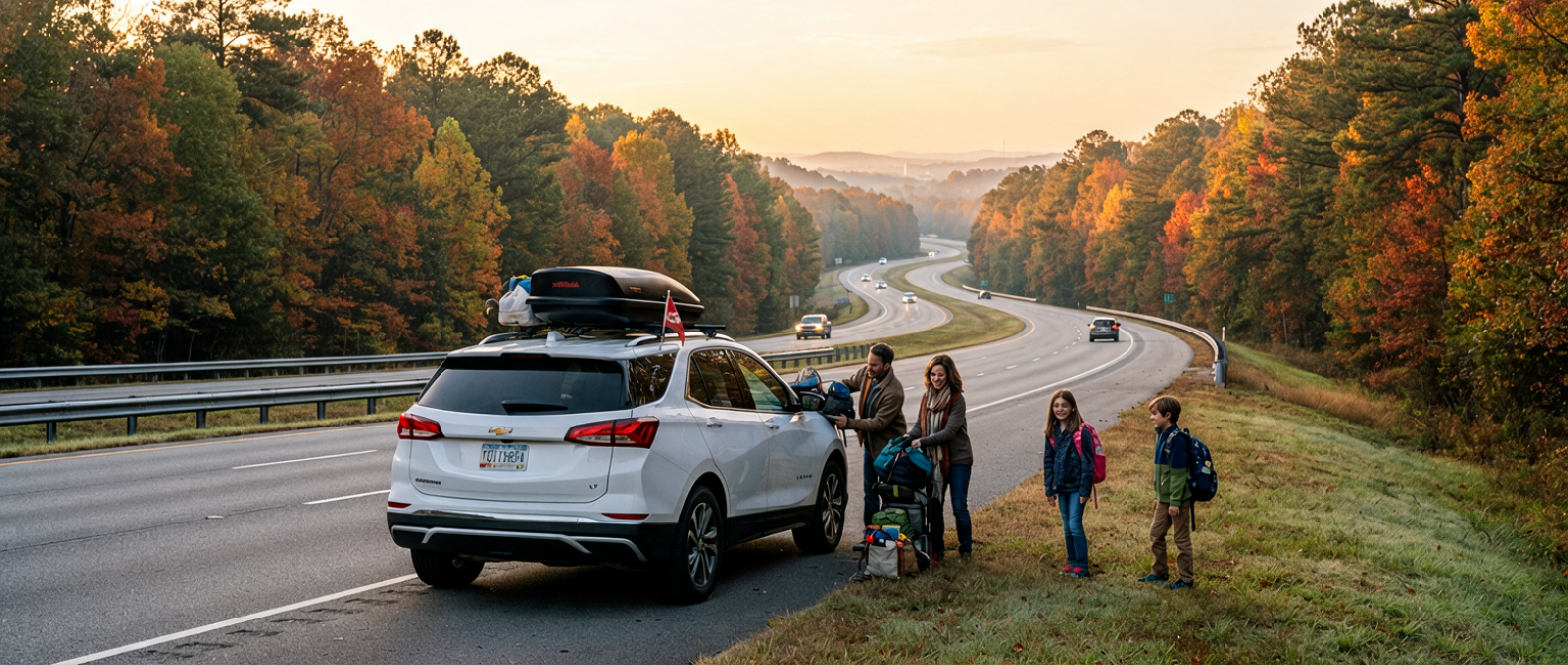
2026 Chevrolet Equinox on a South Carolina highway in fall foliage, ready for a Thanksgiving drive to Columbia

The 2026 Equinox Gives Every Seat a Warm Start on the Columbia Run

Chevrolet made a decision for 2026 that's easy to miss while you're scanning window stickers. Heated front seats and a heated steering wheel are now standard equipment on every Equinox trim, including the base LT. So a Fairfield County family loading up for the Thanksgiving run down I-77 doesn't have to step up to a pricier trim just to arrive in Columbia with warm hands. You get a real comfort upgrade at the entry level, and it's worth knowing what else the 2026 Equinox delivers on a 34-mile holiday drive. Browse the 2026 Equinox at Wilson Chevrolet For 2026, Chevrolet made heated front seats and a heated steering wheel standard on every Equinox trim, including the base LT. Rivals like the Toyota RAV4, Ford Escape, and Hyundai Tucson still charge extra for the same features. What Do the Specs Actually Mean for a Thanksgiving Drive? The 2026 Equinox runs a 1.5-liter turbocharged four-cylinder rated at 175 horsepower, and the figures that count more on a Thanksgiving trip are the ones tied to comfort and how the mileage holds up across the whole drive. That's plenty for I-77. Look at how those numbers play out once you're rolling. Feature 2026 Equinox Spec Why It Matters on a Holiday Run Heated front seats Standard, all trims Warm before the engine fully heats up on a cold November morning Heated steering wheel Standard, all trims Comfortable grip when temps drop into the 40s leaving Winnsboro EPA highway MPG (FWD) 29 mpg 34 miles to Columbia barely registers on the fuel gauge EPA highway MPG (AWD) 29 mpg Identical highway efficiency whether you opt for AWD or not Infotainment screen 11.3-inch touchscreen Easy to navigate and queue music without squinting Wireless Apple CarPlay / Android Auto Standard, all trims No cable needed when you're already running late Max cargo volume (rear seats folded) 63.5 cu ft Fits casserole dishes, overnight bags, and a folding chair Passenger volume 104.3 cu ft Five people across two rows with room to breathe Drive Mode Selector Standard, all trims (new for 2026) Quick adjustment if pavement is wet on that early-morning departure The EPA rates the FWD 2026 Equinox at 26 city / 29 highway / 27 mpg combined, and the AWD version holds that same 29-mpg highway figure. Run the stretch south from Winnsboro to Columbia and the round trip barely registers in a tank that holds between 14.8 and 15.6 gallons. There's nothing to fuss over. A Quieter Cabin Is the Real Upgrade Worth Talking About The biggest change between the 2025 and 2026 Equinox for a highway drive is a cabin Chevrolet reworked to cut road noise versus the outgoing model, and that's not filler language from a press release. You feel it on a 34-mile I-77 run as a conversation you can hold at a normal volume, no competing with tire hum. Need three rows for the whole family? Compare the Traverse The 11.3-inch infotainment screen and the 11-inch Driver Information Center are both standard across the lineup, and wireless Apple CarPlay and Android Auto come on every trim with no upgrade needed. Wired versus wireless is a fair thing to sort out before a road trip, and it matters more than you'd guess. No reaching for a Lightning cable when someone in the backseat is trying to pull up the parade. Want something a size smaller? See the Trailblazer Wireless phone charging is available on the RS and ACTIV trims, though not on the base LT. Stay at the entry level and you'll still have USB ports front and rear, plus the wireless CarPlay keeps the phone in your pocket or the cupholder instead of tethered to the dash. For what the LT runs, that's a fair tradeoff. Standard safety for 2026: Intersection automatic emergency braking and lane centering are now part of the standard Chevy Safety Assist suite on the 2026 Equinox. Both were optional upgrades on the 2025 model, and that reassurance counts when you're merging onto a busy on-ramp alongside holiday traffic on I-77. 2026 Equinox as a Thanksgiving Road Trip Vehicle: Honest Tradeoffs Pros Cons Heated seats and steering wheel standard on the base LT Wireless charging only on RS and ACTIV, not the LT 29 mpg highway on both FWD and AWD No hybrid option for buyers who want maximum efficiency Wireless CarPlay and Android Auto on every trim Five-passenger maximum (no third row) Quieter cabin vs. the 2025 model AWD towing capacity tops out at 1,500 lbs Drive Mode Selector standard across all 2026 trims 63.5 cu ft of cargo space with the rear seats folded Who Should Take an Equinox Down I-77 This Thanksgiving? A family of four or five that doesn't need a third row and isn't pulling a trailer is the right fit here, because the Equinox is a compact two-row SUV built for that kind of load rather than a convoy or a heavy tow. Columbia sits about 34 miles south of Winnsboro on I-77. The Equinox handles that corridor comfortably, parks without drama in a Columbia neighborhood, and for 2026 it delivers real warmth on a cold November morning without asking you to spend up past the base trim. See what Equinox models we have in stock If your guest list runs larger than five, or you're pulling something with real weight, we'd steer you toward the Traverse or the Tahoe instead. We're not hedging. Calling that out straight is what a good salesperson does before you find the problem in the parking lot at your in-laws' place. For the family that fits in two rows, though, the 2026 Equinox earns that trip. Standard heated seats. Standard wireless CarPlay. A noticeably quieter highway ride than last year. Those aren't small things when you're pulling out of a Winnsboro driveway at 6 a.m. on a 40-degree Thanksgiving morning. Frequently Asked Questions Does the 2026 Chevy Equinox have heated seats on the base trim? Yes. Heated front seats and a heated steering wheel are standard on every 2026 Equinox trim, including the base LT. That's a change from 2025, when heated seats on the entry trim required an upgrade. If you want warmth on the base model without stepping up to RS or ACTIV pricing, the 2026 LT delivers it as standard equipment. How far is Winnsboro to Columbia, and will the Equinox handle the trip without thinking about fuel? The drive from Winnsboro to Columbia via I-77 is about 34 miles, typically under 40 minutes in normal traffic. The EPA rates the 2026 Equinox FWD at 26 city / 29 highway / 27 mpg combined, and the AWD version matches that 29-mpg highway figure. At those numbers you're looking at roughly 1.2 gallons for the round trip. The tank holds between 14.8 and 15.6 gallons depending on the configuration, so there's nothing to think about on fuel for a holiday run to Columbia and back. Explore Financing Options Wilson Chevrolet 798 us hwy 321 N BUSINESS, Winnsboro, SC 29180 (803) 402-4233

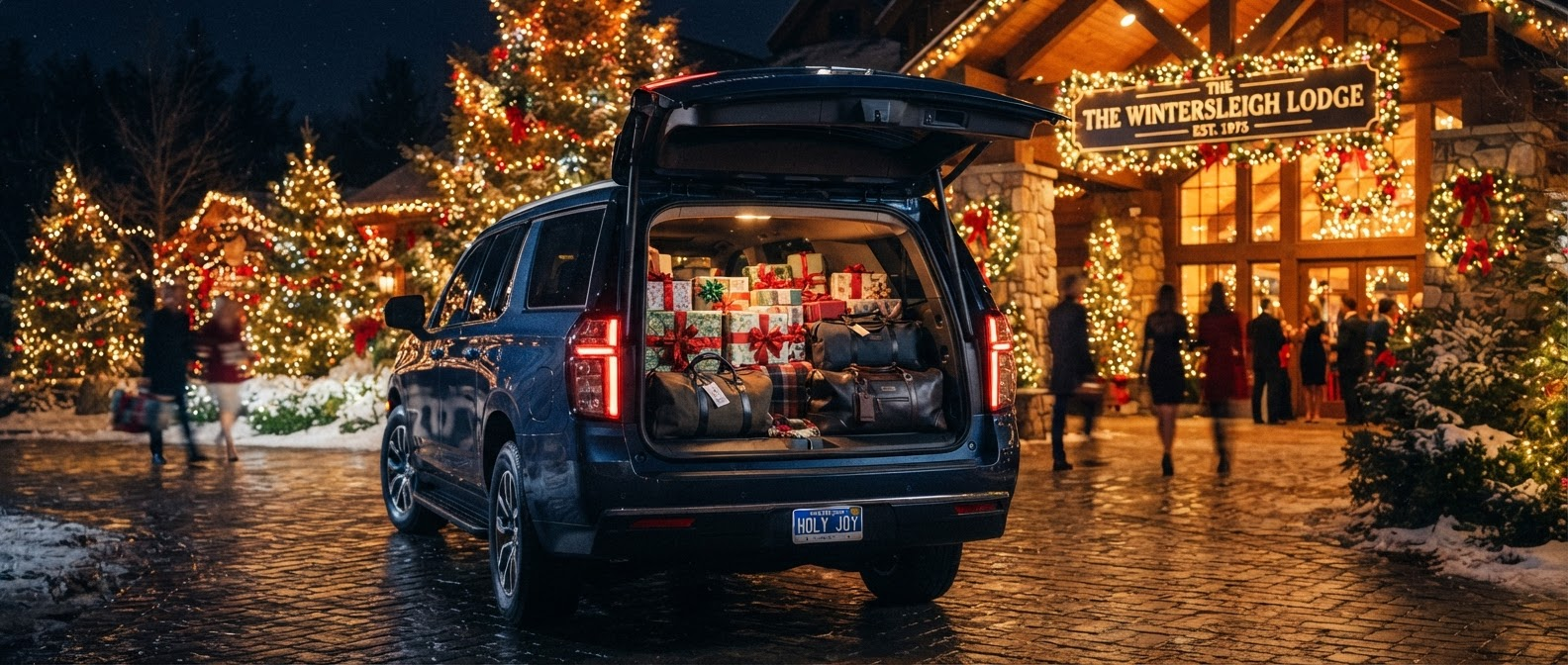
2026 Chevrolet Suburban rear cargo area loaded with holiday gifts and bags, ready for a Charlotte, NC holiday event trip

Your Charlotte Holiday Logistics Guide: Making the 2026 Suburban Work for You

In this article Where Do You Park, and When Should You Leave Winnsboro? The Maneuvering Play: Knowing the Suburban's Size Is Half the Battle What Fits, Row by Row: Loading the Suburban for the Trip Up Your Go-Bag Checklist for the Charlotte Run Charlotte goes big over the holidays. Three major events, millions of visitors, and uptown parking lots that fill faster than you'd expect. Load the Suburban right, leave Winnsboro at the right time, and you spend the evening actually enjoying the lights instead of circling a garage. For this run, the 2026 Chevrolet Suburban is the right tool. It seats up to nine passengers and holds 41.5 cubic feet of cargo behind the third row. Everybody stays buckled, the gifts ride along, and you're not playing Tetris with your family before you even hit I-77. Where Do You Park, and When Should You Leave Winnsboro? Charlotte's three biggest holiday draws each run on their own parking reality, and the short version is that when you leave Winnsboro matters more than which lot you aim for, with one exception at the Speedway where your vehicle is the venue. Arrive at the wrong time, and you're walking half a mile in the cold. Plan ahead, and the Suburban fits right where you need it. Event Arrive By Best Parking Option Suburban Fit Note Key Tip Speedway Christmas (Concord) 30 min before opening On-site speedway lots off Bruton Smith Blvd via I-85 Exit 49 Drive-thru format. Your Suburban IS the venue; no tight spaces Pull to the right lane early to park at Christmas Village (Thu-Sun only) Charlotte Thanksgiving Eve Parade 4:30 PM or earlier Garages several blocks off Tryon Street; avoid parade-route-adjacent blocks Standard garage stalls; mind the 81-inch width without mirrors Allow 60+ minutes for walking and crowd navigation after the show ends Carolina Holiday Light Spectacular (Ballantyne) 5:00 PM Free parking at the Wells Fargo deck, 11611 N. Community House Rd Deck stalls accommodate full-size SUVs; arrive early. Lot fills quickly Free parking is always available; arriving early is the only variable you control Speedway Christmas: The Easiest Parking Win of the Season Speedway Christmas at Charlotte Motor Speedway in Concord runs November 20, 2026, through January 3, 2027. The format is a drive-thru event over a 4-mile course with more than five million lights synchronized to music. You never leave the Suburban, and that's exactly why it's so easy. The whole family piles in, you tune to the station on the radio, and you drive the same oval NASCAR runs. From Winnsboro, take I-77 north to I-85 north and exit at Bruton Smith Blvd (Exit 49). The speedway lots are right there. A per-vehicle admission covers everyone inside, so a full nine-passenger load genuinely stretches the value. On Thursday through Sunday nights, a Christmas Village opens in the infield if you'd rather park and walk. Pull right as you enter to queue for village parking. The one real tradeoff comes on December weekends, when the entry queue packs hard and multiple visitors report hour-plus waits you'll sit through on Friday and Saturday peak nights. Weeknights from Monday to Wednesday move faster, even if the village is closed those evenings. Charlotte Thanksgiving Eve Parade: Uptown Is a Different Animal The Novant Health Thanksgiving Eve Parade runs Wednesday, November 25, 2026, along Tryon Street in Uptown Charlotte, with step-off at 5:30 PM. It draws well over 100,000 spectators. Uptown is not Speedway Christmas. You're parking in a structured garage on city streets, and the Suburban's 226.3-inch length and 81-inch width (without mirrors) mean you want a garage with full-size SUV clearance. Avoid anything that posts a low-clearance sign under 6.5 feet. So park in a garage at least four blocks from Tryon Street. The closest garage feels smart before the parade, but after the show those same blocks gridlock first. Give yourself 60 minutes minimum for post-event exit. You'll be glad you did. Browse our new inventory before your trip if you've been thinking about an upgrade. A cold November night in Uptown is where you notice whether your current SUV pushes enough heat to the third row. The Maneuvering Play: Knowing the Suburban's Size Is Half the Battle At 226.3 inches long, the Suburban is nearly 19 feet of vehicle, and that length is a planning fact more than a problem, since most standard parking structures handle it fine and only underground boutique garages and tight festival surface lots call for a second thought. Chevrolet lists the turning diameter at 43.3 feet, so you'll want to keep that in mind in the tightest decks. The Chevrolet Tahoe is a real alternative if you have five or fewer passengers and want a more maneuverable footprint. It's about 17 inches shorter. The tradeoff lands on cargo. The Tahoe's maximum cargo volume is 122.9 cubic feet versus the Suburban's 144.5 cubic feet, and if you're carrying gifts, gear, and a full family, that 21-cubic-foot difference shows up fast. In tight lots, back the Suburban in. The camera system gives you a clear rear picture, and backing in lets you pull straight forward when it's time to leave, which matters at event end when every other car is also pulling out. Parking width reality check. The 2026 Suburban measures 81 inches wide without mirrors. Standard parking spaces run 8.5 to 9 feet wide (102 to 108 inches). You've got room. The tight spots are narrow urban decks built before full-size SUVs became common. Look for a posted minimum width of 8.5 feet or choose end-cap and corner spots. Third-row etiquette. If your event involves a lot of in-and-out loading (think a holiday market rather than a fixed event), park once and stay put, because you're not gaining anything by circling. Moving a loaded Suburban through a crowded surface lot repeatedly costs time. Pick your spot, lock in, and walk. See Current Chevrolet Holiday Offers What Fits, Row by Row: Loading the Suburban for the Trip Up The cargo numbers break down into three real configurations for a family run to Charlotte, and which one you use depends on how many seats you need filled, so the trade between people and packages is what you'll want to settle before you load. With all three rows occupied (your full crew aboard): Chevrolet lists 41.5 cubic feet behind the third row. That holds four standard checked-bag-size suitcases or the equivalent in shopping bags and gift boxes. Enough for an overnight or a serious shopping haul, not enough for the camping gear you'd packed for a Lake Wateree trip last summer. Third row folded, second row occupied: 93.8 cubic feet. Now you're loading a stroller, a pack-n-play, ski bags, or a genuinely large holiday gift haul while still carrying five passengers. Both rear rows folded: 144.5 cubic feet. That number is the cargo-only configuration, and it's enormous. A full family won't use it on a Charlotte holiday trip, but it's the number that answers "could we just load up everything for grandma's house AND a hotel stay?" Yes. The Chevrolet Traverse is worth a look if your crew is five or six and cargo is your main question. Smaller overall footprint, easier city maneuvering, and still three rows. It won't match the Suburban's max cargo or its ability to seat nine, but if Charlotte's parking geometry makes you nervous, the Traverse is an honest alternative that fits a standard garage stall more comfortably. Your Go-Bag Checklist for the Charlotte Run Run through this list before you back out of the driveway on US 321, because the small stuff like tickets, chargers, and a meeting point is what saves the evening, and none of it costs you time once you've loaded the Suburban. [ ] Confirm event tickets or entry requirements on your phone before you leave Winnsboro (some events require digital tickets, not walk-up entry) [ ] Download an offline map of the Charlotte/Concord area. Event-night cell service gets spotty in heavy crowds [ ] Pack a portable USB charger or plug into the Suburban's power outlets so phones don't die at the end of the night [ ] Note your parking deck level and section number the moment you park (you'll thank yourself at 9 PM with tired kids) [ ] Layers for everyone. Charlotte's November nights run cold, and parade viewing means standing still for an hour [ ] Set a specific post-event meeting point before you split up at any large venue [ ] Load cargo in reverse departure order: the last things you'll need go in first, closest items go in last [ ] Check I-77 northbound travel time on departure day. Holiday weekend traffic adds 20 to 40 minutes to the Winnsboro-to-Charlotte run on the heaviest travel days Schedule a pre-trip service check before the holiday run. Fresh tires and a solid oil service before November travel, and you'll have one fewer thing to think about when I-77 gets busy. Go enjoy it. You'll find the lights are worth the drive. Schedule a Pre-Trip Service Check Wilson Chevrolet 798 us hwy 321 N BUSINESS, Winnsboro, SC 29180 (803) 402-4233