




Blog

Silverado 1500 vs. GMC Sierra 1500: An Honest Take for Fairfield County Drivers

2026 Chevrolet Silverado 1500 crew cab towing a boat at a South Carolina lake ramp

Short version first. Both trucks ride on the same frame, pull the same trailer, and run the same engines. So the question isn't whether either one is capable. Both are. What matters is which one fits what Fairfield County actually asks of a truck, and that answer runs more specific than most comparisons let on.

The 2026 Silverado 1500 is what we carry at Wilson Chevrolet. We're going to be straight with you about both trucks, because you'll make a better decision that way, and a better decision means you come back.

What Are You Actually Getting Under the Hood?

Both trucks share the same T1 platform and the same four-engine lineup, so the hardware doing the towing is identical no matter which badge sits on the grille, and the difference you're shopping for shows up somewhere other than the engine bay. Full stop. The 2.7L TurboMax four-cylinder tows up to 9,500 pounds on either nameplate. The 5.3L V8 reaches 11,300 pounds. Max out with the 6.2L V8 or the Duramax 3.0L turbo-diesel and both trucks hit 13,300 pounds of towing capacity when properly equipped with the Max Trailering Package. Chevrolet lists the same figures on the Silverado spec sheet that GMC publishes for the Sierra.

Where payload gets interesting is in the details. The 2026 Silverado 1500 with the TurboMax engine carries up to 2,260 pounds. The Sierra in the same configuration tops out at 2,240 pounds. Twenty pounds is not the reason to buy a truck. But it shows up across every engine pairing (the Silverado edges the Sierra in raw payload in each configuration), and if you're running a fifth-wheel setup where every pound of tongue weight counts against your bed's rating, that margin matters more than it sounds.

Give the Duramax diesel a direct callout. The EPA rates it at 23 city / 28 highway / 25 combined MPG in 2WD trim, the best highway fuel economy in the full-size truck segment, and it's available in both the Silverado and the Sierra. If you're making runs down I-77 to Columbia and back multiple times a week with a trailer behind you, that diesel pays for itself in ways a gas V8 simply doesn't.

How Do These Trucks Actually Compare? (The Decision Table)

They split apart on the parts you touch rather than the parts that pull, so the table below lines them up side by side, matches the numbers where they overlap, and then flags the one row most Fairfield County comparisons leave out. Same bones underneath, and it's the skin and packaging that changes.

Feature2026 Silverado 15002026 Sierra 1500
Max towing (properly equipped)13,300 lbs13,300 lbs
Max payload (TurboMax config)2,260 lbs2,240 lbs
Duramax EPA highway MPG28 mpg28 mpg
Trailering camera viewsUp to 14Up to 14
Multi-position tailgateMulti-Flex (6 positions, available)MultiPro (6 positions, standard higher trims)
Interior finish directionWork-ready, tactile controlsMore premium materials, refined cabin
Top-tier trimHigh CountryDenali / Denali Ultimate
Off-road factory trimZR2AT4 / AT4X
Dealer within Fairfield CountyWilson Chevrolet, WinnsboroNo GMC dealer locally

Most Fairfield County comparison articles leave that last row out entirely. If something goes wrong on your Sierra on a Saturday afternoon and the nearest dealer is 30 miles down the road, you'll notice that premium cabin matters a lot less.

See Current Silverado Offers

Where Does the Sierra Actually Win?

The Sierra earns its clearest win inside the cabin, where the interior runs noticeably more refined at comparable trim levels than anything on the Silverado side, and the frame and tow ratings underneath still match pound for pound. We'll say that plainly, because pretending otherwise wouldn't help you.

The Denali Ultimate offers 16-way power massaging seats, full-grain leather, and genuine open-pore wood trim (none of which you'll find in the Silverado High Country at the same level). The Sierra also tends to package advanced trailering cameras and the integrated brake controller as standard equipment on more trims, meaning you climb to a lower rung on the trim ladder to get those features unlocked.

The MultiPro Tailgate, standard on Sierra SLT and above, functions as a work step, a full-width step, a load stop, and more. The Silverado's Multi-Flex Tailgate offers the same six positions but isn't always included at the same trim level. At a Carolina Adventure World trailhead on a Saturday morning, loading ATVs with six people standing around, that tailgate difference is real and you'll feel it.

If you spend a lot of time commuting up I-77 toward Charlotte and your truck is also your daily driver, the Sierra's quieter cabin and more premium touches are genuinely worth comparing. We won't pretend otherwise.

Worth knowing: Neither truck's trailering tech actually differs in what it *does*. Both offer up to 14 camera views, transparent trailer view, hitch guidance, and an integrated in-vehicle trailering app. The Sierra includes those features on more trims without extra packages. If you're configuring a mid-level truck and don't want to add packages, that's a genuine Sierra advantage.

Explore financing options for either direction you're leaning. Our team can walk you through trim-level comparisons and what's actually in stock.

A Print-and-Go Checklist Before You Decide

Run through this list before you visit any lot, because the right badge depends less on the brochure and more on your trailer weight, your cab and bed choice, and how far you're willing to drive for service. Print it, check the boxes, and go.

  • [ ] Know your trailer weight. Find your current or planned trailer's loaded weight and compare it to the engine ratings above.
  • [ ] Check your cab and bed. Tow and payload ratings shift depending on Regular Cab vs. Double Cab vs. Crew Cab, and short bed vs. standard.
  • [ ] Decide diesel or gas. If you haul frequently and run I-77 or US 321 regularly, the Duramax's 28 mpg highway (EPA-estimated) changes the math on total cost of ownership.
  • [ ] Confirm which tailgate features matter to you. If you load from the side and step in regularly (boat launches at Lake Wateree, for example), the multi-position gate matters in practice, not just on paper.
  • [ ] Identify which trim gets you the trailering tech you want. On the Silverado, confirm whether you need to add the trailering package. On the Sierra, verify which trim includes it standard.
  • [ ] Think about service proximity. How far are you driving for maintenance and service? Local access has real value over months and years.
  • [ ] Ask about available inventory. Configurations on a lot beat a build-to-order wait when your hauling need is now.

Plan It This Way: Which Truck for Fairfield County

If you're running a boat to Lake Wateree on weekends, towing a cargo trailer for work, or hauling gear to Carolina Adventure World, the Silverado 1500 covers every real-world capability ask a Fairfield County driver has, and it matches the Sierra pound for pound on the tow numbers. Our Silverado 2500 HD is the next step if your trailer weight pushes past the half-ton ceiling consistently. Browse our current Silverado inventory to see what's on the ground in Winnsboro right now.

The honest tradeoff runs like this. The Sierra wins on interior refinement and cabin polish at matching trims. If a more premium daily experience matters most and you're willing to drive for service, it deserves a test drive. But if you want a truck that works hard in Fairfield County, has dealer support on US 321, and doesn't ask you to pay for a cabin upgrade you'll mud up by October, the Silverado 1500 is exactly what it looks like. It's a truck built to be used.

By the Wilson Chevrolet Team | September 2026

Frequently Asked Questions

Are the 2026 Silverado 1500 and GMC Sierra 1500 actually the same truck?

They're built on the same T1 platform, the same four-engine lineup (2.7L TurboMax, 5.3L V8, 6.2L V8, and 3.0L Duramax diesel), the same maximum towing capacity of 13,300 pounds when properly equipped, and the same core trailering technology. The meaningful differences are in interior materials and finish quality, how features are packaged across trim levels, and the trim names themselves. The Sierra positions itself as the more premium choice, while the Silverado focuses on work-ready value and payload.

Does the Silverado or the Sierra get better fuel economy?

Neither wins this one clearly. They're virtually identical. Both trucks with the 3.0L Duramax diesel earn EPA-estimated ratings of 23 city / 28 highway / 25 combined MPG in 2WD. The 2.7L TurboMax gas engine returns 18 city / 21 highway / 20 combined on both trucks in 2WD. If you're choosing between these two trucks specifically on fuel economy, the engine you pick matters far more than the badge on the grille.

Does it matter that Wilson Chevrolet doesn't sell the Sierra?

It matters more than the badge comparison suggests. Service appointments and regular maintenance all happen at a franchised dealer for that brand. If you buy a Sierra and the nearest GMC dealer is 25 to 35 miles away, that shop becomes the one handling your truck's service life. Wilson Chevrolet's service center is on US 321 in Winnsboro (that's a meaningful difference for Fairfield County drivers who don't want to spend an afternoon driving to and from a Columbia service lane).

Wilson Chevrolet

798 us hwy 321 N BUSINESS, Winnsboro, SC 29180

(803) 402-4233

Recommended Posts

2026 Chevrolet Tahoe towing a boat trailer at a South Carolina lake ramp

The Grand Wagoneer Wins on Towing (Until You Load Your Family In)

{ "@context": "https://schema.org", "@type": "AutoDealer", "name": "Wilson Chevrolet", "url": "https://www.wilsonchevy.com", "telephone": "(803) 402-4233", "address": { "@type": "PostalAddress", "streetAddress": "798 us hwy 321 N BUSINESS", "addressLocality": "Winnsboro", "addressRegion": "SC", "postalCode": "29180" } } { "@context": "https://schema.org", "@type": "Article", "headline": "The Grand Wagoneer Wins on Towing (Until You Load Your Family In)", "publisher": { "@type": "Organization", "name": "Wilson Chevrolet" }, "datePublished": "2026-09-17", "dateModified": "2026-09-17" } #just-private-label * { box-sizing: border-box; } #just-private-label { font-family: inherit; line-height: 1.7; color: #333333; max-width: 800px; margin: 0 auto; padding: 20px; } #just-private-label h2 { font-size: 1.5em; font-weight: 600; margin-top: 1.5em; margin-bottom: 0.75em; color: #000000; } #just-private-label h3 { font-size: 1.2em; font-weight: 600; margin-top: 1.2em; margin-bottom: 0.5em; color: #000000; } #just-private-label p { margin-bottom: 1em; font-size: 1em; } #just-private-label a { color: #000000; text-decoration: underline; } #just-private-label a:hover { text-decoration: none; } #just-private-label strong { font-weight: 600; } #just-private-label ul, #just-private-label ol { margin-bottom: 1em; padding-left: 1.5em; } #just-private-label li { margin-bottom: 0.5em; } #just-private-label .tip-box { background-color: #f9f9f9; border-left: 4px solid #333333; padding: 15px; margin: 1.5em 0; } #just-private-label .faq-section { background-color: #f5f5f5; padding: 30px; margin: 2em 0; } #just-private-label .faq-section h2 { margin-top: 0; margin-bottom: 1em; padding-bottom: 15px; border-bottom: 2px solid #333333; } #just-private-label .faq-item { margin-bottom: 1.5em; padding-bottom: 1.5em; border-bottom: 1px solid #e0e0e0; } #just-private-label .faq-item:last-child { margin-bottom: 0; padding-bottom: 0; border-bottom: none; } #just-private-label .faq-item h3 { color: #000000; margin-top: 0; margin-bottom: 0.5em; font-size: 1.1em; } #just-private-label .faq-item p { margin-bottom: 0; color: #333333; } #just-private-label .cta-section { margin-top: 2em; padding: 20px; text-align: center; } #just-private-label .cta-button { display: inline-block; padding: 12px 24px; margin: 10px; background-color: #bb8b35; color: #ffffff !important; text-decoration: none; font-weight: 600; } #just-private-label .cta-button:hover { opacity: 0.9; text-decoration: none; } #just-private-label .dealer-footer { margin-top: 40px; padding-top: 20px; border-top: 1px solid #e0e0e0; text-align: center; font-size: 14px; color: #666666; } #just-private-label .dealer-footer p { margin: 5px 0; } @media (max-width: 600px) { #just-private-label { padding: 15px; } #just-private-label h2 { font-size: 1.3em; } #just-private-label h3 { font-size: 1.1em; } #just-private-label .cta-button { display: block; margin: 10px 0; } } In this article Is the Grand Wagoneer Really the Better Family Hauler? What These Numbers Mean at Lake Wateree Where the Grand Wagoneer Genuinely Wins So What Should a Winnsboro Family Actually Do? One number shows up in practically every comparison of these two full-size SUVs. 10,000 pounds is the Grand Wagoneer's maximum tow rating, and it's a real figure. The Tahoe tops out at 8,400 lbs with the Max Trailering Package. On paper, the Jeep wins. So, case closed, right? The reality is not quite that clean. At Wilson Chevrolet we talk with Fairfield County families who've done their homework and arrive convinced the Grand Wagoneer is the obvious hauler. Then we walk through what those numbers mean once five people, luggage, and a boat tongue enter the equation, and the conversation gets a lot more interesting. The 2026 Chevrolet Tahoe is the vehicle we sell here, so we're clearly not a neutral party. We also won't pretend the Wagoneer lacks real strengths, because it has them. What we can do is show you where each myth lives and what the verified specs actually say. The short version The Grand Wagoneer's 10,000-lb tow rating is real, but its 1,470-lb payload means a full family load significantly eats into what you can safely pull. The Tahoe's payload sits around 2,020 lbs, giving it more working headroom once passengers and gear are aboard. The Grand Wagoneer requires premium fuel on its Hurricane Twin-Turbo engine. The Tahoe's base 5.3L V8 runs on regular 87 octane. The Tahoe's independent rear suspension produces a flat load floor and 122.7 cu ft of maximum cargo space, more than the standard-wheelbase Grand Wagoneer's 116.7 cu ft. The Grand Wagoneer's third row genuinely is more spacious (36.6 in of legroom vs. the Tahoe's 34.9 in), and its cabin refinement is a real advantage. Is the Grand Wagoneer Really the Better Family Hauler? The Grand Wagoneer really does tow more on paper, yet it isn't automatically the better family hauler once your load gets realistic, because maximum towing and what you can pull with five people and their gear aboard are two very different numbers, and that difference is exactly where the myth lives. The 10,000-lb figure comes from Jeep's own spec page for the 2026 Grand Wagoneer. It's legitimate, and it's best in class. The Tahoe's 8,400 lbs is legitimate too, verified by Chevrolet with the Max Trailering Package on a rear-wheel-drive model with the 5.3L V8. The Claim What's Actually True "The Wagoneer tows 10,000 lbs, so it's the better hauler" Max tow is measured unloaded. The Grand Wagoneer's payload is 1,470 lbs (Jeep). Load five passengers plus luggage and you've consumed most of it before the tongue weight is counted. "The Tahoe can't compete on towing" Chevrolet rates the 2026 Tahoe at up to 8,400 lbs properly equipped. With roughly 2,020 lbs of payload (Chevrolet), more capacity remains after passengers and cargo are aboard. "The Wagoneer's Hurricane engine is more efficient" The Grand Wagoneer's Hurricane Twin-Turbo requires premium fuel. The Tahoe's standard 5.3L V8 runs on regular 87 octane (a real cost difference at every Fairfield County fill-up). "The Tahoe's third row is for kids only" Chevrolet lists 34.9 inches of third-row legroom for the 2026 Tahoe, made possible by the independent rear suspension that lowered the floor. Adults fit. "The Grand Wagoneer has more cargo space" The Tahoe's independent rear suspension creates a flat load floor and 122.7 cu ft of maximum cargo volume. The standard-wheelbase Grand Wagoneer reaches 116.7 cu ft. Behind the third row with everyone seated, the Wagoneer leads slightly (27.9 vs. 25.5 cu ft). "Both run the same kind of fuel" They do not. The Grand Wagoneer's Hurricane Twin-Turbo is a premium-fuel engine. The Tahoe's 5.3L V8 is designed for regular unleaded. What These Numbers Mean at Lake Wateree Families shopping three-row SUVs in Fairfield County usually plan the purchase around one weekend scenario, loading the boat for Lake Wateree or hitching the camper for a run south on I-77, and the spec that decides that day is payload, not the tow figure on the brochure. Let's put real weight to the numbers. A typical family of five adults averaging 175 lbs each is 875 lbs of human beings. Add luggage, a cooler, and gear for a weekend on the water and you're realistically at 1,100 to 1,200 lbs of payload before you hook a trailer. The Grand Wagoneer's 1,470-lb payload (Jeep's published figure) leaves you roughly 270 to 370 lbs for tongue weight. A standard bass boat trailer puts 200 to 400 lbs of tongue weight on the hitch. You're right at the edge. The Tahoe's payload of approximately 2,020 lbs (Chevrolet) leaves more margin in that same scenario. None of this knocks the Wagoneer's engineering. A heavier, more luxurious truck simply carries more of its own weight. The Grand Wagoneer's tow rating is legitimate. Its payload rating is the number that actually limits what a full family can pull, and at 1,470 lbs, it's the tighter constraint of the two. The fuel question is just as practical. Our lot sits on US 321 in Winnsboro. The Tahoe's standard 5.3L EcoTec3 V8 is designed for regular 87 octane (Chevrolet), so every 5.3L Tahoe we send home runs on the same fuel as the rest of town. The Grand Wagoneer's Hurricane Twin-Turbo engine runs on premium instead. Premium adds up. That recurring ownership cost never shows up in a spec table. See Current Tahoe Offers Where the Grand Wagoneer Genuinely Wins The Grand Wagoneer genuinely wins in a few specific places, and we'd be doing you a disservice to pretend otherwise, so here is where the extra money buys something real rather than a bigger tow figure on the window sticker. This Wagoneer earns its keep on a handful of dimensions worth naming plainly. Third-row legroom is one of them. Jeep lists 36.6 inches in the 2026 Grand Wagoneer. Chevrolet lists 34.9 inches in the Tahoe. That's nearly two inches, and on a two-hour drive it's the difference between an adult sitting normally and an adult angling their knees sideways. If your third row carries teenagers or adults regularly, the Wagoneer's numbers are better. Cabin refinement is the other one. The Grand Wagoneer's interior is genuine luxury territory (quilted leather, open-pore wood trim, standard front-seat ventilation and massage functions, a suede headliner on upper trims). A Tahoe High Country is a premium interior in its own right, with a 17.7-inch diagonal touchscreen standard across the lineup and available Bose audio. Still, the Wagoneer sits in a different segment for interior feel, closer to an Escalade than a loaded Tahoe. If cabin experience is the priority and your towing needs are modest (under 7,000 lbs with a full family load), the Wagoneer makes a compelling case. The honest tradeoff is real. You pay a good deal more, you'll buy premium fuel every time, and your real-world family-loaded tow capacity is more constrained than the headline number suggests. Per Chevrolet's published 2026 specifications, the Tahoe's independent rear suspension produces a flat cargo floor and a maximum cargo volume of 122.7 cubic feet. That figure represents an increase of approximately 10 cubic feet over the previous solid-axle generation. Get a trade-in appraisal when you're ready to compare what each vehicle costs to own month over month, well beyond the purchase price. So What Should a Winnsboro Family Actually Do? Start from the weight you'll actually pull on a normal Saturday, then add a real passenger-and-gear estimate to the payload column, because that arithmetic, and not the brochure's headline tow figure, is what tells you which SUV's real-world capacity matches how your family truly uses it. Run that math before you fall for the biggest number. Pull a 5,000-lb pontoon to Lake Wateree with the full family aboard and you'll want room to spare in the payload budget. The 2026 Tahoe's combination of towing capacity and higher payload gives you that margin. It runs 87 octane, and with the available Duramax 3.0L diesel, Chevrolet rates it for over 600 miles of highway range on a single tank, practical for I-77 runs to Charlotte or Columbia. Carry adults in your third row every week, keep your towing under 7,000 lbs, and value cabin feel as much as capability, and the Grand Wagoneer's legroom and interior quality become genuine advantages worth having. We carry the 2026 Tahoe here at Wilson Chevrolet on US 321 in Winnsboro. We can walk you through every trim and every engine option, and we'll be straight with you about which configuration fits your actual hauling life, not just the one with the biggest number on the spec sheet. By the Wilson Chevrolet Team | September 2026 Frequently Asked Questions { "@context": "https://schema.org", "@type": "FAQPage", "mainEntity": [ { "@type": "Question", "name": "Does the 2026 Chevrolet Tahoe's third row actually fit adults?", "acceptedAnswer": { "@type": "Answer", "text": "Yes. Chevrolet lists 34.9 inches of third-row legroom in the 2026 Tahoe. That measurement became possible when the current generation switched to an independent rear suspension, which lowered the floor and added roughly 10 cubic feet of rear cargo space compared to the previous solid-axle design. Adults fit in the third row on real road trips, not just kids." } }, { "@type": "Question", "name": "What fuel does the 2026 Grand Wagoneer require compared to the Tahoe?", "acceptedAnswer": { "@type": "Answer", "text": "The Grand Wagoneer's Hurricane Twin-Turbo engine requires premium fuel. The Tahoe's standard 5.3L EcoTec3 V8 is designed for regular 87 octane, and the available 3.0L Duramax diesel runs on diesel fuel. For most Winnsboro families filling up regularly, the Tahoe's regular-fuel V8 is the more straightforward ownership proposition. FAQ: - Does the 2026 Chevrolet Tahoe's third row actually fit adults? Yes. Chevrolet lists 34.9 inches of third-row legroom in the 2026 Tahoe. The independent rear suspension lowered the floor and added roughly 10 cubic feet of rear cargo space compared to the previous design. Adults fit in the third row on real road trips. - What fuel does the 2026 Grand Wagoneer require compared to the Tahoe? The Grand Wagoneer's Hurricane Twin-Turbo engine requires premium fuel. The Tahoe's standard 5.3L EcoTec3 V8 is designed for regular 87 octane, and the available 3.0L Duramax diesel runs on diesel fuel." } } ] } Does the 2026 Chevrolet Tahoe's third row actually fit adults? Yes. Chevrolet lists 34.9 inches of third-row legroom in the 2026 Tahoe. That measurement became possible when the current generation switched to an independent rear suspension, which lowered the floor and added roughly 10 cubic feet of rear cargo space compared to the previous solid-axle design. Adults fit in the third row on real road trips, not just kids. What fuel does the 2026 Grand Wagoneer require compared to the Tahoe? The Grand Wagoneer's Hurricane Twin-Turbo engine requires premium fuel. The Tahoe's standard 5.3L EcoTec3 V8 is designed for regular 87 octane, and the available 3.0L Duramax diesel runs on diesel fuel. For most Winnsboro families filling up regularly, the Tahoe's regular-fuel V8 is the more straightforward ownership proposition. Value Your Trade-In Wilson Chevrolet 798 us hwy 321 N BUSINESS, Winnsboro, SC 29180 (803) 402-4233

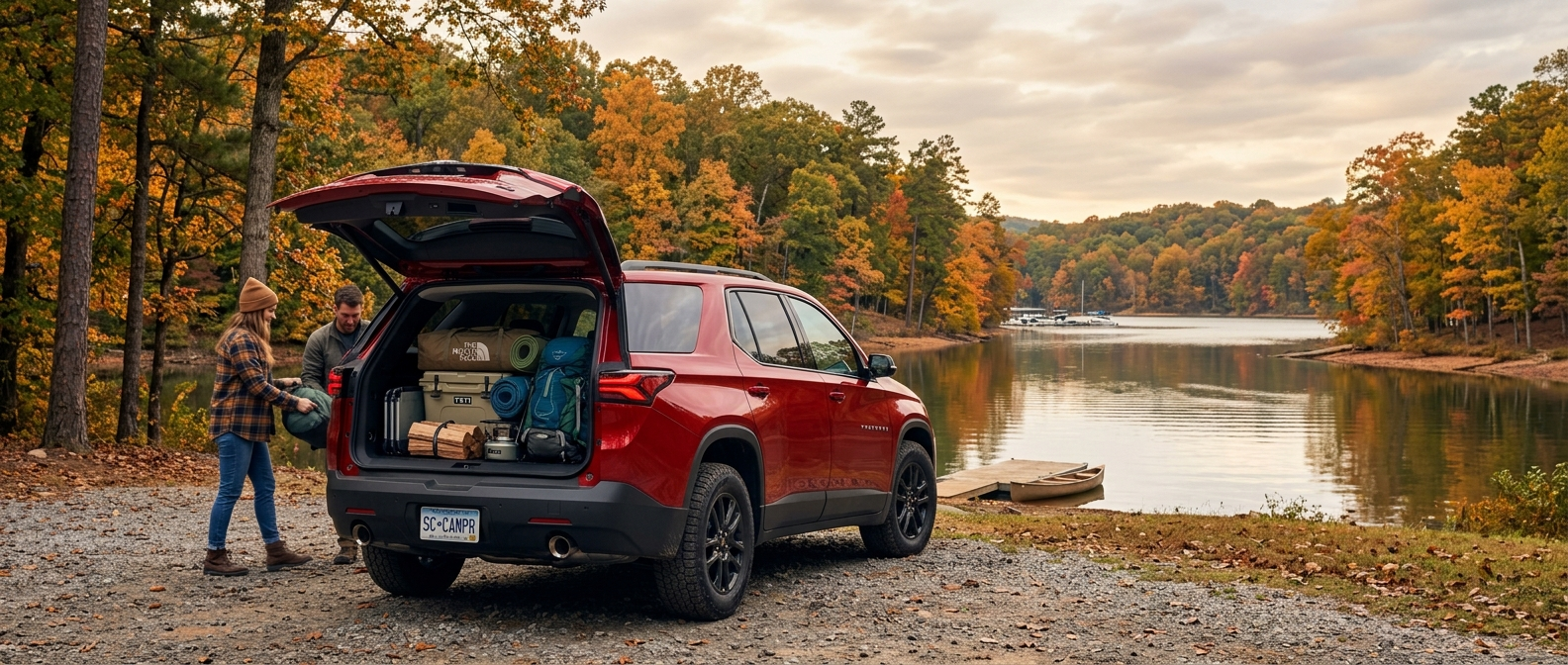
2026 Chevrolet Traverse with liftgate open at a South Carolina lake during fall, loaded with outdoor gear for a family outing

Chevrolet Traverse vs. Equinox for Fall Family Activities: Which One Do You Actually Need?

{ "@context": "https://schema.org", "@type": "AutoDealer", "name": "Wilson Chevrolet", "url": "https://www.wilsonchevy.com", "telephone": "(803) 402-4233", "address": { "@type": "PostalAddress", "streetAddress": "798 us hwy 321 N BUSINESS", "addressLocality": "Winnsboro", "addressRegion": "SC", "postalCode": "29180" } } { "@context": "https://schema.org", "@type": "Article", "headline": "Chevrolet Traverse vs. Equinox for Fall Family Activities: Which One Do You Actually Need?", "publisher": { "@type": "Organization", "name": "Wilson Chevrolet" }, "datePublished": "2026-09-16", "dateModified": "2026-09-16" } #just-private-label * { box-sizing: border-box; } #just-private-label { font-family: inherit; line-height: 1.7; color: #333333; max-width: 800px; margin: 0 auto; padding: 20px; } #just-private-label h2 { font-size: 1.5em; font-weight: 600; margin-top: 1.5em; margin-bottom: 0.75em; color: #000000; } #just-private-label h3 { font-size: 1.2em; font-weight: 600; margin-top: 1.2em; margin-bottom: 0.5em; color: #000000; } #just-private-label p { margin-bottom: 1em; font-size: 1em; } #just-private-label a { color: #000000; text-decoration: underline; } #just-private-label a:hover { text-decoration: none; } #just-private-label strong { font-weight: 600; } #just-private-label ul, #just-private-label ol { margin-bottom: 1em; padding-left: 1.5em; } #just-private-label li { margin-bottom: 0.5em; } #just-private-label .tip-box { background-color: #f9f9f9; border-left: 4px solid #333333; padding: 15px; margin: 1.5em 0; } #just-private-label .faq-section { background-color: #f5f5f5; padding: 30px; margin: 2em 0; } #just-private-label .faq-section h2 { margin-top: 0; margin-bottom: 1em; padding-bottom: 15px; border-bottom: 2px solid #333333; } #just-private-label .faq-item { margin-bottom: 1.5em; padding-bottom: 1.5em; border-bottom: 1px solid #e0e0e0; } #just-private-label .faq-item:last-child { margin-bottom: 0; padding-bottom: 0; border-bottom: none; } #just-private-label .faq-item h3 { color: #000000; margin-top: 0; margin-bottom: 0.5em; font-size: 1.1em; } #just-private-label .faq-item p { margin-bottom: 0; color: #333333; } #just-private-label .cta-section { margin-top: 2em; padding: 20px; text-align: center; } #just-private-label .cta-button { display: inline-block; padding: 12px 24px; margin: 10px; background-color: #bb8b35; color: #ffffff !important; text-decoration: none; font-weight: 600; } #just-private-label .cta-button:hover { opacity: 0.9; text-decoration: none; } #just-private-label .dealer-footer { margin-top: 40px; padding-top: 20px; border-top: 1px solid #e0e0e0; text-align: center; font-size: 14px; color: #666666; } #just-private-label .dealer-footer p { margin: 5px 0; } @media (max-width: 600px) { #just-private-label { padding: 15px; } #just-private-label h2 { font-size: 1.3em; } #just-private-label h3 { font-size: 1.1em; } #just-private-label .cta-button { display: block; margin: 10px 0; } } In this article What's the Real Difference Between These Two Chevys? Does Your Fall Calendar Actually Require Three Rows? Towing and Trail Gear for Fall Outdoors MPG on Fall Weekend Runs: The Equinox Advantage So Which Should You Choose for Fall Family Activities? The answer is simpler than most comparison articles make it. If you're fitting five people and their gear, the 2026 Equinox does it cleanly. If you're fitting five people AND two more, or towing a boat trailer to Lake Wateree in the Traverse, the decision is already made for you. The short version The 2026 Traverse seats up to 8 and tows up to 5,000 lbs; the 2026 Equinox seats 5 and tows up to 1,500 lbs (AWD, properly equipped). Those two numbers settle most family fall decisions. Cargo with the third row UP in the Traverse is actually tighter than the Equinox's everyday space (22.9 vs. 29.8 cu ft behind the rear seat); fold that row and the Traverse opens to 56.6 cu ft. The Equinox returns EPA-estimated 26-27 mpg combined (FWD); the Traverse returns 21-22 mpg combined. Over a full fall season of weekend runs, that gap adds up. If your fall Saturdays involve 6-8 people, a boat, or hauling a full camp setup, the Traverse. If it's a family of four or five with soccer bags and a stroller, the Equinox earns its spot every time. What's the Real Difference Between These Two Chevys? Both wear the Chevrolet badge, both come with standard Chevy Safety Assist, and both run modern turbocharged engines, so on paper they read like close cousins, but the real difference is size, and it shows the moment you park them side by side or thread either one through a tight lot. The 2026 Traverse is a three-row mid-size hauler measuring 204.5 inches from bumper to bumper. Its rival, the 2026 Equinox, is a two-row compact that checks in at 183.2 inches. The gap comes to 21 inches, and you feel every inch of it in a grocery store parking lot. Category 2026 Traverse 2026 Equinox Seating 7 or 8 passengers 5 passengers Max cargo (all seats folded) 97.6 cu ft 63.5 cu ft Cargo behind rear seat 22.9 cu ft (3rd row up) 29.8 cu ft Engine 2.5L turbo, 328 hp 1.5L turbo, 175 hp Towing (max, properly equipped) 5,000 lbs 1,500 lbs (AWD) EPA combined MPG (FWD) 22 mpg 27 mpg EPA combined MPG (AWD) 21 mpg 26 mpg Overall length 204.5 in 183.2 in One number in that table runs opposite to what the sizes suggest. The Equinox actually holds more usable cargo behind its rear seats (29.8 cu ft) than the Traverse carries behind its third row (22.9 cu ft). Its headline 97.6 cubic feet only shows up with every row folded flat. With everyone aboard, it's roomy up front and tighter in back than shoppers expect. The badge slightly oversells the back. The single deciding factor: count how often you genuinely carry six or more people. If that's weekly, get the Traverse. If it's twice a year, the Equinox handles your family's real life more efficiently. Does Your Fall Calendar Actually Require Three Rows? Whether your fall calendar truly needs three rows depends on how often those extra seats carry people rather than riding along empty, and our read from the lot is that the row often earns its keep only a handful of weekends a year. The Traverse's third row is a real row (Chevrolet lists it as seating for three with a 60/40 split back), and it's best suited to kids. Adults will feel the roofline tightening up back there on a long I-77 run to a Columbia fall festival. The Equinox is the right pick when your fall weekends look like two parents, two or three kids, a pile of sports gear, and a quick stop at a pumpkin patch. At 29.8 cubic feet behind the second row, it swallows a stroller, two baseball bags, and a week's worth of groceries without drama. What it can't do is seat a third row of relatives for Thanksgiving weekend. There's the trade, plain and clear. The Traverse earns its footprint when the calendar fills up, say six people to a fall festival, or a family plus grandparents heading down US 321 toward a Fairfield County day trip. Fold one side of the 60/40 third-row bench and you still carry five people and meaningful gear at once. That dual-use flexibility is what sets it apart from a two-row SUV in a way the numbers alone don't quite capture. See Current Chevrolet Fall Offers Towing and Trail Gear for Fall Outdoors For towing, these two Chevys aren't in the same league, and the gap is wide enough to make the decision for you, because the 2026 Traverse pulls up to 5,000 lbs properly equipped and the 2026 Equinox tops out at 1,500 lbs with AWD and the available Trailering Package. Fall on Lake Wateree is some of the best paddling weather in Fairfield County. The water's down from summer traffic, the foliage on the bank is turning, and the crowds thin out. Launch a canoe or a small bass boat and you'll feel why the two vehicles part ways here. The 2026 Traverse tows up to 5,000 lbs when properly equipped. The 2026 Equinox, with AWD and the available Trailering Package, is rated at up to 1,500 lbs. A canoe or a set of kayaks on a small trailer fits inside the Equinox's rating, but a 14-foot fishing boat with a trolling motor and fuel will push past it in a hurry. A bass boat in the 16-to-18-foot range, completely normal on Lake Wateree, is Traverse territory, and that's not a close call. From our service team: When families ask us about towing a boat on South Carolina's two-lane county roads, we always note that rated capacity and comfortable capacity aren't the same thing. The Traverse's 328-hp, 326 lb-ft turbocharged engine gives it real headroom when towing near its rating. The Equinox's 1,500-lb AWD figure leaves almost no margin on anything bigger than a lightweight jon boat. For families loading up for Carolina Adventure World (day trips to those ATV trails get long) or hauling camping gear to the Lake Wateree State Recreation Area, the Traverse's 56.6 cubic feet behind the second row is the number that matters, since that's where a full weekend of tents, coolers, and gear actually lives. MPG on Fall Weekend Runs: The Equinox Advantage On fuel, the Equinox wins outright and we won't pretend otherwise, since the EPA rates the 2026 Equinox at 26-27 mpg combined depending on whether you choose AWD or FWD while the 2026 Traverse lands at 21-22 mpg combined across its drivetrains. On a 120-mile round trip (Winnsboro to Columbia and back on I-77, a route that comes up often in a Fairfield County fall), that 5-mpg combined difference adds up over a full season of Saturday outings. So does that make the Traverse a fuel hog? Not exactly, because it carries a larger tank (around 19-21 gallons versus the Equinox's 14.8 gallons), so the range per fill-up evens out more than the mpg numbers suggest. Still, pump visits favor the Equinox for families who stay strictly two-row and run short, frequent trips. If fuel efficiency on daily driving is a hard priority and you're rarely carrying more than five people, the Equinox is the better call, no asterisk. The bigger SUV asks that trade. So Which Should You Choose for Fall Family Activities? Which one's right for you comes down to a headcount and a hitch, so before the lists below, the short version is that the Traverse fits the big-group, boat-hauling fall while the Equinox fits the four-or-five-person, fuel-minded one, and both are solid picks for the right family. Choose the 2026 Traverse if: Your household regularly carries 6 or more people (grandparents, carpools, sports teams) You're towing a boat to Lake Wateree or a utility trailer more than a couple times per year You want maximum cargo flexibility when the third row folds: 56.6 cu ft with the family along, up to 97.6 cu ft when everyone rides separately The fall agenda includes full-family road trips where everyone rides together Choose the 2026 Equinox if: Your household runs four or five people consistently Fuel economy on regular I-77 commutes and weekend runs matters to you You value a shorter, easier-to-park SUV (183.2 inches versus 204.5 inches) Your gear-towing needs top out around a kayak trailer or a small utility haul We'll say it straight. The Traverse isn't the automatic "better" choice just because it's bigger. Fold-flat space still costs you. Families who don't regularly use that third row are paying in fuel and parking for room they rarely fill. The Equinox is a genuinely capable, full-featured SUV. It just does one thing the Traverse does (seat a full extended family) not at all. Both models are on our lot here at Wilson Chevrolet in Winnsboro. Come by, load up your real gear, and we'll put you in both. The right call becomes obvious once you're standing at the liftgate. Frequently Asked Questions { "@context": "https://schema.org", "@type": "FAQPage", "mainEntity": [ { "@type": "Question", "name": "Does the 2026 Chevrolet Traverse have a usable third row for adults on longer trips?", "acceptedAnswer": { "@type": "Answer", "text": "The Traverse's third row is a real seat with a 60/40 split-folding back, but it's best suited for children and smaller adults. Chevrolet rates it for up to three occupants in back, but headroom tightens on full-size adults during longer drives. For occasional use (a fall festival run, transporting extra family members around Fairfield County) it works fine. For a three-hour road trip with grown adults in the back, most families find the second row is where they'd rather seat them." } }, { "@type": "Question", "name": "Is the 2026 Equinox big enough for a family of five with fall weekend gear?", "acceptedAnswer": { "@type": "Answer", "text": "Yes, consistently. The Equinox offers 29.8 cubic feet behind its second row with everyone seated, which fits a stroller, sports bags, a cooler, and overnight luggage without folding seats. For the typical Winnsboro-area family running Saturday activities with kids, it handles the load well. Where it shows its limits is towing. The Equinox maxes at 1,500 lbs when AWD-equipped, so boats and heavy trailers are the Traverse's domain, not the Equinox's." } } ] } Does the 2026 Chevrolet Traverse have a usable third row for adults on longer trips? The Traverse's third row is a real seat with a 60/40 split-folding back, but it's best suited for children and smaller adults. Chevrolet rates it for up to three occupants in back, but headroom tightens on full-size adults during longer drives. For occasional use (a fall festival run, transporting extra family members around Fairfield County) it works fine. For a three-hour road trip with grown adults in the back, most families find the second row is where they'd rather seat them. Is the 2026 Equinox big enough for a family of five with fall weekend gear? Yes, consistently. The Equinox offers 29.8 cubic feet behind its second row with everyone seated, which fits a stroller, sports bags, a cooler, and overnight luggage without folding seats. For the typical Winnsboro-area family running Saturday activities with kids, it handles the load well. Where it shows its limits is towing. The Equinox maxes at 1,500 lbs when AWD-equipped, so boats and heavy trailers are the Traverse's domain, not the Equinox's. See What Your Trade-In Is Worth Wilson Chevrolet 798 us hwy 321 N BUSINESS, Winnsboro, SC 29180 (803) 402-4233

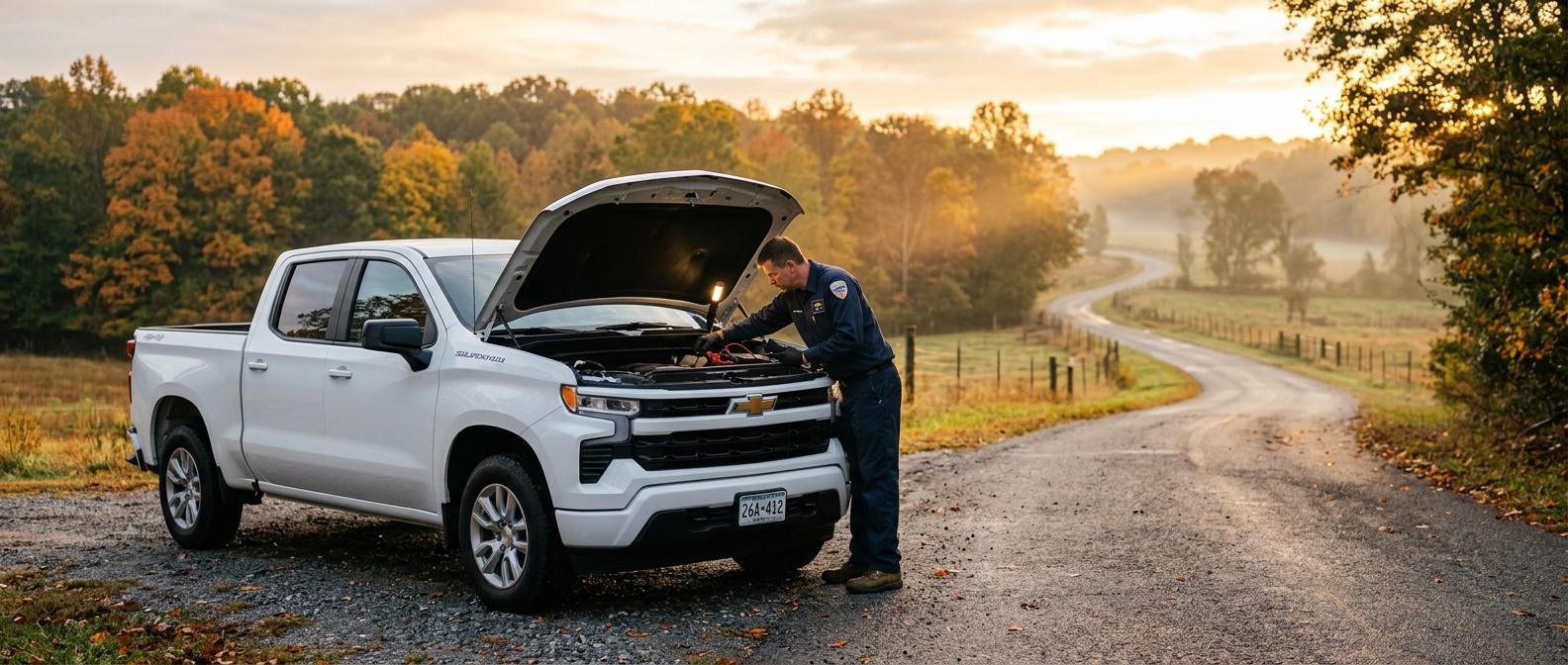
2026 Chevrolet Silverado 1500 with hood open for battery inspection on a fall morning in Winnsboro, SC_1

5 Battery Warning Signs to Check Before Winnsboro Mornings Cool Down

{ "@context": "https://schema.org", "@type": "AutoDealer", "name": "Wilson Chevrolet", "url": "https://www.wilsonchevy.com", "telephone": "(803) 402-4233", "address": { "@type": "PostalAddress", "streetAddress": "798 us hwy 321 N BUSINESS", "addressLocality": "Winnsboro", "addressRegion": "SC", "postalCode": "29180" } } { "@context": "https://schema.org", "@type": "Article", "headline": "5 Battery Warning Signs to Check Before Winnsboro Mornings Cool Down", "publisher": { "@type": "Organization", "name": "Wilson Chevrolet" }, "datePublished": "2026-09-15", "dateModified": "2026-09-15" } #just-private-label * { box-sizing: border-box; } #just-private-label { font-family: inherit; line-height: 1.7; color: #333333; max-width: 800px; margin: 0 auto; padding: 20px; } #just-private-label h2 { font-size: 1.5em; font-weight: 600; margin-top: 1.5em; margin-bottom: 0.75em; color: #000000; } #just-private-label h3 { font-size: 1.2em; font-weight: 600; margin-top: 1.2em; margin-bottom: 0.5em; color: #000000; } #just-private-label p { margin-bottom: 1em; font-size: 1em; } #just-private-label a { color: #000000; text-decoration: underline; } #just-private-label a:hover { text-decoration: none; } #just-private-label strong { font-weight: 600; } #just-private-label ul, #just-private-label ol { margin-bottom: 1em; padding-left: 1.5em; } #just-private-label li { margin-bottom: 0.5em; } #just-private-label .tip-box { background-color: #f9f9f9; border-left: 4px solid #333333; padding: 15px; margin: 1.5em 0; } #just-private-label .cta-section { margin-top: 2em; padding: 20px; text-align: center; } #just-private-label .cta-button { display: inline-block; padding: 12px 24px; margin: 10px; background-color: #bb8b35; color: #ffffff !important; text-decoration: none; font-weight: 600; } #just-private-label .cta-button:hover { opacity: 0.9; text-decoration: none; } #just-private-label .dealer-footer { margin-top: 40px; padding-top: 20px; border-top: 1px solid #e0e0e0; text-align: center; font-size: 14px; color: #666666; } #just-private-label .dealer-footer p { margin: 5px 0; } @media (max-width: 600px) { #just-private-label { padding: 15px; } #just-private-label h2 { font-size: 1.3em; } #just-private-label h3 { font-size: 1.1em; } #just-private-label .cta-button { display: block; margin: 10px 0; } } In this article How We Rank These: Warning Signs That Matter Most in South Carolina Warning Sign 1: A Sluggish Crank on a Cool Morning Warning Sign 2: Corrosion on the Battery Terminals Warning Sign 3: Headlights That Dim or Flicker at Idle Warning Sign 4: The Battery Warning Light Warning Sign 5: A Battery More Than 3 Years Old With Any Other Symptom Present What Our Service Team Checks in a Battery Test Starting fine all summer doesn't mean your Chevy battery is healthy. It means the summer heat hasn't finished the job yet. The single most important warning sign to catch right now is a slow, sluggish crank on a cool morning, because that crank is what exposes a battery Fairfield County's heat already weakened. Catch it in September, before October lows start touching the mid-50s. Don't wait for a no-start. Book a battery inspection at our Wilson Chevrolet service center before the season turns on you. How We Rank These: Warning Signs That Matter Most in South Carolina We rank these five signs by how reliably each predicts imminent failure in a Southern heat climate, and that order runs opposite to a Northern list, since here in Winnsboro summer heat does the damage months before a cool fall morning ever reveals it. Up north, cold snaps are the headline killer. Down here, the chemistry works the other way around. Our summers run hot for months on end, with consecutive July days at or near 92 degrees, and that sustained heat accelerates electrolyte evaporation, corrodes battery plates, and quietly bleeds reserve capacity. By the time September arrives and overnight lows drop toward 62 degrees, the battery is already compromised. The cool morning doesn't create that problem. It only reveals one building since May. So the ranking below reflects Southern heat stress, and it's weighted by how quickly each sign tends to precede an actual failure. Rank Warning Sign Why It Matters in SC What to Do 1 Slow or sluggish engine crank Direct read on cold-cranking amp loss after summer heat damage Test CCA at service center immediately 2 Visible terminal corrosion SC heat and humidity accelerate corrosion buildup; corroded terminals restrict current flow Clean terminals; have charging system checked 3 Dim or flickering headlights at idle Battery struggling to hold voltage under low-demand conditions Load test to confirm battery or alternator issue 4 Battery warning light on dash Charging system reporting a voltage problem Diagnostic scan; do not ignore 5 Battery older than 3 years showing any other symptom Hot climates shorten standard lead-acid life (as little as 2 to 4 years) Proactive load test now; replace if borderline Warning Sign 1: A Sluggish Crank on a Cool Morning A slow, grinding start on a cool morning is the clearest signal your battery is losing cold-cranking amps, and a battery that cranked fine back at 85 degrees may not have enough left to turn the engine over on a 58-degree October morning. CCA measures how much current your battery can deliver to spin the engine over in cool conditions, and it's what gets depleted when summer heat breaks down the battery's internal chemistry. Heat accelerates the chemical reactions inside a lead-acid battery, and though that sounds harmless, the effect is corrosive. Electrolyte evaporates, plates degrade, and the battery's capacity to deliver a strong fast crank drops gradually over a full South Carolina summer. The cool morning just puts it to the test. By fall, the loss is baked in. Our service team treats this as the first and most reliable diagnostic signal. It's real-time evidence of what the battery has left, beyond what a static voltage meter shows. Silverado 1500 owners pulling loads or running accessories put higher demand on the battery at every start. A truck with reduced reserve capacity shows that slow crank earlier than a lighter vehicle would, so don't assume the truck is just "being a diesel in the morning." Warning Sign 2: Corrosion on the Battery Terminals White or bluish-grey buildup around the battery terminals isn't cosmetic, and though it looks like surface grime you could scrub off and forget, corrosion insulates the connection between the battery and the cable and restricts current flow on every start. In Winnsboro's mix of summer heat and humidity, that buildup forms faster than in drier climates, and it's easy to miss a battery until something goes wrong. Corroded terminals also throw misleading readings on a basic voltage meter. The resistance from the corrosion can mask how much charge the battery actually holds, which is exactly why cleaning terminals comes first. You can't trust an electrical test until the connection is clean. Mild terminal cleaning is often a driveway job with baking soda, water, and a wire brush. What you can't assess from the driveway is what sits underneath. If the corrosion points to internal battery leakage or has worked its way into the cable clamp, that's a professional inspection and not a Saturday morning project. Warning Sign 3: Headlights That Dim or Flicker at Idle Dim or flickering lights at idle mean the battery is fighting to hold voltage under load, and while your headlights, dash backlighting, and interior lamps all draw from it when the alternator's output sits at its lowest, a heat-worn battery shows that strain first at a stop. If those lights look dimmer than usual, or flicker when you engage the air conditioning, the battery is struggling to supply steady voltage under a relatively light electrical load. Flickering lights can also point to a failing alternator, which recharges the battery while you drive. Our service team tests both at the same time. A weak battery and a weak alternator often trend toward failure together on higher-mileage vehicles, so there's no value in chasing one without checking the other. Tahoe and Traverse drivers running rear-seat entertainment, multi-zone climate control, and ambient lighting (often all at once on a school run) put above-average electrical demand on the system. A battery that's lost capacity to heat shows that strain first at idle. There's no buffer to absorb it. Schedule a Battery Inspection at Wilson Chevrolet Warning Sign 4: The Battery Warning Light A battery or charging-system warning light on the dash is unambiguous, and though it doesn't always mean the battery itself is dead, it always means your vehicle is actively reporting a voltage problem somewhere in the electrical system. The cause can be the alternator, a loose connection, or a failing voltage regulator. Either way, the system has dropped below what the vehicle considers acceptable. Don't dismiss it. A check-engine light sometimes sits for days without immediate consequence. A battery warning light on a heat-stressed battery in September is a shorter fuse. Equinox owners commuting on I-77 between Winnsboro and Columbia: if that light comes on mid-drive, get it checked before the return trip. Running with a failing charging system depletes whatever reserve the battery has left, and an Equinox that won't restart in a Columbia parking lot is a very specific kind of afternoon. Service Center Heads-Up: If the battery warning light shows up alongside unusual electrical behavior, like the radio resetting, power windows slowing, or the instrument cluster dimming, treat it as same-day service. Don't wait and see. Warning Sign 5: A Battery More Than 3 Years Old With Any Other Symptom Present In South Carolina's hot climate, the expected lifespan of a standard lead-acid car battery shortens from the national 3-to-5-year range to roughly 2-to-4 years, because sustained summer heat accelerates internal plate degradation and electrolyte loss. Age alone isn't automatic cause for replacement. A three-year-old battery that passes a full load test is still a healthy battery. But age plus any one of the four warning signs above tells us the summer already reduced the reserve, and there's no cushion left to absorb the added demand of fall and winter driving, from seat heaters to rear defrosters to headlights on at 7 AM. Our service team keeps the call practical and evidence-based. If the battery delivers adequate CCA at its rated specification on a load test, we say hold and retest in six months. If it's borderline, we recommend replacing before November rather than after a no-start in January. A battery that's already borderline in September does not grow stronger. One spec worth asking about is AGM. AGM batteries, short for absorbed glass mat, handle heat and vibration better than conventional flooded lead-acid batteries and hold lower electrolyte loss in hot conditions. Several Chevy models come standard with AGM, and it's a worthwhile upgrade to raise with our service team if you're replacing a flooded battery in a vehicle that spends its summers here in Fairfield County. What Our Service Team Checks in a Battery Test A battery inspection at Wilson Chevrolet isn't a five-second reading with a handheld voltmeter, because our technicians test battery voltage, cold-cranking amp output, and alternator performance together, since a battery that looks fine at rest can still drop below spec under real load. A cool-morning crank after a hard South Carolina summer is exactly the condition that exposes it. The Chevrolet multi-point inspection includes a battery visual covering terminal condition, hold-down hardware, and case integrity, an electrical test verified against the vehicle's rated CCA specification, and an alternator output check. Results come back on a color-coded printout. Green is good, yellow means watch it, red means address it now. You'll leave knowing the actual state of the system. September is the right window. The heat that did the damage is behind us. The cool mornings that will reveal it are still weeks ahead. Get in between those two points and you're not reacting to a no-start. You're preventing one. Schedule your fall battery inspection at Wilson Chevrolet on US 321 in Winnsboro. Our service team is reachable at 803-635-4614, Monday through Friday. By the Wilson Chevrolet Team | September 2026 See Current Chevrolet Offers at Wilson Chevrolet Wilson Chevrolet 798 us hwy 321 N BUSINESS, Winnsboro, SC 29180 (803) 402-4233