




Blog

How to Pick the Right Tire Tread Depth for South Carolina Fall Rain

2026 Chevrolet Silverado 1500 driving on wet South Carolina road in fall rain, showing tire tread on damp asphalt

September in Fairfield County plays a quiet trick on you. The thermometer slides from the high 80s down toward the 60s overnight, the first cold fronts start pushing through the Midlands, and the rain that follows a real front can drop an inch or more on a road that's been baking dry all summer. That combination reaches your tires in two ways drivers don't always connect. The temperature drop quietly bleeds pressure out of your tires (NHTSA guidance puts it at roughly one PSI for every 10-degree Fahrenheit drop), and worn tread that seemed fine in August suddenly has a lot less margin once standing water builds up on I-77 or US 321.

South Carolina sets the legal minimum tread depth at 2/32 of an inch. We'll say it plainly. That number is where the law stops caring, not where your wet-road grip stops working. Knowing the difference, and knowing which of our Chevy models to watch most closely, is what this guide is for.

Schedule a tire inspection at Wilson Chevrolet

The short version
  • The action point is 4/32", not 2/32": Research shows wet stopping distances increase roughly 50 to 80 feet at 4/32" compared to new tires at 60 mph. By 2/32", that gap nearly doubles again.
  • Trucks and larger SUVs need more margin: A loaded Silverado 1500 or Tahoe carries more momentum into a wet stop than a Trax or Trailblazer. Don't let those vehicles run below 4/32".
  • Check pressure in September: The fall temperature swing can drop your PSI by 2 to 3 points before you notice, and underinflation speeds edge wear that costs you water-channeling capacity.
  • Rotation keeps the wear even: Chevrolet's owner's manual calls for rotation every 7,500 miles. Skipped rotations can leave one axle 2/32" shallower than the other, and that's where unexpected pull shows up in a wet corner.
  • The penny test tells you when it's already too late: Use a quarter instead.

What Actually Matters When Choosing Tread Depth for Wet Roads?

Two variables decide how well your tires grip a wet road, and both come down to the tread you have left. The first is how much water the tire can move per second, the second is how quickly you decelerate once the brakes engage, and tread depth governs both because the grooves that channel water are the same grooves that wear away with the miles. When the grooves shallow out, water stays under the contact patch instead of getting evacuated, and the tire starts to skim the surface rather than grip it.

The thresholds stack up like this against a South Carolina fall commute.

Tread DepthConditionBest ForWet-Road RealityTradeoff
10/32"-11/32"New (all-season passenger)All conditions, full marginMaximum water evacuation, shortest wet stopsNone at this stage
11/32"-12/32"New (light truck/SUV)Silverado, Tahoe, Traverse, ColoradoBest grip for heavier vehicles; deeper grooves handle more water volumeSlightly higher rolling resistance than shallower tires
6/32"-9/32"Good usable rangeEveryday Midlands drivingStrong wet performance, no urgent concernNormal wear monitoring still needed
4/32"Practical replacement pointRain-season driving thresholdStopping distance from 60 mph has grown roughly 50-80 feet vs. newStill driveable in normal conditions; heavy rain becomes risky
2/32"Legal minimum onlyNothing we'd recommendWet stopping distance nearly doubles vs. new; hydroplaning resistance is minimalLegally passable, practically inadequate in fall rain

See current Silverado 1500 inventory at Wilson Chevrolet

Be fair about the tradeoff. Tires at 4/32" still have real life left, and replacing tires that still look fine costs money, no way around it. We get that. But the research is clear that wet performance falls off a cliff below 4/32" in ways a dry road never reveals. South Carolina's fall rain is unpredictable enough, arriving in waves off cold fronts from September through November, that we'd rather you carry that buffer when the road turns wet fast.

How Tread Depth and Vehicle Weight Work Together

Vehicle weight changes how much tread margin you need, and the heavier Chevys need the most of it. A Tahoe loaded with three rows of passengers and weekend gear bound for Lake Wateree carries far more momentum into a wet stop than an empty Trax on the same road, and physics doesn't grade on a curve, so more weight turns every drop in wet grip into a longer stopping distance. Generic guides skip that part. So while 4/32" is the practical floor for any Chevy, we'd call it a firm floor for the heavier vehicles in the lineup.

On the lot, we see it this way: A Silverado 1500 running near max payload or towing anything substantial is working its tires harder than the odometer reflects. Tread wear on a truck that's been doing real work tends to run ahead of what the mileage suggests.

Rotation matters here too. Chevrolet's owner's manual calls for tire rotation every 7,500 miles. Skip a couple of cycles on a front-wheel-drive vehicle like an Equinox or Trax, and the front tires can end up a full 2/32" shallower than the rears before you notice. That mismatch shows up as an unexpected pull or oversteer in a wet turn, and a rainy stretch of I-77 is the last place you want that surprise.

Browse Equinox models at Wilson Chevrolet

The September temperature swing adds one more layer. When Winnsboro highs fall from 85 degrees to 68 degrees overnight, that 17-degree swing pulls roughly 1.5 PSI out of your tires on its own, per NHTSA guidance. Underinflation distorts the contact patch and speeds up edge wear, and the edge is exactly the part of the tire responsible for channeling water.

None of this is dramatic. It slowly costs you grip over the weeks your tire pressure goes unchecked as fall sets in.

Three things to do right now:

  • Check tread depth with a quarter. Insert it with Washington's head pointing down, and if you can see the top of his head, you're at or below 4/32" and it's time to make a plan.
  • Check pressure cold, before the first drive of the day, against the placard on your driver's door jamb.
  • If you've skipped a rotation cycle, get it done before the fall rain season hits in earnest.

Schedule a Fall Tire Check at Our Service Center

Match the Gear to How You Actually Drive

The right tread strategy shifts with how you use your Chevy, so no single answer fits every driver on the same road. What stays constant is the 4/32" planning threshold, and what changes is how much urgency it carries depending on your speeds, your loads, and the roads you run this fall. The breakdown runs like this.

  • I-77 and US 321 daily commuters (any model): Highway speeds are where hydroplaning risk climbs fastest. Treat 4/32" as a firm replacement point, not a "keep watching" moment.
  • Silverado 1500 and Silverado 2500 HD towing or hauling: More load means more momentum in every wet stop. Keep your Silverado HD tires above 4/32" and verify pressure against your door placard rather than a generic number, since loaded and unloaded specs can differ.
  • Traverse and Tahoe family haulers: Three-row SUVs with full loads sit well into the range where worn tires start to matter. Inspect before the school-year schedule hits full stride in fall.
  • Trax and Trailblazer lighter commuters: Lighter vehicles get a little more forgiveness from worn tires in the wet, though 4/32" is still the right trigger point for replacement planning.
  • Colorado pickup owners headed to Carolina Adventure World: All-terrain tires, which some Colorado buyers spec, start deeper but wear differently from standard all-seasons. The 4/32" planning threshold still applies.

Frequently Asked Questions

When should I actually replace my tires in South Carolina?

Plan for replacement when your tread reaches 4/32 of an inch, not the 2/32-inch legal minimum. Research shows wet stopping distance from 60 mph increases roughly 50 to 80 feet at 4/32" compared to new tires. By 2/32", that distance nearly doubles again. South Carolina fall rain arrives quickly off cold fronts, and you want that buffer before the road gets wet rather than after.

How does fall temperature in the Midlands affect my tire pressure?

Per NHTSA guidance, tire pressure drops roughly one PSI for every 10-degree Fahrenheit temperature decrease. The September-to-October temperature swing in the Winnsboro and Columbia area can move daytime highs by 15 to 20 degrees over just a few weeks. That's a realistic loss of 1.5 to 2 PSI without a single slow leak. Underinflated tires flex more through each rotation, which speeds up edge wear and reduces the water-channeling capacity of the tread grooves. Check pressure cold, against your door-jamb placard, as fall sets in.

Wilson Chevrolet

798 us hwy 321 N BUSINESS, Winnsboro, SC 29180

(803) 402-4233

Recommended Posts

2021 Chevrolet Malibu sedan on a fall morning in Winnsboro South Carolina

Chevrolet Malibu by Model Year: Which Years Are Worth Your Commute

{ "@context": "https://schema.org", "@type": "AutoDealer", "name": "Wilson Chevrolet", "url": "https://www.wilsonchevy.com", "telephone": "(803) 402-4233", "address": { "@type": "PostalAddress", "streetAddress": "798 us hwy 321 N BUSINESS", "addressLocality": "Winnsboro", "addressRegion": "SC", "postalCode": "29180" } } { "@context": "https://schema.org", "@type": "Article", "headline": "Chevrolet Malibu by Model Year: Which Years Are Worth Your Commute", "publisher": { "@type": "Organization", "name": "Wilson Chevrolet" }, "datePublished": "2026-09-11", "dateModified": "2026-09-11" } #just-private-label * { box-sizing: border-box; } #just-private-label { font-family: inherit; line-height: 1.7; color: #333333; max-width: 800px; margin: 0 auto; padding: 20px; } #just-private-label h2 { font-size: 1.5em; font-weight: 600; margin-top: 1.5em; margin-bottom: 0.75em; color: #000000; } #just-private-label h3 { font-size: 1.2em; font-weight: 600; margin-top: 1.2em; margin-bottom: 0.5em; color: #000000; } #just-private-label p { margin-bottom: 1em; font-size: 1em; } #just-private-label a { color: #000000; text-decoration: underline; } #just-private-label a:hover { text-decoration: none; } #just-private-label strong { font-weight: 600; } #just-private-label ul, #just-private-label ol { margin-bottom: 1em; padding-left: 1.5em; } #just-private-label li { margin-bottom: 0.5em; } #just-private-label .faq-section { background-color: #f5f5f5; padding: 30px; margin: 2em 0; } #just-private-label .faq-section h2 { margin-top: 0; margin-bottom: 1em; padding-bottom: 15px; border-bottom: 2px solid #333333; } #just-private-label .faq-item { margin-bottom: 1.5em; padding-bottom: 1.5em; border-bottom: 1px solid #e0e0e0; } #just-private-label .faq-item:last-child { margin-bottom: 0; padding-bottom: 0; border-bottom: none; } #just-private-label .faq-item h3 { color: #000000; margin-top: 0; margin-bottom: 0.5em; font-size: 1.1em; } #just-private-label .faq-item p { margin-bottom: 0; color: #333333; } #just-private-label .cta-section { margin-top: 2em; padding: 20px; text-align: center; } #just-private-label .cta-button { display: inline-block; padding: 12px 24px; margin: 10px; background-color: #bb8b35; color: #ffffff !important; text-decoration: none; font-weight: 600; } #just-private-label .cta-button:hover { opacity: 0.9; text-decoration: none; } #just-private-label .dealer-footer { margin-top: 40px; padding-top: 20px; border-top: 1px solid #e0e0e0; text-align: center; font-size: 14px; color: #666666; } #just-private-label .dealer-footer p { margin: 5px 0; } @media (max-width: 600px) { #just-private-label { padding: 15px; } #just-private-label h2 { font-size: 1.3em; } #just-private-label h3 { font-size: 1.1em; } #just-private-label .cta-button { display: block; margin: 10px 0; } } Chevrolet has retired the Malibu as a new car, and that part's settled. But if you're driving the I-77 corridor between Winnsboro and Columbia every day and need a comfortable, fuel-efficient sedan that won't embarrass you with repair bills, the used Malibu market right now is genuinely interesting. A discontinued nameplate floods the used lot with depreciated examples, and not all of them are equal. When folks come in hunting a used Malibu, our team at Wilson Chevrolet sees a clear split. The right year is a solid commuter buy, the wrong year is a parts lottery ticket. This guide tells you exactly which is which, based on NHTSA recall records and what the ninth-generation platform eventually sorted out over time. The short version Sweet spot: 2019-2021 (the post-refresh 9th generation), after GM addressed the early 1.5L turbo gremlins and before the 2022-2023 front impact bar weld recall Runner-up for budget buyers: 2015 (eighth generation), which earned a 92 out of 100 reliability score per J.D. Power (the strongest reliability mark the Malibu ever posted) Years to watch: 2016-2018 (high recall volume, fuel injector and accumulator issues), and 2022-2023 (front frame weld recall that led GM to buy back some vehicles) 2024-2025: Final production units; clean specs but a new rearview camera recall (campaign N262551720) is still being remedied in 2026 Engine choice: The 1.5L turbo CVT is the commuter pick. The EPA rates it at 28 city / 36 highway for the 2025 final year, and the 2019 refresh version delivered 29 city / 36 highway Browse Wilson Chevrolet's current pre-owned inventory Which Malibu years are the real sweet spot? For a Fairfield County commuter, the 2019 through 2021 model years are the ones we'd point at without hesitation, since GM had already refreshed the ninth-generation platform by then, though even a strong year still needs a clean VIN before you sign anything. GM refreshed the ninth-generation Malibu for 2019 with a new front end, an updated 8-inch touchscreen, and revised CVT programming that narrowed the gap between EPA estimates and real-world highway driving. The EPA rates the 2019 Malibu's 1.5L turbo at 29 city / 36 highway. On a steady I-77 cruise at 65 mph, owners report highway numbers that actually meet that figure. The 2021 Malibu earned a 5-star overall safety rating from NHTSA, and that's no marketing line. It reflects 10 standard airbags and a platform that had been sorted over five model years by that point. The full picture by year range breaks down like this. Year Range Generation Sweet Spot? Years to Watch Why It Matters 2016-2018 9th gen (early) No Yes, avoid 9 recalls in 2016 alone; 2018 had ~152,605 vehicles recalled for 1.5L fuel injector / ECM disabling 2019-2021 9th gen (refreshed) Yes No Post-CVT update, 5-star NHTSA in 2021, lower recall count, strong highway mpg 2022-2023 9th gen (late) Conditional Yes, verify VIN Front impact bar weld recall (NHTSA 22V923000); some vehicles were bought back by GM 2024-2025 9th gen (final) Conditional Monitor 2023-2025 rearview camera recall (NHTSA N262551720) still being remedied; confirm repair completed 2015 8th gen Yes (budget) No Highest J.D. Power reliability score in Malibu history (92/100); older platform, less tech One note on the 8th gen 2015. It's a truly reliable car, and it's also several tech generations behind the 9th gen's touchscreen, lane departure warning, and available automatic emergency braking. For a pure budget commuter, it works. For someone who wants Chevy Safety Assist features on the I-77 stretch, the 2019-2021 range is the better answer. Which years should you watch out for, and why? The 2016-2018 range is where the ninth generation was still ironing out its early issues, so we'd steer well clear of those years without a thorough pre-purchase inspection, even though a well-kept example with a clean recall history and full paperwork can still work out fine for a patient buyer. Be specific here. 2018 is the worst year to buy uninspected. NHTSA documented a recall covering approximately 152,605 2018 Malibu vehicles for fuel injector failure caused by ECM software problems on the 1.5L turbo. The symptom is the engine refusing to start or stalling, not what you want between Winnsboro and Columbia on a cold September morning. 2016 had nine separate recall campaigns. Nine. Most were addressed through recall service years ago, but an older used unit might carry an unrepaired open recall. Always run the VIN at nhtsa.gov before you buy. See pre-owned Malibu options at Wilson Chevrolet There's also a rear seat belt retractor recall across the 2016-2021 range (loose or missing fasteners that could affect proper function). GM notified owners and dealers performed the fix at no charge, so most vehicles in that window have been remedied. Confirm it on your specific VIN. It's a 30-second check that matters. Check the 22V923000 status on any 2022 or 2023 you're weighing. NHTSA campaign 22V923000 flagged a front impact bar that may not have been properly welded to the front frame rail. The consequence is that crash sensors might not perform correctly in a collision event. GM's remedy for unresolvable cases was to buy the vehicle back. Pull the VIN, confirm the repair was performed, and look for documentation. Run every used Malibu VIN through nhtsa.gov/recalls before you commit. An open recall is a negotiating point and a safety check. Do it before the test drive, not after. Pros and Cons of a Used Ninth-Generation Malibu (2016-2025) Pros Cons EPA highway rating of 36 mpg on the 1.5L turbo (real commuter fuel economy) Front-wheel drive only, no AWD option (limits winter traction on icy mornings) 111-inch wheelbase delivers rear-seat legroom competitive with larger sedans CVT transmission has a "rubbery" feel that takes some adjustment for drivers coming from traditional automatics Chevy Safety Assist standard on later years (AEB, lane keep, forward collision alert) The 2.0L turbo makes the car quicker but drops fuel economy notably; harder to find used in good shape Available remote start standard on 2025 (useful for warming a cold cabin before your commute) Discontinued nameplate means dealer support narrows over time as parts age out 15.8-gallon tank with 36 mpg highway means roughly 560 highway miles per fill-up 2016-2018 had elevated recall volume; requires careful VIN research before purchase Which year for which buyer? The right year depends on what you're really optimizing for, and not every commuter needs the same thing, so the honest answer splits three or four ways depending on your daily miles, your budget, and how much driver-assist tech you want on the I-77 run. Your daily distance drives most of the decision. Budget handles the rest. If you drive 30-plus miles one way on I-77 daily and fuel economy is the priority: Target a 2019-2021 with the 1.5L turbo and confirmed CVT recall clearance. The EPA rates that engine at 29 city / 36 highway, and the updated CVT programming from the 2019 refresh tightens the real-world gap on steady highway runs. A cooler September through November in Fairfield County is the best season for that 36-mpg figure. Engine temperature stabilizes, the stop/start system works without heat stress, and you're not running the A/C at full blast. If you want the most tech for the money and your commute is shorter: A 2021 Malibu 2LT or Premier gives you the full Chevy Safety Assist suite (automatic emergency braking, lane keep assist, forward collision alert) and available heated front seats. For a fall and winter commute on US 321 or the I-77 on-ramp, available heated seats aren't a luxury. They're a 6 AM quality-of-life feature. If your budget is tight and you just need a reliable point-A-to-point-B car: Look at a clean 2015 eighth-generation with documented service history. It lacks the 9th gen's driver assistance package, but it carries the highest J.D. Power reliability score the nameplate ever earned. A simpler car, which can be exactly right. What we tell buyers who come in undecided: The 2019-2021 window is the one we'd buy ourselves for a daily commute. The platform was mature, the recall profile is manageable with a VIN check, and the fuel economy on the I-77 run is real, most days anyway. Stay out of the 2016-2018 without a thorough pre-purchase inspection, and verify any 2022-2023 unit's frame weld recall closure before you sign anything. Value Your Current Vehicle Toward a Used Malibu The Malibu's discontinuation is the commuter's quiet advantage right now. Supply is high, prices are soft, and the best years in the range are sitting on used lots across the Winnsboro area and the Columbia metro. Our financing team at Wilson Chevrolet can walk you through what makes sense for your situation. If you're trading something in, we'll give you a straight appraisal. We do stock used sedans and can help you verify VIN recall status right here at our dealership on US 321. No runaround. Just a clean look at the car before you drive it home. Frequently Asked Questions { "@context": "https://schema.org", "@type": "FAQPage", "mainEntity": [ { "@type": "Question", "name": "Is the Chevrolet Malibu still being made?", "acceptedAnswer": { "@type": "Answer", "text": "No. Chevrolet officially ended Malibu production in November 2024, with the 2025 model year being the final one available new. The nameplate was discontinued as part of GM's shift toward SUVs and electric vehicles. Used examples from the final 2019-2025 production window are widely available." } }, { "@type": "Question", "name": "What is the best used Chevrolet Malibu year to buy for commuting?", "acceptedAnswer": { "@type": "Answer", "text": "For daily commuters, the 2019 through 2021 model years offer the strongest combination of fuel economy, safety ratings, and resolved early-generation issues. The 2019 Malibu's 1.5L turbo is EPA-rated at 29 city and 36 highway. The 2021 model earned a 5-star overall safety rating from NHTSA. Both are solid choices after a VIN recall check." } }, { "@type": "Question", "name": "Which Chevrolet Malibu years had the most recall problems?", "acceptedAnswer": { "@type": "Answer", "text": "The 2016 model year had nine separate NHTSA recall campaigns. The 2018 Malibu saw a large recall covering approximately 152,605 vehicles for 1.5L turbo fuel injector failure caused by ECM software issues. The 2022-2023 range was recalled for a front impact bar weld concern (NHTSA 22V923000). The 2023-2025 range carries a rearview camera recall (NHTSA N262551720) that was still being remedied as of 2026. Always verify open recall status at nhtsa.gov before purchasing any used Malibu." } } ] } Is the Chevrolet Malibu still being made? No. Chevrolet officially ended Malibu production in November 2024, with the 2025 model year being the final one available new. The nameplate was discontinued as part of GM's shift toward SUVs and electric vehicles. Used examples from the final 2019-2025 production window are widely available. What is the best used Chevrolet Malibu year to buy for commuting? For daily commuters, the 2019 through 2021 model years offer the strongest combination of fuel economy, safety ratings, and resolved early-generation issues. The 2019 Malibu's 1.5L turbo is EPA-rated at 29 city and 36 highway. The 2021 model earned a 5-star overall safety rating from NHTSA. Both are solid choices after a VIN recall check. Which Chevrolet Malibu years had the most recall problems? The 2016 model year had nine separate NHTSA recall campaigns. The 2018 Malibu saw a large recall covering approximately 152,605 vehicles for 1.5L turbo fuel injector failure caused by ECM software issues. The 2022-2023 range was recalled for a front impact bar weld concern (NHTSA 22V923000). The 2023-2025 range carries a rearview camera recall (NHTSA N262551720) that was still being remedied as of 2026. Always verify open recall status at nhtsa.gov before purchasing any used Malibu. Explore Financing Options at Wilson Chevrolet Wilson Chevrolet 798 us hwy 321 N BUSINESS, Winnsboro, SC 29180 (803) 402-4233

2026 Chevrolet Blazer RS parked on a downtown Columbia SC street surrounded by fall foliage during a fall festival

Your Chevrolet Blazer Parking Playbook for Fall Events in Downtown Columbia

Downtown Columbia fills up fast in fall. On festival Saturdays, Main Street turns into a different city (foot traffic, road closures, and drivers circling the same block while the good spots vanish). The play is simple. Know where you're headed before you leave Winnsboro, put the 2026 Chevrolet Blazer where it fits, and walk straight to the fun. If you're also weighing a smaller footprint for city days, the Chevy Trailblazer is worth a look (but the Blazer's combination of cargo space and street presence makes it a genuinely strong choice for a full day out). Where Do You Park and When? Aim to pull up before 10 a.m. on a Saturday and you'll get your pick of spots, but wait until noon and you're competing with everyone who had the same idea, so the honest reality of fall in Columbia is that your timing decides the whole day. Beat the crowd and the rest falls into place. The good news is worth knowing. The Main Street District runs five parking garages, and on Saturdays parking is free district-wide (enforcement runs Monday through Friday, 9 a.m. to 7 p.m., per the City of Columbia Parking Services Department). The first hour in each garage is free on weekdays too, which matters if you arrive early and head out before the lunch rush. Point the Blazer at one of these. Garage Address Best For Fit Note PJ Cannon Garage 1227 Taylor St Main Street events, restaurants Standard stalls; the Blazer's 191.9-inch length parks comfortably Taylor Street Garage 1600 Assembly St Midblock Main Street access Passport app payment; low-level spots recommended Lincoln Street Garage 820 Washington St Vista district, Colonial Life Arena events Often less crowded; walking distance to all of Main Lady Street Garage 1100 Lady St Lower Main, The Vista Gated hourly access; arrive early on event days Assembly Street meters Assembly St (parallel to Main) Quick stop, early arrivals Free Saturdays; metered weekdays One more tip. When a big event at Colonial Life Arena pushes the Park Street Garage to a cash charge, head to Lincoln Street instead. Lincoln Street Garage sits across from Police Headquarters on Washington Street. It tends to absorb overflow without the chaos. The Blazer's overall length of 191.9 inches is firmly midsize (shorter than a Traverse or a Tahoe). It backs into a standard stall with room to spare. That 7.5-inch ground clearance clears standard garage ramps without drama. If you're in the RS trim, the parking assist system is on the option sheet and worth having for tight garage corners. The Maneuvering Play in the District Main Street itself gets partially closed during major events, so the honest trade-off with the Blazer is that it's not a compact SUV at 191.9 inches end to end, though that length is what buys you cargo room a smaller crossover can't match on a full day out. For purely urban errand running, the Chevy Trax is smaller and genuinely nimbler in tight quarters (but for a day that mixes a Columbia fall festival with cargo, think folding chairs, a cooler, or a stroller, the Blazer's 30.5 cubic feet behind the rear seats is real utility). In our experience, a full day downtown fills that cargo floor. It's one thing to park a stylish crossover in the district. It's another to have room for what you're carrying without cramming it. If you're routinely running three rows of people into town, the Chevy Traverse handles that job better (but for a couple or a small family packing a day bag and a folding blanket for an outdoor concert, the Blazer is right-sized). Now for the maneuvering once you're on the street. If Main is closed for the event, approach from Assembly Street or Sumter Street. Both run parallel or perpendicular to Main and stay open during most festivals. Drop your passengers near the event entrance, then circle back to the garage. The Yellow Shirt Ambassador shuttle runs from most garages to event areas on busy days (use it on the return trip when foot traffic is dense). Insider parking read: The Lincoln Street Garage at 820 Washington Street is the least-crowded major option when Main Street is packed. It's walking distance to The Vista and Main, and it's a faster in-and-out when the event winds down. Crowd etiquette note: Pull forward fully in every garage stall. Blazer RS has a hands-free gesture liftgate, but make sure you've got rear clearance before opening it in a tight row. Other drivers will appreciate it. The Main Street District's five garages offer free parking on Saturdays, and the Lincoln Street Garage at 820 Washington Street consistently has more availability when the main event lots fill up. Go-Enjoy-It Checklist Before You Leave Winnsboro The I-77 run from Winnsboro into Columbia is roughly 30 miles of clean corridor, and the Blazer's EPA-rated 22 city / 27 highway mpg (2.0-liter FWD models) makes the round trip a non-event on a full tank, so the only real work happens before you back out of the driveway. Square that away first. Before you go: Confirm the event address and whether Main Street has any road closures listed (check the City of Columbia website) Charge your phone (the Passport app handles meter payment and you'll want GPS through the district) Load cargo before leaving; the Blazer's liftgate is easier in your own driveway than in a full garage In the Blazer: Target arrival before 10 a.m. for Saturday fall events on Main Street PJ Cannon Garage on Taylor Street or Lincoln Street Garage are your primary targets If both show full on approach, Assembly Street meters open up on Saturdays at no charge Active Noise Cancellation is standard on the 2026 Blazer, so the cabin stays calm even if the hunt for a spot takes a few extra minutes When you're parked: Note your floor and stall number (RS has connected navigation; save the garage location as a pin before you walk away) The Yellow Shirt Ambassador Hotline offers a courtesy walk or shuttle from the garage back to your vehicle (useful when the post-event crowd makes the walk longer than the event) See what 2026 Blazer trims are currently available at Wilson Chevrolet The fall calendar fills fast. Jubilee: Festival of Black History and Culture runs September 19 at the Mann-Simons Site in downtown Columbia. The Main Street Walking Tour runs September 27. Fall in this part of South Carolina is the right season to be out in it (Columbia peaks for fall foliage from late October through early November per Experience Columbia SC), and the Blazer earns its keep on exactly this kind of day. By the Wilson Chevrolet Team | September 2026 See Current Blazer Offers at Wilson Chevrolet Wilson Chevrolet 798 us hwy 321 N BUSINESS, Winnsboro, SC 29180 (803) 402-4233

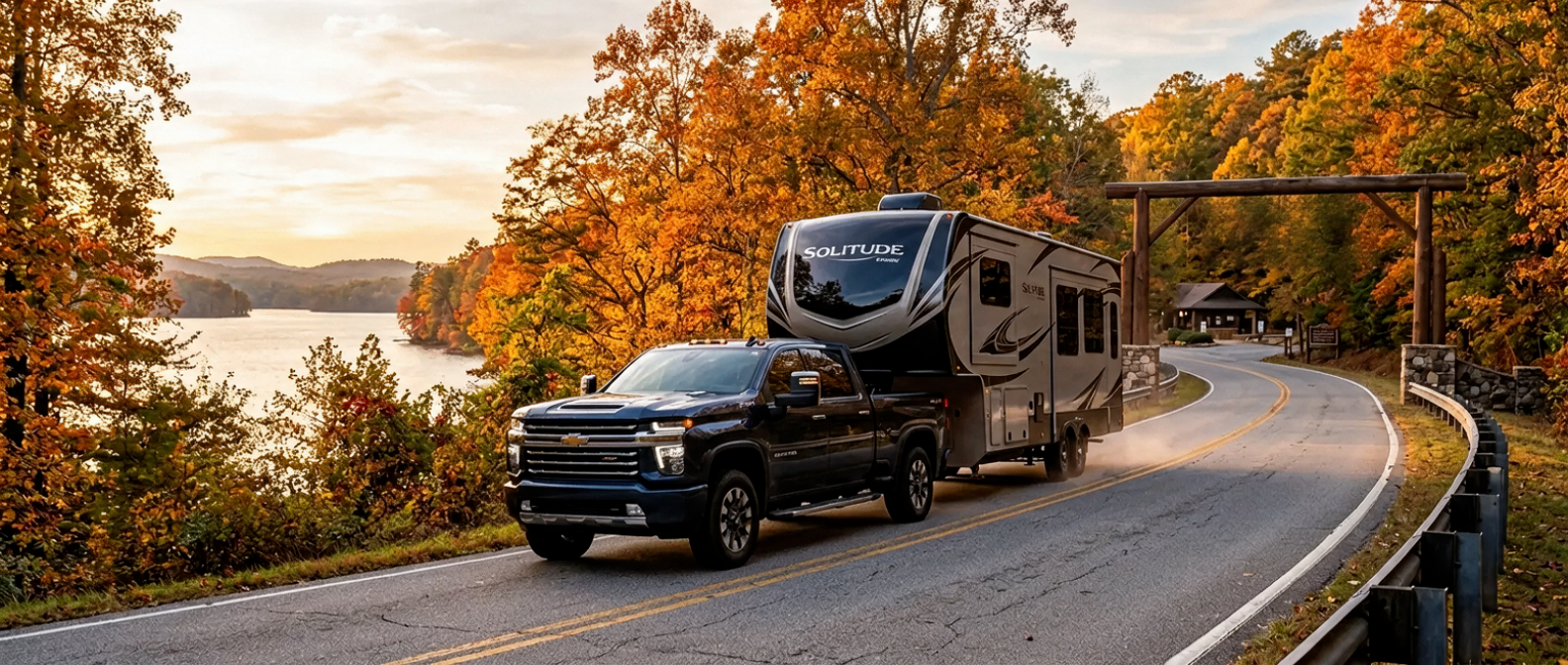
2026 Chevrolet Silverado 2500HD towing a fifth-wheel camper on a fall drive to Lake Wateree State Park in South Carolina

Pull Right: Your 2026 Silverado 2500HD Fall Towing Guide for Lake Wateree

{ "@context": "https://schema.org", "@type": "AutoDealer", "name": "Wilson Chevrolet", "url": "https://www.wilsonchevy.com", "telephone": "(803) 402-4233", "address": { "@type": "PostalAddress", "streetAddress": "798 us hwy 321 N BUSINESS", "addressLocality": "Winnsboro", "addressRegion": "SC", "postalCode": "29180" } } { "@context": "https://schema.org", "@type": "Article", "headline": "Pull Right: Your 2026 Silverado 2500HD Fall Towing Guide for Lake Wateree", "publisher": { "@type": "Organization", "name": "Wilson Chevrolet" }, "datePublished": "2026-09-09", "dateModified": "2026-09-09" } #just-private-label * { box-sizing: border-box; } #just-private-label { font-family: inherit; line-height: 1.7; color: #333333; max-width: 800px; margin: 0 auto; padding: 20px; } #just-private-label h2 { font-size: 1.5em; font-weight: 600; margin-top: 1.5em; margin-bottom: 0.75em; color: #000000; } #just-private-label h3 { font-size: 1.2em; font-weight: 600; margin-top: 1.2em; margin-bottom: 0.5em; color: #000000; } #just-private-label p { margin-bottom: 1em; font-size: 1em; } #just-private-label a { color: #000000; text-decoration: underline; } #just-private-label a:hover { text-decoration: none; } #just-private-label strong { font-weight: 600; } #just-private-label ul, #just-private-label ol { margin-bottom: 1em; padding-left: 1.5em; } #just-private-label li { margin-bottom: 0.5em; } #just-private-label .tip-box { background-color: #f9f9f9; border-left: 4px solid #333333; padding: 15px; margin: 1.5em 0; } #just-private-label .cta-section { margin-top: 2em; padding: 20px; text-align: center; } #just-private-label .cta-button { display: inline-block; padding: 12px 24px; margin: 10px; background-color: #bb8b35; color: #ffffff !important; text-decoration: none; font-weight: 600; } #just-private-label .cta-button:hover { opacity: 0.9; text-decoration: none; } #just-private-label .dealer-footer { margin-top: 40px; padding-top: 20px; border-top: 1px solid #e0e0e0; text-align: center; font-size: 14px; color: #666666; } #just-private-label .dealer-footer p { margin: 5px 0; } @media (max-width: 600px) { #just-private-label { padding: 15px; } #just-private-label h2 { font-size: 1.3em; } #just-private-label h3 { font-size: 1.1em; } #just-private-label .cta-button { display: block; margin: 10px 0; } } In this article What's the Plan at a Glance? Know What Your Camper Actually Weighs The Route and Why Fall Timing Is Exactly Right Why the 2500HD Is the Right Truck for This Trip The plan is simple enough. Load the camper, take I-77 south from Winnsboro, and drop into Lake Wateree State Park before the weekend crowds settle in. What makes that trip actually work is matching the right Silverado 2500HD configuration to what your trailer really weighs loaded (not what the brochure says it weighs empty). A cold October morning at the boat ramp is no time to discover you left the wrong number on the door-jamb sticker. The 2026 Silverado 2500HD is the right foundation. Set it up correctly for a fall run to the lake, and the drive nearly runs itself. What's the Plan at a Glance? Lake Wateree State Park sits on Desportes Island about 30 miles northeast of Columbia, just east of I-77. From Wilson Chevrolet on US 321 in Winnsboro, you're talking roughly 35 minutes of driving. The park runs 72 reservable campsites, most with water and electric service, and many sized generously enough for a full-length fifth wheel and tow vehicle. Reservations require a two-night minimum, so plan a proper weekend rather than a quick overnight. Stop What to Do Best Time Parking and Access Lake Wateree State Park campground Set up camp, connect to water and electric hookups Check in from the office; paved sites and roads Large RV parking lot adjacent to the office (pull-through access available) Boat ramp and tackle shop Launch the boat, buy bait, fuel up at the refueling dock Early morning for fishing Paved ramp; the tackle shop is small but stocked for a weekend Wateree shoreline fishing Crappie, largemouth bass, catfish, striped bass in a 13,000-acre lake Dawn and dusk, especially in fall when bass are feeding actively Walk-in from the campground or by boat 2.3-mile nature trail Stretch your legs, watch for osprey and bald eagles along the shoreline Mid-morning after temps rise Trailhead accessible from the main park area Annual Creepy Campout Halloween event held the last Saturday of October every year Late October Plan a reservation well in advance; this weekend fills fast Know What Your Camper Actually Weighs Your trailer's dry weight is not the number you're actually towing, and that gap is where a fall trip quietly goes sideways, because a loaded 24-foot rig carries far more than its spec sheet ever admits. Load that travel trailer with water tanks, gear, food, and bikes, and you've added well north of 1,000 pounds to the printed figure. A mid-size travel trailer in the 24-to-28-foot range commonly lands between 5,500 and 8,500 pounds once loaded for a real trip. A fifth-wheel pushes higher, with many fully loaded units sitting between 12,000 and 15,000 pounds before you add anything from the house. Browse available Silverado 2500HD configurations and you'll see two engine choices, and the right one depends directly on where your trailer lands on that scale. Chevrolet lists the 2026 Silverado 2500HD's standard 6.6L V8 gas engine at 401 horsepower and 464 lb-ft of torque. For a conventional-hitch travel trailer under 10,000 pounds loaded, that gas engine does the job cleanly. Step up to the available Duramax 6.6L Turbo-Diesel V8 and output jumps to 470 horsepower and 975 lb-ft of torque (per Chevrolet's own specification page). That torque figure shows up most at low RPM. Chevrolet's Duramax delivers its peak torque at just 1,600 RPM, which is why it feels effortless pulling away from a dead stop at the boat ramp with a loaded fifth wheel behind you. It doesn't feel like it's working. For a fifth wheel or any loaded rig above roughly 12,000 pounds, the Duramax stops being optional. It's the necessary tool. Insider note: New for 2026, Chevrolet made the integrated trailer brake controller standard on every single trim of the Silverado 2500HD. You no longer have to spec up to a higher trim or add an aftermarket controller to manage trailer brakes from the in-dash display. That change earns its keep for anyone backing into a Lake Wateree campsite at dusk on a Friday. The Route and Why Fall Timing Is Exactly Right If you're eyeing the half-ton Silverado 1500 for this kind of trip, it handles travel trailers under 8,000 to 9,000 pounds comfortably, though pulling a fifth wheel changes the conversation entirely. The 2500HD's frame, suspension, and brake system are built for the sustained load, well beyond the peak rating on paper. Flat and manageable at HD towing speeds, the I-77 corridor from Winnsboro to the Lake Wateree turnoff won't test the truck much. What you want in the bed is enough gear to cook a proper camp dinner and enough capacity in the truck to bring back a cooler of lake fish. The Silverado 2500HD carries up to 3,689 pounds of payload (check your specific truck's door-jamb sticker for the number that actually applies to your build). Payload is where a fifth wheel bites, because the pin weight, typically 15 to 25 percent of the trailer's total weight, counts against your payload, not your tow rating. Fall is the right season for this trip, no question. South Carolina's October temperatures drop to a reasonable range for camping without the summer heat and humidity that turns an August campsite into a misery contest. The park's annual Creepy Campout runs the last Saturday of October. Book that weekend early, especially with a long rig, because sites that fit a large fifth wheel plus tow truck go first. Next step: Before you hitch up, verify your specific truck's tow rating on the door-jamb sticker and cross it against your trailer's loaded GVWR (not the dry weight). Those two numbers are the only ones that matter on the day you pull out. Why the 2500HD Is the Right Truck for This Trip For a lightweight travel trailer under 8,000 pounds, a Silverado 1500 can do the job cleanly, and it'll be easier to thread through the campground loop, so we won't push more truck on you than the trip needs. We'll tell you that plainly. The 2500HD is harder to park in a tight, wooded campsite, full stop. Buyers who come to us with a fifth wheel, a larger toy-hauler, or a trailer loaded with a kayak or two on the back are in 2500HD territory every time. The gas tank holds 28 to 36 gallons (per Chevrolet) depending on configuration, and that range matters on a trip where you're pulling weight and the nearest station past the park entrance requires backtracking. The Duramax's fuel efficiency under load is meaningfully better than the gas engine at sustained highway speeds with a heavy trailer, which is the exact condition you're dealing with on the run back north on I-77 on a Sunday afternoon. We'd also flag something that rarely makes it into a towing guide. The available 14-camera surround-view system (Chevrolet lists up to 14 cameras on the 2500HD) includes a transparent trailer view that lets you see past the camper while moving. Backing into a tight Riverside campsite loop at Lake Wateree, where the wooded sites run close together and the pad is paved but your sight lines aren't great, that camera system earns its keep in the first ten minutes. Plan your fall camper trip. Get your 2500HD into our service center for a pre-tow inspection before you hitch up. The lake will be there. Arrive ready. By the Wilson Chevrolet Team | September 2026 See Current Silverado 2500HD Offers Wilson Chevrolet 798 us hwy 321 N BUSINESS, Winnsboro, SC 29180 (803) 402-4233