





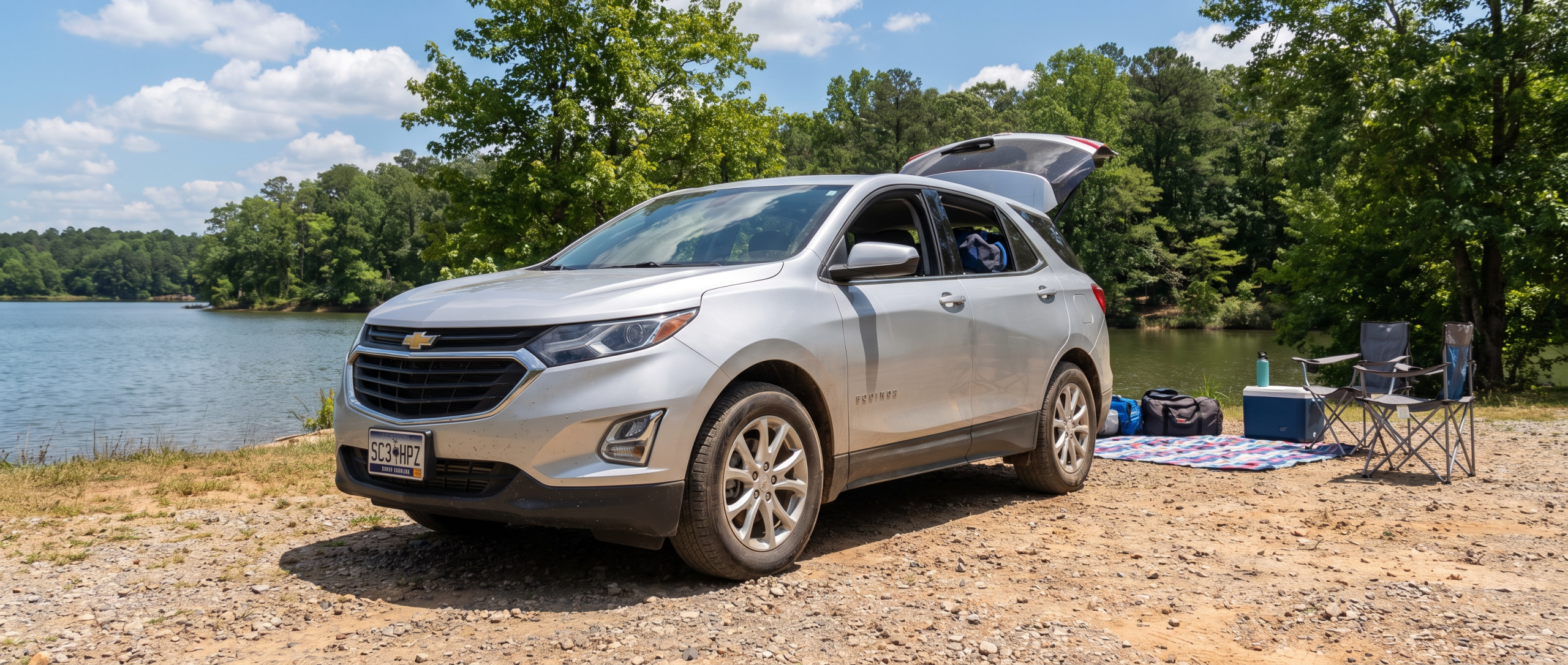
If you’re shopping for a used Chevy SUV near Chester or anywhere along the I-77 corridor this summer, the single most important question isn’t which model to pick — it’s which model year. The wrong year of an otherwise solid SUV can mean inheriting someone else’s NHTSA recall headaches or documented engine trouble. The right year, chosen deliberately, puts a proven, low-drama vehicle in your driveway before the next Lake Wateree weekend rolls around.
This guide covers three Chevrolet SUV tiers that move regularly through the used market here in Fairfield County: the compact Chevrolet Equinox, the three-row Chevrolet Traverse, and the full-size Chevrolet Tahoe. For each one, you’ll find the verified sweet-spot years, the years worth extra scrutiny, and exactly what makes the difference.
- Equinox sweet spot: 2019-2021. The 1.5L turbo is broken in, lane-keep assist and automatic emergency braking are standard, and NHTSA complaint volume dropped sharply from the 2018 first-year model.
- Equinox years to watch: 2010-2013 and 2018. The 2.4L four-cylinder in those older years has a well-documented excessive oil consumption problem; the 2018 carried early-production driveshaft and brake recall campaigns.
- Traverse sweet spot: 2021-2023. Fewest complaints in the second generation, the 2022 had only one NHTSA recall. Avoid 2019-2020 — 8 recalls and 188 complaints filed for the 2020 alone.
- Tahoe sweet spot: 2021 and newer (fifth generation). The 2021 redesign brought independent rear suspension, more cargo space, and available diesel. Earlier fourth-gen years (2015-2020) work on a tighter budget.
- Run a VIN check on any used vehicle before you buy — recalls transferred to a second owner are still your responsibility to close.
Which Equinox years are actually worth buying?
The 2019, 2020, and 2021 Equinox are the strongest recommendations for most used buyers near Chester. By 2019, Chevrolet had resolved the first-year growing pains of the 2018 third-generation launch — specifically a documented driveshaft recall (NHTSA 17V516000) and rear brake caliper issues that appeared in early 2018 production. The 2019 and 2020 models carry Lane Keep Assist and Automatic Emergency Braking as standard, and NHTSA complaint volume is notably lower than the first-year model.
The EPA rates the 2021 Equinox FWD with the 1.5L turbo at 26 city / 31 highway, which matters on a summer run from Winnsboro down I-77 into Columbia and back. That efficiency holds up under heat load better than you might expect from a turbocharged engine, provided maintenance is current.
| Model Year | Generation | NHTSA Notes | Sweet Spot? |
|---|---|---|---|
| 2010-2013 | 2nd Gen | 1,000+ complaints (oil consumption, timing chain) | Avoid |
| 2018 | 3rd Gen | 5 recalls, driveshaft + brake campaigns | Proceed carefully |
| 2019-2021 | 3rd Gen | Low complaint volume, AEB standard | Yes |
| 2022-2023 | 3rd Gen | 5 recalls on 2022 (seat bolt, fuel pump, child-seat LATCH) | Good, verify recalls closed |
| 2024-2025 | 4th Gen | Latest generation, clean record so far | Strong if in budget |
The 2022 Equinox is mechanically sound, but it accumulated five NHTSA recall campaigns — including a fuel pump module that could cause an engine stall (NHTSA campaign N222372310 for 2021-2022 models) and a child-seat LATCH anchorage coating issue (campaign N232403240 for 2020-2023 models). None of these are reasons to walk away from a 2022 if the specific VIN shows all campaigns closed, but they are reasons to verify before you sign.
Browse Wilson Chevrolet’s current pre-owned inventory to see which model years and trims are available right now.
Which Equinox and Traverse years should give you pause?
Equinox: 2010-2013 is the generation to treat with the most caution. NHTSA data shows the 2010 and 2011 Equinox each logged more than 1,100 complaints — the highest volumes across all Equinox model years on record. The 2.4L four-cylinder engine used across 2010-2013 had documented excessive oil consumption tied to defective piston rings. In the worst cases, owners reported needing to top off oil every 1,000 miles, which can lead to engine damage long before scheduled service intervals catch it. Timing chain failures were also reported on V6 versions from 2010-2012.
The fix for a 2010-2013 Equinox with active oil consumption is an engine replacement — one of the costliest outcomes in used-SUV ownership. If a seller cannot show consistent oil-change records at closer-than-factory intervals, that is a real flag on these years.
Traverse: 2019 and 2020 are the years to approach carefully. Both score below the second-generation average in NHTSA-sourced reliability data. The 2020 Traverse had 8 recalls and 188 NHTSA complaints on file, with the dominant problem categories being engine and powertrain. The 2019 also showed early transmission concerns from owners — a “shift to park” detection fault that appeared in several of the first second-generation Traverse examples.
The 2021 Traverse had three recalls, largely addressing a roof rail airbag connector issue and a potential transmission fluid leak — both are the kind of documented, addressed campaigns that a VIN check can confirm closed. The 2022 had just one recall. That year-over-year improvement is real and significant for used buyers.
Pros and Cons of Buying Used vs. New for Each Tier
The used market for Chevy SUVs near Chester sits in a genuinely interesting spot right now. Enough 2020-2023 inventory has cycled through that buyers can find solid recent examples without the premium of a brand-new vehicle. Here is the honest trade-off by size tier:
| Pros of Buying Used | Cons / Watch Points | |
|---|---|---|
| Equinox (compact) | High supply keeps prices accessible; proven 1.5L turbo reliability on 2019-2021; full tech suite available | 2022 had active fuel system recall; 2018 first-year issues still circulating |
| Traverse (3-row) | 3-row seating at a lower entry point than new; 2021-2023 sweet spot well-documented | 2019-2020 carry above-average complaint volume; early second-gen transmission concerns |
| Tahoe (full-size) | Fifth-generation (2021+) IRS ride quality is genuinely better than prior gen; diesel option available used | 2021 first year had numerous recalls — confirm VIN is clear before purchase |
Which Tahoe years deserve a second look on the used lot?
The 2021 model year marked a true generational leap for the Tahoe. Chevrolet swapped the old solid rear axle for an independent rear suspension, which improved the ride meaningfully on the kinds of roads you find between Winnsboro and points north toward Rock Hill. Cargo space expanded to a maximum of 144.7 cubic feet, and the fifth generation introduced a 3.0L Duramax diesel option rated at 24 mpg combined — a real number if long hauls are part of the picture.
The fourth-generation Tahoe (2015-2020) is not a bad vehicle, but be aware that the 2021 first-year model carried numerous NHTSA recalls, including campaigns on the roof rail airbag, transmission fluid containment, and other items. Verify any 2021 Tahoe VIN on NHTSA.gov before purchase to confirm all open campaigns are resolved.
For buyers who want the fifth-generation improvements without paying close to current pricing, a clean 2022 or 2023 Tahoe represents the best of both worlds — the updated platform has more time for any first-year items to surface and get addressed.
Which year is right for which buyer?
Three distinct buyer profiles tend to walk onto the lot at Wilson Chevrolet when the used Chevy SUV conversation comes up, and each one maps to a different answer.
The budget-focused daily driver: A 2019 or 2020 Equinox LT with the 1.5L turbo and a clean service record is the call here. The third-generation platform is proven, the EPA fuel economy of 26/31 FWD holds up on the I-77 Columbia commute, and parts are widely available at any Chevrolet service center. Inspect the oil condition before you buy — turbocharged engines reward consistent maintenance.
The family with a full back seat: A 2021 or 2022 Traverse with the 3.6L V6 is where to look. The 2021 earned the second generation’s highest J.D. Power quality score, and the 38.4 inches of second-row legroom means actual adults fit back there. Check that the 2021’s NHTSA recalls are closed — they are addressed by a simple dealer service visit, not a complicated fix.
The hauler or trail-runner headed for Carolina Adventure World: A 2021 or newer Tahoe with the Z71 package gives you the independent rear suspension, the truck-based frame for trailering, and off-road gear ratios that the Traverse and Equinox do not offer. Budget for the fuel cost accordingly — the 5.3L V8 is rated at 16 city / 22 highway in EPA testing. If the diesel is available in a clean used example, the 24 mpg combined figure changes the ownership math considerably on longer trips.
No matter which tier fits your situation, an independent inspection and a VIN lookup on NHTSA.gov are worth doing on any used SUV. Recalls follow the vehicle, not the original owner.
Frequently Asked Questions
What are the best used Chevrolet Equinox years to buy near Chester, SC?
The 2019, 2020, and 2021 model years are the most straightforward recommendations. These third-generation Equinoxes carry standard Lane Keep Assist and Automatic Emergency Braking, the 1.5L turbo had time to mature past the 2018 first-year issues, and NHTSA complaint volume is low for all three years. A clean 2019 or 2020 with documented service history is one of the more reliable compact SUV purchases in the current used market.
Which used Chevrolet Traverse years should I avoid?
The 2019 and 2020 Traverse are the years to approach most carefully. The 2020 in particular had 8 NHTSA recalls and 188 owner complaints on file — more than double the 2021’s tally. The dominant issues were engine and powertrain related. The 2018 also carried early transmission trouble in the first year of the second generation. If you are shopping a Traverse, target 2021 or newer.
Does buying a used SUV with an open recall create a problem for the buyer?
Yes. A safety recall travels with the vehicle’s VIN regardless of ownership history. If a previous owner never completed a recall repair, the issue is still open when you take title. Always run the VIN on NHTSA.gov before purchasing any used vehicle. Recall repairs at an authorized Chevrolet service center are completed at no charge, but an open campaign is still a safety item that needs attention.
Connect with us


- August 2026
- July 2026
- June 2026
- May 2026
- April 2026
- March 2026
- February 2026
- January 2026
- November 2025
- June 2025
- May 2025
- April 2025
- February 2025
- December 2024
- November 2024
- September 2024
- August 2024
- July 2024
- April 2024
- March 2024
- February 2024
- January 2024
- December 2023
- October 2023
- September 2023
- May 2023
- April 2023
- March 2023
- February 2023
- January 2023
- September 2022
- July 2022
- June 2022
- March 2022
- January 2022
- December 2021
- November 2021
- October 2021
- September 2021
- August 2021
- July 2021
- June 2021
- April 2021
- January 2021
- December 2020
- November 2020
- October 2020
- September 2020
- August 2020
- July 2020
- June 2020
- May 2020