





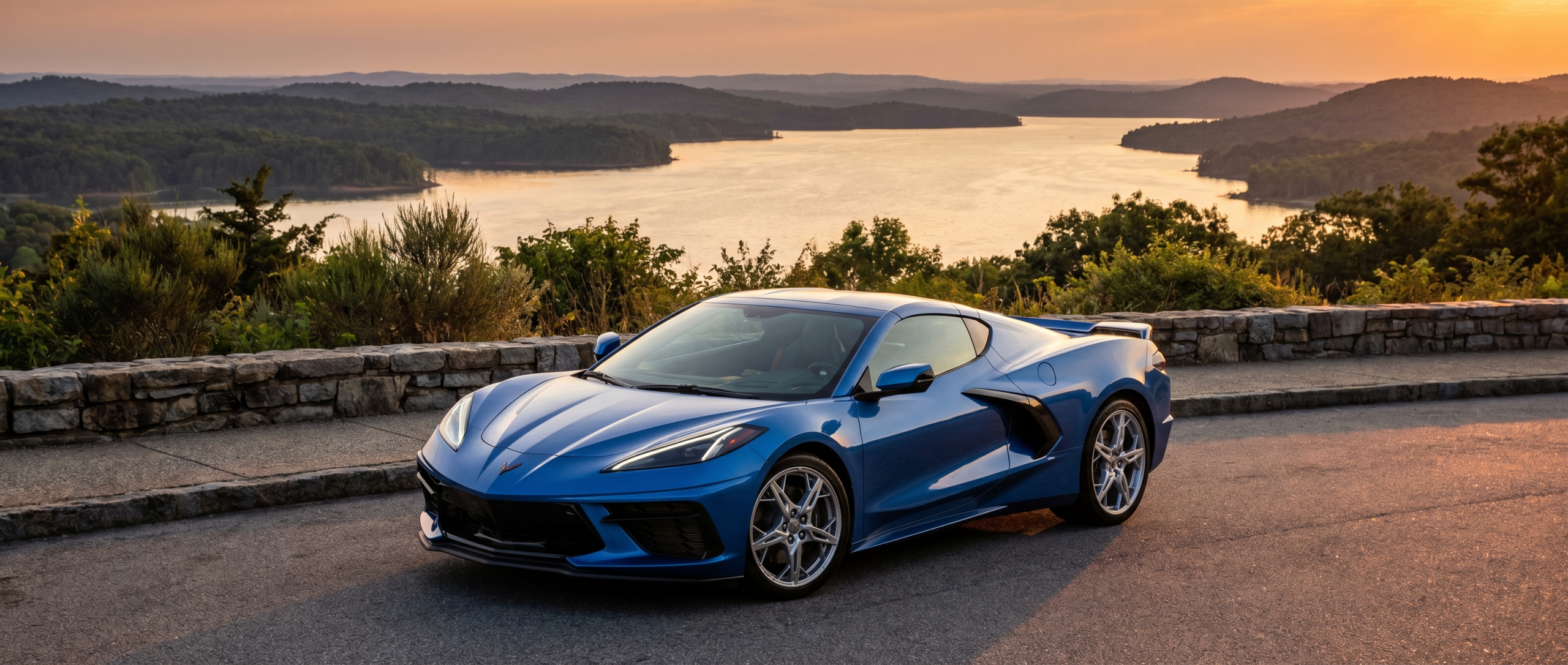
Lake Murray’s 650 miles of shoreline create endless opportunities for memorable Corvette® drives, and Winnsboro, SC sits perfectly positioned just 45 minutes away for day trips that showcase both performance and scenery. Whether you’re craving twisting backroads through Fairfield County’s rolling hills or smooth lakeside cruising with waterfront dining stops, these routes transform any summer weekend into an adventure worth taking. The combination of elevation changes, tree-lined straightaways, and panoramic water views makes this region ideal for experiencing everything your sports car was engineered to deliver.
Planning Your Lake Murray Corvette Adventure
Your Corvette’s 495-horsepower LT1 V8 engine deserves roads that let it breathe, and the journey from Winnsboro to Lake Murray offers exactly that through Highway 215’s sweeping curves and elevation changes. The best driving experiences start early – before 8 AM means cooler temperatures for optimal engine performance and lighter traffic on popular routes like Highway 378 approaching the dam.
Consider these essential preparations for your Lake Murray drive:
- Check tire pressure when cold (recommended 30 PSI front, 32 PSI rear for C8 models)
- Clean your windshield inside and out for clear visibility during sunrise/sunset drives
- Download offline maps since cell coverage drops near Dreher Island State Park
- Pack microfiber cloths for quick detail touch-ups at scenic stops
- Bring polarized sunglasses to reduce glare off the water
The weather patterns around Lake Murray can change quickly during summer afternoons. Morning drives typically offer the most stable conditions, with afternoon thunderstorms common between 2-5 PM from June through August.
Best Scenic Routes from Winnsboro to Lake Murray
The 45-mile stretch from downtown Winnsboro to Lake Murray Dam presents three distinct route options, each offering unique driving experiences suited to different moods and skill levels. Route 34 South through Ridgeway provides the most direct path with long straightaways perfect for experiencing your Corvette’s acceleration, while the backroads through Blair and Pomaria reward patient drivers with technical sections and minimal traffic.
Highway 215 to Highway 176 Route:This 52-mile route maximizes curves and elevation changes:
- Start on US-321 South from Winnsboro
- Turn right onto SC-215 at Blair
- Follow SC-176 West to Lake Murray Dam
- Total drive time: 75-90 minutes
- Best features: 27 marked curves, 400 feet elevation change
The photographer’s choice with multiple vista points:
- Take US-321 South to Columbia
- Connect to US-378 West toward Lexington
- Follow signs to Lake Murray Dam
- Total distance: 58 miles
- Highlights: Four scenic pulloffs, Congaree Creek crossing
For those wanting to explore our pre-owned inventory before their trip, finding a well-maintained Corvette with the performance package can make these routes even more enjoyable.
Waterfront Dining Destinations Worth the Drive
Nothing complements a spirited drive like waterfront dining where you can park your Corvette within view and enjoy fresh catches with panoramic lake views. The Rusty Anchor at Bomb Island ranks as the most Corvette-friendly destination, offering dedicated sports car parking just 20 feet from outdoor seating where you can keep an eye on your ride while enjoying their famous fish tacos.
| Restaurant | Distance from Dam | Corvette Parking | Must-Try Dish | Average Wait |
|---|---|---|---|---|
| The Rusty Anchor | 8 miles | Dedicated spots | Fish Tacos | 15-20 min |
| Drift Away Marina | 12 miles | Valet available | Shrimp & Grits | 25-30 min |
| Captain’s Table | 5 miles | Limited paved | Fried Catfish | 20-25 min |
| Bomb Island Grill | 10 miles | Gravel lot | BBQ Nachos | 10-15 min |
The lunch rush hits these establishments hard between noon and 2 PM on weekends. Planning your arrival before 11:30 AM or after 2:30 PM ensures both shorter waits and cooler pavement temperatures for your Corvette. Several locations offer call-ahead seating, though tables with water views typically require waiting regardless of reservations.
Hidden Gems and Photo Opportunities
Beyond the obvious marina shots, Lake Murray hides several spectacular vantage points perfect for capturing your Corvette against dramatic backdrops. The overlook at Spence Island Road remains relatively unknown despite offering 180-degree lake views with the Saluda Dam visible in the distance – arrive during golden hour for magazine-worthy shots.
Top Photography Locations:- Dreher Island State Park Marina: Paved parking with mountain backdrop
- Rocky Creek Bridge: Sunrise silhouettes with morning mist
- Hilton Recreation Area: Elevated views with pine tree framing
- Dam North Observation Deck: Industrial meets natural aesthetic
- Shull Island Causeway: Water on both sides, best at sunset
Professional photographers frequent these spots during October for fall colors, but summer mornings offer equally stunning opportunities with calm water creating perfect reflections. The parking area at Rocky Creek Bridge accommodates only four vehicles, making early arrival essential for securing the prime spot.
When you’re ready to check out new inventory for your next adventure vehicle, remember that the latest Silverado 1500 models offer excellent support vehicles for hauling track gear or towing boats to Lake Murray’s numerous launch points.
Corvette Clubs and Summer Events at Lake Murray
The Lake Murray Corvette Club hosts monthly cruises that welcome Winnsboro-area enthusiasts, with their Summer Sunset Series drawing 50-75 participants every third Saturday from May through September. These organized drives follow predetermined routes with pace cars ensuring safe speeds while still allowing spirited driving through designated sections away from populated areas.
2024 Summer Corvette Events:- Independence Day Poker Run – July 6th
- Mid-Summer Night Cruise – August 17th
- Labor Day Lake Loop – September 2nd
- Autumn Colors Tour – October 12th
Registration typically opens 30 days before each event through the club’s Facebook page. Participation costs $25-35 per car, with proceeds supporting local charities including the Lexington Medical Center Children’s Wing. First-time participants receive route maps, radio frequencies for group communication, and safety briefings covering hand signals and spacing protocols.
The Chapin Labor Day Festival features a dedicated Corvette show class with lakeside display areas. Early registration guarantees shaded spots under the pavilion – critical when surface temperatures on black asphalt can exceed 140°F during afternoon judging.
Safety Tips for Performance Driving Near Water
Lake Murray’s scenic roads demand respect, especially when morning dew or afternoon storms create challenging conditions for high-performance vehicles. The combination of your Corvette’s power and these variable conditions requires adjusted driving techniques that prioritize safety while still enjoying the driving experience.
Weather-Specific Considerations:- Morning dew persists until 9 AM in shaded sections
- Afternoon storms develop rapidly between 2-5 PM
- Bridge surfaces remain slippery 30 minutes after rain
- Fog forms near water during spring and fall mornings
Your Corvette’s electronic stability control and performance traction management systems provide excellent safety nets, but understanding their limits prevents overconfidence. The hairpin turn on Old Chapin Road has claimed numerous sports cars whose drivers underestimated decreasing radius curves combined with elevation changes.
Essential safety preparations include:
- Verify tire tread depth (minimum 4/32″ for wet conditions)
- Test brakes before aggressive driving sections
- Maintain 3-4 car lengths following distance
- Use Performance mode only on familiar, dry roads
- Monitor oil and coolant temperatures during spirited runs
Consider how financing options can help you add advanced safety features like the Z51 performance package with enhanced cooling and magnetic ride control for maximum control on challenging roads.
Common Questions About Corvette Summer Drives in Winnsboro, SC
How early should I start my Lake Murray drive from Winnsboro, SC to avoid traffic?
Departing Winnsboro before 7:30 AM ensures minimal traffic on Highway 215 and prime parking at popular Lake Murray destinations. Weekend traffic increases significantly after 9 AM, particularly near Lexington and the dam area, where boat launches create congestion throughout summer months.
What’s the best Corvette driving route for photography near Lake Murray?
The Dreher Island loop offers 23 miles of scenic driving with five designated photo pulloffs featuring lake views and mountain backdrops. Start at the state park entrance, follow the perimeter road clockwise, and stop at the marina overlook during golden hour for optimal lighting conditions.
Which Chevrolet® Corvette features work best for Lake Murray area driving?
The Corvette’s Magnetic Selective Ride Control proves invaluable on Lake Murray’s varied road surfaces, automatically adjusting suspension firmness for comfort on rough marina roads and performance on smooth highways. The performance exhaust option enhances the experience through tree-lined sections where sound resonates beautifully.
Are there covered parking options for Corvettes at Lake Murray restaurants?
The Rusty Anchor and Drift Away Marina offer covered valet services specifically for high-end vehicles, protecting your Corvette from intense summer sun. Captain’s Table provides shaded spots on a first-come basis, typically filling by 11 AM on weekends.
What maintenance should I perform after Lake Murray summer drives?
Rinse your Corvette’s undercarriage to remove lake-area humidity residue and check brake components for any debris from gravel parking areas. The high humidity near Lake Murray can accelerate brake dust accumulation, making weekly wheel cleaning essential during summer driving season.
Where can I connect with other Corvette enthusiasts near Winnsboro, SC?
The Lake Murray Corvette Club meets monthly at rotating Lexington County locations, welcoming Fairfield County members. Their Facebook group shares weekly cruise plans, technical advice, and upcoming event information for the greater Columbia area.
Your Next Lake Murray Adventure Awaits
Lake Murray’s endless combinations of scenic routes, waterfront destinations, and driving challenges create the perfect playground for your Corvette adventures. From early morning mist rising off the water to sunset reflections painting the sky, each drive offers unique experiences that remind you why you chose America’s sports car. The team at Wilson Chevrolet understands the passion that drives Corvette enthusiasts and stands ready to help you maintain, upgrade, or even find your next dream machine for exploring South Carolina’s most beautiful waterways.
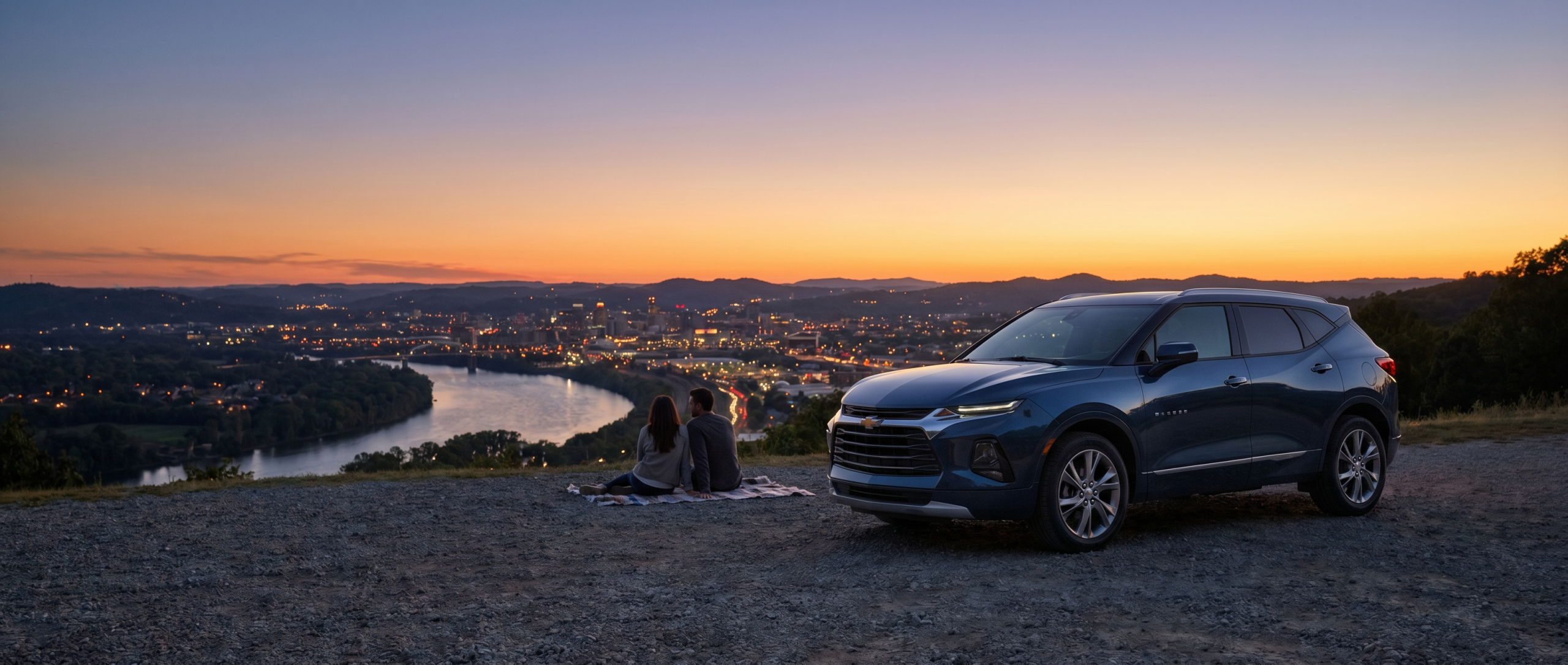
The mercury hits 95°F by noon in Columbia, but that’s when the Chevrolet® Blazer™ truly shines – its dual-zone automatic climate control creates a 72-degree sanctuary while you cruise past Lake Murray at sunset. For drivers in Winnsboro, SC who refuse to let summer heat compromise their evening plans, the Blazer delivers a sophisticated escape that transforms every drive into an occasion worth savoring.
What Makes the Blazer Perfect for South Carolina Summer Evenings
Your Blazer’s ventilated front seats actively circulate cool air through perforated leather surfaces, pulling heat away from your body within 60 seconds of startup – a feature that matters when your vehicle has been parked at Harbison Boulevard shopping center all afternoon. This isn’t just air conditioning; it’s a comprehensive comfort system designed for the specific challenges of Southern summers.
The panoramic sunroof features a power sunshade that blocks 99% of UV rays while still allowing natural light to filter through. As you navigate I-20 toward downtown Columbia for dinner, you control exactly how much of that famous Carolina sunset enters your cabin. The tinted glass works with the climate system to maintain your chosen temperature without overworking the AC compressor.
Interior Design Elements That Elevate Every Drive
The Blazer’s cabin wraps you in materials chosen specifically for their performance in heat and humidity. The available leather-appointed seating surfaces resist temperature absorption better than traditional cloth, staying cooler when parked and warming to body temperature faster when occupied.
Key comfort features include:
- Heated and ventilated front seats with 8-way power adjustment
- Ambient interior lighting with multiple color choices
- Soft-touch dashboard materials that don’t retain heat
- Premium Bose® audio system with noise cancellation
- Wireless charging pad that keeps phones cool while charging
The floating center console design creates an airy feel that psychologically enhances the sense of space. When you’re dressed for an evening at the Koger Center or Vista district restaurants, you appreciate how the Blazer’s interior maintains your comfort without compromising your style.
Technology Features for Enhanced Summer Comfort
Remote start capability through the myChevrolet app means your Blazer begins cooling before you even leave the office. Set your preferred temperature, and the system automatically adjusts fan speed and vent direction to achieve that comfort level by the time you arrive. The app shows real-time interior temperature, so you know exactly when your vehicle is ready.
The Blazer’s advanced climate control goes beyond basic cooling:
Intelligent Temperature Management- Automatic defog system prevents windshield condensation
- Rear seat climate vents with separate controls
- Cabin humidity sensor adjusts settings automatically
- Solar load sensor compensates for sun position
- Schedule departure times for pre-conditioning
- Adjust settings remotely from anywhere
- Monitor fuel usage for climate control
- Receive maintenance reminders for cabin filter changes
Blazer Versus Summer Heat: Real Performance Data
The RS and Premier trims of the Blazer feature an advanced thermal management system that maintains consistent cooling even in stop-and-go traffic on Assembly Street. The 3.6L V6 engine generates 308 horsepower while managing heat efficiently, preventing the power loss that affects many vehicles in extreme temperatures.
| Summer Performance Factor | Blazer Advantage | Impact on Comfort |
|---|---|---|
| Cooling Capacity | 6.5 kW output | Cabin cooled in under 3 minutes |
| Insulation Rating | 42 dB reduction | Quiet environment for conversation |
| UV Protection | 99% blockage | Interior materials protected from fading |
| Airflow Volume | 350 CFM max | Rapid air exchange throughout cabin |
Browse our new inventory to see which Blazer configuration matches your summer driving needs.
Smart Features for South Carolina’s Unique Climate
Living between Columbia and the Midlands means dealing with afternoon thunderstorms that can drop temperatures 20 degrees in minutes. The Blazer’s rain-sensing wipers activate automatically, while the automatic headlights adjust for rapidly changing conditions. The available all-wheel drive system provides confidence when those summer storms leave standing water on Two Notch Road.
The hands-free power liftgate proves invaluable when loading groceries from Trenholm Plaza or beach gear for a Lake Murray weekend. Wave your foot under the rear bumper, and the gate opens without requiring you to set down packages or fumble for keys in the heat.
Evening Drive Routes That Showcase Blazer Comfort
The Blazer transforms familiar Columbia routes into memorable experiences. Cruise down Main Street as the sun sets, with the ambient lighting creating a sophisticated atmosphere inside while the city lights begin to sparkle outside. The acoustic glass reduces road noise, letting you enjoy conversation or your favorite playlist through the premium sound system.
Popular summer evening destinations from Winnsboro:
- Riverbanks Zoo concerts – 45-minute comfortable drive
- Lake Murray dam overlook – Perfect for sunset viewing
- Congaree National Park – Firefly viewing in climate-controlled comfort
- Five Points entertainment district – Valet-friendly dimensions
- Segra Park for Fireflies games – Ample cargo space for chairs and coolers
Interior Space Configuration for Summer Activities
The Blazer’s 64.2 cubic feet of cargo space adapts to whatever summer throws your way. The 60/40 split-folding rear seats lie completely flat, creating room for paddleboards, camping gear, or that antique find from a Devine Street shop. The cargo management system includes:
- Underfloor storage compartment for valuables
- Multiple tie-down points for securing gear
- Cargo net to prevent items from shifting
- Rear seat reminder to check for passengers or pets
When configured for five passengers, everyone enjoys generous legroom and individual climate vents. The Tahoe offers even more space for larger families, while the Trailblazer provides similar style in a more compact package for easier downtown parking.
Common Questions About Chevrolet Blazer Style and Comfort for Columbia Summer Nights in Winnsboro, SC
How quickly does the Blazer’s AC cool the interior on hot Columbia days?
The Blazer’s climate system can drop interior temperature by 40 degrees within three minutes of maximum cooling activation. Using remote start 5-10 minutes before departure ensures a comfortable cabin even after parking in direct sunlight at Williams-Brice Stadium.
Does the Blazer’s panoramic sunroof make the cabin hotter in South Carolina summers?
The panoramic sunroof actually helps regulate temperature through its UV-blocking glass and power sunshade, rejecting 99% of harmful rays. The design allows heat to escape when vented while maintaining the climate-controlled environment Columbia drivers need.
What’s the fuel economy impact of running AC constantly in Winnsboro summers?
The Blazer’s efficient 3.6L engine maintains an EPA-estimated 27 mpg highway even with continuous AC use. The automatic stop/start technology saves fuel at traffic lights while maintaining cabin comfort through an auxiliary electric compressor.
How do the Blazer’s ventilated seats compare to regular leather in heat?
Ventilated seats actively pull moisture and heat away from occupants, maintaining surface temperatures up to 15 degrees cooler than standard leather. The perforated surfaces work with the climate system to eliminate the sticky feeling common in South Carolina humidity.
Can the Blazer’s interior materials withstand years of intense SC sun exposure?
Chevrolet engineers test all Blazer interior materials in conditions exceeding South Carolina’s climate extremes, ensuring colorfastness and durability. The UV-resistant surfaces maintain their appearance even after years of parking at Harbison or Sandhills shopping areas.
Which Blazer trim level offers the best summer comfort features in Columbia?
The Premier trim includes ventilated front seats, panoramic sunroof, and premium leather surfaces as standard equipment. However, the RS trim can be equipped with similar features while adding distinctive styling that turns heads on Gervais Street.
Your Summer Starts with the Right Vehicle
When Columbia temperatures soar and the evening promises adventure, the Chevrolet Blazer stands ready to deliver the comfort and style you deserve. From its intelligent climate control to spacious interior wrapped in premium materials, every element works together to create an oasis from the South Carolina heat. The team at Wilson Chevrolet understands how important comfort is to Midlands drivers, especially during those long summer months when the heat seems endless but the opportunities for evening enjoyment never stop.
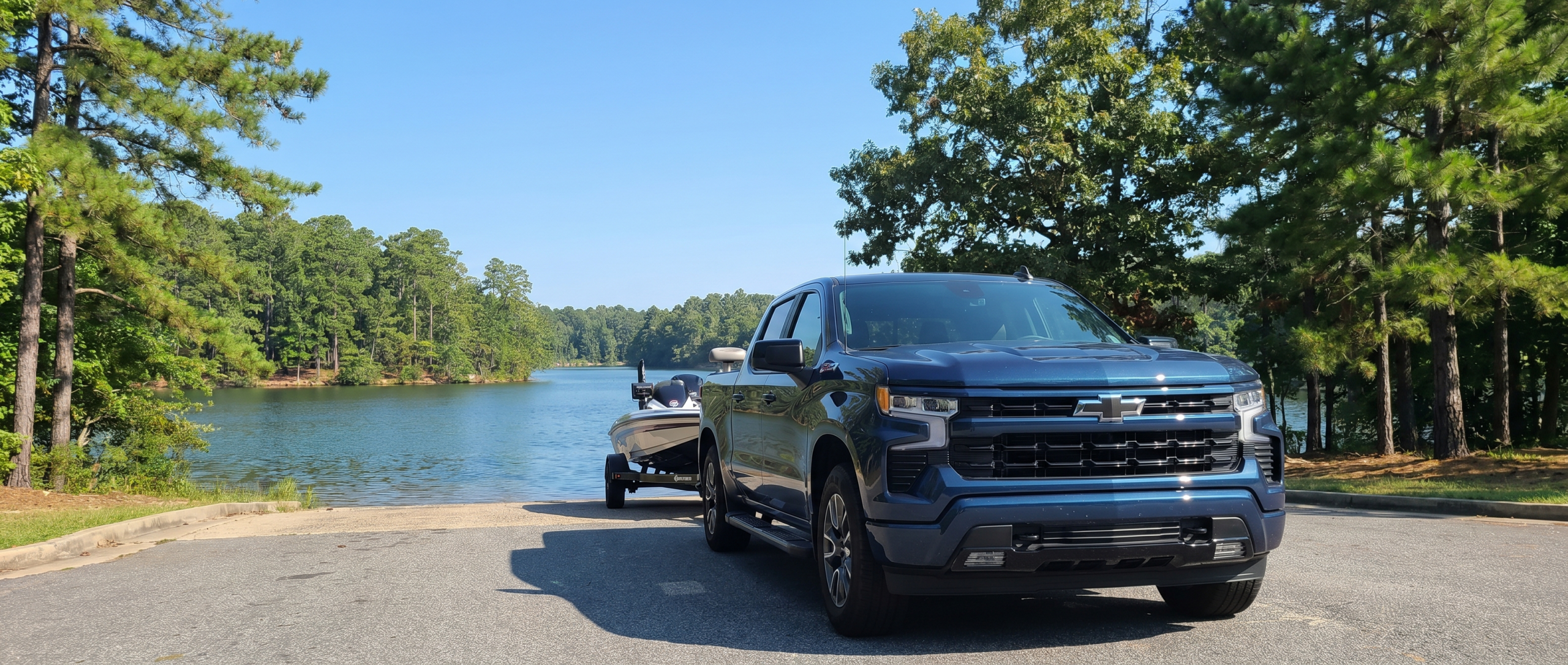
Your Silverado 1500‘s cooling system faces its biggest test when hauling heavy loads through South Carolina’s 95-degree summer days – and that extra strain can mean the difference between reaching Lake Wateree or breaking down on Highway 321. For truck owners in Winnsboro, SC who depend on their Silverado for work and recreation, understanding how to protect your cooling system during peak hauling season isn’t just maintenance advice – it’s essential knowledge that prevents costly repairs and keeps you productive when temperatures soar.
Understanding Your Silverado’s Cooling System Under Load
The 6.2L V8 in your Silverado 1500 generates up to 420 horsepower, but that power creates heat that must be managed through a complex cooling network. When you add a 10,000-pound trailer to the equation, your cooling system works overtime to maintain the ideal operating temperature of 195-220 degrees Fahrenheit.
Your truck’s cooling system includes several critical components working together:
- Heavy-duty radiator with increased capacity
- Engine oil cooler
- Transmission fluid cooler
- Electric cooling fans with variable speed control
- High-flow water pump
- Pressurized coolant recovery system
During summer hauling, each component must function perfectly to prevent overheating. The integrated transmission cooler becomes especially important when towing through the rolling hills around Ridgeway, where constant gear changes generate additional heat.
Pre-Summer Cooling System Inspection Checklist
Before the mercury climbs above 90 degrees, a thorough cooling system inspection can prevent roadside breakdowns. South Carolina’s combination of high humidity and extreme heat creates unique challenges for truck cooling systems, making spring maintenance crucial for summer reliability.
Essential Inspection Points:- Coolant Level and Condition
- Check when engine is cold
- Look for proper fill level in overflow tank
- Inspect color (should be bright orange or green)
- Test concentration with refractometer
- Belt and Hose Examination
- Check serpentine belt for cracks or glazing
- Squeeze radiator hoses for soft spots
- Look for bulges or wear marks
- Inspect hose clamps for corrosion
- Radiator and Cooling Fan Function
- Clean debris from radiator fins
- Verify electric fans activate properly
- Check for bent or damaged fins
- Ensure proper airflow through grille
- Thermostat Operation
- Monitor temperature gauge during warm-up
- Confirm upper radiator hose gets hot after thermostat opens
- Watch for erratic temperature readings
A pre-summer inspection helps identify potential failures before they strand you with a loaded trailer on I-77.
Critical Coolant Maintenance for Heavy-Duty Use
Chevrolet specifies Dex-Cool coolant for your Silverado 1500, engineered to last 150,000 miles under normal conditions. However, severe duty like frequent towing requires more vigilant maintenance to protect against corrosion and maintain proper heat transfer.
The extreme heat generated during summer hauling accelerates coolant degradation. When towing near maximum capacity, your coolant temperature can spike 20-30 degrees above normal, breaking down protective additives faster than typical driving.
| Driving Condition | Coolant Change Interval | Typical Summer Temperature |
|---|---|---|
| Normal Use | 150,000 miles | 195-210°F |
| Occasional Towing | 100,000 miles | 210-220°F |
| Frequent Heavy Hauling | 50,000 miles | 220-235°F |
| Commercial/Fleet Use | 30,000 miles | 225-240°F |
Regular coolant testing reveals problems before they cause damage. Check pH levels annually – readings below 8.5 indicate acidic conditions that corrode aluminum components.
Smart Towing Techniques to Reduce Heat Stress
How you drive while towing significantly impacts cooling system stress. Winnsboro’s location between Columbia and Charlotte means many drivers haul boats to Lake Wateree or transport equipment along Highway 34, routes that challenge any cooling system.
Heat-Reducing Driving Strategies:- Maintain steady speeds: Constant acceleration and deceleration generates excess heat
- Use tow/haul mode: Optimizes shift points and engine braking
- Monitor transmission temperature: Install aftermarket gauge if not equipped
- Plan routes wisely: Avoid stop-and-go traffic when possible
- Allow cool-down periods: Stop every 100 miles for 10-minute breaks
The Silverado’s Grade Braking feature helps control descent speeds without riding the brakes, reducing heat buildup in both the engine and transmission. This proves especially valuable when navigating the terrain changes near Mitford or heading toward the Broad River.
Weight distribution also affects cooling efficiency. Proper tongue weight (10-15% of trailer weight) maintains airflow to the radiator. Overloaded tongue weight pushes the front end down, restricting air intake through the grille.
Upgrade Options for Maximum Cooling Performance
While the Silverado 1500 comes well-equipped for towing, several upgrades enhance cooling capacity for drivers who regularly push limits. These modifications prove worthwhile for contractors, farmers, and recreational towers around Fairfield County who demand maximum performance.
Proven Cooling Upgrades:- Heavy-duty radiator: Increases cooling surface area by 40%
- High-flow water pump: Improves coolant circulation at low speeds
- Auxiliary transmission cooler: Reduces fluid temperatures by 30-50 degrees
- Hood vents: Improves hot air extraction from engine bay
- Performance thermostat: Opens at lower temperature for earlier cooling
| Upgrade | Typical Cost | Temperature Reduction | Best For |
|---|---|---|---|
| HD Radiator | $400-600 | 15-25°F | All heavy haulers |
| Trans Cooler | $150-250 | 30-50°F | Frequent towers |
| Electric Fans | $300-500 | 10-20°F | Slow-speed towing |
| Hood Vents | $200-400 | 5-10°F | Extreme conditions |
The most cost-effective upgrade? An auxiliary transmission cooler provides dramatic temperature reduction for minimal investment, extending transmission life significantly.
Common Questions About Silverado 1500 Cooling Systems in Winnsboro, SC
How often should I flush my Silverado’s coolant system in South Carolina’s climate?
Flush your Silverado’s cooling system every 50,000 miles if you tow regularly in South Carolina heat, or every 100,000 miles for normal driving. The combination of high humidity and temperatures above 90 degrees from May through September accelerates coolant breakdown, making more frequent service intervals wise for Winnsboro area drivers who haul heavy loads.
What temperature is too hot for my Silverado when towing?
Your Silverado 1500 should run between 210-230°F when towing in normal conditions, with 240°F being the maximum safe operating temperature. If your gauge exceeds 235°F while hauling on highways around Winnsboro, reduce speed immediately and activate your hazard lights while finding a safe place to stop and cool down.
Can I use universal coolant instead of Dex-Cool in my Chevrolet?
Stick with GM-approved Dex-Cool or equivalent OAT (Organic Acid Technology) coolant in your Silverado to maintain warranty coverage and prevent damage. Mixing coolant types creates a gel-like substance that clogs cooling passages, a costly mistake that requires complete system flushing at minimum.
Should I upgrade my Silverado’s cooling system before buying a larger trailer?
Assess your current cooling performance first by monitoring temperatures during typical hauling scenarios around Fairfield County. If temperatures regularly exceed 220°F or you plan to tow near the 12,000-pound maximum rating, investing in cooling upgrades like an auxiliary transmission cooler provides valuable insurance against heat-related failures.
Why does my Silverado run hotter when towing uphill compared to flat highways?
Climbing grades like those on Highway 215 toward Jenkinsville forces your engine to work harder while reducing airflow through the radiator due to slower speeds. The combination of increased power demand and decreased cooling creates perfect conditions for overheating, making proper cooling system maintenance essential for hill country towing.
What are signs my Silverado’s thermostat is failing?
Watch for erratic temperature gauge readings, engine running too cool or too hot, poor heater performance, or coolant leaks near the thermostat housing. A stuck thermostat prevents proper coolant flow, risking engine damage during summer towing around Lake Wateree or Broad River recreation areas.
Protecting Your Investment Through Proper Cooling Care
Summer hauling pushes your Silverado 1500 to its limits, but proper cooling system care ensures reliable performance when you need it most. Regular maintenance, smart driving techniques, and strategic upgrades work together to prevent the frustration and expense of overheating failures.
Remember that your cooling system works hardest during those critical moments – merging onto I-77 with a full load, climbing toward Monticello, or navigating the back roads around Fairfield County with equipment in tow. The time invested in cooling system care pays dividends through years of dependable service.
Take action before summer heat peaks. Schedule a cooling system inspection, test your coolant condition, and address any concerns before they become roadside emergencies. Your Silverado was built for hard work – proper cooling care ensures it delivers that capability every time you need it. The service experts at Wilson Chevrolet understand the unique demands South Carolina summers place on truck cooling systems and can help keep your Silverado running strong through the hottest hauling conditions.
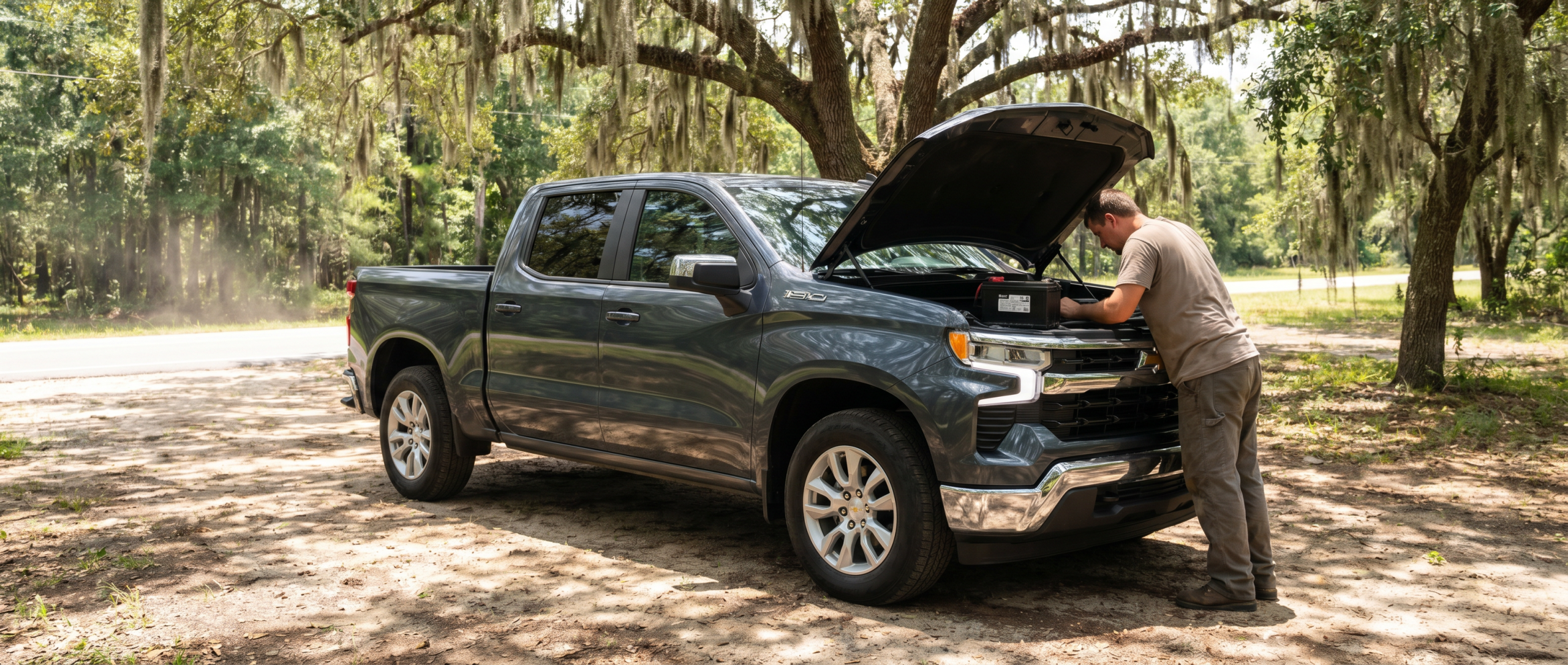
South Carolina heat pushes car batteries harder than most drivers realize – the average battery loses 33% of its strength when temperatures climb above 92°F. If you drive a Chevrolet® through Fairfield County’s summer heat, understanding battery care can mean the difference between reliable starts and roadside frustration. This guide provides specific maintenance strategies for popular models like the Silverado™, Tahoe, and Equinox, helping Winnsboro, SC drivers maximize battery life despite challenging summer conditions.
Why Heat Damages Your Chevy’s Battery Faster Than Cold
Battery fluid evaporates 50% faster at 95°F than at 77°F, and that accelerated chemical reaction shortens your battery’s lifespan significantly. The intense heat common around Lake Wateree and throughout Fairfield County creates a perfect storm for battery stress. Your Silverado 1500’s battery works overtime just maintaining normal electrical functions when parked in direct sunlight.
Heat causes internal battery plates to corrode faster, reducing the unit’s ability to hold a charge. This explains why batteries that seem fine in June suddenly fail by August. The damage happens gradually – each hot day chips away at your battery’s capacity until one morning it simply won’t turn over.
Making matters worse, today’s vehicles demand more from batteries than ever before. Your Equinox runs multiple computers, sensors, and systems that need constant power. This continuous draw combined with extreme heat accelerates battery breakdown. Smart drivers who recognize these challenges take proactive steps to protect their investment.
Signs Your Battery Struggles in Summer Heat
Your Chevrolet provides several warning signs before complete battery failure, but summer heat can make these symptoms appear suddenly. Watch for these indicators that your battery needs attention:
Early Warning Signs:
- Engine cranks slowly on hot afternoons
- Headlights dim when using air conditioning
- Dashboard warning lights flicker intermittently
- Power windows operate slower than normal
- Check engine light appears without obvious cause
The most telling sign happens during those first starts after your vehicle sits in the sun. If your Tahoe hesitates before turning over or makes a labored cranking sound, the battery already suffers from heat damage. These symptoms often worsen throughout the day as temperatures climb.
Interior electronics offer additional clues about battery health. When your infotainment system resets randomly or your clock loses time, the battery likely can’t maintain consistent voltage. These minor annoyances predict major problems ahead.
Temperature extremes around Ridgeway and Blythewood create perfect conditions for battery stress. Vehicles parked at Fairfield Central High School or along SC-34 experience direct sun exposure that can push under-hood temperatures above 140°F. This heat literally cooks battery components from the inside out.
Essential Battery Maintenance for Fairfield County Drivers
Regular maintenance prevents most heat-related battery failures, yet many drivers skip these simple steps until problems arise. Here’s your essential checklist for summer battery care:
Monthly Inspection Tasks:
- Check battery terminals for white or green corrosion buildup
- Ensure battery hold-down bracket remains tight
- Look for cracks or bulges in the battery case
- Test electrolyte levels in non-sealed batteries
- Clean any debris from battery tray area
Start by examining the battery connections on your Trailblazer or Silverado 2500 HD. Corrosion appears as fuzzy growth around terminals and prevents proper electrical flow. Mix baking soda with water to neutralize acid buildup, then scrub gently with an old toothbrush. Rinse thoroughly and dry completely before reconnecting.
Physical battery placement matters more than most realize. A loose battery bounces during drives on US-321, causing internal damage and shortened life. Tighten the hold-down bracket until the battery can’t move but avoid overtightening which cracks the case.
For traditional batteries with removable caps, check fluid levels monthly during summer. The liquid should cover internal plates by about half an inch. Add only distilled water – tap water contains minerals that damage battery chemistry. Most newer Chevrolet models use maintenance-free batteries, eliminating this step.
Parking Strategies That Extend Battery Life
Where and how you park makes a measurable difference in battery longevity during South Carolina summers. Strategic parking reduces under-hood temperatures by up to 20 degrees, directly impacting battery stress levels.
Smart Parking Guidelines:
- ✓ Choose shaded spots whenever possible
- ✓ Face vehicle away from afternoon sun
- ✓ Use windshield sunshades to reduce cabin heat
- ✓ Crack windows slightly for ventilation (if safe)
- ✓ Avoid parking on hot asphalt when alternatives exist
Drivers shopping at Fairfield County Plaza or visiting Lake Monticello should prioritize covered parking areas. Even partial shade helps – parking so only the rear of your Silverado sits in sun keeps the engine compartment cooler than full exposure.
Consider investing in a battery insulation kit if you regularly park outdoors. These thermal barriers wrap around the battery, reducing temperature fluctuations. They work especially well for work trucks and vehicles that sit outside during long shifts.
Building orientation affects parking decisions too. At locations like Fairfield County Hospital, the east side of buildings provides afternoon shade while west-facing spots bake in direct sun. These small choices compound over time, potentially adding years to battery life.
Testing and Replacement: Know When to Act
Professional battery testing removes guesswork from maintenance decisions. Most batteries last 3-5 years in moderate climates, but Fairfield County heat often shortens this to 2-3 years. Regular testing catches problems before they strand you.
| Battery Age | Test Frequency | Action Needed |
|---|---|---|
| 0-2 years | Annually | Monitor only |
| 2-3 years | Every 6 months | Consider replacement |
| 3+ years | Every 3 months | Plan immediate replacement |
| Any age with symptoms | Immediately | Test and likely replace |
Modern battery testers measure cold cranking amps (CCA) and internal resistance, providing accurate health assessments. If your battery tests below 70% of its rated CCA, replacement makes more sense than waiting for complete failure. Summer heat damage is cumulative – a marginal battery in July won’t survive August.
When selecting a replacement battery for your Tahoe or Colorado, choose one designed for hot climates. Look for AGM (Absorbed Glass Mat) batteries which handle temperature extremes better than traditional flooded batteries. They cost more initially but last longer in harsh conditions.
The manufacturing date matters when buying new batteries. Find the date code stamped on the case – never buy a battery more than six months old. Batteries deteriorate even sitting on store shelves, especially in non-climate-controlled warehouses. Fresh batteries deliver maximum service life.
Browse our new inventory to see vehicles equipped with the latest battery technology designed for Southern heat resistance.
Common Questions About Chevrolet Battery Care in Winnsboro, SC
How often should I test my Chevrolet battery in Fairfield County’s climate?
Test your Chevrolet battery every six months if it’s under three years old, or every three months once it passes the three-year mark. Fairfield County’s hot summers accelerate battery aging, making frequent testing essential for reliability. Schedule testing before summer and after to catch heat damage early.
Does idling my Silverado with AC running drain the battery?
Extended idling with air conditioning strains your Silverado’s battery and charging system, especially in extreme heat. The alternator works harder at idle speeds and may not fully recharge the battery. Limit idle time to 10 minutes or less, and take a 15-minute drive weekly to maintain proper charge levels.
What’s the best battery type for hot weather driving in South Carolina?
AGM (Absorbed Glass Mat) batteries perform best in South Carolina’s hot climate, lasting 40% longer than standard flooded batteries. They resist heat damage, don’t require water additions, and handle the high electrical demands of modern Chevrolet vehicles. The extra cost pays for itself through extended service life.
Can I jump-start my Chevy safely in extreme heat?
Jump-starting in extreme heat requires extra caution due to increased hydrogen gas production from hot batteries. Park both vehicles in shade if possible, ensure good ventilation, and let batteries cool for 10 minutes before connecting cables. Follow your owner’s manual procedures exactly and wear safety glasses for protection.
Where can I get my Chevrolet battery tested in Winnsboro, SC?
Wilson Chevrolet offers free battery testing for all Chevrolet models using advanced diagnostic equipment. Located conveniently in Winnsboro, the service team checks battery health, charging system operation, and starter draw. Regular testing helps prevent unexpected failures common during Fairfield County summers.
Should I disconnect my battery if my vehicle sits unused in summer heat?
Disconnecting the battery prevents parasitic drain but isn’t necessary for short periods under two weeks. For longer storage, disconnect the negative terminal first, then positive. Better yet, use a battery tender to maintain optimal charge without the hassle of reconnection and potential computer memory loss.
Protect Your Investment Through Smart Battery Care
Summer battery care goes beyond basic maintenance – it’s about understanding how Fairfield County’s unique climate challenges your Chevrolet’s electrical system. Whether you drive a hardworking Silverado 2500 HD or efficient Trailblazer, these preventive steps save money and prevent inconvenient breakdowns.
Remember that battery problems rarely announce themselves with convenient timing. They strike during rushed morning commutes or when returning to a sun-baked parking lot after work. Taking action now, before problems develop, keeps you moving reliably through the hottest months.
The service experts at Wilson Chevrolet understand local driving conditions and how they affect battery life. From testing to replacement, they provide the knowledge and quality parts that keep Fairfield County drivers confident in their vehicles year-round.
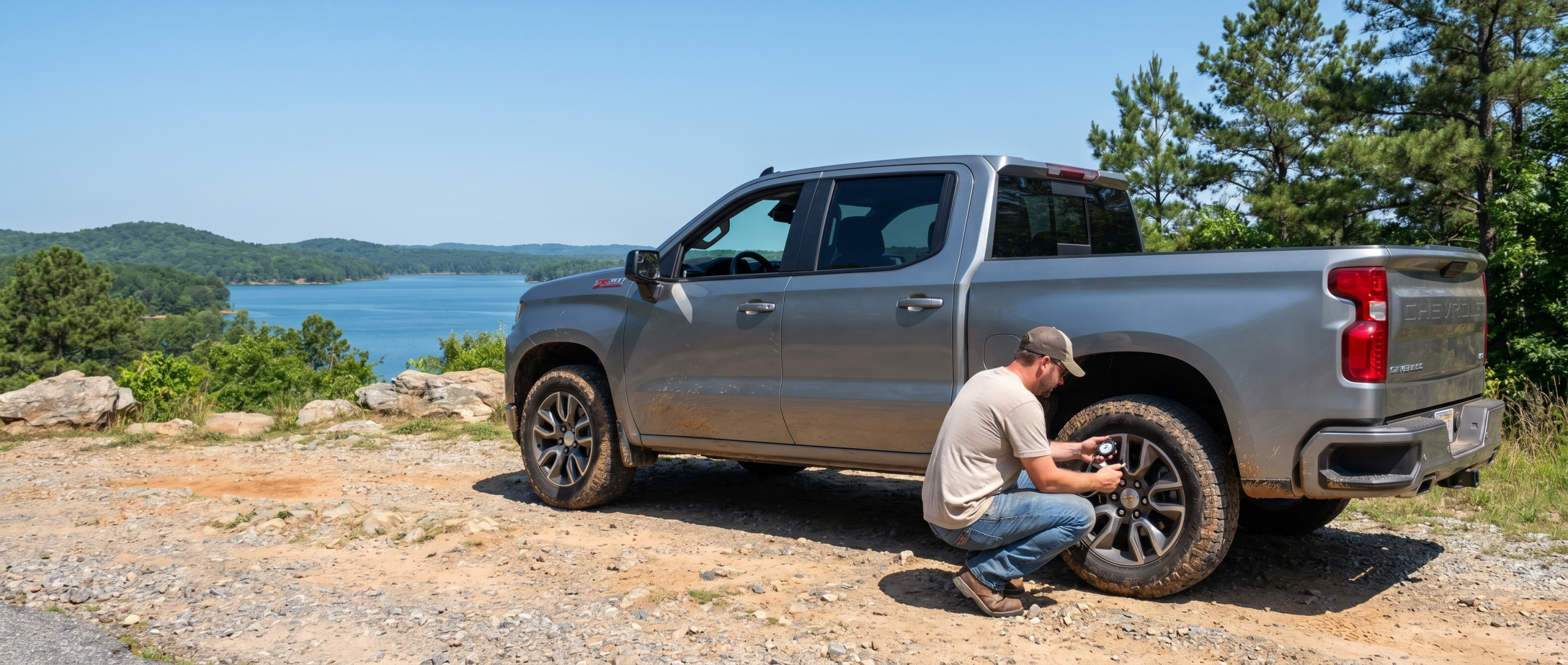
South Carolina’s June temperatures can swing from 65°F at dawn to 95°F by afternoon, causing your tire pressure to fluctuate by up to 2 PSI for every 10-degree change. For Chevrolet owners in Winnsboro, SC, this dramatic temperature variation makes June the perfect month to evaluate your tires before the intense summer heat arrives. Understanding how our unique climate affects your vehicle’s tires can mean the difference between reliable performance and unexpected roadside troubles.
How Winnsboro’s Summer Heat Impacts Your Chevrolet’s Tires
Your tires lose approximately 1-2 pounds of rubber through normal wear every 5,000 miles – and that process accelerates dramatically when pavement temperatures exceed 140°F, which happens regularly on I-77 during South Carolina summers.
The science behind heat’s effect on tires is straightforward but often overlooked. As temperatures rise, the air inside your tires expands, increasing pressure beyond recommended levels. Overinflated tires wear unevenly, reduce your contact patch with the road, and compromise your Silverado 1500‘s towing stability or your Equinox’s fuel efficiency.
Hot pavement also softens tire rubber, making it more susceptible to damage from road hazards. Those seemingly minor imperfections on Highway 321 toward Columbia become more dangerous when your tires are heat-stressed. Regular pressure checks and visual inspections help you catch problems before they strand you on a sweltering afternoon.
But heat isn’t just about pressure changes – it’s about chemistry too.
Signs Your Tires Need Attention Before Peak Summer
Uneven tread wear often appears first on the inside edges of your tires, where it’s hardest to spot during casual glances – yet this hidden wear pattern indicates alignment issues that waste fuel and compromise safety.
Here are the critical warning signs that demand immediate attention:
Visual Indicators:- Tread depth less than 4/32 of an inch (use the quarter test)
- Visible cracks or bulges in sidewalls
- Uneven wear patterns across the tread surface
- Vibration or pulling while driving on smooth roads like Highway 34
- Decreased fuel economy in your Trailblazer or Trax
- Longer stopping distances, especially concerning for heavy vehicles
- Reduced responsiveness during lane changes
- Hydroplaning in typical afternoon thunderstorms
The penny test works, but the quarter test provides a better safety margin for South Carolina’s sudden summer storms. Place a quarter upside down in your tread – if you can see the top of Washington’s head, it’s time to explore our new inventory for replacement options.
These warning signs become even more critical when you consider our local driving conditions.
Why June Timing Matters for Fairfield County Drivers
June in Fairfield County brings unique challenges that make tire maintenance particularly crucial – afternoon thunderstorms can drop 2 inches of rain in 30 minutes, turning Highway 200 toward Ridgeway into a hydroplaning hazard for worn tires.
Our location between Lake Wateree and the Broad River means humidity levels often exceed 70% by noon, accelerating tire degradation through a process called ozone cracking. This environmental stress, combined with temperature extremes, makes June the ideal window for tire service before July and August bring the year’s most punishing conditions.
June Tire Maintenance Benefits:
- Beat the July heat when service bays are busiest
- Prepare for summer road trips and vacation travel
- Take advantage of moderate morning temperatures for service
- Address issues before peak hurricane season brings heavy rains
The Fairfield County road system presents its own challenges. Rural roads near Lake Monticello often have sharp gravel that can penetrate heat-softened rubber, while the expansion joints on the Highway 34 bridge over the Broad River can jar already-stressed tires. Your Tahoe or Silverado 2500 HD needs properly maintained tires to handle these conditions safely.
Understanding our local challenges is just the beginning – let’s look at the specific benefits for different Chevrolet models.
Chevrolet Model-Specific Tire Considerations
Each Chevrolet model has unique tire requirements based on weight distribution, drivetrain configuration, and intended use – your Colorado™’s all-terrain tires need different care than your Trax’s highway-focused rubber.
| Model | Recommended PSI Range | June Check Priority | Special Considerations |
|---|---|---|---|
| Silverado 1500 | 35-45 PSI | Towing prep | Load range affects pressure needs |
| Equinox | 32-35 PSI | Rotation due | AWD models wear differently |
| Tahoe | 35-38 PSI | Weight distribution | Third-row use changes dynamics |
| Trailblazer | 33-36 PSI | Alignment check | Sport mode increases wear |
| Colorado | 35-44 PSI | Off-road inspection | Trail damage accumulates |
The Silverado 2500 HD demands particular attention due to its heavy-duty application. These trucks often run LT-rated tires that require higher pressures and more frequent rotation intervals. If you use your truck for work around Chester County or haul boats to Lake Wateree, monthly pressure checks become even more critical.
Taking action now saves money and hassle later in the summer.
Taking Action: Your June Tire Maintenance Checklist
A comprehensive tire inspection takes just 15 minutes but can prevent hours of roadside frustration during South Carolina’s brutal summer heat.
Essential June Maintenance Steps:
- Check pressure when cold (before 9 AM is ideal)
- Inspect tread depth using the quarter test
- Examine sidewalls for cracks or damage
- Verify valve stems aren’t cracked or leaking
- Review alignment by checking wear patterns
- Rotate according to schedule (typically every 5,000-7,500 miles)
- Document findings for tracking over time
Beyond basic maintenance, consider these summer-specific preparations:
- ✓ Verify spare tire pressure and condition
- ✓ Check jack and lug wrench functionality
- ✓ Stock emergency supplies (water, coolant, jumper cables)
- ✓ Program roadside assistance numbers
- ✓ Consider nitrogen inflation for pressure stability
Browse our pre-owned inventory if you’re noticing multiple issues that suggest your current tires are beyond their service life. Sometimes replacement makes more financial sense than continuing to maintain worn tires.
Now let’s address the specific questions Winnsboro drivers often ask about summer tire care.
Common Questions About Summer Tire Care in Winnsboro
How often should I check my Chevrolet’s tire pressure during South Carolina summers?
Check your Chevrolet’s tire pressure every two weeks during summer months, or weekly if you drive more than 300 miles per week. The extreme temperature swings between morning and afternoon in Winnsboro can cause pressure variations of 4-6 PSI, affecting fuel economy and tire wear. Always check pressure before long trips to Lake Wateree or when hauling heavy loads.
What tire pressure should I run in my Silverado when towing in hot weather?
Increase your Silverado’s rear tire pressure by 5-10 PSI above the door sticker recommendation when towing in temperatures above 85°F. For example, if your door sticker shows 35 PSI, run 40-45 PSI in the rear when pulling boats or trailers. This compensates for the extra weight and heat buildup, preventing dangerous tire flex and potential blowouts on I-77.
Do all-terrain tires on my Colorado need different summer care than regular tires?
All-terrain tires require more frequent rotation (every 3,000-5,000 miles) and careful pressure monitoring during Winnsboro summers due to their aggressive tread blocks. The deeper treads trap more heat and wear unevenly on hot pavement, especially on Highway 321. Check for stone drilling and remove embedded rocks weekly to prevent punctures when the rubber softens in high temperatures.
When should I replace tires versus continuing maintenance in Fairfield County?
Replace your tires when tread depth reaches 4/32″ or if you notice cracks, bulges, or uneven wear patterns that alignment can’t fix. In Fairfield County’s climate, tires older than six years need replacement regardless of tread depth due to heat and ozone damage. If you’re spending more than $100 monthly on tire-related repairs, replacement offers better value and safety.
Can I trust the tire pressure monitoring system in my Chevrolet during summer?
Your Chevrolet’s TPMS provides reliable warnings but shouldn’t replace manual checks during summer months. The system typically alerts you when pressure drops 25% below recommendation – far too low for optimal performance and safety. Use TPMS as a backup while maintaining bi-weekly manual checks, especially before trips to Lake Monticello or long highway drives.
What’s the best time of day to get tire service in Winnsboro during June?
Schedule tire service between 7 AM and 10 AM for the most comfortable experience and accurate pressure readings. Early morning appointments at service centers avoid the afternoon heat that makes waiting areas uncomfortable and can affect technician efficiency. Many Winnsboro drivers schedule service before work, avoiding the lunch rush and afternoon thunderstorms common in June.
Keep Your Chevrolet Rolling Safely This Summer
June’s moderate temperatures offer Winnsboro drivers the perfect opportunity to address tire maintenance before the scorching July and August heat arrives. By taking action now, you’re investing in safer summer travels, better fuel economy, and avoiding the frustration of tire failures during family vacations or daily commutes. Your Chevrolet deserves proper care to handle South Carolina’s challenging summer conditions, from the morning fog near Lake Wateree to the afternoon heat radiating off Highway 321. The team at Wilson Chevrolet understands these local challenges and stands ready to help keep you rolling safely through summer and beyond.

Summer in Winnsboro, SC brings the perfect weather for tackling those home improvement projects you’ve been planning all winter – but first, you need the right truck to haul materials from Lowe’s, tow equipment to Lake Wateree, or transport landscaping supplies for that backyard renovation. Whether you’re renovating your deck, building a shed, or landscaping your property, choosing between the Colorado and Silverado 1500 lineup can determine how efficiently you complete your summer projects. This guide breaks down which Chevrolet® truck matches your specific project needs, from payload capacity to bed configurations, helping Fairfield County residents make an informed decision based on real-world applications.
Matching Your Project Size to the Right Chevrolet Truck
Your Silverado 1500 can handle 2,280 pounds of payload – that’s roughly 45 sheets of plywood or 114 bags of mulch in a single trip.
The key to choosing between a Colorado and Silverado isn’t just about size – it’s about understanding your typical project scope. Weekend warriors tackling deck repairs, fence installations, or moderate landscaping projects often find the Colorado’s 1,578-pound payload capacity more than sufficient. The mid-size truck navigates tight spaces better, making multiple trips to Building Supply Company on Highway 321 less of a hassle, especially when maneuvering through residential areas.
For more ambitious projects, the Silverado 1500 transforms summer work. Its available 6.2L V8 engine delivers the muscle needed for:
- Hauling full pallets of pavers or retaining wall blocks
- Towing equipment trailers to job sites
- Transporting riding mowers and heavy landscaping equipment
- Moving construction debris to the landfill
Real-World Towing Capabilities for Fairfield County Projects
When properly equipped, your Silverado 2500 HD can tow up to 18,500 pounds – enough to handle a loaded equipment trailer, skid steer, and materials simultaneously.
Summer projects around Lake Monticello or Ridgeway often require towing boats alongside work trailers. Here’s where the differences become clear:
Colorado Towing Performance:- Maximum towing: 7,700 pounds
- Perfect for: Small utility trailers, jet skis, compact excavators
- Integrated trailer brake controller available
- Trailer Sway Control standard
- Maximum towing: 13,300 pounds
- Handles: Medium equipment trailers, multiple ATVs, larger boats
- Advanced Trailering System with multiple camera views
- Hitch Guidance with Hitch View
- Maximum towing: 18,500 pounds
- Built for: Heavy equipment, large RVs, commercial-grade trailers
- Diesel option for maximum torque
- Fifth-wheel and gooseneck capable
The advanced trailering features make a significant difference when navigating the winding roads near Broad River or backing into tight spaces at local marinas.
Bed Configurations and Storage Solutions
The most versatile truck bed might surprise you – the Silverado 1500’s Multi-Flex Tailgate offers six different functions, including a built-in step and work surface.
Choosing the right bed configuration impacts every project:
| Truck Model | Bed Length Options | Key Features | Best For |
|---|---|---|---|
| Colorado | 5’2″ or 6’2″ | Corner steps, 13 tie-downs | Compact loads, easy access |
| Silverado 1500 | 5’8″, 6’6″, or 8′ | Multi-Flex tailgate, LED lighting | Versatile projects |
| Silverado 2500 HD | 6’9″ or 8′ | Stronger steel bed, heavy duty | Commercial-grade work |
Consider how you’ll organize tools and materials. The Silverado offers an available Industry-Exclusive Power Up/Down Tailgate – a game-changer when your hands are full of supplies from Great Falls Hardware. Both Colorado and Silverado provide:
- Multiple tie-down points for securing loads
- Available spray-in bedliner
- Cargo management systems
- 120V power outlets in the bed
Essential Summer Project Features
Modern Chevrolet trucks include technology that transforms how you work. The myChevrolet Mobile App lets you remote start your Silverado with maximum air conditioning – crucial when temperatures hit 95°F in July.
Climate and Comfort Features:- Ventilated seats (available on higher trims)
- Dual-zone automatic climate control
- Remote start standard on most models
- Cabin air filter for dusty job sites
- Up to 13 camera views on Silverado
- Bed View Camera for monitoring loads
- Invisible Trailer Camera
- Head-Up Display to monitor speed while towing
- Durabed with 12 fixed tie-downs
- High-strength steel construction
- Corrosion protection (important near Lake Wateree)
- Available Z71 off-road package for rough terrain
Browse our new inventory to see which models include your must-have features.
Comparing Fuel Efficiency for Multiple Hardware Store Runs
The 2.7L Turbo engine in the Silverado 1500 achieves up to 20 city/23 highway MPG – remarkable efficiency for a full-size truck.
Summer projects mean frequent trips between Winnsboro and Columbia for specialty supplies. Here’s what to expect:
Colorado Fuel Economy:- 2.5L 4-cylinder: 20 city/30 highway
- 3.6L V6: 18 city/25 highway
- 2.8L Turbo-Diesel: 20 city/30 highway
- 2.7L Turbo: 20 city/23 highway
- 5.3L V8: 16 city/22 highway
- 3.0L Turbo-Diesel: 23 city/29 highway
The diesel options shine for drivers making regular runs to Charlotte or Lexington for materials. The combination of torque and efficiency means fewer fuel stops and more productive work days.
Local Dealer Support for Your Summer Projects
South Carolina’s humid summers and afternoon thunderstorms can be tough on trucks hauling heavy loads. Regular maintenance becomes even more critical during project season.
Maintenance Considerations:- Check payload ratings before each major haul
- Monitor tire pressure when loaded (changes with weight)
- Service transmission more frequently when towing
- Inspect trailer connections and electrical systems
Your local connection matters when you need:
- Quick warranty service between projects
- Expert advice on towing setups
- Accessories like bed liners or tool boxes
- Maintenance to keep your truck project-ready
The team at Wilson Chevrolet understands Fairfield County’s unique needs – from navigating rural job sites to hauling boats on weekends.
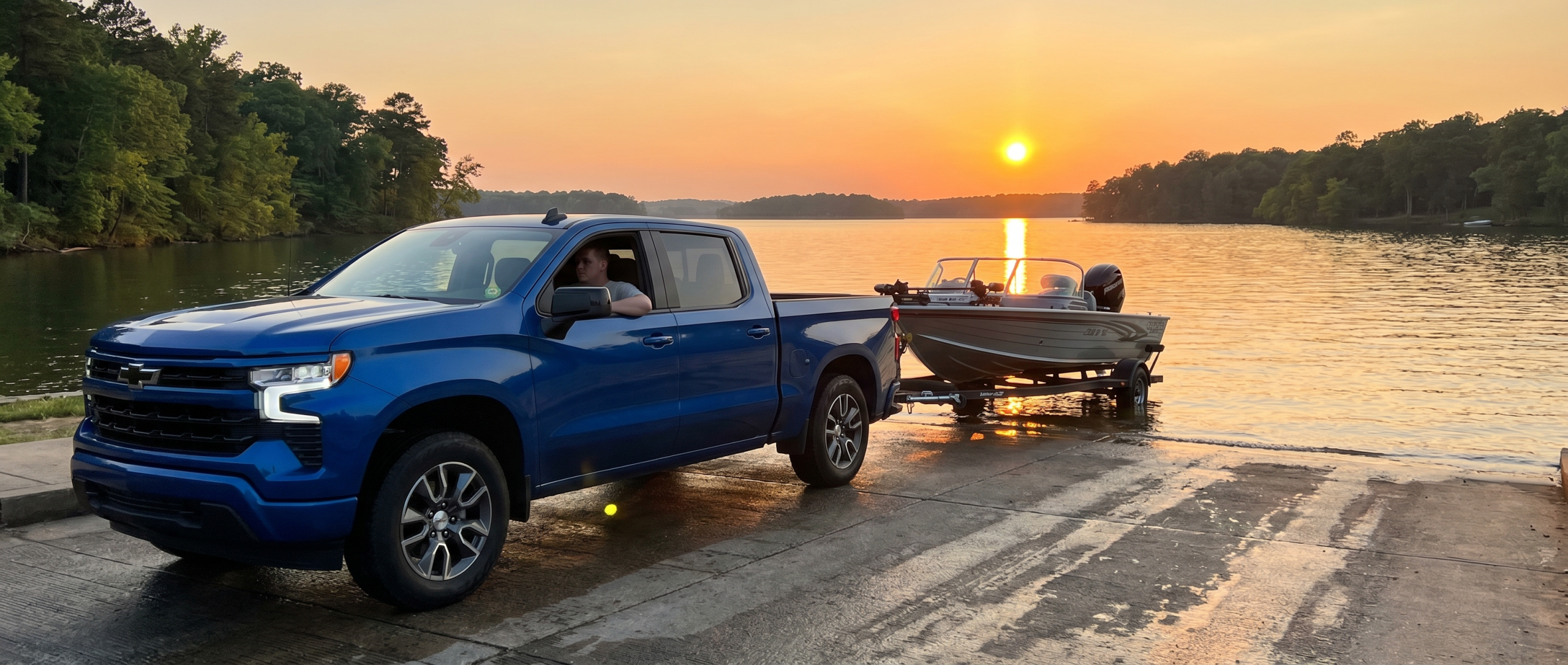
Lake Wateree stretches across 13,700 acres with over 180 miles of shoreline, and your Silverado can handle everything from lightweight fishing boats to substantial wakeboard vessels when properly equipped. Whether you’re launching at Clearwater Cove Marina or navigating the winding roads near Beaver Creek, understanding your truck’s capabilities transforms weekend lake trips from stressful to seamless. This guide covers the towing specs, local launch strategies, and maintenance tips that Winnsboro, SC boaters need to maximize their time on the water while protecting their investment in both truck and boat.
Understanding Your Silverado’s Towing Capabilities for Lake Wateree
The 2024 Silverado 1500 with the 5.3L V8 and Max Trailering Package can tow up to 13,300 pounds – enough capacity for most recreational boats you’ll see at Lake Wateree’s five public launch ramps. This rating assumes proper weight distribution and includes the boat, trailer, fuel, and gear. For heavier vessels like large pontoons or cabin cruisers, the Silverado 2500 HD steps up with 18,500 pounds of conventional towing capacity.
Your actual towing experience depends on more than just numbers. The weight of passengers, coolers, fishing gear, and water sports equipment adds up quickly. A 21-foot bowrider that weighs 3,500 pounds dry can easily approach 5,000 pounds when you factor in the trailer, full fuel tank, and a day’s worth of supplies.
Understanding payload versus towing capacity prevents dangerous overloading situations. Payload includes everything inside the truck – people, cargo, and the tongue weight pressing down on your hitch. The Silverado 1500 typically offers 1,800-2,200 pounds of payload, while the Silverado 2500 HD can handle over 3,500 pounds. This matters because tongue weight should equal 10-15% of your total trailer weight for stable towing.
Essential Towing Equipment and Setup
Proper equipment setup makes the difference between white-knuckle driving and confident cruising to Lake Wateree Recreation Area. Your hitch system forms the foundation of safe towing, and the right configuration depends on your boat’s weight.
Required Equipment by Boat Weight:- Under 5,000 pounds: Class III hitch with 2-inch receiver
- 5,000-8,000 pounds: Class IV hitch with weight distribution system
- Over 8,000 pounds: Class V hitch with weight distribution and sway control
- All weights: 7-pin wiring harness for trailer brakes and lights
The Silverado’s factory-installed hitch options integrate with the truck’s systems for optimal performance. Aftermarket hitches work, but factory equipment communicates with your truck’s computer for features like Trailer Sway Control and Hill Start Assist.
Weight distribution hitches become crucial when towing boats over 5,000 pounds. These systems use spring bars to transfer weight from the rear axle to the front axle and trailer axles, maintaining level ride height and improving steering control. Local dealers can help you calculate the correct spring bar rating based on your specific boat and loading habits.
Safety chains require proper installation with enough slack for turns but not so much they drag on pavement. Cross the chains under the coupler to create a cradle that catches the trailer tongue if the coupler fails. South Carolina law requires safety chains on all trailers over 3,000 pounds gross weight.
Lake Wateree Launch Ramps: Local Knowledge for Silverado Owners
Lake Wateree offers five public boat ramps, each with unique characteristics that affect your launching strategy. Understanding these differences helps you choose the right location and prepare your Silverado accordingly.
| Launch Location | Ramp Grade | Best For | Silverado Considerations |
|---|---|---|---|
| Clearwater Cove Marina | Gentle (15°) | All boats | Wide turnaround, easy 2WD launch |
| Lake Wateree State Park | Moderate (20°) | Small-medium boats | 4WD recommended when wet |
| Beaver Creek Landing | Steep (25°) | Experienced towers | 4WD required, limited parking |
| River Bend Landing | Gentle (12°) | Large boats | Extended ramp, good traction |
| Pine Island Access | Variable | Kayaks/small boats | Seasonal water level changes |
Clearwater Cove Marina serves as the primary launching point for most Wateree boaters, offering ample parking and a well-maintained concrete ramp. The gentle grade works well with 2WD Silverados, though morning dew can create slippery conditions requiring 4WD engagement.
Lake Wateree State Park’s ramp challenges drivers with a steeper grade and frequent algae buildup. Engaging 4WD before backing down prevents wheel spin that damages the ramp surface and leaves you stuck. The nearby courtesy dock allows single operators to tie off while parking.
Local water levels fluctuate seasonally, affecting ramp usability. Spring typically brings the highest levels, while late summer can expose hazardous ramp ends. Check current lake levels through Duke Energy’s website before choosing your launch location.
Navigating Local Roads: From Winnsboro to Water
The route from Winnsboro to Lake Wateree involves several considerations for towers. Highway 34 provides the most direct path, but narrow shoulders and sharp curves near Liberty Hill demand attention when pulling a boat.
Key Towing Routes and Considerations:- Highway 34 East: Wide lanes, gradual curves, recommended for all boat sizes
- River Road: Scenic but narrow, avoid with boats over 20 feet
- Highway 97 South: Good alternate route, watch for construction near Camden, SC
- Longtown Road: Local shortcut, steep hills require engine braking
The intersection of Highway 34 and Lake Wateree State Park Road creates a challenging left turn for long rigs. Taking the turn wide prevents trailer tires from dropping off the pavement edge. Local drivers expect this maneuver, but use your signals early.
Morning fog frequently develops over the lake and adjacent roads, particularly in fall. The Silverado’s automatic headlight system helps, but manual fog light activation improves visibility for other drivers seeing your rig.
Road construction near the Highway 601 bridge affects weekend traffic patterns. Plan extra time during summer months when both construction crews and boaters compete for road space. The Silverado’s integrated brake controller proves especially valuable in stop-and-go traffic situations.
Silverado Towing Features That Matter at the Lake
Modern Silverados include technology that specifically benefits boat towers navigating Lake Wateree’s varied conditions. Understanding and using these features improves safety and reduces driver fatigue.
The Tow/Haul mode modifies transmission shift patterns to reduce gear hunting on hills. Engaging this mode before leaving Winnsboro lets the transmission learn your load characteristics for optimal performance. The system also activates grade braking to control speed on descents without overheating your brakes.
Advanced Towing Technologies:- Trailer Sway Control: Detects and corrects trailer oscillation
- Hill Start Assist: Prevents rollback on steep ramps
- Integrated Brake Controller: Proportional trailer braking
- Hitch View Camera: Aids solo hitching
- Trailer Side Blind Zone Alert: Monitors extended blind spots
- Rear Cross Traffic Alert: Essential for busy ramp areas
The hitch view camera revolutionizes solo launching. This dedicated camera angle shows your hitch ball and trailer coupler, eliminating the traditional back-and-forth dance. Practice using this feature in your driveway before attempting it at crowded ramps.
StabiliTrak works with Trailer Sway Control to detect and correct dangerous oscillations. South Carolina’s afternoon thunderstorms create sudden wind gusts that can start trailer sway. The system applies individual wheel brakes and reduces engine power to bring the combination under control.
Maintenance Considerations for Lake-Going Silverados
Regular towing to Lake Wateree accelerates certain maintenance needs. The combination of heavy loads, frequent backing, and occasional water exposure requires adjusted service intervals.
Transmission fluid degrades faster under towing conditions. While normal Silverado maintenance schedules suggest 45,000-mile intervals, frequent towers should consider 30,000-mile changes. The color and smell test helps – dark fluid or burnt odors indicate immediate service needs. If you want to stay ahead of transmission issues, you can browse our new inventory for the latest Silverado models with enhanced cooling systems.
Towing-Specific Maintenance Schedule:- Engine oil: Every 3,000-5,000 miles (severe duty schedule)
- Transmission fluid: 30,000 miles or annually
- Differential fluid: 15,000 miles for heavy towing
- Brake inspection: Every 10,000 miles
- Coolant system: Annual pressure test
- Air filter: Check monthly during summer
The rear differential works harder when towing, especially during ramp launches. Factory fill synthetic fluid handles normal use, but upgrading to severe-duty formulations extends component life. Some Silverado owners add limited-slip additives for better traction on slippery ramps.
Brake wear accelerates dramatically when towing. The integrated trailer brake controller reduces this wear, but regular inspection catches problems before they strand you at the lake. Grooved rotors or thin pads compromise your ability to control heavy loads on steep ramps.
Common Questions About Silverado Boat Towing in Winnsboro, SC
How much boat can a Silverado 1500 safely tow to Lake Wateree?
A properly equipped Silverado 1500 can tow boats up to 13,300 pounds including trailer weight, though most recreational boats at Lake Wateree weigh between 3,000-7,000 pounds fully loaded. Consider your passenger and gear weight, plus the 10-15% tongue weight that counts against payload capacity. The 5.3L V8 with 3.42 axle ratio handles most bass boats and runabouts, while the 6.2L V8 provides extra power for heavier wakeboard boats.
What’s the best Silverado configuration for towing in the Lake Wateree area?
The ideal Lake Wateree towing setup includes 4WD for slippery ramp conditions, the Max Trailering Package for integrated brake control, and either the 5.3L or 6.2L V8 engine. Crew cab models offer space for family and gear while maintaining acceptable wheelbase proportions for maneuvering at tight launch ramps. The Z71 package adds useful skid plates that protect against ramp hazards.
Do I need 4WD for Lake Wateree’s boat ramps?
While 2WD Silverados can handle Clearwater Cove Marina and River Bend Landing in dry conditions, 4WD becomes essential at steeper ramps like Beaver Creek Landing or during wet weather. Morning dew, rain, and algae create slippery conditions year-round. Even experienced towers engage 4WD as insurance against embarrassing and potentially dangerous situations at crowded ramps.
How does towing affect my Silverado’s fuel economy around Winnsboro?
Expect fuel economy to drop 30-50% when towing boats over 4,000 pounds, with the Silverado 1500 averaging 10-12 mpg on trips to Lake Wateree. The 6.2L V8 actually performs more efficiently than the 5.3L when towing heavy loads because it doesn’t work as hard. Plan fuel stops accordingly, as the round trip from Winnsboro plus a day on the water can consume over half a tank.
What Silverado maintenance should I prioritize as a frequent Lake Wateree boater?
Transmission service tops the priority list for boats over 5,000 pounds, followed by differential fluid changes and brake inspections. The frequent low-speed maneuvering at ramps generates more heat than highway towing. Check your air filter monthly during summer’s dusty conditions, and consider early oil changes if you’re towing every weekend during boating season.
Where should I practice towing before heading to Lake Wateree’s busy ramps?
The empty parking lot at V.C. Summer Nuclear Station Visitor Center off Highway 215 offers space for practicing backing maneuvers without pressure. Fairfield Central High School’s lot works on weekends for getting comfortable with your turning radius. Master these skills before attempting Beaver Creek Landing or Lake Wateree State Park on busy summer mornings.
Your Next Trip to Lake Wateree Starts Here
Towing your boat to Lake Wateree becomes second nature when you understand your Silverado’s capabilities and prepare properly. From choosing the right launch ramp to maintaining your truck for years of reliable service, each decision impacts your on-water enjoyment. The combination of local knowledge and your truck’s advanced towing features creates confidence whether you’re pulling a jon boat to chase crappie or hauling a wakeboard boat for family fun.
The team at Wilson Chevrolet knows Lake Wateree and understands the unique demands our local waters place on towing vehicles. Our service technicians see firsthand what works and what doesn’t for South Carolina boaters. When you’re ready to upgrade your towing capability or need expert maintenance to keep your current Silverado performing its best, we’re here to help make your next lake day the best one yet.
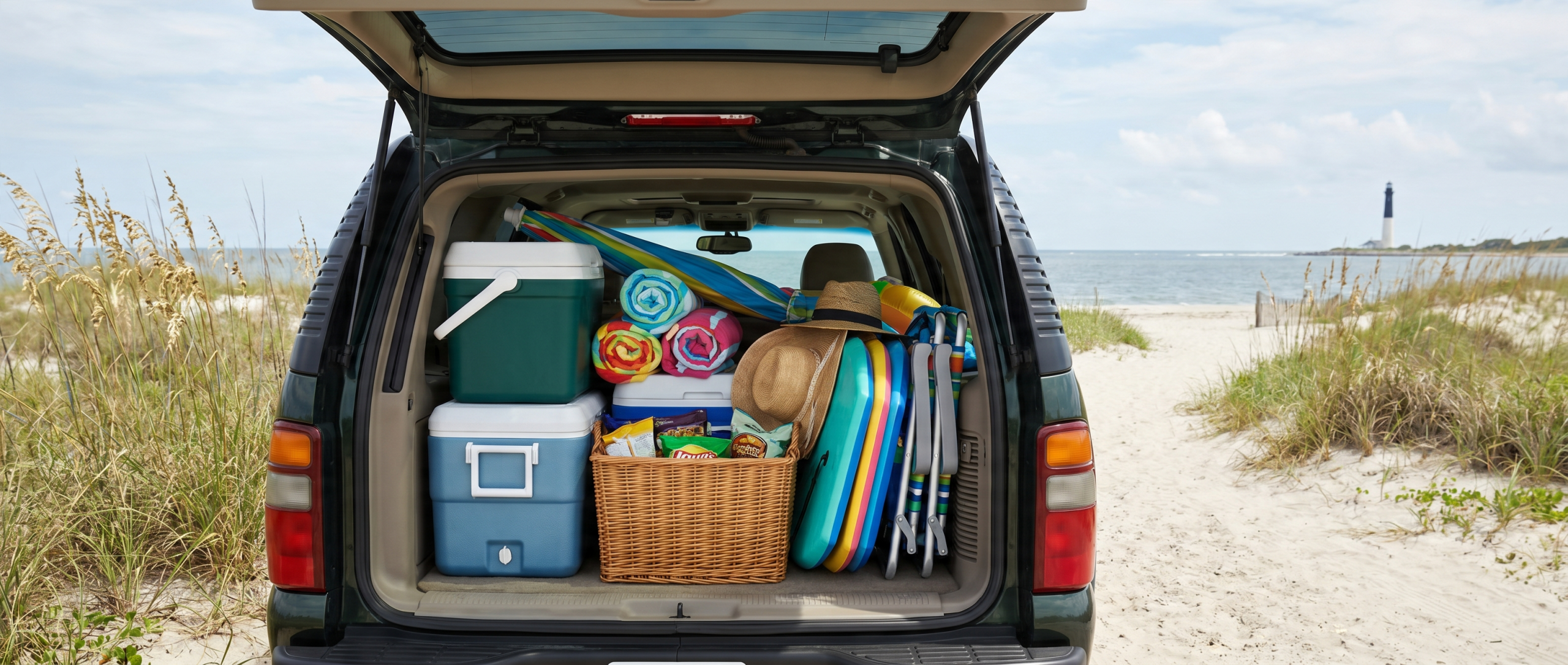
Your Suburban offers 144.7 cubic feet of cargo space behind the first row – that’s more room than most master bedroom closets. For families in Winnsboro, SC planning beach getaways to Myrtle Beach or Charleston, maximizing this cavernous interior means the difference between a smooth coastal cruise and a cramped, chaotic road trip. This guide breaks down exactly how to pack your Suburban for maximum efficiency, comfort, and easy beach access once you arrive.
Smart Packing Zones: Creating Order in Your Suburban’s Massive Interior
The key to stress-free beach trips starts with dividing your Suburban into specific cargo zones – a strategy that transforms loading from guesswork into science. Create three distinct areas: everyday essentials behind the third row (41.5 cubic feet), beach gear in the middle section, and bulky items like coolers against the second-row seats.
This zoning system serves multiple purposes beyond organization. Your most-needed items remain accessible during rest stops along I-77 or US-321. Beach toys and umbrellas stay separate from clean clothes. Wet items have their designated space for the return journey.
Consider weight distribution too. Heavy coolers and water jugs should sit low and forward, improving your Suburban’s already stellar highway stability. Lighter bags and inflatable items can stack higher without affecting handling.
The middle captain’s chairs in many Suburban configurations offer pass-through access, letting you reach cargo without stopping. This proves invaluable when little ones need snacks near Columbia or someone wants their beach book before hitting the coast.
Essential Beach Gear Placement for Quick Access
Strategic placement of beach essentials can save you 20-30 minutes of searching time at your destination – time better spent catching waves or claiming the perfect spot on the sand. Position items based on when you’ll need them: arrival gear first, daily-use items accessible, departure supplies tucked away.
Immediate Access Items (behind third row or in door pockets):- Sunscreen and bug spray
- Beach parking permits and cash
- Phone chargers and cables
- First-aid kit
- Wet wipes and paper towels
- Beach chairs and umbrellas
- Sand toys and boogie boards
- Beach bag with towels
- Portable shade tent
- Rolling beach cart
- Extra towels and clothes
- Backup sunscreen bottles
- Grocery bags and coolers
- Beach games and sports equipment
The Suburban’s numerous storage cubbies handle smaller items perfectly. Door pockets accommodate spray bottles, while the center console stores valuables you won’t take to the beach. Upper storage compartments keep phones and tablets charged and out of direct sunlight.
Temperature-sensitive items deserve special attention during South Carolina’s humid summers. The Suburban’s rear air conditioning vents help protect electronics and medications from heat damage during your journey through the Midlands. Just another example of thoughtful design that makes family trips more manageable.
Maximizing Space: From Fairfield County to the Coast
A fully loaded Suburban heading from Fairfield County to Myrtle Beach covers roughly 150 miles – a journey that tests both packing skills and passenger comfort. Smart space utilization ensures everyone arrives happy, not cramped and cranky from fighting for legroom with beach chairs.
Start with soft-sided bags instead of hard suitcases. They conform to the Suburban’s interior angles and squeeze into spaces rigid luggage can’t reach. Compression bags work wonders for beach towels and clothes, reducing volume by up to 50%.
Vertical Space Optimization:- Ceiling cargo nets for lightweight items
- Over-seat organizers for books and tablets
- Stackable storage bins with lids
- Hanging shoe organizers for toiletries
Consider investing in a roof cargo box for Suburban overflow. These aerodynamic additions barely affect fuel economy while adding 16-20 cubic feet of weatherproof storage. Perfect for bulky items like beach canopies or surfboards that eat up interior space.
Pack with the return trip in mind. Beach trips generate sandy, wet gear that needs isolation from clean items. Designate specific bags or bins for dirty laundry and sandy toys. The Suburban’s rubber floor mats in the cargo area handle beach sand better than carpet, making cleanup at Lake Wateree Park or Ridgeway Town Park during your return trip much easier.
Remember weight limits too. While the Suburban handles up to 1,794 pounds of payload, overloading affects braking and fuel efficiency. Distribute weight evenly and keep total cargo under recommended limits for optimal performance on those long stretches of I-20.
Family-Friendly Loading Strategies
Loading a Suburban for a beach vacation with kids requires strategy beyond simple space management – it’s about maintaining sanity from driveway to shoreline. Establish a loading system that works for your family and stick to it every trip.
Create individual beach bags for each family member using different colored bags or labels. This prevents the dreaded “where’s my stuff?” chorus at your destination. Each bag should contain that person’s beach essentials: swimsuit, towel, sunscreen, and beach toys.
Kid-Friendly Loading Rules:- Each child packs their own beach bag (with supervision)
- Favorite car entertainment goes in reach
- Snack bags in the middle row console
- Emergency cleanup kit behind driver’s seat
Use clear plastic bins for beach toys so kids can see what’s inside without dumping everything. Number or label bins by day if staying multiple nights – “Day 1 Beach Toys,” “Day 2 Activities,” and so on. This prevents toy overload on the beach while ensuring fresh entertainment throughout your stay.
The Suburban’s Rear Seat Entertainment system, if equipped, needs consideration during packing. Keep the screens clear and accessible, with headphones in seatback pockets. Downloaded movies work better than streaming when passing through rural areas between Ridgeway and the coast where cellular signals weaken. Nothing derails a peaceful journey faster than “the movie stopped working” complaints from the back seats.
Common Questions About Chevrolet Suburban Cargo Guide for Family Beach Trips from Fairfield County
How much beach gear can realistically fit in a Suburban with 7 passengers from Winnsboro, SC?
With seven passengers, your Suburban still offers 41.5 cubic feet behind the third row – enough for a large cooler, beach chairs for everyone, an umbrella, beach bags, and toys. Using roof storage or a hitch cargo carrier adds another 15-20 cubic feet for bulkier items like bikes or kayaks.
What’s the best way to protect my Chevrolet’s interior from sand and salt water?
Invest in rubber floor mats and seat-back protectors specifically designed for beach trips. Keep a portable vacuum in the cargo area for quick cleanups, and use waterproof bags for wet swimsuits. The Suburban’s durable interior handles beach conditions well, but prevention beats restoration.
Can I tow a small boat or jet ski trailer to the beach with a packed Suburban?
The Suburban can tow up to 8,300 pounds when properly equipped, easily handling most recreational watercraft while fully loaded with passengers and gear. Factor in tongue weight when packing the cargo area, and check out our pre-owned inventory if you need a model with the Max Trailering Package.
Where are the best stops between Fairfield County and Myrtle Beach for families?
Columbia offers several family-friendly rest areas, with Saluda Shoals Park providing playground breaks. The South Carolina State Museum makes an educational pitstop. Florence’s Woods Bay State Park offers a nature break about halfway to the coast.
Does the Chevrolet Suburban’s fuel economy change significantly when fully loaded?
Expect a 10-15% decrease in fuel economy when fully loaded for beach trips. The Suburban’s 6.2L V8 typically achieves 20-23 mpg highway empty but may drop to 17-20 mpg with full cargo and passengers. Plan fuel stops accordingly, especially with limited stations between Winnsboro and the coast.
What beach safety equipment should I always pack in my Suburban?
Always carry a first-aid kit, sunscreen SPF 50+, aloe vera, beach umbrella anchors, and a clearly marked safety whistle for each child. Include emergency contact information, any prescription medications, and a basic tool kit. Store these in an easily accessible bin behind the third-row seats.
Your Next Beach Adventure Starts Here
Mastering your Suburban’s cargo capacity transforms stressful beach departures into smooth family adventures. With 144.7 cubic feet of possibility and these proven packing strategies, you’re ready to tackle any coastal expedition from Fairfield County. From sunrise departures in downtown Winnsboro to sunset arrivals at South Carolina’s beautiful beaches, your Suburban serves as the ultimate family beach trip companion. Whether you’re exploring our new inventory for your next adventure vehicle or need packing accessories, the team at Wilson Chevrolet understands what Fairfield County families need for memorable beach getaways.
Pack up the family and fuel up your sense of adventure – the 218-mile journey from Winnsboro, SC to Hilton Head Island transforms from a simple drive into an unforgettable experience when you’re behind the wheel of a Tahoe. This comprehensive guide reveals the best routes, hidden stops, and insider tips that turn your coastal getaway into a journey worth remembering. Whether you’re navigating with a car full of beach gear or towing your boat to the island’s pristine waters, we’ll show you how to maximize every mile while discovering South Carolina’s diverse landscapes along the way.
Choosing Your Route: Highway Speed vs. Scenic Discovery
The fastest route shoots straight down I-77 South before cutting east on I-26, clocking in at just over 3 hours – but speed isn’t everything when you have 355 horsepower and room for eight. The scenic alternative through Highway 321 South adds only 30 minutes while revealing small-town charm and roadside farm stands perfect for stocking up on local peaches and boiled peanuts.
Consider these route factors:
Highway Route (I-77/I-26)- Total distance: 218 miles
- Estimated time: 3 hours 15 minutes
- Best for: Families with young children, late departures
- Key advantage: Multiple rest stops and gas stations
- Total distance: 235 miles
- Estimated time: 3 hours 45 minutes
- Best for: Photography enthusiasts, leisurely travelers
- Key advantage: Historic towns and local attractions
The Tahoe’s 24-gallon fuel tank means you can make either journey without refueling, though the scenic route offers more interesting stops if you want to stretch your legs. Your 10-speed automatic transmission adapts seamlessly whether you’re cruising at highway speeds or navigating through Chester’s historic downtown.
Essential Tahoe Features for Your Coastal Journey
Your Tahoe becomes a mobile command center for the perfect road trip, with features designed to handle everything from Winnsboro’s rolling hills to Hilton Head’s sandy approaches. The 5.3L V8 engine delivers confident power for merging onto I-77 while loaded with beach gear, bikes, and a week’s worth of supplies.
The tri-zone automatic climate control proves invaluable when South Carolina’s humidity kicks in around Orangeburg. Front passengers can stay cool while rear riders adjust their own temperature – preventing the age-old thermostat battles that derail family trips. Meanwhile, the available rear-seat entertainment system transforms potential “are we there yet?” moments into peaceful movie time.
Storage solutions make the difference between a cramped ride and a comfortable journey:
- 25.5 cubic feet behind the third row handles coolers and beach bags
- Power-folding third row expands cargo to 72.6 cubic feet
- Underfloor storage compartment keeps valuables out of sight
- Roof rails accommodate cargo carriers or kayaks
The hands-free power liftgate becomes especially useful at rest stops when your arms are full of snacks and drinks from the Santee exit plaza.
Strategic Stops Between Fairfield County and the Coast
The journey from Winnsboro to Hilton Head offers surprising variety as you transition from Piedmont hills to Lowcountry marshes. Each stop adds flavor to your adventure while giving everyone a chance to stretch and explore.
Columbia (Mile 28) marks your first major waypoint, where the State House dome signals you’re entering the capital region. The Riverbanks Zoo exit offers a potential detour for families, though save this for the return trip to maintain your beach momentum. Instead, use Columbia for a quick breakfast stop at one of Main Street’s local cafes.
Orangeburg (Mile 75) provides the perfect halfway break. The Edisto Memorial Gardens offer shaded walking paths and restrooms in a beautiful setting. Your Tahoe’s remote start feature lets you cool the interior while the family explores the butterfly garden – a welcome comfort when summer temperatures soar.
Walterboro (Mile 145) serves as the gateway to the Lowcountry. The historic downtown features antique shops and the South Carolina Artisans Center. Time your stop here for lunch at one of the local restaurants serving authentic Lowcountry cuisine. The Tahoe’s parking sensors help navigate the narrow historic district streets with confidence.
| Stop Location | Distance from Winnsboro | Key Features | Recommended Time |
|---|---|---|---|
| Columbia | 28 miles | Restaurants, gas, shopping | 20-30 minutes |
| Orangeburg | 75 miles | Gardens, restrooms, picnic areas | 30-45 minutes |
| Walterboro | 145 miles | Historic downtown, lunch options | 45-60 minutes |
| Beaufort | 180 miles | Waterfront park, historic homes | 30 minutes |
Family Entertainment and Comfort Solutions
Keeping everyone happy during a 3+ hour drive requires strategy, and your Tahoe provides the tools for success. The available rear-seat entertainment system with dual 12.6-inch diagonal color-touch screens means siblings can watch different movies simultaneously – ending the eternal battle over movie selection.
The Chevrolet® Infotainment system supports both Apple CarPlay and Android Auto, letting you access your favorite road trip playlists or podcasts. Create different audio zones so drivers can enjoy their content while kids watch movies with wireless headphones. The premium Bose audio system delivers concert-quality sound when the whole family agrees on the soundtrack.
Comfort features that make the miles fly by:
- Heated and ventilated front seats combat varying temperatures
- Available second-row captain’s chairs provide individual space
- Multiple USB ports keep devices charged throughout the journey
- Panoramic sunroof brings natural light without the heat
- Conversation mirror lets you check on rear passengers without turning
Pack smart using the Tahoe’s versatile storage: assign each family member a zone for their personal items, use door pockets for frequently needed items like hand sanitizer and tissues, and keep snacks in the center console’s deep compartment.
Navigating Hilton Head: Beaches, Parking, and Island Adventures
Arriving at Hilton Head presents unique driving considerations that your Tahoe handles expertly. The island’s signature tree canopy creates stunning tunnel-like roads, but also means navigating around low-hanging branches. Your Tahoe’s height of 75.5 inches fits comfortably under most canopies, though Beach City Road requires extra attention near Coligny Plaza.
Beach access points each offer different advantages:
Coligny Beach Park provides the most amenities with nearby restaurants and shops. The large parking lot accommodates your Tahoe easily, and the available HD Surround Vision camera system helps navigate tight spots during peak summer crowds. Arrive before 10 AM for the best parking selection. Folly Field Beach offers a quieter experience with ample parking. The Tahoe’s power running boards make loading and unloading beach gear effortless, while the hands-free liftgate means sandy hands won’t dirty your vehicle. Sea Pines requires a gate fee but provides access to iconic Harbour Town. Your Tahoe’s refined appearance fits perfectly among the upscale resort atmosphere. The Teen Driver technology comes in handy if older kids want to make solo trips to the shops while you relax at the beach.Essential island navigation tips:
- Most beach parking areas charge fees from March through September
- The Cross Island Parkway provides quick north-south access
- Pope Avenue serves as the main commercial corridor
- Bike paths parallel most major roads – watch for cyclists
Browse our new inventory to find a Tahoe equipped with the specific features that match your family’s road trip style.
Maximizing Fuel Economy on Your Coastal Adventure
The 218-mile journey to Hilton Head showcases your Tahoe’s efficiency capabilities when you apply smart driving strategies. The 5.3L V8 with Dynamic Fuel Management seamlessly deactivates cylinders during highway cruising, helping you achieve up to 27 MPG on the highway – impressive for a full-size SUV with this much capability.
Your driving habits significantly impact fuel consumption:
- Use cruise control on I-77 and I-26 to maintain steady speeds
- Coast when approaching Santee’s toll plaza instead of late braking
- Keep speeds between 65-70 MPH for optimal efficiency
- Use Eco mode during highway stretches for maximum fuel savings
The real-time fuel economy display helps you develop efficient driving patterns. Many drivers report completing the entire Winnsboro to Hilton Head journey on a single tank, with fuel to spare for island exploring. The Tahoe’s fuel tank capacity means you can choose gas stations strategically rather than stopping at expensive tourist-area pumps.
Weather impacts your fuel economy too. South Carolina’s summer heat means running the air conditioning constantly, but the tri-zone system’s efficiency minimizes the impact. Setting the temperature to 72-74 degrees instead of maximum cold can improve fuel economy by up to 3 MPG while keeping everyone comfortable.
Preparation Checklist for the Perfect Beach Getaway
A successful road trip starts before you leave your driveway in Winnsboro. Your pre-trip inspection should take advantage of Wilson Chevrolet’s service expertise to ensure worry-free travels.
One Week Before Departure- [ ] Check tire pressure (proper inflation improves fuel economy)
- [ ] Verify all fluids are topped off
- [ ] Test all entertainment systems and device connections
- [ ] Download offline maps in case of cellular dead zones
- [ ] Schedule service if you’re approaching maintenance intervals
- [ ] Beach gear organized in waterproof bags
- [ ] Cooler positioned for easy access in cargo area
- [ ] Emergency kit including jumper cables and first aid
- [ ] Phone chargers for every device type
- [ ] Sunshades for parked beach protection
- [ ] Program Hilton Head address into navigation system
- [ ] Set up driver preferences and mirror positions
- [ ] Adjust climate control for all zones
- [ ] Confirm entertainment system has downloaded content
- [ ] Fill up at Winnsboro’s most affordable stations
The Tahoe’s MyChevrolet mobile app lets you remote start from your house, ensuring a comfortable temperature before loading up. You can also check tire pressure, fuel level, and oil life from your phone – catching any issues before they become road trip problems.
Common Questions About Road Tripping from Winnsboro, SC
How much does it cost in gas to drive a Tahoe from Winnsboro to Hilton Head?
With current South Carolina gas prices, expect to spend $35-45 for the round trip in your Tahoe, assuming 23 MPG combined fuel economy. The actual cost varies based on your driving style and whether you choose the faster interstate route or scenic highways through historic towns.
What’s the best time to leave Winnsboro, SC to avoid traffic on the way to Hilton Head?
Depart Winnsboro before 7 AM or after 10 AM to miss Columbia’s rush hour traffic on I-77. Friday afternoons see the heaviest beach traffic, while Sunday mornings offer the clearest roads, letting you reach Hilton Head in just over three hours with minimal delays.
Can a Chevrolet Tahoe handle beach driving at Hilton Head?
The Tahoe easily manages Hilton Head’s paved beach access points and packed sand parking areas, though beach driving isn’t permitted on the island. Its available four-wheel drive system provides confidence on sandy access roads, while the increased ground clearance handles beach parking lot transitions smoothly.
What are the must-stop attractions between Winnsboro and Hilton Head?
The Santee rest area offers clean facilities and local information, while Walterboro’s historic downtown provides authentic Lowcountry dining experiences just 45 minutes from Hilton Head. Orangeburg’s Edisto Memorial Gardens create a perfect halfway stretch stop with beautiful walking paths and playground areas for kids.
Does the Tahoe have enough cargo space for a week-long Hilton Head vacation?
The Tahoe provides 122.9 cubic feet of maximum cargo space with seats folded, easily accommodating a week’s worth of luggage, beach gear, and groceries for eight people. Most families find they can keep the third row up and still fit everything needed for an extended Hilton Head stay.
What safety features in the Chevrolet Tahoe are most useful for highway driving to Hilton Head?
The Tahoe’s adaptive cruise control maintains safe following distances in heavy I-26 traffic, while lane keeping assist helps during the long highway stretches. Automatic emergency braking provides extra protection when traffic suddenly slows near Columbia or Beaufort, making the journey safer for your family.
Your Hilton Head Adventure Starts Here
The 218-mile journey from Winnsboro to Hilton Head becomes more than just a drive when you’re commanding a Tahoe – it transforms into the opening chapter of your coastal adventure. From navigating Fairfield County’s gentle hills to cruising through the Lowcountry’s moss-draped corridors, every mile showcases why families choose this full-size SUV for their most important journeys. With room for everyone and everything, plus the capability to handle whatever South Carolina’s diverse terrain offers, your Tahoe serves as the perfect partner for creating lasting beach memories. Ready to start planning your own Hilton Head road trip? The team at Wilson Chevrolet can help you explore the Tahoe features that matter most for your family’s adventures.
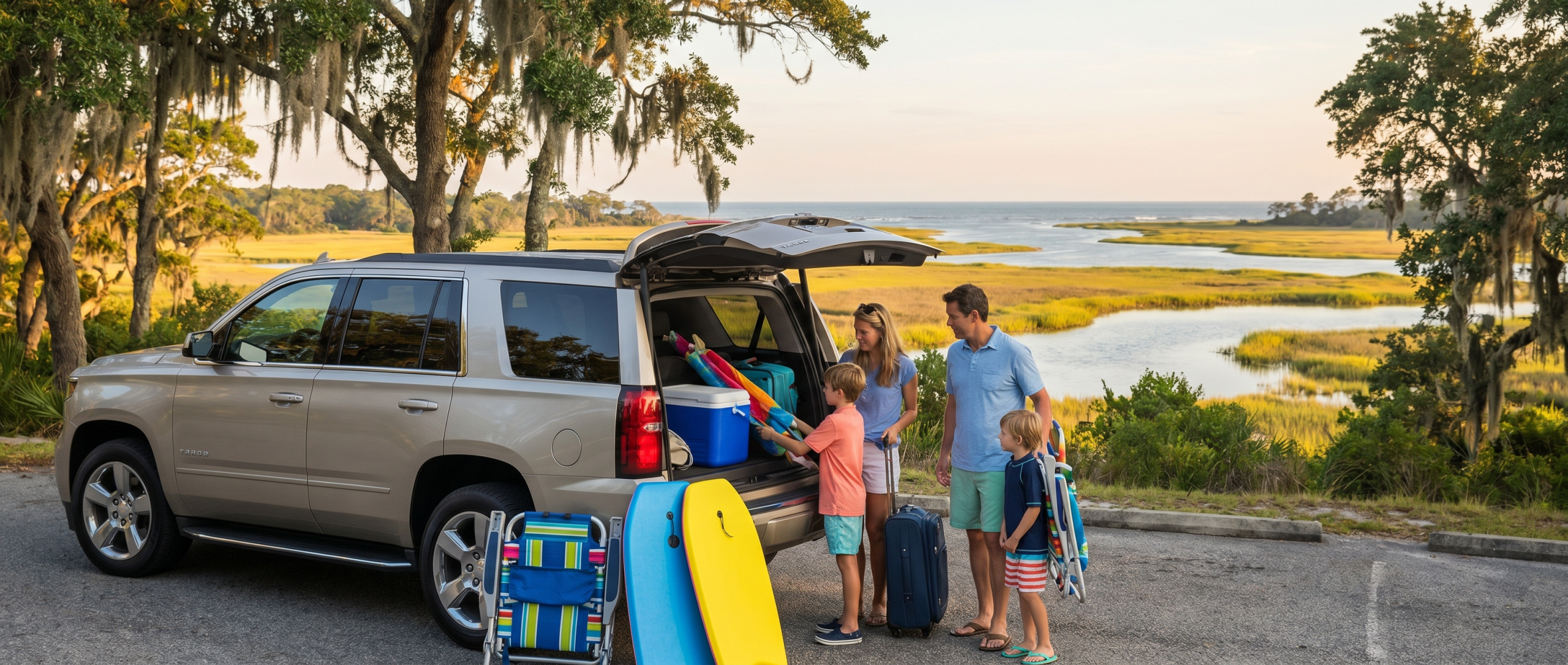
Planning a summer road trip from Winnsboro, SC requires the right SUV – one with enough space for beach gear, comfortable seating for long drives, and reliability to handle everything from I-77 traffic to sandy coastal roads. Whether you’re heading to Myrtle Beach, exploring the Blue Ridge Mountains, or towing a boat to Lake Wateree, selecting between the Tahoe™, Equinox™, and Trailblazer™ depends on matching your specific vacation needs with each vehicle’s strengths.
Matching Your Summer Adventure Style to the Right Chevrolet SUV
Your vacation style directly determines which SUV fits best – the key is understanding what each model excels at delivering. Families packing for week-long beach trips need maximum cargo space and three rows of comfortable seating. Weekend adventurers prioritize fuel efficiency for multiple short trips. Those towing boats or campers require serious capability.
The Tahoe dominates when you need to haul seven or eight people plus their luggage. With 122.9 cubic feet of maximum cargo space behind the first row, it swallows beach chairs, coolers, and suitcases that would overwhelm smaller SUVs. The power-folding third row means you can switch between passenger and cargo configurations in seconds.
The Equinox strikes the sweet middle ground for most vacation needs. Its 63.9 cubic feet of cargo space handles typical family gear, while achieving up to 31 mpg highway means fewer fuel stops between Winnsboro and your destination. The hands-free power liftgate proves invaluable when your arms are full of beach equipment.
The Trailblazer brings surprising capability in a compact package. Don’t let its size fool you – with the rear seats folded, you get 54.4 cubic feet of cargo space. Its nimble handling makes parallel parking in busy beach towns stress-free, while still offering all-wheel drive for those sudden summer storms.
Each model offers distinct advantages that become clear once you identify your vacation priorities.
Space Solutions for Every Summer Journey
Understanding cargo and passenger space helps eliminate vacation stress before it starts. Nothing ruins a trip faster than realizing your gear won’t fit or passengers feel cramped after the first hour.
Tahoe Space Advantages- Third row seats adults comfortably for long trips
- Behind third row: 25.5 cubic feet (fits a week’s groceries plus beach chairs)
- Behind second row: 72.6 cubic feet (multiple large suitcases plus sports equipment)
- Maximum cargo: 122.9 cubic feet (enough for bikes, kayaks, and camping gear)
- 60/40 split-folding rear seats for flexible configurations
- Under-floor storage compartments hide valuables
- Wide rear opening accommodates bulky items
- Adjustable cargo shelf creates two-tier storage
- Fold-flat front passenger seat handles items up to 8.5 feet long
- Multiple small-item storage throughout cabin
- Roof rails support up to 150 pounds for cargo carriers
- Surprisingly deep cargo floor despite compact size
Residents heading out on Highway 34 toward Columbia know that proper packing makes all the difference. The Tahoe’s cavernous interior means you never have to choose between the cooler and the beach umbrella. The Equinox balances passenger comfort with cargo flexibility. The Trailblazer maximizes every inch for those who pack light but smart.
Real-World Fuel Economy for South Carolina Summer Trips
Summer vacation budgets stretch further when you’re not constantly stopping for gas. Understanding real-world fuel economy helps you plan trips and choose the SUV that matches your travel patterns.
| Chevrolet SUV | City MPG | Highway MPG | Range (Highway) | Best For |
|---|---|---|---|---|
| Tahoe (5.3L V8) | 16 | 23 | 600+ miles | Long trips with heavy loads |
| Equinox (1.5L Turbo) | 26 | 31 | 500+ miles | Balanced efficiency |
| Trailblazer (1.3L Turbo) | 29 | 33 | 450+ miles | Maximum fuel savings |
The Tahoe’s large fuel tank offsets its V8 consumption, delivering impressive highway range for those Winnsboro to Florida runs. Families who typically stay within South Carolina – hitting places like Hilton Head, Charleston, or the Upstate – find the Equinox provides the ideal efficiency balance.
The Trailblazer shines for vacation home owners making frequent weekend trips. Whether you’re heading to Lake Wateree or commuting to Charlotte Douglas Airport, those extra mpgs add up quickly over a summer of adventures.
Factor in South Carolina’s relatively low gas prices compared to neighboring states, and your fuel budget goes even further.
Towing and Adventure Capabilities That Match Your Plans
South Carolina’s diverse recreation options – from boat launches at Lake Murray to camping in Sumter National Forest – demand different capability levels. Matching your SUV’s towing capacity to your actual needs prevents both overspending and underbuying.
Adventure-Ready Specifications- Tahoe: 8,400 lbs max towing (properly equipped)
- Equinox: 1,500 lbs towing capacity
- Trailblazer: 1,000 lbs towing (AWD models)
The Tahoe handles serious recreation equipment with authority. Its integrated trailer brake controller and multiple camera views make backing a boat into Dreher Island State Park’s ramps surprisingly simple. The available Max Trailering Package adds enhanced cooling systems for those hot August days pulling loads up I-26.
The Equinox suits families with lighter recreation needs. Think jet skis, small fishing boats, or pop-up campers for weekend getaways. The standard hitch receiver means you can also add bike racks or cargo carriers without modifications.
The Trailblazer works for those whose adventures don’t require towing. Its available all-wheel drive with terrain modes handles muddy festival parking fields or gravel roads to hiking trailheads. The Sport mode even adds some excitement to those winding roads through Chester State Park.
Browse our new inventory to compare towing packages and capability features across all three models.
Technology That Enhances Every Mile
Modern road trips run smoother with the right technology supporting your journey. Each SUV offers features that transform long drives from tedious to enjoyable.
Essential Summer Trip Technology Navigation and Connectivity- Built-in Google Maps with real-time traffic updates
- Apple CarPlay and Android Auto wireless compatibility
- Multiple USB ports for device charging
- Available in-vehicle Wi-Fi hotspot
- Tri-zone automatic climate control (Tahoe)
- Heated and ventilated front seats
- Hands-free power liftgate
- Remote start for pre-cooling before departure
- Adaptive cruise control for highway stretches
- Automatic emergency braking
- Lane keep assist for long drives
- HD surround vision for tight parking situations
The Tahoe’s rear-seat entertainment system keeps passengers happy during the four-hour drive to Charleston. The Equinox’s panoramic sunroof brings the outdoors inside while cruising past Congaree National Park. The Trailblazer’s wireless charging pad means phones stay powered for navigation and photos.
Common Questions About Summer Vacation SUVs in Winnsboro, SC
Which Chevrolet SUV is best for beach trips from Winnsboro?
The Tahoe excels for beach vacations, offering 122.9 cubic feet of cargo space for chairs, umbrellas, coolers, and luggage. Its three rows seat up to eight comfortably for the 3.5-hour drive to Myrtle Beach, while the powerful V8 easily handles a fully loaded vehicle on I-20 and Highway 501.
How do Chevrolet SUVs handle South Carolina’s summer heat?
All three models feature powerful air conditioning systems designed for Southern climates, with the Tahoe offering tri-zone climate control. Remote start lets you pre-cool the interior before loading up, while ventilated seats in higher trims keep drivers comfortable during August heat waves common around Fairfield County.
What’s the ideal Chevrolet SUV for towing a boat to Lake Wateree?
The Tahoe dominates towing duties with 8,400 pounds maximum capacity when properly equipped. This easily handles most wakeboard boats and pontoons popular at Lake Wateree, just 20 minutes from Winnsboro, while the integrated brake controller and trailer sway control ensure safe handling.
Which model offers the best fuel economy for vacation home trips?
The Trailblazer achieves up to 33 mpg highway, ideal for frequent weekend trips to vacation properties. Owners regularly driving between Winnsboro and second homes in Charleston or the mountains save significantly on fuel costs compared to larger SUVs while still enjoying all-wheel drive capability.
Can the Equinox handle camping gear for state park adventures?
Yes, the Equinox provides 63.9 cubic feet of cargo space with rear seats folded, accommodating tents, sleeping bags, coolers, and camping equipment. The 1,500-pound towing capacity also handles small camping trailers for adventures to nearby Sesquicentennial State Park or Dreher Island.
What technology features help with long summer road trips?
Built-in navigation with Google Maps provides real-time traffic updates for avoiding delays on I-77 or I-26. Apple CarPlay and Android Auto offer seamless smartphone integration, while available Wi-Fi hotspots keep passengers connected throughout South Carolina and beyond.
Your Perfect Summer Adventure Starts Here
Choosing between the Tahoe, Equinox, and Trailblazer comes down to matching your specific vacation style with each vehicle’s strengths. Families needing maximum space and towing power find the Tahoe delivers without compromise. Those seeking efficiency without sacrificing versatility discover the Equinox hits the sweet spot. Adventurers wanting nimble handling and excellent fuel economy appreciate what the Trailblazer offers.
Summer memories begin with the right vehicle for your journey. Whether you’re planning weekly trips to Lake Wateree, annual pilgrimages to Hilton Head, or exploring new destinations across the Southeast, there’s a Chevrolet SUV designed for your adventure. The team at Wilson Chevrolet understands how Fairfield County families vacation and can help match you with the perfect SUV for your summer plans.
Connect with us


- July 2026
- June 2026
- May 2026
- April 2026
- March 2026
- February 2026
- January 2026
- November 2025
- June 2025
- May 2025
- April 2025
- February 2025
- December 2024
- November 2024
- September 2024
- August 2024
- July 2024
- April 2024
- March 2024
- February 2024
- January 2024
- December 2023
- October 2023
- September 2023
- May 2023
- April 2023
- March 2023
- February 2023
- January 2023
- September 2022
- July 2022
- June 2022
- March 2022
- January 2022
- December 2021
- November 2021
- October 2021
- September 2021
- August 2021
- July 2021
- June 2021
- April 2021
- January 2021
- December 2020
- November 2020
- October 2020
- September 2020
- August 2020
- July 2020
- June 2020
- May 2020