





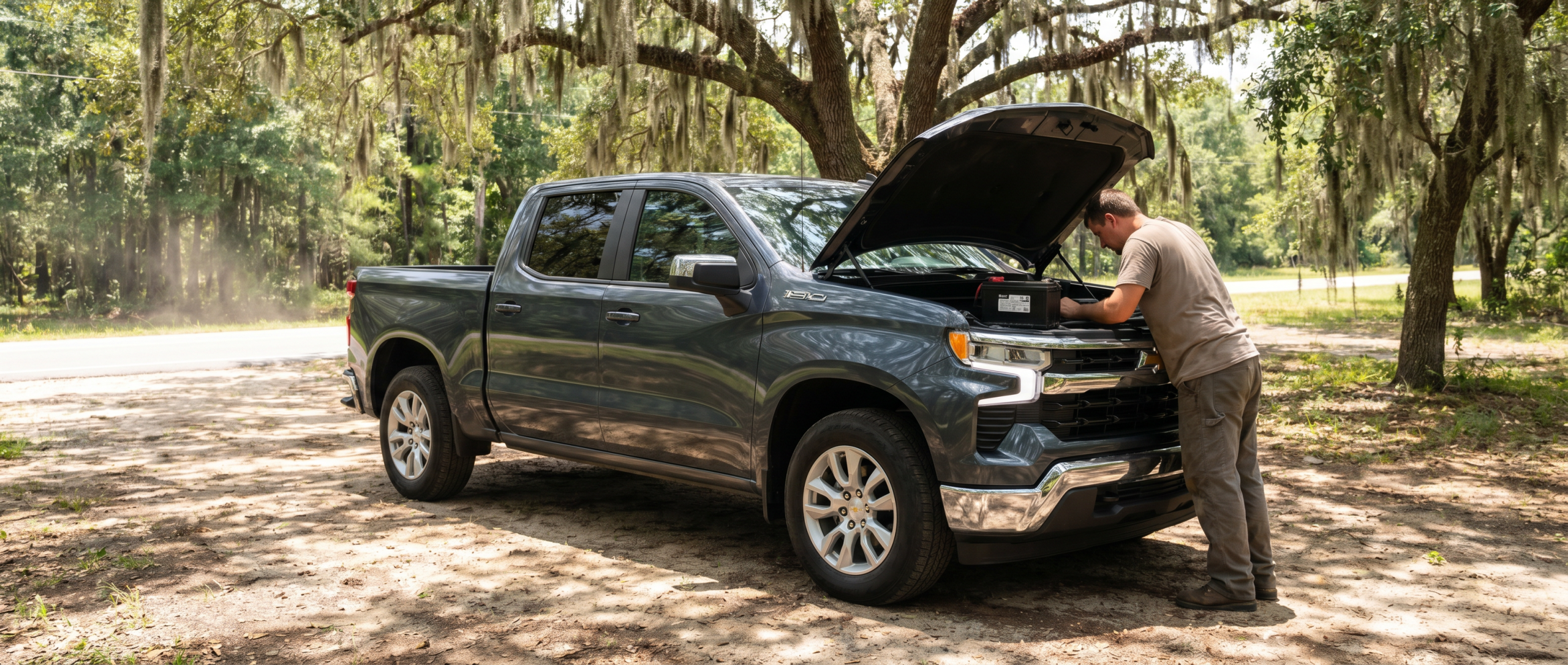
South Carolina heat pushes car batteries harder than most drivers realize – the average battery loses 33% of its strength when temperatures climb above 92°F. If you drive a Chevrolet® through Fairfield County’s summer heat, understanding battery care can mean the difference between reliable starts and roadside frustration. This guide provides specific maintenance strategies for popular models like the Silverado™, Tahoe, and Equinox, helping Winnsboro, SC drivers maximize battery life despite challenging summer conditions.
Why Heat Damages Your Chevy’s Battery Faster Than Cold
Battery fluid evaporates 50% faster at 95°F than at 77°F, and that accelerated chemical reaction shortens your battery’s lifespan significantly. The intense heat common around Lake Wateree and throughout Fairfield County creates a perfect storm for battery stress. Your Silverado 1500’s battery works overtime just maintaining normal electrical functions when parked in direct sunlight.
Heat causes internal battery plates to corrode faster, reducing the unit’s ability to hold a charge. This explains why batteries that seem fine in June suddenly fail by August. The damage happens gradually – each hot day chips away at your battery’s capacity until one morning it simply won’t turn over.
Making matters worse, today’s vehicles demand more from batteries than ever before. Your Equinox runs multiple computers, sensors, and systems that need constant power. This continuous draw combined with extreme heat accelerates battery breakdown. Smart drivers who recognize these challenges take proactive steps to protect their investment.
Signs Your Battery Struggles in Summer Heat
Your Chevrolet provides several warning signs before complete battery failure, but summer heat can make these symptoms appear suddenly. Watch for these indicators that your battery needs attention:
Early Warning Signs:
- Engine cranks slowly on hot afternoons
- Headlights dim when using air conditioning
- Dashboard warning lights flicker intermittently
- Power windows operate slower than normal
- Check engine light appears without obvious cause
The most telling sign happens during those first starts after your vehicle sits in the sun. If your Tahoe hesitates before turning over or makes a labored cranking sound, the battery already suffers from heat damage. These symptoms often worsen throughout the day as temperatures climb.
Interior electronics offer additional clues about battery health. When your infotainment system resets randomly or your clock loses time, the battery likely can’t maintain consistent voltage. These minor annoyances predict major problems ahead.
Temperature extremes around Ridgeway and Blythewood create perfect conditions for battery stress. Vehicles parked at Fairfield Central High School or along SC-34 experience direct sun exposure that can push under-hood temperatures above 140°F. This heat literally cooks battery components from the inside out.
Essential Battery Maintenance for Fairfield County Drivers
Regular maintenance prevents most heat-related battery failures, yet many drivers skip these simple steps until problems arise. Here’s your essential checklist for summer battery care:
Monthly Inspection Tasks:
- Check battery terminals for white or green corrosion buildup
- Ensure battery hold-down bracket remains tight
- Look for cracks or bulges in the battery case
- Test electrolyte levels in non-sealed batteries
- Clean any debris from battery tray area
Start by examining the battery connections on your Trailblazer or Silverado 2500 HD. Corrosion appears as fuzzy growth around terminals and prevents proper electrical flow. Mix baking soda with water to neutralize acid buildup, then scrub gently with an old toothbrush. Rinse thoroughly and dry completely before reconnecting.
Physical battery placement matters more than most realize. A loose battery bounces during drives on US-321, causing internal damage and shortened life. Tighten the hold-down bracket until the battery can’t move but avoid overtightening which cracks the case.
For traditional batteries with removable caps, check fluid levels monthly during summer. The liquid should cover internal plates by about half an inch. Add only distilled water – tap water contains minerals that damage battery chemistry. Most newer Chevrolet models use maintenance-free batteries, eliminating this step.
Parking Strategies That Extend Battery Life
Where and how you park makes a measurable difference in battery longevity during South Carolina summers. Strategic parking reduces under-hood temperatures by up to 20 degrees, directly impacting battery stress levels.
Smart Parking Guidelines:
- ✓ Choose shaded spots whenever possible
- ✓ Face vehicle away from afternoon sun
- ✓ Use windshield sunshades to reduce cabin heat
- ✓ Crack windows slightly for ventilation (if safe)
- ✓ Avoid parking on hot asphalt when alternatives exist
Drivers shopping at Fairfield County Plaza or visiting Lake Monticello should prioritize covered parking areas. Even partial shade helps – parking so only the rear of your Silverado sits in sun keeps the engine compartment cooler than full exposure.
Consider investing in a battery insulation kit if you regularly park outdoors. These thermal barriers wrap around the battery, reducing temperature fluctuations. They work especially well for work trucks and vehicles that sit outside during long shifts.
Building orientation affects parking decisions too. At locations like Fairfield County Hospital, the east side of buildings provides afternoon shade while west-facing spots bake in direct sun. These small choices compound over time, potentially adding years to battery life.
Testing and Replacement: Know When to Act
Professional battery testing removes guesswork from maintenance decisions. Most batteries last 3-5 years in moderate climates, but Fairfield County heat often shortens this to 2-3 years. Regular testing catches problems before they strand you.
| Battery Age | Test Frequency | Action Needed |
|---|---|---|
| 0-2 years | Annually | Monitor only |
| 2-3 years | Every 6 months | Consider replacement |
| 3+ years | Every 3 months | Plan immediate replacement |
| Any age with symptoms | Immediately | Test and likely replace |
Modern battery testers measure cold cranking amps (CCA) and internal resistance, providing accurate health assessments. If your battery tests below 70% of its rated CCA, replacement makes more sense than waiting for complete failure. Summer heat damage is cumulative – a marginal battery in July won’t survive August.
When selecting a replacement battery for your Tahoe or Colorado, choose one designed for hot climates. Look for AGM (Absorbed Glass Mat) batteries which handle temperature extremes better than traditional flooded batteries. They cost more initially but last longer in harsh conditions.
The manufacturing date matters when buying new batteries. Find the date code stamped on the case – never buy a battery more than six months old. Batteries deteriorate even sitting on store shelves, especially in non-climate-controlled warehouses. Fresh batteries deliver maximum service life.
Browse our new inventory to see vehicles equipped with the latest battery technology designed for Southern heat resistance.
Common Questions About Chevrolet Battery Care in Winnsboro, SC
How often should I test my Chevrolet battery in Fairfield County’s climate?
Test your Chevrolet battery every six months if it’s under three years old, or every three months once it passes the three-year mark. Fairfield County’s hot summers accelerate battery aging, making frequent testing essential for reliability. Schedule testing before summer and after to catch heat damage early.
Does idling my Silverado with AC running drain the battery?
Extended idling with air conditioning strains your Silverado’s battery and charging system, especially in extreme heat. The alternator works harder at idle speeds and may not fully recharge the battery. Limit idle time to 10 minutes or less, and take a 15-minute drive weekly to maintain proper charge levels.
What’s the best battery type for hot weather driving in South Carolina?
AGM (Absorbed Glass Mat) batteries perform best in South Carolina’s hot climate, lasting 40% longer than standard flooded batteries. They resist heat damage, don’t require water additions, and handle the high electrical demands of modern Chevrolet vehicles. The extra cost pays for itself through extended service life.
Can I jump-start my Chevy safely in extreme heat?
Jump-starting in extreme heat requires extra caution due to increased hydrogen gas production from hot batteries. Park both vehicles in shade if possible, ensure good ventilation, and let batteries cool for 10 minutes before connecting cables. Follow your owner’s manual procedures exactly and wear safety glasses for protection.
Where can I get my Chevrolet battery tested in Winnsboro, SC?
Wilson Chevrolet offers free battery testing for all Chevrolet models using advanced diagnostic equipment. Located conveniently in Winnsboro, the service team checks battery health, charging system operation, and starter draw. Regular testing helps prevent unexpected failures common during Fairfield County summers.
Should I disconnect my battery if my vehicle sits unused in summer heat?
Disconnecting the battery prevents parasitic drain but isn’t necessary for short periods under two weeks. For longer storage, disconnect the negative terminal first, then positive. Better yet, use a battery tender to maintain optimal charge without the hassle of reconnection and potential computer memory loss.
Protect Your Investment Through Smart Battery Care
Summer battery care goes beyond basic maintenance – it’s about understanding how Fairfield County’s unique climate challenges your Chevrolet’s electrical system. Whether you drive a hardworking Silverado 2500 HD or efficient Trailblazer, these preventive steps save money and prevent inconvenient breakdowns.
Remember that battery problems rarely announce themselves with convenient timing. They strike during rushed morning commutes or when returning to a sun-baked parking lot after work. Taking action now, before problems develop, keeps you moving reliably through the hottest months.
The service experts at Wilson Chevrolet understand local driving conditions and how they affect battery life. From testing to replacement, they provide the knowledge and quality parts that keep Fairfield County drivers confident in their vehicles year-round.
Connect with us


- July 2026
- June 2026
- May 2026
- April 2026
- March 2026
- February 2026
- January 2026
- November 2025
- June 2025
- May 2025
- April 2025
- February 2025
- December 2024
- November 2024
- September 2024
- August 2024
- July 2024
- April 2024
- March 2024
- February 2024
- January 2024
- December 2023
- October 2023
- September 2023
- May 2023
- April 2023
- March 2023
- February 2023
- January 2023
- September 2022
- July 2022
- June 2022
- March 2022
- January 2022
- December 2021
- November 2021
- October 2021
- September 2021
- August 2021
- July 2021
- June 2021
- April 2021
- January 2021
- December 2020
- November 2020
- October 2020
- September 2020
- August 2020
- July 2020
- June 2020
- May 2020