





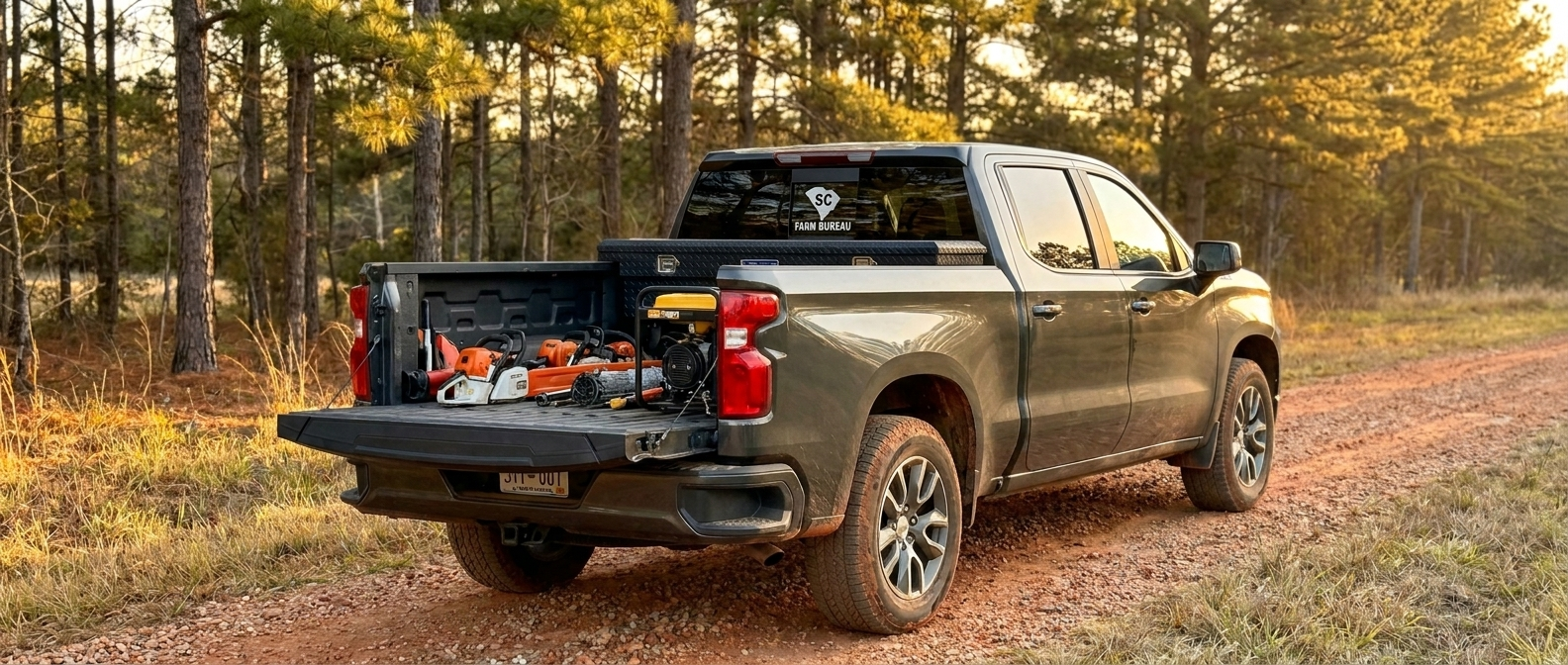
South Carolina’s Midlands don’t ease into summer. They hit hard and stay there. By the time August rolls around in Winnsboro, your Silverado 1500 has spent months hauling under 90-plus-degree heat, idling in humidity that feels like a wet blanket, and pulling enough dust and pollen through to choke a filter twice over. Most fall-prep checklists miss that reality, because they’re written for drivers getting ready for cold. We’re not getting ready for cold. We’re recovering from heat.
The bottom line is simple. A Silverado that rolls into fall unchecked, with heat-stressed fluids, a battery that barely survived August, and coolant that last saw fresh service two years ago, is a truck that’ll let you down during the work push when you need it most. Which services matter most depends heavily on which trim and engine you’re running, and that’s what this guide sorts out.
What Do You Actually Get at Each Trim Tier, and What Does It Cost You in Maintenance?
Silverado 2500 HD owners and light-duty 1500 drivers sit in genuinely different maintenance categories, and even inside the 1500 lineup the four available engines shift your fall service priorities considerably, so the short answer is that what you get at each tier also decides what you owe it come fall. Let’s break the tiers down by what you’re actually managing under the hood.
| Trim Tier | Engine | What You Actually Get | Key Fall Maintenance Priority | Who It’s For |
|---|---|---|---|---|
| Work Truck / Custom | 2.7L TurboMax (310 hp, 430 lb-ft) | Highest payload at 2,260 lbs, 8-speed auto, rugged work focus | Intercooler inspection; turbo boost hose check after summer heat cycles | Tradespeople, small-fleet operators, bed haulers |
| LT / RST / Trail Boss | 2.7L TurboMax or 5.3L V8 | Step up in comfort tech; Trail Boss adds 2-inch lift and Z71 hardware | 5.3L: lifter oil passages; ensure no sludge from summer idling; TurboMax: same turbo check | Daily-driver work truck; Carolina Adventure World weekend warriors |
| LTZ / High Country | 5.3L EcoTec3 V8 (355 hp, 383 lb-ft) standard; 6.2L V8 optional | Leather, heated/ventilated seats, Bose audio, Super Cruise on High Country | 5.3L DFM cylinder deactivation system: clean oil is non-negotiable after hot months | Families that tow plus professionals who want comfort and capability |
| Any trim (diesel option) | 3.0L Duramax (305 hp, 495 lb-ft) | 28 MPG highway (EPA, 2WD), 13,300 lbs max towing, class-exclusive diesel torque | Diesel exhaust fluid (DEF) level and quality; fuel filter service critical before heavy fall towing | High-mileage haulers; I-77 corridor commuters with trailers |
One caveat is worth flagging here, because the Duramax diesel is the towing headline but it’s also the most demanding on fluid maintenance intervals. If you’ve run hard I-77 miles all summer and haven’t touched the fuel filter, don’t wait.
The Heat Did Real Work on Your Fluids
South Carolina summers do far more than warm your engine bay, and over a full summer of relentless heat they cook the corrosion inhibitors right out of your coolant, so the fluid can still test fine on color while the protection it was mixed to deliver has quietly faded. The National Weather Service confirms that South Carolina Midlands high temperatures run in the 80s through September before cold fronts finally show up more often as fall progresses. Call it four-plus solid months of heat stress on your cooling system.
When a Silverado rolls in after a South Carolina summer, our service team works down a short list. We check for coolant that’s slowly lost its corrosion inhibitors, the kind that tests fine on color but fails a test strip. We look at belts for the surface cracking that heat cycling leaves behind. And we run a battery load test, because a unit can technically hold a charge and still fall short under cranking load.
A four-year-old battery that barely survived July is unlikely to deliver in October. Temperatures drop just as internal resistance climbs, and cranking gets harder.
So if your coolant hasn’t been serviced in the last two years or 30,000 miles, whichever came first, fall is the right window. Not next spring. Now, before you’re pulling a trailer to the deer camp off US 321 and the temperature gauge tells you something you didn’t want to hear on a Friday afternoon.
Schedule Your Pre-Fall Service Appointment
Smart-Buy Value: Matching Maintenance Investment to Real Work Demand
Our service center team sees the same pattern hold steady across every trim level, and it comes down to owners who treat service as a planned work-season cost and budget for it well before the fall push begins. That said, not every truck needs the same fall service investment. Sort it out by how you put the truck to work.
You’re a bed-load hauler, not a heavy tower. If your TurboMax-equipped WT or Custom trim spends its work days with tools in the bed and never sees a trailer, your fall priorities stay simple. Think oil and filter, tire pressure and tread depth, brake inspection, air filter. The 2.7L TurboMax’s 430 lb-ft of torque arrives low in the RPM range, which means it’s working less hard than you’d expect under moderate bed loads. Keep the oil clean and the turbo plumbing tight, and it’ll hold up fine.
You tow a boat, a trailer, or a camper regularly. The 5.3L V8 is the workhorse of the lineup and earns that reputation, but its Dynamic Fuel Management cylinder deactivation system runs oil-sensitive. Degraded oil from a summer of stop-start hauling in humid air is exactly the scenario where DFM passages need attention. Get your oil changed before fall towing season starts. Waiting until after is how those passages gum up.
You’re running the diesel on long hauls or heavy commercial loads. The 3.0L Duramax earns its place with an EPA-rated 28 MPG highway in 2WD and 13,300 lbs of max towing when properly equipped. But its diesel-specific needs, from DEF quality to the fuel filter to the exhaust system, aren’t maintenance you get to defer. We treat the diesel fuel filter the way an owner should treat tires. Don’t wait to see the problem before you act.
Thinking about trading up before fall? See what your current Silverado is worth before the work season starts (well-maintained trucks hold their value, and a service record going into an appraisal makes a real difference).
The 2026 Silverado Tier That Actually Fits Your Fall Workload
Browse our current Silverado inventory if you’re weighing a move before the work season, but if you’re staying with the truck you already own, which is often the right call, the honest read on how each tier fits Fairfield County’s fall work reality comes down to how you load and tow it.
TurboMax tiers, from WT through RST, are the right trucks for owners whose fall means payload and moderate towing. Chevrolet lists 2,260 lbs of max payload when properly equipped, and that’s a real number for a work truck that lives in the bed. Step up to the 5.3L tiers if you tow trailers regularly and want the V8’s character with a manageable fuel cost. And if you genuinely put 20,000-plus miles a year on your truck running the I-77 corridor or pulling heavy commercial loads, the diesel’s 495 lb-ft of torque and 28 MPG highway rating are hard to argue with on operating economics. Just budget for the maintenance it demands in return.
The honest tradeoff on the 6.2L V8 runs like this. It delivers the highest gas-engine output at 420 horsepower and 460 lb-ft of torque, and it shares the 13,300-lb max towing ceiling with the diesel when properly equipped, but it returns the worst fuel economy of the gas engines. For most Fairfield County work, the 5.3L closes most of that gap with a better daily fuel cost.
Fall is when a well-maintained truck separates itself from one that’s been coasting. We’d rather talk through what your truck needs now than see it stranded on I-77 in October.
Frequently Asked Questions
What fall maintenance does a 2026 Silverado actually need in South Carolina?
Because South Carolina Midlands summers run hot and humid well into September (the National Weather Service confirms Midlands high temperatures stay in the 80s through September), the real fall-prep priorities are heat-recovery focused rather than cold-weather focused. That means a coolant system check, battery load test, air filter and cabin air filter inspection, belt condition check, and an oil change timed to the start of fall work demand rather than based on a calendar date alone. Diesel Silverado owners should also verify DEF levels and fuel filter condition before heavy towing season begins.
Does the 2.7L TurboMax hold up as well as the 5.3L V8 for fall work use?
It depends entirely on what “work” means for your truck. Chevrolet lists the TurboMax at 310 horsepower and 430 lb-ft of torque, with a max payload of up to 2,260 lbs when properly configured (that’s actually higher payload than the 5.3L V8 in comparable configurations because of the four-cylinder’s lighter weight). For bed-load work with moderate towing, the TurboMax holds up well and is generally simpler to service. The 5.3L V8 (355 hp, 383 lb-ft) has the edge in sustained heavy towing over long distances and has a longer real-world track record in demanding commercial use. Our team’s practical read: if you’re towing over 8,000 lbs with any regularity, the V8 is the more relaxed long-term choice. Under that threshold, the TurboMax earns its place.
Connect with us


- August 2026
- July 2026
- June 2026
- May 2026
- April 2026
- March 2026
- February 2026
- January 2026
- November 2025
- June 2025
- May 2025
- April 2025
- February 2025
- December 2024
- November 2024
- September 2024
- August 2024
- July 2024
- April 2024
- March 2024
- February 2024
- January 2024
- December 2023
- October 2023
- September 2023
- May 2023
- April 2023
- March 2023
- February 2023
- January 2023
- September 2022
- July 2022
- June 2022
- March 2022
- January 2022
- December 2021
- November 2021
- October 2021
- September 2021
- August 2021
- July 2021
- June 2021
- April 2021
- January 2021
- December 2020
- November 2020
- October 2020
- September 2020
- August 2020
- July 2020
- June 2020
- May 2020