





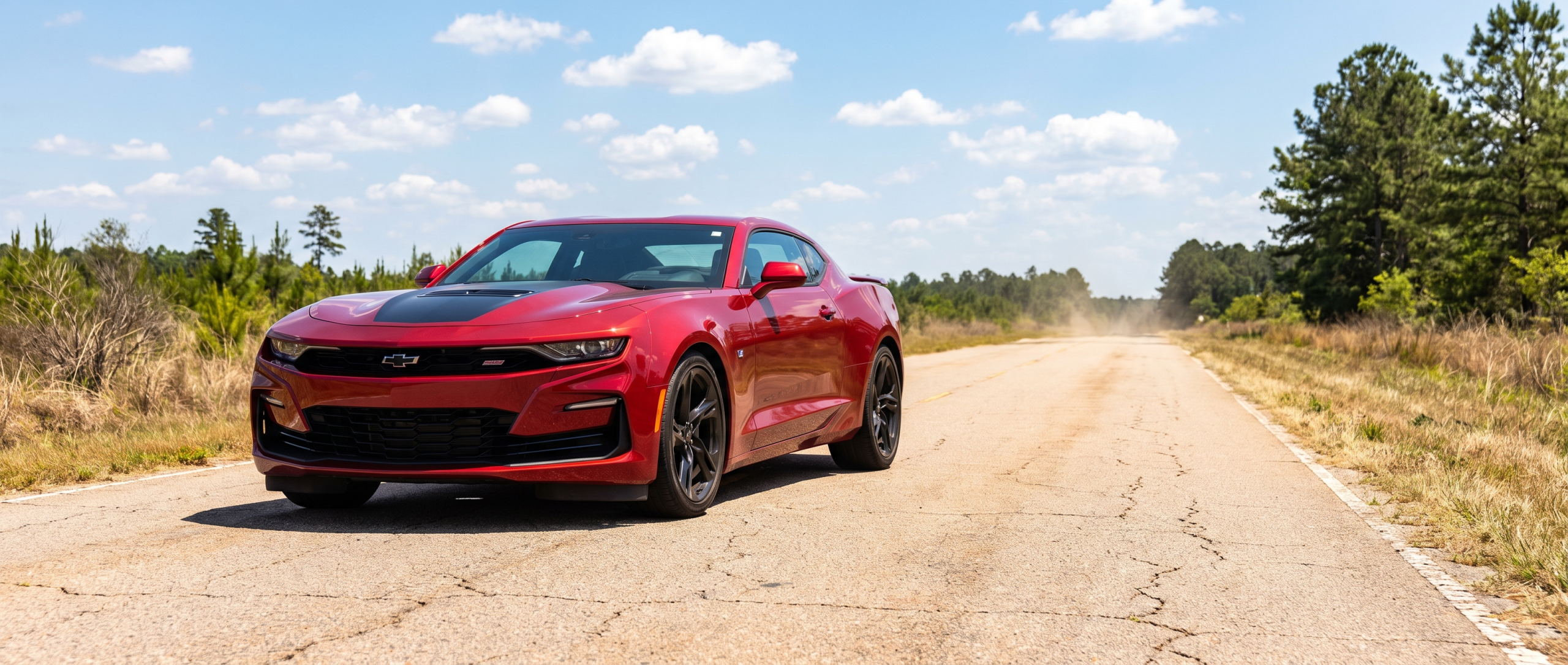
Which engine is under your hood shapes almost everything about how this car behaves in summer heat. Not every sixth-gen Camaro makes the same demands once temperatures in the Columbia area climb past 90 and the heat index pushes toward what NOAA data pegs at around 109 degrees Fahrenheit in July. Getting the details wrong costs you either performance or, in the ZL1’s case, real mechanical wear that won’t announce itself until the damage is already done.
If you’re driving a 2016 through 2024 Camaro from our used lot or keeping your final-generation car in fighting shape, this guide breaks down what “hot-weather value” actually means for your trim level, and where the real tradeoffs live.
What Do You Actually Get at Each Tier When South Carolina Heat Kicks In?
The sixth-gen Camaro’s summer maintenance story splits cleanly across three powertrain tiers, and the differences aren’t cosmetic. They reflect genuine engineering complexity, and understanding them tells you where your money and attention are actually going.
| Trim / Engine | What You Actually Get | The Real Summer Demand | Who It’s For |
|---|---|---|---|
| V6 (1LT / 2LT / 3LT) | 3.6L, 335 hp, 284 lb-ft | Conventional coolant loop; standard oil interval; summer tires optional | Daily driver who wants Camaro style with manageable upkeep |
| LT1 V8 (LT1 trim) | 6.2L LT1, 455 hp, 445 lb-ft | Dexos 1 Gen 2 full-synthetic required; heat cycling shortens real-world oil life; no intercooler system to manage | Enthusiast who wants V8 punch without the ZL1’s added mechanical checklist |
| SS (1SS / 2SS) | 6.2L LT1 engine, same 455 hp | Same oil and cooling demands as LT1 trim; 1LE package adds Brembo brakes that need DOT 4 fluid attention in heat | Performance buyer who drives the car hard on the road but not on track every weekend |
| ZL1 / ZL1 1LE | Supercharged 6.2L LT4, 650 hp, 650 lb-ft | Water-to-air intercooler with a dedicated coolant reservoir; supercharger gear oil; heat soak is the primary summer risk | Driver who uses all of the car and treats service as part of performance, not just maintenance |
Worth saying plainly: the V6 trims are genuinely honest daily-drive machines. Respectable power and a simpler cooling architecture mean summer in Winnsboro is no more complicated than it is for any other modern car.
Smart Summer Ownership: Where the V8 Tiers Diverge
The distinction between the LT1 and the LT4 matters more in South Carolina heat than most guides take the time to explain. Both are 6.2-liter V8s. The service calendars they produce are quite different.
The LT1 (SS and LT1 trim) story: Chevrolet specifies 0W-40 or 5W-30 Dexos 1 Gen 2 full-synthetic oil for the LT1 6.2L engine, with a normal street interval around 7,500 miles. What that interval doesn’t account for is heat cycling. Extended running in high ambient temperatures (think sitting in traffic on US 321 in July with the A/C working hard) degrades oil faster than miles do. If you’re pushing the car on warm days and running it hard, treat the interval as a guide rather than a rule, and lean toward the shorter end.
The ZL1 story is a different chapter entirely. The LT4’s supercharged setup uses a water-to-air intercooler with its own small coolant reservoir, separate from the engine’s main cooling circuit. The brochure won’t tell you this part: when that reservoir runs low, heat soak increases dramatically. The intercooler’s job is to cool the compressed air coming out of the supercharger before it hits the combustion chamber. In South Carolina’s July heat, that job is already harder than it would be in a mild climate. Low fluid makes it harder still, and you feel it as a real reduction in power consistency rather than a dramatic failure. Annual inspection of that reservoir, topped up with distilled water and GM’s ICE coolant, is not optional if you want the ZL1 to perform the way it was engineered to.
Thinking about financing a used Camaro? Check what we have available and let our team walk you through the options.
The Eaton TVS supercharger on the ZL1 also carries a self-contained gear oil reservoir. Inspect it for leaks at every oil change. Chevrolet recommends replacement at 60,000 miles. This is the kind of service record that separates a well-documented ZL1 from one that’s been driven hard and serviced casually, and it matters for the car’s long-term value.
Schedule Your Camaro’s Summer Service
The Tire Question Is the One Most Camaro Owners Skip
Summer tires on a sixth-gen Camaro are worth an honest conversation. The 1LE package on both the SS and ZL1 comes factory-fitted with Goodyear Eagle F1 Supercar 3R tires (or Michelin Pilot Sport Cup 2 depending on the build). These are genuinely track-biased compounds that get better as they warm up. In a South Carolina July, you’ll have no shortage of heat to wake them up.
The tradeoff is real. The Cup 2 and 3R tires wear faster if you have any alignment issues, and they’re sensitive to wet roads. Fairfield County gets meaningful afternoon thunderstorms all summer long. If you’re using the car as a daily driver, the tire on the car may be working harder than the conditions it was designed around.
Our service center can check camber and alignment wear patterns at your next rotation. With sticky summer tires, small camber errors translate to fast, uneven wear.
Making the Smart Choice: Which Tier Actually Earns Its Complexity
Three genuinely different ownership propositions came out of the sixth-gen Camaro’s final run, not just trim levels wearing different badges. Understanding which one fits your driving life is worth the time before you commit to a service plan or a purchase.
The V6 delivers Camaro presence and 335 horsepower with a straightforward summer maintenance rhythm. That’s real value if you want the look and the daily-drive reliability without the performance-oriented upkeep calendar.
The LT1 V8 trims (the LT1 and SS) give you a 455-horsepower engine that Chevrolet built to be one of its most durable V8 platforms. Summer demands are real but manageable: correct oil spec, a shorter interval when you’re driving it hard in heat, and brake fluid attention on 1LE cars. We’ve seen alignment issues quietly chew through performance tires on cars where the owner was doing everything else right. Get the full picture at each service visit.
The ZL1 earns its complexity only when you’re using the car. The intercooler, the supercharger fluid, the high-performance tires and brakes add up to a maintenance calendar, not a burden, for the right owner. For the wrong one, that list represents real money and real performance left on the table.
If you’re thinking about what’s next in your garage, our current Chevrolet lineup has options worth a look, performance and utility built for the roads around Winnsboro and up I-77 toward Charlotte.
Frequently Asked Questions
Does a sixth-gen Camaro SS overheat in stop-and-go traffic during a South Carolina summer?
The SS with the LT1 V8 uses a conventional cooling circuit that’s well-engineered for its power output, and it handles hot-day traffic better than that reputation might suggest. Sitting in traffic on a hot day puts more load on the system than highway driving does, because ram-air cooling drops at low speeds and the engine’s heat output stays constant. Keeping the coolant fresh, the radiator cap sealing at proper pressure, and the system at its correct fill level handles this scenario in a stock car. The real oil and thermal concern with the LT1 in SC heat is extended spirited driving, not simple traffic.
How often should a ZL1 intercooler reservoir be checked in a hot climate?
Chevrolet’s guidance is to inspect the ZL1’s water-to-air intercooler reservoir at minimum annually. In a climate like Fairfield County’s, where July average highs sit in the low-to-mid 90s and the car is driven in sustained heat, inspecting it twice per year is a reasonable practice. Top it with distilled water and GM’s ICE coolant only. An intercooler system running low on fluid allows heat soak to build in the compressed air charge, which the driver will usually notice as reduced throttle response consistency rather than a clear warning light.
What makes summer tire choice critical for a sixth-gen Camaro?
The 1LE package tires (Goodyear Eagle F1 Supercar 3R or Michelin Pilot Sport Cup 2) are track-biased compounds that perform best when warm but wear faster if alignment is off. Fairfield County’s frequent afternoon thunderstorms mean these performance tires on a daily-driver Camaro face wet-road conditions they weren’t designed for. Regular alignment checks at each rotation protect both performance and tire life.
Connect with us


- August 2026
- July 2026
- June 2026
- May 2026
- April 2026
- March 2026
- February 2026
- January 2026
- November 2025
- June 2025
- May 2025
- April 2025
- February 2025
- December 2024
- November 2024
- September 2024
- August 2024
- July 2024
- April 2024
- March 2024
- February 2024
- January 2024
- December 2023
- October 2023
- September 2023
- May 2023
- April 2023
- March 2023
- February 2023
- January 2023
- September 2022
- July 2022
- June 2022
- March 2022
- January 2022
- December 2021
- November 2021
- October 2021
- September 2021
- August 2021
- July 2021
- June 2021
- April 2021
- January 2021
- December 2020
- November 2020
- October 2020
- September 2020
- August 2020
- July 2020
- June 2020
- May 2020