





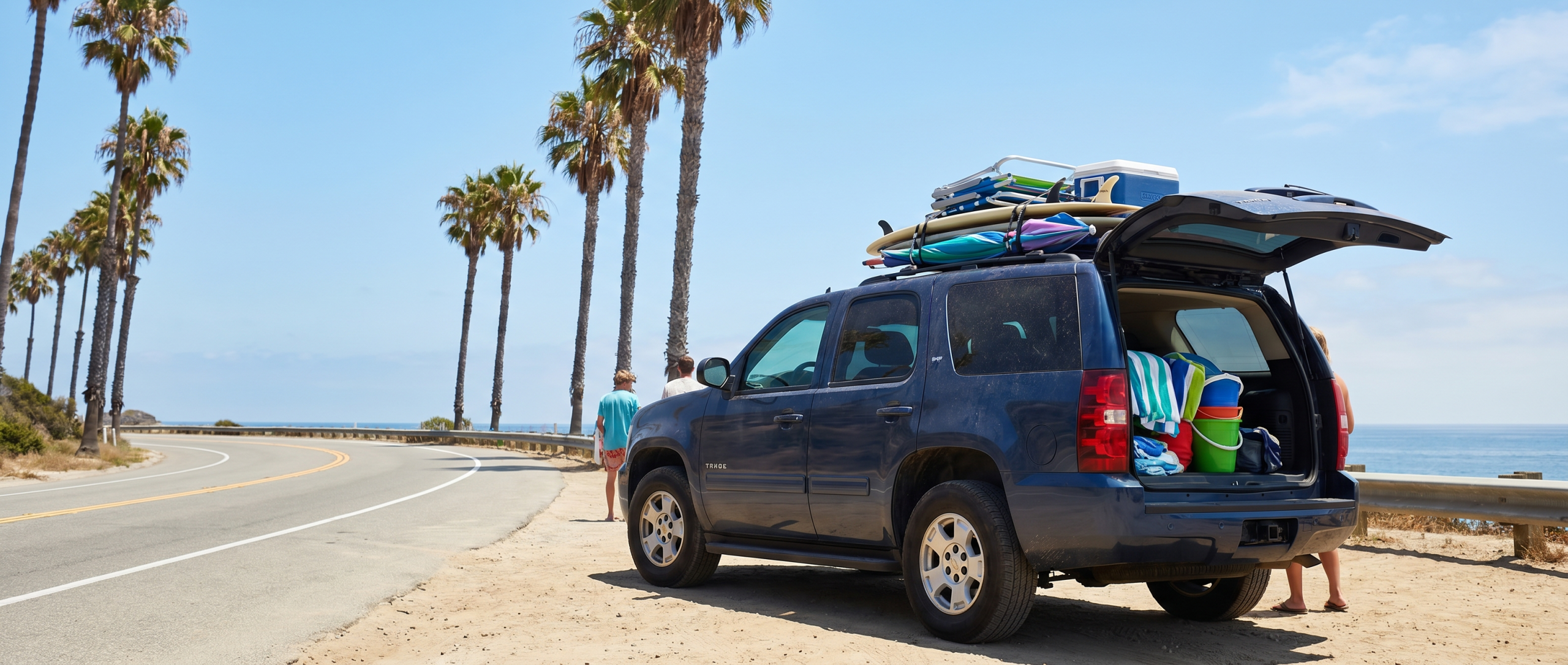
That drive from Winnsboro, SC, to Myrtle Beach takes roughly three hours each way, and the last thing you want is a breakdown on US-521 or I-95 with a car full of beach chairs and impatient passengers. A solid pre-trip service checklist keeps your Chevrolet® running smoothly through every mile of coastal highway. This guide walks through exactly what to inspect, replace, and top off before you load up and head east.
Why a Pre-Trip Inspection Matters More Than You Think
A three-hour highway drive puts different demands on your vehicle than the daily run between home and the shops around US-321. Sustained speeds, heavy cargo, and South Carolina summer heat stress your engine, transmission, tires, and cooling system simultaneously – and small issues that feel minor around town can turn into expensive roadside problems at 70 mph.
The distance from Winnsboro to Myrtle Beach is roughly 170 miles one way. That’s 340 miles round trip, often with extra weight from coolers, luggage, and a full vehicle. Your Tahoe or Equinox might handle the daily commute without complaint, but a loaded beach trip is a different story.
Getting ahead of problems before you leave means more time on the Grand Strand and less time on the shoulder of I-95.
Tires: Your First and Most Important Check
Tires are the single most overlooked item before a road trip, and they’re also the most critical for safety. Start by checking your tire pressure when the tires are cold, ideally first thing in the morning before driving. The correct PSI for your specific Chevrolet model is printed on the driver’s side door jamb – not on the tire sidewall.
Here’s what to inspect:
- Tire pressure – Verify all four tires plus the spare match the recommended PSI
- Tread depth – Use the penny test (insert a penny head-first; if you can see all of Lincoln’s head, the tread is too worn)
- Sidewall condition – Look for cracks, bulges, or cuts that could lead to a blowout at highway speeds
- Spare tire – Confirm it’s inflated and the jack and lug wrench are in place
- Tire age – Tires older than six years may need replacement regardless of tread depth
If you’re driving a Silverado 1500 loaded with beach gear and towing a small trailer, proper tire pressure becomes even more critical. Underinflated tires generate excess heat, and South Carolina summer pavement temperatures can push past 140°F.
Fluids That Need Attention Before the Highway
Every fluid under the hood plays a role during sustained highway driving, and low levels create problems that compound quickly in heat.
| Fluid | What to Check | Why It Matters for Beach Trips |
|---|---|---|
| Engine oil | Level and color on dipstick | Extended highway driving at high temps accelerates oil breakdown |
| Coolant/Antifreeze | Level in reservoir (cold engine only) | Prevents overheating during stop-and-go beach traffic |
| Brake fluid | Level in master cylinder reservoir | Heavy braking with a loaded vehicle demands full fluid levels |
| Transmission fluid | Level and condition (pinkish = good, brown = concern) | Highway cruising and cargo weight stress the transmission |
| Windshield washer fluid | Top off completely | Salt air and coastal bugs coat windshields fast |
| Power steering fluid | Check level against markings | Low fluid causes stiff steering on winding coastal roads |
If your oil change is within 500 miles of being due, get it done before you leave. It’s far easier to handle that in Winnsboro than to search for a service center near Murrells Inlet with a car full of sandy kids.
Cooling System: Don’t Trust It Blindly in Summer
Your cooling system works harder between June and September than any other time of year, and the stretch of I-20 and US-521 heading toward the coast offers little shade and plenty of radiant heat from the asphalt.
Beyond checking coolant levels, inspect these components:
- Radiator hoses – Squeeze them when the engine is cool. They should feel firm, not spongy or cracked. Soft hoses can burst under pressure.
- Radiator cap – A weak cap can’t maintain proper system pressure, leading to overheating. Replace it if it’s more than five years old.
- Serpentine belt – This belt drives your water pump. Look for cracks, fraying, or glazing on the ribbed side. A belt failure kills your cooling system instantly.
- Coolant condition – Fresh coolant is bright green or orange (depending on type). Rusty or murky coolant means a flush is overdue.
If your Trailblazer or Equinox has more than 60,000 miles and hasn’t had a coolant flush, now is a smart time to handle it. The repair bill for an overheated engine dwarfs the cost of a flush.
Brakes: Extra Weight Means Extra Stopping Distance
A fully loaded vehicle takes significantly longer to stop. If you’ve noticed any squealing, grinding, or soft pedal feel during your drives around Winnsboro or past the Fairfield County Courthouse area, address it before the trip.
Brake inspection checklist:
- [ ] Brake pad thickness (minimum 3mm remaining)
- [ ] Rotor condition (no deep grooves or scoring)
- [ ] Brake fluid level and color
- [ ] Emergency/parking brake function
- [ ] No pulling to one side during braking
This matters especially for the Silverado 2500 HD owners who might be towing a boat or jet skis to the beach. Trailer brakes need inspection too, and your brake controller should be tested before you leave town.
Air Conditioning: Three Hours Without AC Is Miserable
South Carolina humidity between May and September turns any vehicle without functioning AC into a rolling sauna. A weak AC system might feel acceptable for a ten-minute drive to the grocery store, but three hours on the highway will test everyone’s patience.
Signs your AC needs attention before the trip:
- Air blows cool but not cold
- Unusual smells when the AC kicks on (often a cabin air filter issue)
- AC cycles on and off frequently
- Weak airflow even at high fan settings
- Strange noises from the compressor area
A cabin air filter replacement is one of the simplest and cheapest fixes, and it dramatically improves both airflow and air quality. If your Trax or Equinox hasn’t had a new cabin filter in 15,000 miles, swap it out. The improvement is immediate.
Battery and Electrical: Heat Kills Batteries Faster Than Cold
Most people associate dead batteries with winter, but extreme summer heat actually degrades battery life faster. High temperatures accelerate the chemical reaction inside the battery, causing internal corrosion and fluid evaporation.
Check these items before your Myrtle Beach trip:
- Battery age – Most batteries last 3-5 years in South Carolina’s climate. If yours is approaching that range, have it load-tested.
- Terminal connections – Clean any corrosion (white or greenish buildup) from the terminals
- Cable condition – Look for fraying or cracking on battery cables
- Charging system – A voltmeter reading between 13.5-14.5V with the engine running indicates a healthy alternator
A dead battery at the Boardwalk or in the Brookgreen Gardens parking lot means calling for a jump in the coastal heat. Spend five minutes checking it in your driveway before you go.
Lights, Wipers, and Visibility
Afternoon thunderstorms roll through the Pee Dee region and coastal areas almost daily during summer. Functional wipers and lights aren’t optional – they’re survival gear during a sudden downpour on US-378.
Quick visibility check:
- Headlights (low and high beam)
- Tail lights and brake lights (have someone stand behind the car while you press the pedal)
- Turn signals (all four, plus hazards)
- Wiper blades (streaking or chattering means replacement time)
- Wiper fluid topped off with a bug-cleaning formula
If your headlight lenses are yellowed or hazy, a restoration kit or professional buffing makes a noticeable difference for nighttime driving on the return trip.
Pack a Road Trip Emergency Kit
Even with a thorough inspection, smart drivers prepare for the unexpected. Keep these items in your vehicle:
- [ ] Phone charger and portable battery pack
- [ ] Basic first aid kit
- [ ] Flashlight with fresh batteries
- [ ] Jumper cables or a portable jump starter
- [ ] Tire pressure gauge
- [ ] One gallon of water (for you or the radiator)
- [ ] Rain jacket (summer storms appear fast on the coast)
- [ ] Paper maps or downloaded offline maps (cell coverage gaps exist on rural stretches)
The stretch between Camden and Florence on US-521 has some rural areas where cell service can be spotty. Having basic supplies means minor issues stay minor.
Common Questions About Chevrolet Service Before a Myrtle Beach Trip from Winnsboro, SC
How far in advance should I service my Chevrolet before driving from Winnsboro, SC, to Myrtle Beach?
Schedule your pre-trip inspection at least one week before your departure date. This gives you time to order any parts and complete repairs without rushing. If the service reveals a needed brake job or tire replacement, a week provides enough buffer to handle it properly before your trip.
What’s the most common breakdown Chevrolet owners experience on summer road trips in South Carolina?
Tire failures and overheating account for the majority of summer roadside breakdowns in South Carolina. The combination of heavy loads, high ambient temperatures, and sustained highway speeds stresses both systems simultaneously. A pre-trip tire and cooling system check addresses the two most likely failure points.
Should I get an oil change before driving to Myrtle Beach from Winnsboro, SC?
If you’re within 1,000 miles of your next scheduled oil change, handle it before the trip. The round trip adds roughly 340 miles to your odometer, and highway driving at sustained speeds in summer heat puts additional stress on engine oil. Fresh oil provides better protection during extended high-temperature operation.
Does my Chevrolet’s tire pressure need adjusting for a loaded beach trip?
Check your owner’s manual for loaded vehicle tire pressure recommendations, which may differ from standard settings. Many Chevrolet models specify higher PSI when carrying maximum passengers and cargo. Never exceed the maximum pressure listed on the tire sidewall, and always check pressure when tires are cold.
How do I know if my Chevrolet’s AC is strong enough for a summer trip to Myrtle Beach?
Your AC should produce air at least 30-40 degrees cooler than the outside temperature at the center vents. On a 90°F day, vent temperatures should read around 50-60°F. If the air feels lukewarm or takes more than five minutes to cool the cabin, have the refrigerant level and compressor checked before your trip.
Are there specific Chevrolet service intervals I should follow before a long drive from Winnsboro?
Follow the maintenance schedule in your owner’s manual, but pay special attention to items due within the next 3,000 miles. Tire rotation, brake inspection, fluid levels, and belt condition are the priority items for any road trip over 300 miles. Your Chevrolet’s built-in Oil Life Monitor and tire pressure monitoring system provide helpful baseline data.
Hit the Beach with Confidence
There’s a big difference between hoping your vehicle makes it to Myrtle Beach and knowing it will. A solid pre-trip checklist takes about an hour of attention but saves you from the stress, cost, and lost vacation time that comes with roadside trouble.
Whether you’re loading up a Tahoe with the whole family or taking a Colorado for a weekend getaway, the basics are the same: tires, fluids, brakes, cooling, and AC. Handle those, and the drive from Winnsboro becomes the easy, enjoyable start to your beach trip it should be. The service team at Wilson Chevrolet can help you schedule service and get every item on this checklist handled before your departure day.
Connect with us


- August 2026
- July 2026
- June 2026
- May 2026
- April 2026
- March 2026
- February 2026
- January 2026
- November 2025
- June 2025
- May 2025
- April 2025
- February 2025
- December 2024
- November 2024
- September 2024
- August 2024
- July 2024
- April 2024
- March 2024
- February 2024
- January 2024
- December 2023
- October 2023
- September 2023
- May 2023
- April 2023
- March 2023
- February 2023
- January 2023
- September 2022
- July 2022
- June 2022
- March 2022
- January 2022
- December 2021
- November 2021
- October 2021
- September 2021
- August 2021
- July 2021
- June 2021
- April 2021
- January 2021
- December 2020
- November 2020
- October 2020
- September 2020
- August 2020
- July 2020
- June 2020
- May 2020