





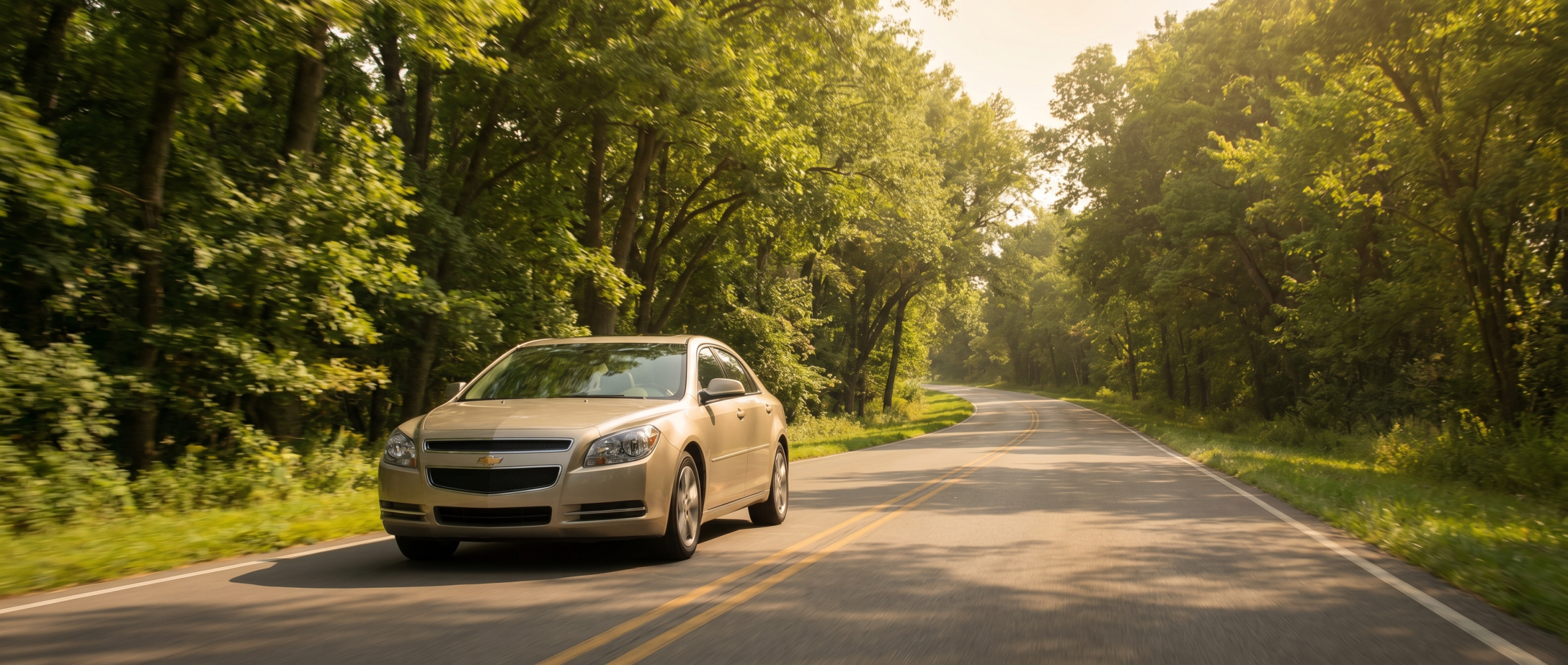
The drive from Winnsboro, SC to Columbia is only about 30 miles down US-321 or I-77, but summer heat can quietly eat into your fuel efficiency more than you’d expect. Temperatures above 90°F force your air conditioning to work harder, and that alone can reduce your fuel economy by up to 25%, according to the U.S. Department of Energy. If you’re making regular summer trips to Columbia for shopping, dining, or catching events, those extra gallons add up fast.
This guide breaks down how to get the most out of every tank on your summer drives – and which Chevrolet® Malibu models handle the heat without punishing your wallet.
How Summer Heat in South Carolina Affects Your Gas Mileage
Air conditioning is the single biggest drain on fuel economy during summer driving in South Carolina, where July temperatures regularly push past 95°F. The EPA estimates that running your A/C in stop-and-go traffic can reduce fuel economy by more than 25% compared to driving without it.
That’s a real concern for Winnsboro residents heading into Columbia’s busier traffic corridors. Once you exit the relatively smooth stretch of I-77 and merge into city driving around Two Notch Road or the Vista district, your engine works harder. More braking, more idling, more A/C demand.
Here’s what happens under the hood during a hot summer drive:
- Engine cooling systems run harder, increasing parasitic energy loss
- Tire pressure increases with heat, which can actually help rolling resistance slightly – but over-inflation causes uneven wear
- Fuel evaporation increases, especially if you park in direct sunlight without a sealed fuel system
- Stop-and-go traffic near Columbia’s shopping areas forces constant acceleration cycles
The good news? A few smart habits can offset most of these losses.
Fuel Economy Ratings That Matter for Your Columbia Commute
The Chevrolet Trax™ is one of the most fuel-friendly options in the current Chevrolet lineup, earning an EPA-estimated 28 city/32 highway mpg. For a quick summer run from Winnsboro down to the Columbiana Centre or the Riverbanks Zoo area, that kind of efficiency means you’re spending less time and money at the pump.
The Equinox is another strong pick for drivers who want a bit more cabin space without sacrificing too much efficiency. Its EPA-estimated ratings make it a practical choice for families heading to Columbia for weekend activities around Lake Murray or Sesquicentennial State Park.
Here’s how several Chevrolet models compare for a typical Winnsboro-to-Columbia summer round trip:
| Model | EPA City (mpg) | EPA Highway (mpg) | Approx. Round Trip Cost (60 mi) |
|---|---|---|---|
| Trax | 28 | 32 | Low |
| Equinox | 28 | 31 | Low |
| Trailblazer | 29 | 32 | Low |
| Colorado | 22 | 27 | Moderate |
| Tahoe (V8) | 16 | 20 | Higher |
The key takeaway here isn’t just raw numbers. It’s matching the right vehicle to your actual driving pattern. If your summer trips are mostly highway cruising on I-77, you’ll lean toward highway ratings. If you’re spending time in Columbia’s city traffic, city mpg matters more.
Smart Driving Habits That Save Fuel on US-321 and I-77
You don’t need a new vehicle to improve your summer fuel economy. Driving technique alone can make a 10-15% difference on the same route.
On I-77 southbound toward Columbia:
- Use cruise control on the highway stretch to maintain consistent speed – even small fluctuations waste fuel
- Accelerate gradually after merging; aggressive acceleration from on-ramps burns significantly more gas
- Stay at or near 60-65 mph where safe and legal – fuel economy drops sharply above 65 mph for most vehicles
- Avoid heavy braking by maintaining a safe following distance
Once you reach Columbia city limits:
- Pre-cool your vehicle before driving by opening windows for a minute, then switching to A/C – this reduces the initial cooling load
- Park in shade whenever possible near Richland Mall, Harbison Boulevard shopping areas, or downtown Columbia
- Combine errands into one trip instead of making multiple drives from Winnsboro during the same week
- Use the recirculate button on your A/C – it cools already-cooled cabin air instead of pulling in 100°F outside air
That recirculate tip alone can reduce your A/C compressor load by up to 10%, which translates directly into fuel savings.
Pre-Trip Maintenance That Protects Your Efficiency
A well-maintained Chevrolet runs more efficiently. Period. Before your summer trips to Columbia get into full swing, a quick maintenance check can prevent the kind of slow efficiency losses that most drivers never notice.
Summer fuel economy maintenance checklist:
- ✓ Check tire pressure – Under-inflated tires increase rolling resistance. Every 1 psi drop below recommended pressure costs roughly 0.2% in fuel economy
- ✓ Replace engine air filter if dirty – a clogged filter restricts airflow and reduces efficiency
- ✓ Verify coolant levels – low coolant forces the engine to work harder in South Carolina’s summer heat
- ✓ Inspect A/C system – a struggling A/C compressor draws more engine power than a properly charged system
- ✓ Use manufacturer-recommended motor oil – the correct viscosity reduces internal engine friction
If it’s been a while since your last service visit, it’s a good time to schedule service and make sure your vehicle is summer-ready before those trips to Lake Wateree or Columbia’s Congaree National Park become a weekly routine.
Why the Route You Choose Between Winnsboro and Columbia Matters
Not all 30-mile drives are created equal when it comes to fuel economy. The route you pick between Winnsboro and Columbia can affect your efficiency more than you’d think.
US-321 South is the more direct route for many Winnsboro residents. It’s a mix of two-lane highway and moderate traffic, with a few traffic lights through smaller communities. The pacing is steady, and you avoid the merge-heavy sections of interstate driving.
I-77 South offers higher speeds and a faster arrival time, but the on-ramp acceleration, higher cruising speeds, and occasional congestion near Columbia can offset that time savings with higher fuel consumption.
Here’s a practical comparison:
| Factor | US-321 | I-77 |
|---|---|---|
| Average speed | 45-55 mph | 65-75 mph |
| Traffic lights | Several | Minimal |
| Fuel efficiency impact | Better for city-rated vehicles | Better for highway-rated vehicles |
| Summer traffic congestion | Light | Moderate near exits |
| Scenic value | More rural scenery | Standard highway |
For drivers in a Trailblazer or Trax with strong city mpg ratings, US-321 may actually deliver better real-world fuel economy than the interstate. For Silverado 1500 or Tahoe owners whose highway numbers outpace their city ratings, I-77 is the smarter choice.
Either way, you’ll pass through some of Fairfield County’s nicest stretches of countryside – not a bad view for a summer drive.
Common Questions About Chevrolet Fuel Economy for Summer Trips Near Winnsboro, SC
Does running the A/C really hurt fuel economy on drives from Winnsboro, SC to Columbia?
Yes, running your air conditioning can reduce fuel economy by up to 25% in stop-and-go traffic, according to the U.S. Department of Energy. On the highway stretch of I-77 between Winnsboro and Columbia, the impact is smaller – closer to 5-10%. Using the recirculate setting and pre-cooling your cabin helps reduce the drain significantly.
Which Chevrolet model gets the best fuel economy for summer driving near Winnsboro, SC?
The Chevrolet Trailblazer and Trax currently offer the strongest EPA fuel economy ratings in the Chevrolet lineup, both achieving over 28 mpg in city driving. For Winnsboro residents making regular summer trips to Columbia, these models keep fuel costs low without sacrificing interior comfort or cargo space.
How often should I check tire pressure during summer in South Carolina?
Check your tire pressure at least once a month during summer, and always before a longer trip. South Carolina’s summer pavement temperatures can cause tire pressure to fluctuate by 3-5 psi throughout the day. Morning checks before driving give you the most accurate reading and help maintain proper fuel efficiency.
Does the route from Winnsboro to Columbia affect how much gas I use?
Absolutely. Taking US-321 at moderate speeds often yields better fuel economy for compact SUVs and sedans, while I-77’s higher speeds benefit trucks and larger SUVs with stronger highway mpg ratings. Your driving style on either route – smooth acceleration versus aggressive driving – also plays a major role in real-world fuel consumption.
Is premium gas worth it for better fuel economy on summer trips from Winnsboro?
Most Chevrolet models are designed to run on regular unleaded 87-octane fuel. Using premium gas in an engine designed for regular provides no measurable fuel economy benefit, according to the EPA. Save the extra cost per gallon and put it toward proper maintenance instead – that delivers real efficiency gains.
Summer trips from Fairfield County to Columbia should be about enjoying the destination – whether that’s a day at Riverbanks Zoo, shopping along Harbison Boulevard, or exploring the trails near Congaree National Park. They shouldn’t be about watching your fuel gauge drop faster than expected.
A few simple habits, the right maintenance, and choosing a Chevrolet model that matches your driving pattern go a long way. The team at Wilson Chevrolet can help you find the right fit for your lifestyle and make sure your current vehicle is running at peak efficiency before summer heats up.
Browse our new inventory to explore fuel-friendly Chevrolet options ready for your next Columbia road trip.
Connect with us


- August 2026
- July 2026
- June 2026
- May 2026
- April 2026
- March 2026
- February 2026
- January 2026
- November 2025
- June 2025
- May 2025
- April 2025
- February 2025
- December 2024
- November 2024
- September 2024
- August 2024
- July 2024
- April 2024
- March 2024
- February 2024
- January 2024
- December 2023
- October 2023
- September 2023
- May 2023
- April 2023
- March 2023
- February 2023
- January 2023
- September 2022
- July 2022
- June 2022
- March 2022
- January 2022
- December 2021
- November 2021
- October 2021
- September 2021
- August 2021
- July 2021
- June 2021
- April 2021
- January 2021
- December 2020
- November 2020
- October 2020
- September 2020
- August 2020
- July 2020
- June 2020
- May 2020