




Blog

Why June Is the Right Time for Chevrolet Tire Checks in Winnsboro, SC

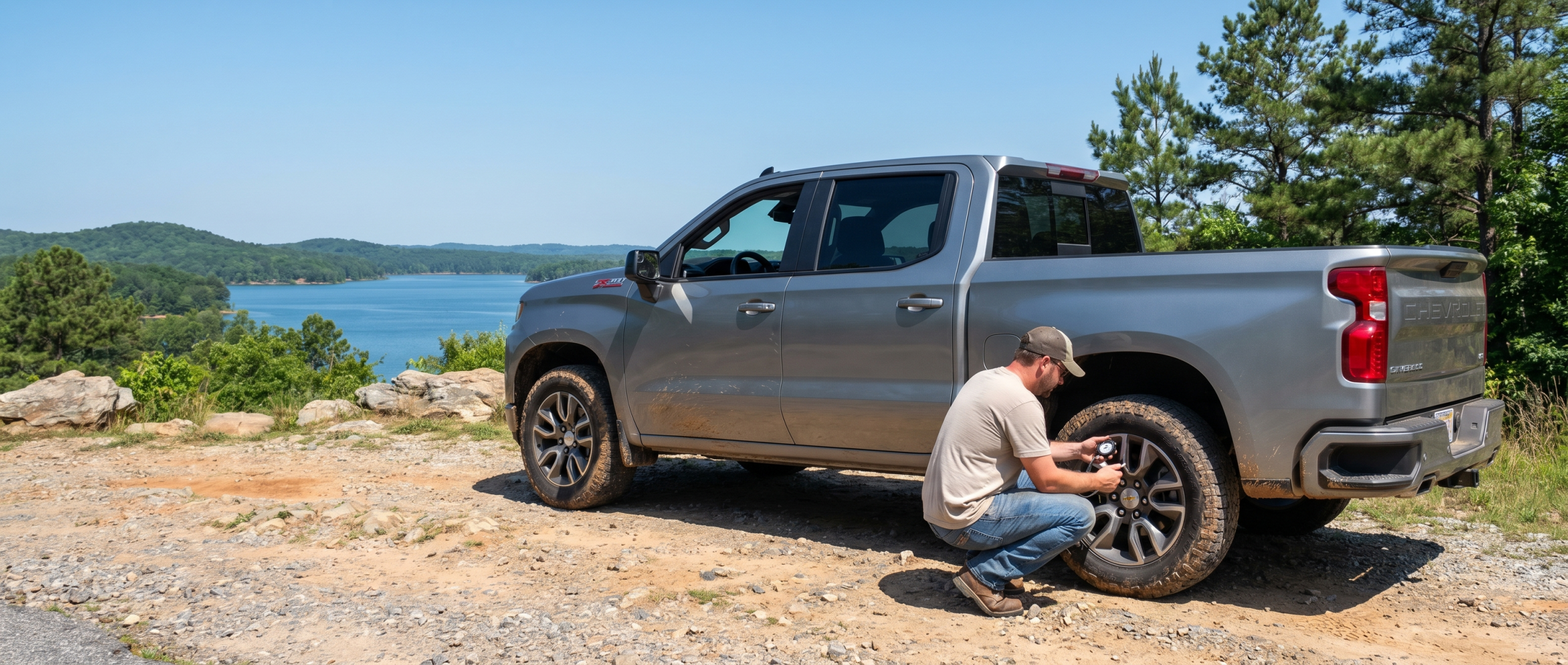
Chevrolet tire maintenance service in Winnsboro, SC

South Carolina's June temperatures can swing from 65°F at dawn to 95°F by afternoon, causing your tire pressure to fluctuate by up to 2 PSI for every 10-degree change. For Chevrolet owners in Winnsboro, SC, this dramatic temperature variation makes June the perfect month to evaluate your tires before the intense summer heat arrives. Understanding how our unique climate affects your vehicle's tires can mean the difference between reliable performance and unexpected roadside troubles.

How Winnsboro's Summer Heat Impacts Your Chevrolet's Tires

Your tires lose approximately 1-2 pounds of rubber through normal wear every 5,000 miles - and that process accelerates dramatically when pavement temperatures exceed 140°F, which happens regularly on I-77 during South Carolina summers.

The science behind heat's effect on tires is straightforward but often overlooked. As temperatures rise, the air inside your tires expands, increasing pressure beyond recommended levels. Overinflated tires wear unevenly, reduce your contact patch with the road, and compromise your Silverado 1500's towing stability or your Equinox's fuel efficiency.

Did you know? The pavement temperature can be 40-60 degrees hotter than the air temperature on sunny days. When it's 95°F in Winnsboro, the road surface can reach 155°F.

Hot pavement also softens tire rubber, making it more susceptible to damage from road hazards. Those seemingly minor imperfections on Highway 321 toward Columbia become more dangerous when your tires are heat-stressed. Regular pressure checks and visual inspections help you catch problems before they strand you on a sweltering afternoon.

But heat isn't just about pressure changes - it's about chemistry too.

Signs Your Tires Need Attention Before Peak Summer

Uneven tread wear often appears first on the inside edges of your tires, where it's hardest to spot during casual glances - yet this hidden wear pattern indicates alignment issues that waste fuel and compromise safety.

Here are the critical warning signs that demand immediate attention:

Visual Indicators:
  • Tread depth less than 4/32 of an inch (use the quarter test)
  • Visible cracks or bulges in sidewalls
  • Uneven wear patterns across the tread surface
  • Vibration or pulling while driving on smooth roads like Highway 34
Performance Changes:
  • Decreased fuel economy in your Trailblazer or Trax
  • Longer stopping distances, especially concerning for heavy vehicles
  • Reduced responsiveness during lane changes
  • Hydroplaning in typical afternoon thunderstorms

The penny test works, but the quarter test provides a better safety margin for South Carolina's sudden summer storms. Place a quarter upside down in your tread - if you can see the top of Washington's head, it's time to explore our new inventory for replacement options.

Pro tip: Check your tires early in the morning before driving. This gives you the most accurate pressure reading, as friction from driving heats tires and artificially increases pressure readings by 4-5 PSI.

These warning signs become even more critical when you consider our local driving conditions.

Why June Timing Matters for Fairfield County Drivers

June in Fairfield County brings unique challenges that make tire maintenance particularly crucial - afternoon thunderstorms can drop 2 inches of rain in 30 minutes, turning Highway 200 toward Ridgeway into a hydroplaning hazard for worn tires.

Our location between Lake Wateree and the Broad River means humidity levels often exceed 70% by noon, accelerating tire degradation through a process called ozone cracking. This environmental stress, combined with temperature extremes, makes June the ideal window for tire service before July and August bring the year's most punishing conditions.

June Tire Maintenance Benefits:

  • Beat the July heat when service bays are busiest
  • Prepare for summer road trips and vacation travel
  • Take advantage of moderate morning temperatures for service
  • Address issues before peak hurricane season brings heavy rains

The Fairfield County road system presents its own challenges. Rural roads near Lake Monticello often have sharp gravel that can penetrate heat-softened rubber, while the expansion joints on the Highway 34 bridge over the Broad River can jar already-stressed tires. Your Tahoe or Silverado 2500 HD needs properly maintained tires to handle these conditions safely.

Understanding our local challenges is just the beginning - let's look at the specific benefits for different Chevrolet models.

Chevrolet Model-Specific Tire Considerations

Each Chevrolet model has unique tire requirements based on weight distribution, drivetrain configuration, and intended use - your Coloradoâ„¢'s all-terrain tires need different care than your Trax's highway-focused rubber.

ModelRecommended PSI RangeJune Check PrioritySpecial Considerations
Silverado 150035-45 PSITowing prepLoad range affects pressure needs
Equinox32-35 PSIRotation dueAWD models wear differently
Tahoe35-38 PSIWeight distributionThird-row use changes dynamics
Trailblazer33-36 PSIAlignment checkSport mode increases wear
Colorado35-44 PSIOff-road inspectionTrail damage accumulates
Pro tip: Your door jamb sticker shows factory recommendations, but towing or hauling requires adjustment. Check your owner's manual for loaded vehicle specifications.

The Silverado 2500 HD demands particular attention due to its heavy-duty application. These trucks often run LT-rated tires that require higher pressures and more frequent rotation intervals. If you use your truck for work around Chester County or haul boats to Lake Wateree, monthly pressure checks become even more critical.

Taking action now saves money and hassle later in the summer.

Taking Action: Your June Tire Maintenance Checklist

A comprehensive tire inspection takes just 15 minutes but can prevent hours of roadside frustration during South Carolina's brutal summer heat.

Essential June Maintenance Steps:

  1. Check pressure when cold (before 9 AM is ideal)
  2. Inspect tread depth using the quarter test
  3. Examine sidewalls for cracks or damage
  4. Verify valve stems aren't cracked or leaking
  5. Review alignment by checking wear patterns
  6. Rotate according to schedule (typically every 5,000-7,500 miles)
  7. Document findings for tracking over time

Beyond basic maintenance, consider these summer-specific preparations:

Summer Readiness Checklist:
  • ✓ Verify spare tire pressure and condition
  • ✓ Check jack and lug wrench functionality
  • ✓ Stock emergency supplies (water, coolant, jumper cables)
  • ✓ Program roadside assistance numbers
  • ✓ Consider nitrogen inflation for pressure stability

Browse our pre-owned inventory if you're noticing multiple issues that suggest your current tires are beyond their service life. Sometimes replacement makes more financial sense than continuing to maintain worn tires.

Now let's address the specific questions Winnsboro drivers often ask about summer tire care.

Common Questions About Summer Tire Care in Winnsboro

How often should I check my Chevrolet's tire pressure during South Carolina summers?

Check your Chevrolet's tire pressure every two weeks during summer months, or weekly if you drive more than 300 miles per week. The extreme temperature swings between morning and afternoon in Winnsboro can cause pressure variations of 4-6 PSI, affecting fuel economy and tire wear. Always check pressure before long trips to Lake Wateree or when hauling heavy loads.

What tire pressure should I run in my Silverado when towing in hot weather?

Increase your Silverado's rear tire pressure by 5-10 PSI above the door sticker recommendation when towing in temperatures above 85°F. For example, if your door sticker shows 35 PSI, run 40-45 PSI in the rear when pulling boats or trailers. This compensates for the extra weight and heat buildup, preventing dangerous tire flex and potential blowouts on I-77.

Do all-terrain tires on my Colorado need different summer care than regular tires?

All-terrain tires require more frequent rotation (every 3,000-5,000 miles) and careful pressure monitoring during Winnsboro summers due to their aggressive tread blocks. The deeper treads trap more heat and wear unevenly on hot pavement, especially on Highway 321. Check for stone drilling and remove embedded rocks weekly to prevent punctures when the rubber softens in high temperatures.

When should I replace tires versus continuing maintenance in Fairfield County?

Replace your tires when tread depth reaches 4/32" or if you notice cracks, bulges, or uneven wear patterns that alignment can't fix. In Fairfield County's climate, tires older than six years need replacement regardless of tread depth due to heat and ozone damage. If you're spending more than $100 monthly on tire-related repairs, replacement offers better value and safety.

Can I trust the tire pressure monitoring system in my Chevrolet during summer?

Your Chevrolet's TPMS provides reliable warnings but shouldn't replace manual checks during summer months. The system typically alerts you when pressure drops 25% below recommendation - far too low for optimal performance and safety. Use TPMS as a backup while maintaining bi-weekly manual checks, especially before trips to Lake Monticello or long highway drives.

What's the best time of day to get tire service in Winnsboro during June?

Schedule tire service between 7 AM and 10 AM for the most comfortable experience and accurate pressure readings. Early morning appointments at service centers avoid the afternoon heat that makes waiting areas uncomfortable and can affect technician efficiency. Many Winnsboro drivers schedule service before work, avoiding the lunch rush and afternoon thunderstorms common in June.

Keep Your Chevrolet Rolling Safely This Summer

June's moderate temperatures offer Winnsboro drivers the perfect opportunity to address tire maintenance before the scorching July and August heat arrives. By taking action now, you're investing in safer summer travels, better fuel economy, and avoiding the frustration of tire failures during family vacations or daily commutes. Your Chevrolet deserves proper care to handle South Carolina's challenging summer conditions, from the morning fog near Lake Wateree to the afternoon heat radiating off Highway 321. The team at Wilson Chevrolet understands these local challenges and stands ready to help keep you rolling safely through summer and beyond.

Wilson Chevrolet

798 us hwy 321 N BUSINESS, Winnsboro, SC 29180

(803) 402-4233

Recommended Posts

2027 Chevrolet Equinox with open cargo hatch loaded for a fall road trip on a South Carolina highway

Equinox vs. Honda CR-V: Which One Actually Fits Your Fall Road Trip?

October is prime road-trip season in the Midlands. The heat finally breaks, the leaves on US 321 turn amber, and you'll see half of Fairfield County loading up for the Smokies, the Outer Banks, or just a long weekend somewhere north on I-77. Should you be cross-shopping the Equinox with a CR-V? We hear that question around the lot this time of year, and yes, you should. What actually separates them only shows up once you get past the brochure. The brochure won't tell you. Browse our Equinox inventory at Wilson Chevrolet to see what's on the lot right now. The Equinox wins on ride comfort, a broader standard-safety package, and entry value. The CR-V wins on cargo volume and hybrid fuel economy. Which one matters more depends on how many seats you are filling and how far you are driving. How Do These Two SUVs Actually Work Differently? These two share a segment and a price neighborhood, yet they're built around very different ideas of what a road trip asks for, and that split shows up the moment you look at the powertrains, where one leans on stepped gears for confident response and the other on a CVT for smoothness and economy. The 2027 Equinox runs a 1.5-liter turbocharged four-cylinder making 175 horsepower. Every trim now uses an 8-speed automatic. Chevrolet replaced the CVT for 2027 on FWD models, so you'll feel defined, gear-by-gear shifts across the lineup. AWD is optional and raises torque to 203 lb-ft. The 2027 CR-V gives you two paths, a 1.5-liter turbocharged four-cylinder producing 190 horsepower on gas trims, or a 2.0-liter hybrid system making 204 total system horsepower. Gas CR-V models use a CVT, and hybrid models use an eCVT. That transmission difference matters on I-77 more than most comparison articles acknowledge. The Equinox's stepped 8-speed gives you a confident, deliberate response when you merge onto the interstate or pass a slow-moving log truck on a two-lane connector. The CR-V's CVT is smooth and fuel-efficient, though it has that characteristic elastic-surge feel under hard acceleration, especially when the vehicle is loaded. Neither is wrong. They just feel different when you're running 75 mph toward Charlotte with four people and a weekend's worth of gear on board. Feature 2027 Chevrolet Equinox 2027 Honda CR-V (Gas) 2027 Honda CR-V (Hybrid) Engine 1.5L Turbo, 175 hp 1.5L Turbo, 190 hp 2.0L Atkinson + Electric, 204 hp (system) Transmission 8-speed automatic (all trims) CVT eCVT Drivetrain FWD standard, AWD available FWD standard, AWD available FWD or AWD Cargo (seats up) 29.8 cu ft 39.3 cu ft 36.3 cu ft Cargo (seats down) 63.5 cu ft 76.5 cu ft Lower (battery placement) EPA Highway MPG (FWD) 29 mpg 33 mpg 36 mpg Standard Safety Features 15+ (full Chevy Safety Assist suite) Honda Sensing suite Honda Sensing suite Towing (AWD, gas) 1,500 lbs 1,500 lbs 1,000 lbs (hybrid) Sources: Chevrolet lists the 2027 Equinox transmission change and 29-mpg highway figure. The EPA rates the gas 2027 CR-V FWD at 33 mpg highway and the hybrid FWD at 36 mpg highway. Honda's spec sheet lists the cargo figures above. Which One Do You Actually Need for the Roads Around Here? Generic national comparisons stop being useful right here, because the right pick depends on your actual load and your actual route, and the I-77 corridor from Winnsboro to Charlotte runs 90-plus miles of sustained highway cruising, so if you're taking the family for a fall trip, you're running loaded. So here's where it splits. Choose the Equinox if: You're filling most or all five seats. When the rear seats are occupied, the cargo gap matters most, 39.3 cubic feet (CR-V) versus 29.8 cubic feet (Equinox) behind those seats. That's nearly 10 cubic feet, which is meaningful. But when you've got three people in the back, neither vehicle lets you fold those seats anyway. You're working with whatever fits in the trunk. The Equinox's hidden under-floor storage compartment gives you a dedicated slot for valuables or smaller items you want out of sight, which is handy on a multi-day trip. Chevrolet also includes over 15 standard safety features from the base trim up. Adaptive Cruise Control, Automatic Emergency Braking, Blind Spot Intervention, Rear Cross Traffic Braking, Forward Collision Alert, Lane Keep Assist, and more, which makes long interstate stretches noticeably less fatiguing. Need more room for a bigger group? The Traverse offers three rows with 98.2 cubic feet of max cargo. Choose the CR-V if: You're traveling as a couple or with one or two kids, and you plan to keep those rear seats folded most of the time. The 76.5-cubic-foot maximum cargo volume is genuinely class-leading on gas trims. The CR-V is the better cargo hauler when you've got the flexibility to use all of it. And if fuel efficiency is your deciding factor, the CR-V Hybrid AWD is rated by the EPA at 37 mpg combined, compared to 26-27 mpg combined for the Equinox, and that difference adds up on a long run north, especially once you're past Charlotte. See our current new inventory at Wilson Chevrolet for available Equinox trims and configurations. One honest concession from our side, the Equinox doesn't offer a hybrid option. If you're stretching every mile out of a tank, the CR-V Hybrid has a real, verifiable advantage that no amount of comfort-ride framing changes. See Current Equinox Offers A Few Terms Worth Knowing Term What it means in plain language CVT Continuously Variable Transmission. No fixed gears, engine revs smoothly but can feel rubbery under hard acceleration eCVT A hybrid-specific version that blends electric motor and engine input for efficiency Chevy Safety Assist Chevrolet's standard six-feature safety bundle: AEB, Front Pedestrian Braking, Lane Keep Assist, Forward Collision Alert, Following Distance Indicator, and IntelliBeam automatic high beams EPA Combined MPG The fuel economy estimate that blends city and highway driving (55% highway, 45% city in EPA testing) What This Means for Your Next Vehicle Here's the bottom line for someone leaving Winnsboro this fall, and it really comes down to who's riding along and how far you're pushing, because these two SUVs reward different trips rather than crowning one outright winner, and knowing your own pattern settles it faster than any spec chart will. If you're the household that packs light and travels as a couple, or you put real value on hybrid efficiency for longer trips, the CR-V, especially the hybrid, is worth serious consideration. We'll say that plainly. But if you're loading up five seats with the family for a long weekend, or you simply want a confidence-inspiring, smooth-riding SUV with a full safety suite standard and a transmission that feels like a conventional automatic on the highway, the Equinox is the stronger fit for that specific drive. Our team's consistent read, customers who switch from the CR-V to the Equinox mention the ride quality and the breadth of standard safety tech. Both are verifiable specs, not marketing. Chevrolet lists 15-plus standard features including Adaptive Cruise Control on every trim, and it's a feature that eases driver fatigue on the I-77 stretch between Winnsboro and Charlotte. Take a closer look at the Equinox lineup and find the right configuration for your next trip. Frequently Asked Questions Is the Chevy Equinox or Honda CR-V better for highway road trips? For drivers who fill all five seats frequently, the Equinox delivers a comfort-tuned ride, 15-plus standard safety features including Adaptive Cruise Control standard on every trim, and the Equinox's 8-speed automatic gives the highway driving a confident, familiar feel. The CR-V's gas trims have a CVT, which some drivers find less satisfying under load. That said, if maximum cargo volume is the priority and you're often traveling as a couple or small group with seats folded, the CR-V's 76.5 cubic feet of maximum cargo space and its hybrid powertrain's EPA-rated 37 mpg combined (AWD hybrid) are real advantages. The better pick depends on how many seats you are filling and how much weight you give to fuel economy versus ride character. Does the Honda CR-V have more cargo space than the Chevrolet Equinox? Yes. Substantially. The 2027 CR-V offers 39.3 cubic feet of cargo behind the rear seats and 76.5 cubic feet with them folded, per Honda's specifications. The 2027 Equinox offers 29.8 cubic feet behind the rear seats and 63.5 cubic feet fully folded, per Chevrolet's specifications. The gap is largest when the rear seats are up (nearly 10 cubic feet). Note that CR-V Hybrid trims have less cargo than gas trims (36.3 cu ft behind the rear seats) because of battery placement. Value Your Current Vehicle Toward an Equinox Wilson Chevrolet 798 us hwy 321 N BUSINESS, Winnsboro, SC 29180 (803) 402-4233

2026 Chevrolet Tahoe at a South Carolina lake boat ramp, ready for towing

Three Full-Size Family SUVs Compared for Fairfield County Life: Tahoe, Expedition, and Traverse

Most families shopping a big three-row SUV around Winnsboro walk in with two names already in mind, the Chevrolet Tahoe and the Ford Expedition. There's a third truck that belongs in that conversation, and it sits right here on our lot at Wilson Chevrolet. The 2026 Traverse closes the gap on passenger room and cargo while towing a capable 5,000 pounds, and it does it at a meaningfully different entry point than either full-size, which reshapes the whole comparison. Here's what we've learned helping Fairfield County families weigh these three. The deciding factor rarely comes down to the spec sheet. It comes down to two things, how heavy whatever you're pulling to Lake Wateree is, and how far you run I-77 every week. The short version Tow heavy rigs (over 8,000 lbs): The 2026 Tahoe maxes at 8,400 lbs (5.3L V8, RWD, Max Trailering Package); the 2026 Expedition tops the class at 9,600 lbs (4x4, Heavy-Duty Tow Package). Traverse caps at 5,000 lbs. Best cargo flexibility: Tahoe delivers 122.7 cu ft with seats folded; Traverse leads its own class at 97.6 cu ft; Expedition MAX reaches 123.1 cu ft but requires the extended body. Best fuel economy: Tahoe with the available Duramax diesel is EPA-rated at 21 city / 28 highway. The Expedition 4x4 (EcoBoost V6) runs about 16 city / 22 highway. Traverse (2.5L turbo) earns 20 city / 26 highway. Budget-conscious 3-row family: The Traverse is the right call. Full-size towing and full-size comfort are only worth paying for when you actually use them. Committed to Chevy and need serious tow capacity: The Tahoe, especially with the Duramax diesel, is built for exactly that. Browse the 2026 Chevrolet Tahoe at Wilson Chevrolet How Do These Three SUVs Actually Compare? On paper, these three split by the job far more than the badge, so start there before you start comparing trims. Tahoe and Expedition are full-size, body-on-frame haulers built around weight, while the Traverse is a unibody crossover that trades the top tow numbers for better mileage and an easier daily footprint. Our numbers below fill in the rest. The specs below are based on Chevrolet's published figures for the 2026 Tahoe and Traverse, and Ford's published specifications for the 2026 Expedition. Towing figures assume proper equipment packages. They are not base configurations. Spec 2026 Chevrolet Tahoe 2026 Ford Expedition 2026 Chevrolet Traverse Max tow (properly equipped) 8,400 lbs 9,600 lbs (4x4 SWB) 5,000 lbs Engine options 5.3L V8 / 6.2L V8 / 3.0L Duramax diesel 3.5L EcoBoost V6 (400-440 hp) 2.5L turbo 4-cyl (328 hp) Seating capacity Up to 9 (LS bench) / 8 most trims Up to 8 Up to 8 Max cargo (seats folded) 122.7 cu ft 108.5 cu ft (SWB) 97.6 cu ft Cargo behind 3rd row 25.5 cu ft 22.9 cu ft 22.9 cu ft EPA fuel economy (best config) 21 city / 28 hwy (diesel RWD) ~16 city / 22 hwy (4x4 EcoBoost) 20 city / 26 hwy Body-on-frame Yes Yes No (unibody crossover) Best for Towing + long haul efficiency (diesel) Maximum tow capacity Family budget + daily driving A few things jump off that table. The Expedition's headline tow number is real, but it only applies to the short-wheelbase 4x4 with the Heavy-Duty Trailer Tow Package installed. Without that package, the 4x2 base Expedition is limited to 6,000 lbs per Ford's published towing guide. Tahoe leans on packages too for its 8,400 lb ceiling (5.3L V8, RWD, Max Trailering). Build your specific truck before you commit to a tow number. How Much Are You Actually Pulling? Most of the answer rides on trailer weight, and around here that number tends to land lower than the full-size badge suggests. A boat and a weekend's gear sit well inside the Traverse's range, while a loaded horse trailer or a big fifth-wheel pushes you squarely into full-size territory. Both ends point at different trucks. A pontoon boat or bass boat on a typical aluminum trailer runs 3,500 to 5,000 lbs loaded. A 24-foot travel trailer lands between 5,000 and 7,500 lbs. A full horse trailer with two animals can push 8,000 lbs and above. So here's the practical breakdown for our corner of South Carolina. Lake Wateree sits east of Winnsboro. If you're pulling a boat to the lake on weekends, the 2026 Chevrolet Traverse handles the load at up to 5,000 lbs and gets you there on noticeably better fuel economy than either full-size. If you're hauling a loaded horse trailer or a large fifth-wheel toward Charlotte, you need the Tahoe or the Expedition. That's the straight line for our area. The Expedition wins on raw tow rating (9,600 lbs vs 8,400 lbs in the Tahoe's best build), and that 1,200 lb margin matters when you're consistently near the ceiling. But the Tahoe offers something the Expedition doesn't, an available 3.0L Duramax turbo-diesel. The EPA rates that combination at 21 city / 28 highway. For a family running the I-77 corridor to Columbia or Charlotte several times a month in a full-size SUV, that highway number is a genuine difference-maker over a year of fill-ups. The Expedition's 3.5L EcoBoost V6 is a capable engine producing up to 440 hp in High-Output trim, but it's a gas-only powertrain. There's no diesel option in the Expedition lineup. The Tahoe's available Duramax diesel is EPA-rated at 28 mpg highway, a figure no other full-size body-on-frame SUV can match. For I-77 families who are logging real miles, that engine often justifies the Tahoe over the Expedition on operational cost alone. See Current Chevrolet Offers at Wilson Chevrolet Pros and cons where they actually matter for Fairfield County buyers: Pros Cons Tahoe: Three engine options including the Duramax diesel; 122.7 cu ft max cargo; up to 9 passengers on LS bench Tahoe: 8,400 lb tow ceiling lower than Expedition; fuel economy with gas V8 is modest (15 city / 20 hwy on 5.3L) Expedition: Class-leading 9,600 lb tow capacity; more second and third-row passenger room by most measures; 24-inch panoramic display Expedition: Gas-only (no diesel); shorter standard cargo bay than Tahoe; 9,600 lb rating requires specific package + 4x4 configuration Traverse: Best fuel economy of the three; 97.6 cu ft max cargo; Smart Slide seats make third-row access practical; more affordable entry Traverse: 5,000 lb tow ceiling rules it out for heavy trailers; unibody crossover, not body-on-frame; no diesel option Which One Fits Your Family? There's no single winner here, because the right pick tracks your heaviest regular load more than anything else. Tow past 8,000 pounds on a regular basis and the Expedition earns it; want three powertrains with a foot in efficiency and the Tahoe fits; need three rows on a family budget and the Traverse quietly takes it. The Expedition is the right call when towing is the priority and you regularly run loads above 8,000 lbs. It wins on that single axis, and Ford's packaging does give third-row passengers more room on longer trips. We'll say that plainly. If you're cross-shopping and the trailer always wins the argument, the Expedition deserves a serious look. The Tahoe wins when you need the flexibility of three powertrains and want to keep a foot in fuel efficiency without giving up full-size utility. The Duramax diesel configuration is rare in this segment and genuinely useful for high-mileage I-77 drivers who also tow a few times a year. A 24-gallon tank at 28 highway miles per gallon is over 650 miles of range on a single fill. On a Charlotte run, that range adds up. For many Fairfield County families, though, the Traverse is the answer nobody expected. Here's what that package delivers: Three rows and seating for eight that rides like a proper family SUV. 97.6 cu ft of max cargo and 5,000 lbs of tow capacity. 26 mpg highway with a standard garage bay fit (79.6 inches wide without mirrors). That last point is more than you can say for a fully loaded Tahoe or Expedition in a tighter driveway. Does your life actually need 8,000 lbs of tow capacity, or do you just want to feel like it does? Those are two different purchases. If the answer is a bass boat and weekend soccer gear, the Traverse earns the call. If it's a horse trailer or a 30-foot camper, you want the Tahoe or the Expedition. Explore financing options at Wilson Chevrolet to run the numbers on any of these three, or bring your current vehicle in for a trade appraisal while you're comparing. By the Wilson Chevrolet Team | October 2026 Frequently Asked Questions Does the 2026 Chevrolet Tahoe tow more than the Ford Expedition? No. The 2026 Ford Expedition has a higher maximum tow rating. The Expedition 4x4, properly equipped with Ford's Heavy-Duty Trailer Tow Package, is rated at 9,600 lbs. The 2026 Tahoe tops out at 8,400 lbs with the 5.3L V8, rear-wheel drive, and the Max Trailering Package. Both ratings require specific configurations and are not base numbers. For towing above 8,400 lbs, the Expedition holds the advantage. Is the 2026 Chevrolet Traverse a good alternative to the Tahoe for a family with a boat? Yes, for most common boat setups. The 2026 Traverse tows up to 5,000 lbs, which is enough for the majority of pontoon boats, bass boats, and smaller ski boats on aluminum or light aluminum trailers. It seats up to eight passengers, carries 97.6 cubic feet of maximum cargo, and returns 26 mpg on the highway. Families who do not regularly pull loads over 5,000 lbs often find the Traverse covers their real-world needs without the fuel and size commitment of a full-size body-on-frame SUV. Get Pre-Qualified at Wilson Chevrolet Wilson Chevrolet 798 us hwy 321 N BUSINESS, Winnsboro, SC 29180 (803) 402-4233

Used Chevrolet Traverse at a South Carolina lake recreation area in fall, family loading gear into the cargo area, autumn foliage in the background

Used Chevy SUVs by Model Year: Which Years Are Actually Worth It for Fall Family Buyers Near Blythewood

If you're shopping for a used Chevrolet SUV this fall, the model year matters more than the badge on the tailgate suggests. A 2018 Traverse and a 2022 Traverse carry the same nameplate, but they're not the same purchase. Pick the right year and your family stays comfortable on the I-77 run between Blythewood and Winnsboro. Pick the wrong one and you're in a waiting room at the service center two months after you sign. Let's start with the short answer. For a compact family crossover, target a third-generation Equinox from 2021. That year carried just 75 documented NHTSA owner complaints and earned a five-star NHTSA crash rating. For three rows on a real budget, the 2022 Traverse had only one NHTSA recall on record. For full-size room and genuine towing, the 2020 Tahoe is the documented sweet spot in the fourth-gen lineup before fifth-generation pricing takes over. What's below explains each call. The short version Equinox sweet spot: 2021 (five-star NHTSA crash rating, 75 owner complaints on record) or 2023-2024 (lowest complaint volumes in the model's history). The 2017 earned a perfect 5/5 from Consumer Reports with zero recalls that year. Years to approach carefully (Equinox): 2010 through 2013, where NHTSA documented more than 1,000 complaints for the 2010 alone, centered on engine oil consumption in the 2.4-liter four-cylinder. Traverse sweet spot: 2022 (just one NHTSA recall, 76 complaints) or 2023 (two recalls, 62 complaints). Both represent a settled, mature second-generation platform. Years to approach carefully (Traverse): 2018 first-year builds (9-speed shifter complaints documented) and 2019 (358 NHTSA owner complaints, the highest of any second-gen year). Tahoe sweet spot: 2020 (one NHTSA recall, 38 complaints, Consumer Reports 5.0 reliability score for that model year). For fifth-gen room and cargo, the 2022 is the cleaner entry point over the 2021 launch year. Always verify: Run the VIN through NHTSA's free lookup tool to confirm every open recall is resolved before you buy anything. Which Model Years Are the Sweet Spots? The answer runs differently for each size class, so we'll break it down by the three Chevy SUV families that make the most sense for Fairfield County and Blythewood-area buyers, from compact to three-row mid-size to full-size. Model Sweet-Spot Years Years to Watch Main Documented Concern Equinox 2021, 2023-2024 2010-2013 Engine oil consumption; 2010 alone had 3 NHTSA recalls and 1,000-plus complaints Equinox 2017 2015 2015 carried documented complaints; 2017 = zero recalls, 5/5 Consumer Reports Traverse 2022-2023 2018, 2019 2018 first-year 9-speed shifter; 2019 = 358 NHTSA complaint reports Traverse 2016-2017 (1st gen) 2009-2012 (1st gen) Timing chain stretch and transmission wave-plate failures in early first-gen Tahoe 2019-2020 2015, 2021 early builds 2015 = 16 NHTSA recalls (nameplate record); 2021 = 292 complaints, 8 recalls Equinox: Third-Generation Is Where You Want to Be The third-generation Equinox launched for 2018 with a 1.5-liter turbocharged four-cylinder, and it cleaned up the powertrain concerns that had piled up across the second-gen years. We'd call that the meaningful break in the model's history. Within that third gen, the 2021 is our pick for families, and it's an easy one to stand behind. NHTSA data shows just 75 documented owner complaints for that year. Chevrolet added standard surround-vision cameras and rear collision alert as standard equipment on the 2021, and the five-star NHTSA crash rating holds. The 2021 carries four NHTSA recalls, which is modest and addressed under no-charge remedies. If your budget reaches to 2023 or 2024, those years carry even lower complaint volumes and represent a fully mature platform. The tradeoff is price, and you'll see it reflected in late-model Equinox examples with clean records that live up to their reputation. A word on the second-gen years, 2010 through 2013. NHTSA recorded more than 1,000 owner complaints for the 2010 Equinox alone, centered on engine oil consumption tied to the 2.4-liter four-cylinder. The 2010 also drew three separate NHTSA recalls covering the electrical system, powertrain, and a seat adjuster defect. Repairs ranged from piston-ring replacements to full engine replacements. That's documented, specific, and not a risk we'd recommend for a family's primary driver. Traverse: Skip the First Two Second-Gen Years, Aim for 2022 The second-generation Traverse arrived for 2018 with a size increase, a more refined interior, and a nine-speed automatic transmission. That first-year build came with documented shifter complaints. NHTSA's complaint file for the 2018 Traverse sits at 332 owner reports, and 2019 is the highest of any second-gen year at 358 complaints. The 2020 piled up eight NHTSA recalls outright, and that's not a number you ignore. The data turns sharply at 2021, where complaints dropped to 72. By 2022 you're looking at the cleanest single year in the second-generation run, just one NHTSA recall and 76 complaints. The 2023 follows close behind with 62 complaints and two recalls. See Traverse inventory at Wilson Chevrolet and look for 2022 examples with documented service history and recall completion records. Three rows, solid reliability data, and a platform that Chevrolet had four years to refine. That's a strong used-SUV combination. For buyers who need three rows but can't stretch to a 2022, the first-generation 2016 and 2017 Traverse are worth serious consideration. By that point in the production run, Chevrolet had addressed the timing chain and transmission wave-plate concerns of the early first-gen years. These won't have the modern driver-assistance suite of a 2022, but the core mechanicals are documented as solid. Team Observation: On late second-gen Traverses, we check the build date on the window sticker rather than leaning only on the model year label. A 2018 Traverse built late in the production year can differ from an early-production unit, because running changes landed after early complaints surfaced. It takes thirty seconds to check, and it'll tell you plenty. Find Out What Your Current SUV Is Worth Which Years Should You Watch Out For? Every nameplate has a few years where the documented record gives us pause, and the fair way to say it is that none of them are automatic dealbreakers, they're just years that ask for more homework and a closer inspection before you sign anything. Here are the specific ones. Equinox 2010-2013. The core issue was excessive oil consumption in the 2.4-liter four-cylinder. NHTSA complaint data for 2010 exceeds 1,000 reports, with similar volumes documented for 2011 and 2013. The 2010 alone drew three separate NHTSA recalls covering the electrical system and powertrain, a seat adjuster defect, and a defroster flaw. These aren't years to avoid based on reputation. They're years to approach carefully based on documented, specific mechanical patterns. Traverse 2018 and 2019. First-year redesign issues are common across every brand, and the second-gen Traverse nine-speed transmission drew consistent owner complaints from 2018 production. The 2019 logged 358 NHTSA complaints, the highest complaint volume of any second-gen Traverse year in NHTSA's database. If you're looking at 2018 or 2019 examples, a pre-purchase inspection from a qualified technician focused on the transmission is worth the investment before you commit. Tahoe 2015. The 2015 record is unambiguous. Per NHTSA records, the 2015 Chevrolet Tahoe accumulated 16 recalls, the highest recall count in the nameplate's modern history, covering airbag systems, power steering, brake boosters, and transmission concerns. A 2015 with full recall-completion documentation isn't impossible to vet, but it's a substantial amount of homework for a vehicle that old. The 2016 through 2020 years are meaningfully cleaner. Tahoe 2021 (early builds specifically). The fifth-generation Tahoe is a genuinely improved vehicle over the fourth-gen. Independent rear suspension, 25.5 cubic feet of cargo behind the third row (up from just 15.3 cubic feet in the outgoing fourth gen), and more third-row legroom. But NHTSA recorded 292 complaints and eight recalls for the 2021 model year, including a seat-belt buckle assembly recall covering third-row buckles. The buckle recall is a free fix per NHTSA records. Verify it's been completed before you purchase. Browse used inventory at Wilson Chevrolet to check what's currently available with year-specific details. Which Year Fits Which Family? The data narrows the field to a handful of strong years, but the winner for your household comes down to how you actually use the vehicle, the commute, the gear, the trailer behind the hitch. Match the year to the life, and you'll land on the right SUV. Two kids, a school schedule, and the I-77 corridor to Columbia five days a week. The Equinox is your vehicle. A 2021 with documented service history hits the reliability profile you need for a high-use daily driver. The EPA rates the front-wheel-drive 2021 Equinox 1.5-liter turbo at 26 miles per gallon on the highway, a number that shows up in your real budget when you're running that corridor regularly. If a 2021 is priced above your target, the 2017 with its verified zero-recall record is the best budget alternative in the third-gen range. Three kids, a dog, and weekend gear hauling to Lake Wateree State Recreation Area. You've got a three-row problem, and the 2022 Traverse solves it without the first- and second-year headaches. Seats up to eight, carries the gear, and represents a platform that NHTSA complaint data shows stabilizing in 2021 and settling further in 2022. Don't let moderate mileage scare you if the service records are complete, a 2022 Traverse with documented maintenance history and verified recall completion has plenty of useful life ahead. You're towing a boat, running full-family errands, and you're not apologizing for the size. A 2020 Tahoe is the honest answer, with one NHTSA recall on record. Consumer Reports gave it a 5.0 out of 5.0 reliability score for that model year. Fourth-gen towing capacity ran up to 8,600 pounds with the 5.3-liter V8. It's the final year of the fourth generation, a mature platform priced below the fifth-gen examples that carry the independent rear suspension upgrade. You want the fifth-gen Tahoe's cargo room and you're deciding between 2021 and 2022. Go 2022 if you can. The 2021 redesign is excellent, but the 2022 dropped from 292 NHTSA complaints to 124, and the third-row seat-belt buckle recall that covers 2021 and 2022 is documentable and resolvable. Verify it's been addressed, and the 2022 is a solid purchase. Check Tahoe availability at Wilson Chevrolet to see what's on the lot near Blythewood right now. Run the NHTSA VIN lookup on any used Chevy SUV before you buy. The lookup is free, takes two minutes, and shows every open recall outstanding on a specific vehicle. If a seller won't let you run it before you commit, that's worth noting. Frequently Asked Questions What is the most reliable used Chevy SUV for a family near Blythewood? For a compact family crossover, the 2021 Chevrolet Equinox stands out with 75 documented NHTSA owner complaints, a five-star NHTSA crash test rating, and standard surround-vision cameras and rear collision alert. For three-row family needs, a 2022 Traverse carried just one NHTSA recall and 76 complaints, the cleanest year of the entire second-generation run. Both represent platforms that Chevrolet had time to refine well past their initial production issues, and both are typically available as used examples in the Fairfield County and Columbia metro market. Which used Chevy Equinox years should I avoid? The 2010 through 2013 Equinox years carry the highest documented complaint volumes in the model's history. NHTSA recorded more than 1,000 owner complaints for the 2010 model year alone, tied to engine oil consumption in the 2.4-liter four-cylinder, and that year drew three separate NHTSA recalls. The 2013 also accumulated over 1,000 complaints and two recalls. If your budget points toward a second-generation Equinox, the 2016 or 2017 are the cleaner choices within that generation, the 2017 specifically earned a perfect five out of five from Consumer Reports with zero recalls that year. Is the 2021 Chevrolet Tahoe a good used buy? Yes, with one specific item to verify. The 2021 Tahoe launched the fifth generation with independent rear suspension, 25.5 cubic feet of cargo behind the third row (versus 15.3 cubic feet in the outgoing fourth-gen Tahoe), and genuinely usable third-row legroom. The tradeoff is that NHTSA recorded 292 owner complaints and eight recalls for the 2021 model year, including a third-row seat-belt buckle assembly recall. That recall is a free remedy per NHTSA records. Confirm it has been completed using the NHTSA VIN lookup before you purchase. For a more settled fifth-gen entry, the 2022 logged 124 NHTSA complaints, a meaningful improvement over the launch year. See Pre-Approval Options From Wilson Chevrolet Wilson Chevrolet 798 us hwy 321 N BUSINESS, Winnsboro, SC 29180 (803) 402-4233