



Blog

Chevrolet Blazer vs. Equinox for Holiday Travel Around South Carolina

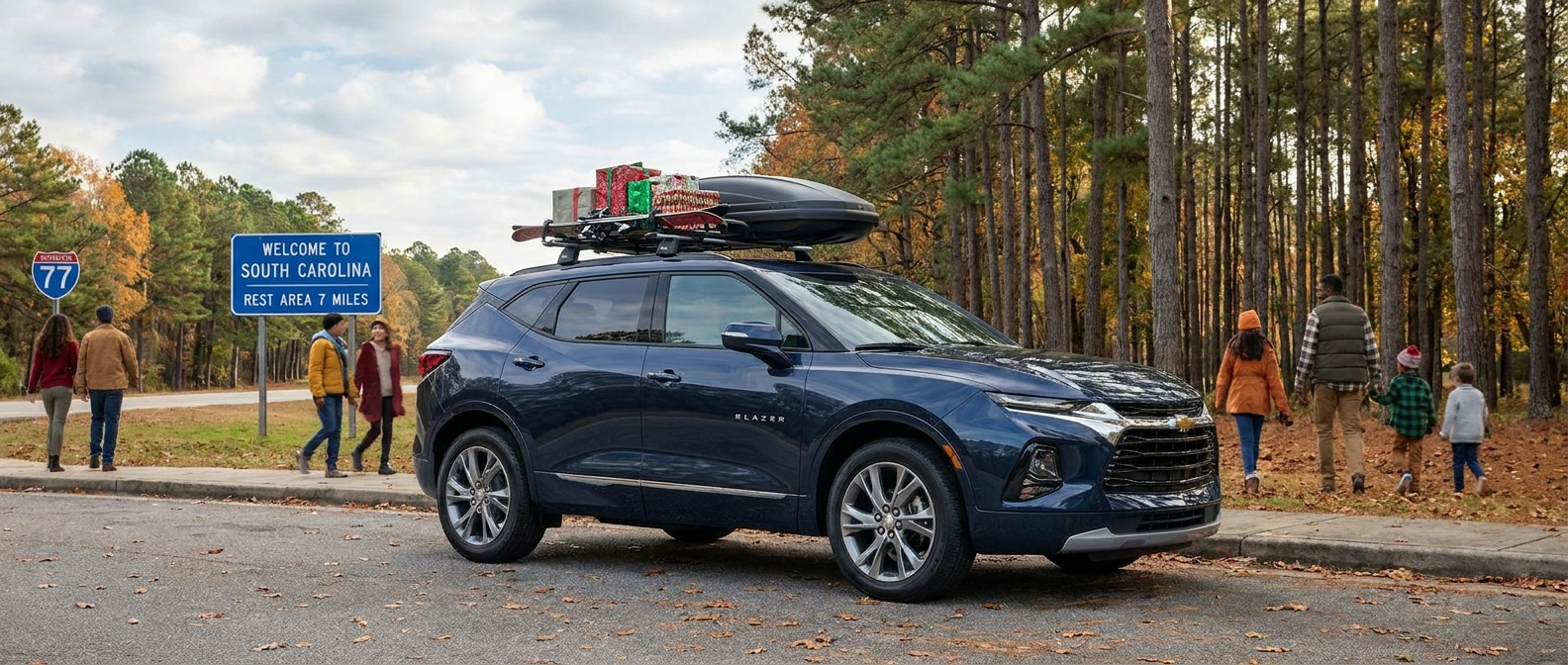
2026 Chevrolet Blazer parked on I-77 in South Carolina during holiday travel season

The 2026 Equinox is the smarter buy when fuel economy and a lower entry point matter most. If you're hauling a full family, a week of luggage, and anything on a hitch, the 2026 Blazer earns its keep on the I-77 run to Columbia or Charlotte, and the highway MPG gap between the two is smaller than almost every comparison article will tell you.

The short version
  • Both SUVs hit 29 mpg on the highway when equipped with their base engines and front-wheel drive, the highway number is a tie.
  • The Equinox wins combined MPG (27 vs. 25), which matters for mixed city/highway driving.
  • The Blazer carries more. 30.5 cu ft behind the rear seats vs. 29.8, plus a 19.4-gallon tank vs. 14.8 gallons, meaning fewer fuel stops on a long run.
  • The Blazer tows up to 4,500 lbs (V6 AWD). The Equinox tops out at 1,500 lbs. That's the gap if you're pulling a small trailer for the holidays.
  • For a Winnsboro or Fairfield County family doing Thanksgiving runs, the Equinox wins if the trip is short and local; the Blazer wins when the luggage is real and the drive is long.

Both of these sit on our lot, and side by side they raise a fair question before you buy. They look alike, so what's actually different? Quite a bit, it turns out. Below is the straight breakdown for South Carolina holiday driving.

See our current Equinox inventory

What's the Real Difference Between the 2026 Blazer and Equinox?

They share a brand, they both seat five, and they carry a family resemblance, yet these are two meaningfully different vehicles built for two different buyers, and once you line up the engines, the tanks, and the tow ratings, the overlap you'd expect from the showroom floor mostly disappears.

Spec2026 Blazer (2.0T FWD)2026 Equinox (FWD)
Engine2.0L turbo I4, 228 hp1.5L turbo I4, 175 hp
City / Hwy MPG22 / 2926 / 29
Combined MPG2527
Fuel Tank19.4 gal14.8 gal
Cargo (seats up)30.5 cu ft29.8 cu ft
Cargo (seats folded)64.2 cu ft63.5 cu ft
Max Towing4,500 lbs (V6 AWD)1,500 lbs
Rear Legroom39.6 in39.7 in
Rear Shoulder Room58.6 in55.5 in
Length191.9 in183.2 in

The EPA rates the front-drive Blazer at 22 city / 29 highway / 25 combined. The front-drive Equinox comes in at 26 city / 29 highway / 27 combined. That city gap is real, and it matters for folks who mostly run errands around Winnsboro. On the interstate, though, the story flips. Run I-77 south toward Columbia or north toward Charlotte, and both base engines land on exactly 29 mpg.

Same number. That detail is easy to miss.

The highway MPG for both the 2026 Blazer and 2026 Equinox is 29 mpg with FWD and their base engines, a tie that matters most on the I-77 holiday run.

Does Fuel Economy Actually Decide This for a Holiday Road Trip?

For a straight shot down I-77 to Columbia or up to the Charlotte area, the MPG tie means you're burning roughly the same fuel per mile in either SUV, so the separation shows up at the pump rather than on the window sticker, and it shows up in a way you might not expect. Check the tank sizes before you fixate on the MPG sticker. The Blazer carries a 19.4-gallon tank; the Equinox holds 14.8 gallons. At 29 highway mpg, the Blazer covers a notably longer stretch before you're hunting for a Pilot or a Shell. No small thing with a car full of people who'd rather not stop.

The combined number favors the Equinox, 27 versus 25, when you're mixing city and highway. If your holiday travel is short hops around Fairfield County rather than a 300-mile push, that efficiency advantage is real and consistent.

Browse 2026 Blazer options at Wilson Chevrolet View our full new Chevy inventory

Per the EPA's 2026 Fuel Economy Guide, the 2026 Chevrolet Equinox FWD is rated at 26 city / 29 highway / 27 combined mpg, and the 2026 Chevrolet Blazer FWD (2.0L) is rated at 22 city / 29 highway / 25 combined mpg.

Cargo and Passenger Space for Holiday Hauling

On paper the cargo and space gaps sound bigger than they feel from the driver's seat, yet the one measurement that genuinely separates these two is exactly the measurement a packed back seat notices first, so it's worth sorting the real differences from the rounding errors.

Rear legroom is essentially identical, 39.6 inches in the Blazer and 39.7 in the Equinox. A tenth of an inch. Grandma rides equally comfortable in both. Where the Blazer does meaningfully win is rear shoulder room, and Chevrolet lists 58.6 inches versus 55.5 for the Equinox. That 3.1-inch gap shows up when three adults are sitting across the back seat for a two-hour drive.

Cargo behind the rear seats is close (30.5 vs. 29.8 cu ft), but once you fold the seats, both open up to nearly identical space, 64.2 cu ft for the Blazer and 63.5 for the Equinox. The floor length and load height feel different on the lot, though. The Blazer's longer body (191.9 in versus 183.2 in) loads and parks differently. That matters if you're threading a packed family driveway on Christmas morning.

One true limitation of the Equinox is its tow rating. Chevrolet rates it to tow 1,500 lbs regardless of trim or drivetrain configuration. If you're pulling a small utility trailer loaded with luggage or holiday gifts, the Equinox is at its limit. The Blazer with the V6 and AWD is rated to 4,500 lbs, genuinely capable of pulling a small boat or a loaded cargo trailer without stress.

See Current Chevy Holiday Offers

Which Should You Actually Pick?

The right pick comes down to how far you drive and whether anything rides behind you, so we'll give you a straight answer by buyer type rather than a vague it-depends, because for most of these trips the choice is clearer than the spec sheet makes it look. Winnsboro is the county seat of Fairfield County.

Pick the Equinox if: You drive mostly in and around town, your holiday trips stay under a tank's range, you don't tow, and you want to spend less per fill-up during mixed driving. The lighter body is easier to park at a crowded Harris Teeter on December 23rd, and two extra combined MPG points add up over a year of driving. For a majority of Fairfield County families, the Equinox is the right answer.

Pick the Blazer if: Your holiday travel is a real trip. Columbia for Thanksgiving and Charlotte for Christmas, or any run where you're loading the whole family plus luggage and driving I-77 two or three hours each way. The larger fuel tank cuts your stops, the rear shoulder room truly fits three adults, and the optional V6 AWD adds towing capacity the Equinox simply can't match. The Blazer RS with its twin-clutch AWD system also handles South Carolina's occasional winter ice patches better than a base FWD setup.

We'll be direct about the Blazer's trade-off. City fuel economy is 4 mpg lower than the Equinox (22 vs. 26), and it's a bigger vehicle to maneuver. If most of your miles are surface streets, that gap will cost you over a year. Know what your driving looks like before you decide.

Explore financing options for either model

Frequently Asked Questions

Is the 2026 Blazer or Equinox better for a long highway drive in South Carolina?

For a pure highway run on I-77, both models are closer than the spec sheets suggest. The EPA rates both the 2026 Blazer (2.0L FWD) and the 2026 Equinox (FWD) at 29 mpg highway. The Blazer's 19.4-gallon tank means fewer stops on a long trip, and its rear shoulder room (58.6 in versus 55.5 in for the Equinox) makes a real difference with adults across the back seat. For short or mixed-use trips, the Equinox's 27 combined MPG edge makes more sense.

Can either SUV tow a small trailer for holiday luggage or a boat?

The two diverge sharply here. Chevrolet rates the 2026 Equinox for a maximum of 1,500 lbs of towing regardless of trim. The 2026 Blazer, properly equipped with the 3.6L V6 and AWD, is rated for up to 4,500 lbs. If you're pulling a small utility trailer with holiday gifts or gear, the Blazer is the only one of the two that handles it comfortably.
Wilson Chevrolet

798 us hwy 321 N BUSINESS, Winnsboro, SC 29180

(803) 402-4233

Recommended Posts

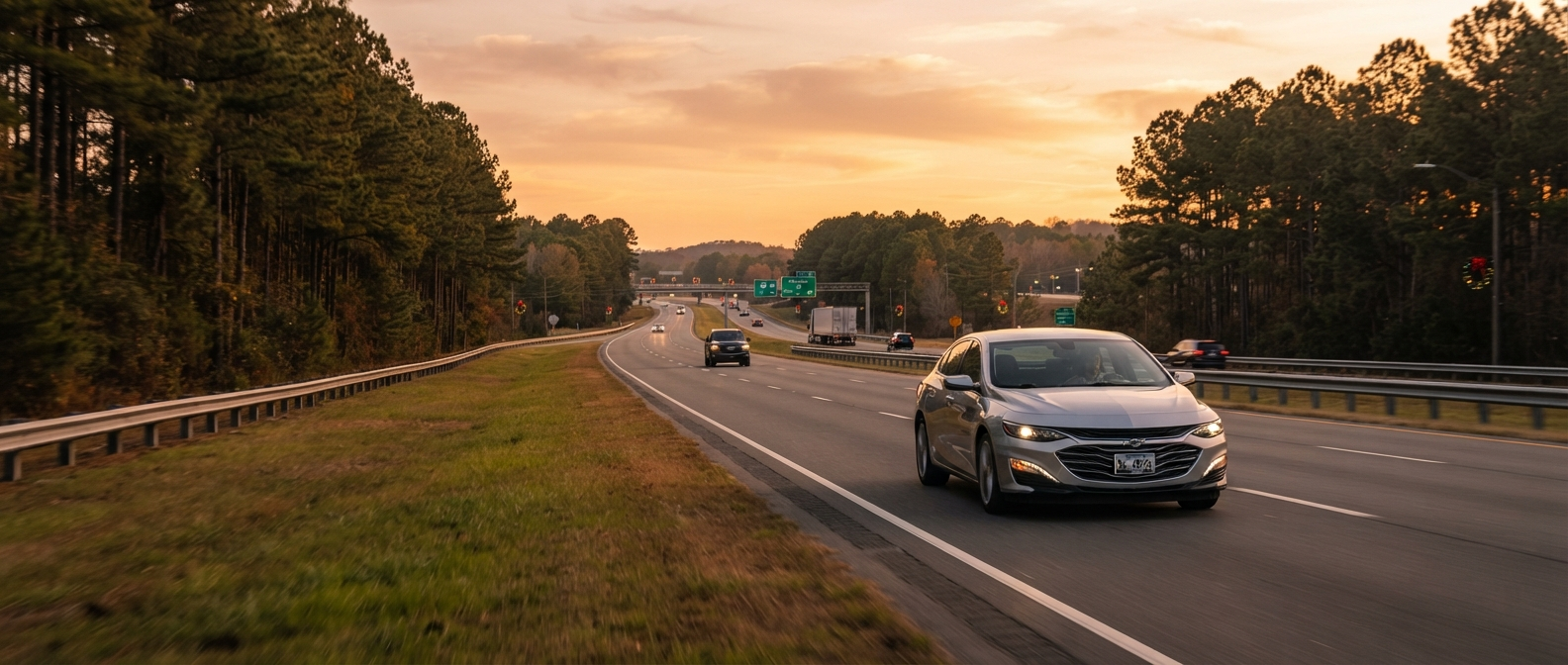
2025 Chevrolet Malibu driving on I-77 in South Carolina during holiday season

I-77 Holiday Traffic: How to Drive Your Malibu Safely This Season

In this article Do This, Not That: I-77 Holiday Driving The One Technique That Matters Most A Quick Pre-Trip Checklist for the Holiday Run Get to Your Destination and Back If you're running the I-77 corridor out of Winnsboro this Thanksgiving or Christmas, the Tuesday-morning drive you know turns into something else entirely. The South Carolina Highway Patrol stations troopers every 10 miles along I-77 during the holiday travel window, and the volume between the Blythewood exits and the Columbia interchange stacks up fast. Your Malibu handles that run beautifully in normal conditions. The holiday version of I-77 asks something different from both you and the car. If you've been thinking about an upgrade before the new year, our Equinox inventory is worth a look while you're here. But this guide is for the Malibu owners who are heading out this week. Do This, Not That: I-77 Holiday Driving Working with the powertrain beats fighting it when I-77 clogs, and the table below sorts the good habits from the ones that quietly wear your Malibu down over a long holiday weekend. The 1.5-liter turbo and CVT are built for highway efficiency, and a stop-and-go pack is exactly where they feel the strain. Follow the flow. Situation Do Don't Heavy merge traffic near Blythewood Ease in early, match flow Accelerate hard to close a gap, then brake Long slow crawl on the interstate Maintain a 3-second following gap; let the CVT idle smoothly Ride the brake in a tight pack Pulling away from a full stop Smooth, steady throttle input Mash the pedal, the turbo spools; CVT will hunt Fuel stops on a long holiday run Fill at or above half a tank before Winnsboro exits Gamble on the next exit when traffic is unpredictable Law enforcement presence Stay at or under the posted limit; troopers are staged every 10 miles Assume the rural stretch between exits is unwatched Distracted traffic around you Keep both hands on the wheel, eyes scanning ahead Stare at brake lights directly in front The One Technique That Matters Most Space management is the single habit that carries you through a holiday I-77, because the Malibu's CVT stays smooth at a steady cruise and the EPA rates the 2025 model at 36 mpg on the highway. That number drops sharply the moment you're in a stop-and-start pack. Put real distance between yourself and the car ahead. We're talking about a 3-to-4-second gap. That gap gives you time to coast rather than brake hard, which keeps the CVT in its happy range and keeps your fuel economy from cratering on a 28-mile run from Winnsboro to Columbia. Browse what's on our lot in Winnsboro if the Malibu has you thinking about your next sedan. The corridor between Exit 34 (SC 34, your Ridgeway/Winnsboro exit) and the Blythewood area has open straightaways that tempt drivers to close gaps after a slow stretch. Resist it. Fairfield County's Wilson Chevrolet team sees plenty of front-end wear on vehicles whose drivers run tight on this stretch year-round. That gap is free maintenance. Schedule a Pre-Trip Service Check Before you merge onto I-77: Check tire pressure (the 2025 Malibu's door placard lists the recommended cold PSI), top off the 15.8-gallon tank, and confirm your washer fluid is full. The Winnsboro-to-Columbia stretch is 28 miles of open road where help isn't immediately at the next exit. A Quick Pre-Trip Checklist for the Holiday Run Running this checklist in order takes about five minutes, and it matters more in holiday traffic than it ever does on a normal Tuesday, because the small stuff you skip is where roadside trouble starts. Cold tire pressure check. Do this before the car warms up. A properly inflated tire holds a straight line in sudden stops, and it keeps your EPA-rated 36 mpg highway figure honest. Washer fluid and wiper condition. Holiday traffic kicks up road grime fast. If the wipers smear, replace them. Replacing them costs almost nothing and fixes a real visibility problem. Fuel tank. Fill before you get on I-77 at Winnsboro, well ahead of the merge lane. The Malibu's 15.8-gallon tank and 36 mpg highway rating will carry you the full run to Charlotte and back without stopping, if you start full. Phone mount and navigation loaded. SCDOT restricts non-emergency lane closures during the Thanksgiving holiday window, but you should still have your route and any SC 511 traffic updates ready before you pull out of the driveway, long before you reach the interstate. Clear your load. Anything loose in the cabin that can shift during a sudden stop belongs in the trunk. It's a plain practical step, nothing dramatic about it. Get to Your Destination and Back The Malibu is a solid long-distance commuter, and it's earned that reputation on exactly this kind of run. The tradeoff is real. It's front-wheel drive, it rides on a CVT that prefers steady throttle, and holiday I-77 rewards patience over any other trait behind the wheel. Give yourself the space, start the trip with a full tank and correct tire pressure, and the 28 miles between Winnsboro and the Columbia interchange will feel exactly like it always does. Our service center on US 321 is open Monday through Friday. Bring the Malibu in before the holiday rush. Book Your Pre-Holiday Service Appointment Wilson Chevrolet 798 us hwy 321 N BUSINESS, Winnsboro, SC 29180 (803) 402-4233

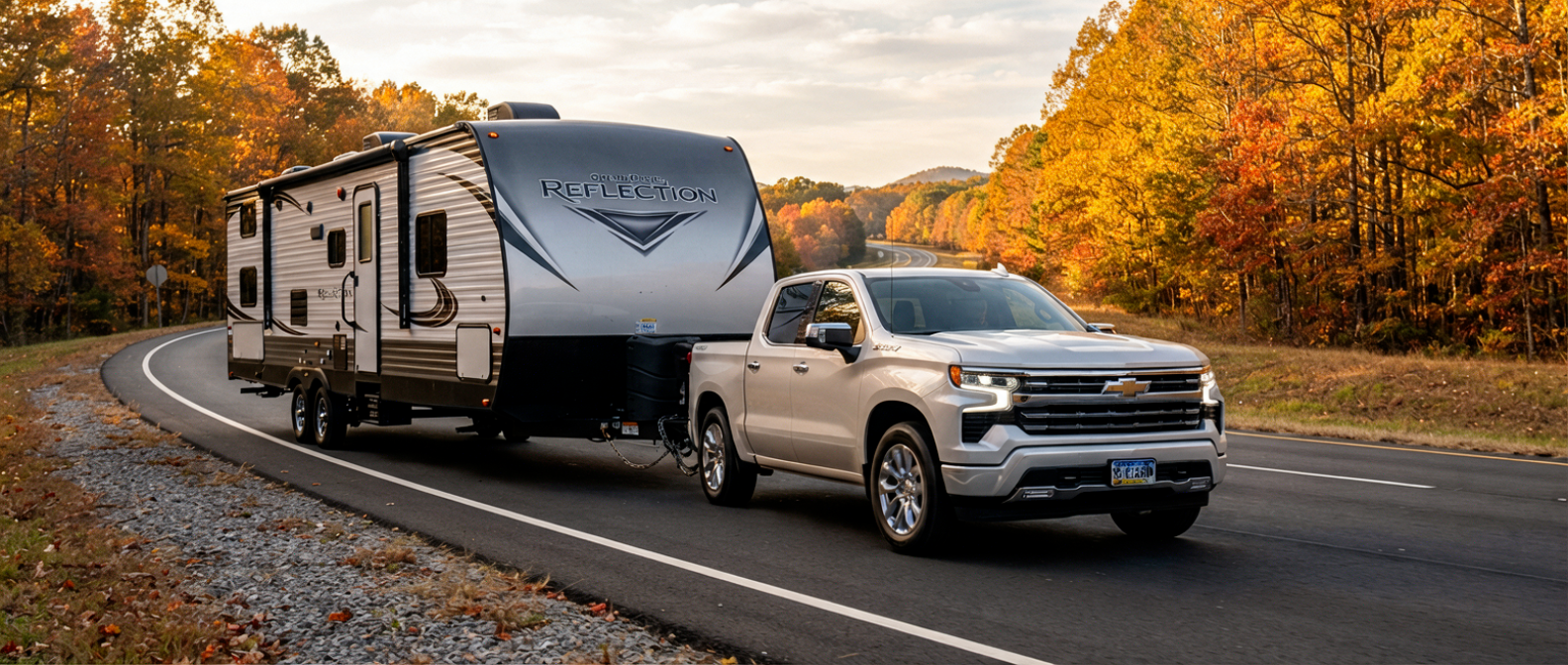
2026 Chevrolet Silverado 1500 towing a travel trailer on a South Carolina highway in fall

Which Silverado Do You Need for Your Holiday Trailer Load?

Pulling a travel trailer, a boat headed to winter storage, or a loaded toy hauler down I-77 this holiday season? For trailer loads under about 10,000 pounds, the 2026 Silverado 1500 with the 5.3L V8 and Max Trailering Package handles the job cleanly and comfortably. Heavier than that, and you'll want to step up to the 2026 Silverado 2500 HD. The numbers make the case, and so does the drive. Which Silverado Engine Actually Fits Your Holiday Load? A fair question before any holiday haul is whether your 1500 can handle the trailer, and the answer comes down to the actual load in front of you, so for anything under about 10,000 pounds loaded the 1500 usually has it, while heavier rigs point you toward the 2500 HD. Forget what a half-ton is assumed to do or not do. Run your load through the table below. Holiday Load Type Typical Loaded Weight 1500 Engine to Target 2500 HD Needed? Utility trailer (ATVs, Carolina Adventure World gear) 3,000 - 6,000 lbs 2.7L TurboMax (9,500 lb rating) No Mid-size travel trailer or pop-up camper 5,000 - 9,000 lbs 5.3L V8 (11,300 lb rating) No Large travel trailer (28-35 ft) 9,000 - 12,500 lbs 6.2L V8 or 3.0L Duramax (up to 13,300 lbs) No, if properly equipped Fifth-wheel or gooseneck (horse trailer, large RV) 14,000 lbs and up 1500 not appropriate Yes (up to 20,000 lbs conventional) Heavy equipment trailer (contractors, farm gear) 16,000+ lbs 1500 not appropriate Yes, Duramax recommended Chevrolet lists the 2026 Silverado 1500's maximum conventional tow rating at 13,300 pounds when equipped with the 6.2L V8 or 3.0L Duramax diesel, the Max Trailering Package, and the right cab and bed configuration. The 5.3L V8 reaches 11,300 pounds. The 2.7L TurboMax four-cylinder, with 430 lb-ft of torque, still rates at 9,500 pounds. That's a lot of trailer for a "base" engine. The jump to the 2026 Silverado 2500 HD matters when loads exceed what the 1500 can safely sustain over distance. Chevrolet rates the 2500 HD with the available 6.6L Duramax diesel at up to 20,000 pounds of conventional towing. Its Duramax produces 975 lb-ft of torque, which means it doesn't strain pulling at altitude on grades the way a gas engine will. At our service center, we see something the spec sheet skips. Trailers gain weight between dry-rating and holiday-loaded. A 28-foot travel trailer rated at 7,500 pounds dry easily climbs to 9,000 or more once you've packed for a week with the family. Know your loaded weight, not just the sticker weight, before you commit to an engine. For loads under 10,000 pounds loaded, the Silverado 1500 with the 5.3L and Max Trailering Package is the practical sweet spot. Above that, the 2500 HD earns its keep. Does the Silverado Have the Right Tech to Handle a Holiday Tow? Rated capacity is only half the story, because towing well also comes down to the first hookup in a dark driveway at 5 a.m., the crosswind on I-77 between Winnsboro and Charlotte, and the stop-and-go traffic on the way back from Columbia the Sunday after Thanksgiving, and the 2026 Silverado has the tech to manage all of it. The hardware backs up the numbers. The Silverado 1500 LT and above trims now come standard with an integrated trailer brake controller for the 2026 model year, and that's a genuine upgrade worth noting. It ties directly into the truck's ABS so your trailer brakes work in sync with the truck's, with no aftermarket box dangling under the dash. Heavier trailers respond noticeably differently at speed when the braking is proportional. The 2026 Silverado 2500 HD includes it standard across every trim level. Hitch Guidance uses the rear camera to overlay dynamic guide lines on the infotainment screen, so you can line up the hitch ball solo without a spotter walking behind, which matters on a holiday morning when everyone else is still inside. Trailer Sway Control monitors and corrects instability before it becomes a handling problem. Tow/Haul Mode adjusts shift points and transmission behavior to reduce gear-hunting on long grades. The Max Trailering Package (RPO code NHT) adds enhanced cooling, automatic locking rear differential, revised suspension, and an optimized axle ratio. Without it, most 2026 Silverado 1500 configurations top out around 9,900 pounds regardless of engine. With it, you unlock the full rating. Team Tip: Tongue weight is the detail that catches people off guard. A properly loaded trailer should put 10 to 15 percent of its total loaded weight on the hitch ball. Too light and the trailer wags. Too heavy and your front axle lifts. Load heavier cargo toward the front of the trailer box, ahead of the axle. It takes five minutes and makes a real difference on the highway. View Current Silverado Specials What If You're Hauling More Than Just a Trailer? What you load beyond the trailer is what separates the 1500 buyer from the 2500 HD buyer around here, because payload and tow rating are two different limits, and a truck that pulls your trailer fine can still run out of room once the bed and cab fill up. So the weight of the trailer alone won't always settle it. When you're towing a trailer and also loading the truck bed, payload capacity matters as much as tow rating. Chevrolet puts the 2026 Silverado 1500 Work Truck trim at up to 2,260 pounds of payload (with the 2.7L TurboMax and RWD). The 2026 Silverado 2500 HD comes in at up to 3,979 pounds of payload. Add family passengers, gear in the cab, and tools in the bed, and that number shrinks fast. Exceeding your Gross Vehicle Weight Rating affects handling and brakes. Winnsboro sits in Fairfield County. Plenty of county buyers who haul equipment out to Carolina Adventure World or run farm loads down US 321 find out the hard way that the 2500 HD earns its purchase back in confidence and stability well beyond raw capacity. Our full Silverado inventory includes both the 1500 and 2500 HD in multiple trims. We can pull the door-jamb sticker on any truck on the lot so you're matching actual rated capacity to your actual load instead of an advertised maximum. There's a real tradeoff here. The 2500 HD costs more and rides stiffer on empty roads, and it gets lower fuel economy when you're not pulling anything. If your holiday trailer is a mid-size travel trailer under 10,000 pounds loaded and you're not loading the bed at the same time, the 1500 handles it and handles it well. If you're regularly over 12,000 pounds or pulling a fifth-wheel, the 2500 HD is the right call. We'll tell you that plainly either way. Explore financing options to see what fits your budget for either model. Frequently Asked Questions How much can the 2026 Silverado 1500 tow when properly equipped? The 2026 Chevrolet Silverado 1500 tows up to 13,300 pounds when equipped with the 6.2L V8 or 3.0L Duramax diesel, the Max Trailering Package, and the right cab and bed configuration. The 5.3L V8 reaches 11,300 pounds and the 2.7L TurboMax reaches 9,500 pounds. Without the Max Trailering Package, most configurations are capped around 9,900 pounds regardless of engine. Is the Silverado 1500 or 2500 HD better for a holiday travel trailer? For a loaded travel trailer under 10,000 pounds, the Silverado 1500 with the 5.3L V8 and Max Trailering Package is the practical choice for most Winnsboro area families. The Silverado 2500 HD becomes the right answer when loads exceed 12,000 to 13,000 pounds, when you're pulling a fifth-wheel or gooseneck, or when you're also carrying heavy payload in the bed at the same time. Does the 2026 Silverado come with a trailer brake controller? Yes. For 2026, the integrated trailer brake controller's now standard on Silverado 1500 LT, RST, LT Trail Boss, ZR2, LTZ, and High Country trims. The Silverado 2500 HD includes it standard across every trim level. It ties directly into the truck's antilock brake system for synchronized braking, with no aftermarket hardware required. Get a Trade-In Estimate Wilson Chevrolet 798 us hwy 321 N BUSINESS, Winnsboro, SC 29180 (803) 402-4233

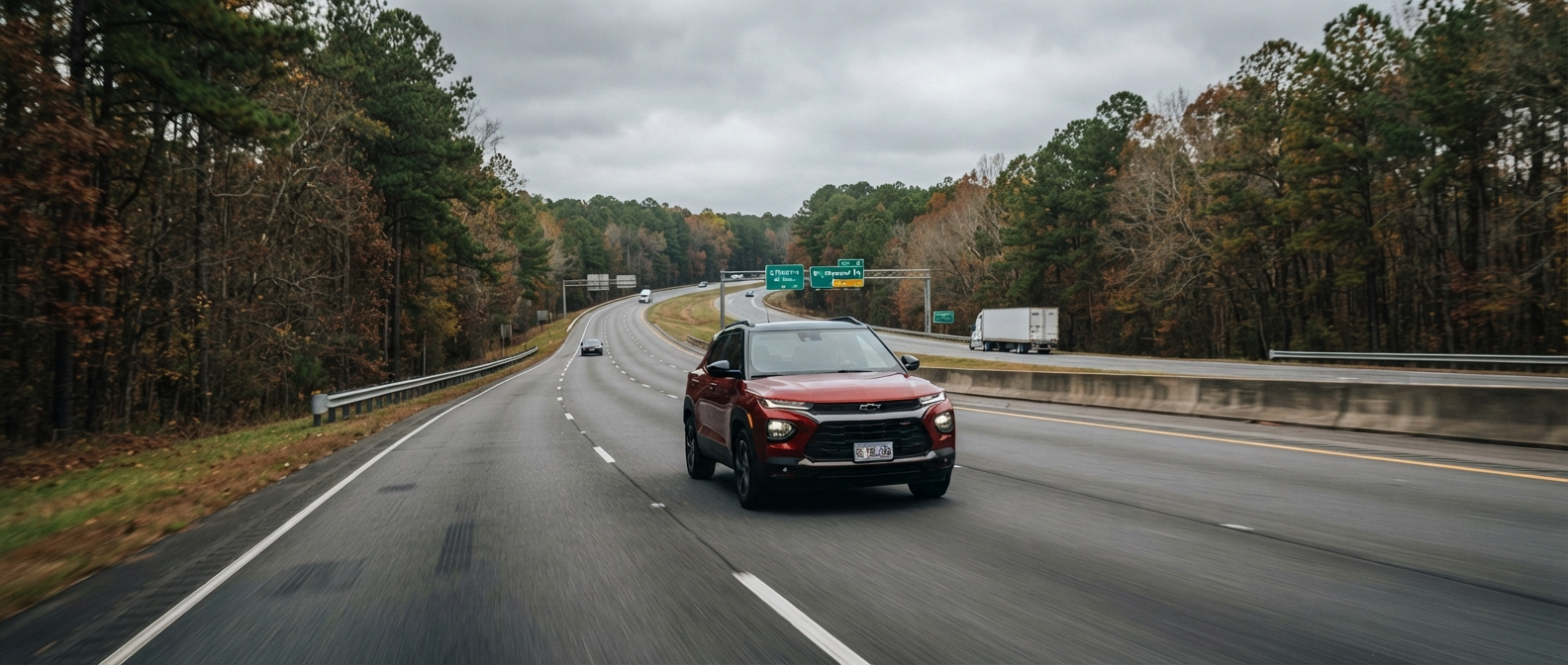
2026 Chevrolet Trailblazer on I-77 in South Carolina during a holiday shopping trip

Does the Trailblazer's Fuel Economy Actually Hold Up on Holiday Shopping Runs?

Winnsboro to Columbia on I-77 covers about 30 miles one way. Add parking, a stop-and-go loop through a crowded shopping center, and a loaded-down return trip, and that round trip tests whatever you're driving. A fair question this time of year is whether the 2026 Chevrolet Trailblazer will stretch its tank far enough to make the holiday run with fuel to spare. Yes, it will, though which Trailblazer you pick changes the math considerably. The difference between FWD and AWD isn't just a traction decision. You're swapping a transmission, raising engine load, and giving up a 4-mpg swing in combined efficiency. We'll cover what matters before you sign. The 2026 Trailblazer's 1.3L FWD is the fuel economy standout at 31 mpg combined (EPA estimate), while choosing AWD replaces the CVT with a 9-speed automatic and drops combined efficiency to 27 mpg. For most South Carolina winters, that trade-off deserves a close look. How Does the Trailblazer's Fuel Economy Actually Work? Three powertrain combinations give you three different efficiency stories, and the gap is wide enough to matter, since the 1.2L and 1.3L front-drive setups both post strong numbers while the AWD version trades a few mpg for extra grip. So the right pick depends on how you actually drive. The EPA's official 2026 ratings show the gap clearly. Configuration Engine Transmission City MPG Hwy MPG Combined MPG Tank Range (est.) 1.2L Turbo FWD (LS / LT) 1.2L turbo 3-cyl, 137 hp CVT 30 31 30 ~396 miles 1.3L Turbo FWD (RS / ACTIV FWD) 1.3L turbo 3-cyl, 155 hp CVT 29 33 31 ~435 miles 1.3L Turbo AWD (all AWD trims) 1.3L turbo 3-cyl, 155 hp 9-speed automatic 26 29 27 ~356 miles The EPA estimates are for the 2026 model year. Tank range estimates use the 13.2-gallon fuel tank at each configuration's combined mpg rating. Something counterintuitive turns up in those numbers. The larger 1.3L engine beats the smaller 1.2L on the highway, 33 mpg versus 31. Both engines run a CVT when paired with front-wheel drive, but the 1.3L's 174 lb-ft of torque arrives at just 1,500 rpm. That lower torque peak lets the CVT hold a less-stressed, more efficient engine speed at steady interstate cruising. The 1.2L works a bit harder to keep the same pace. That's why its highway number lands two mpg lower. Worth knowing: Both Trailblazer engines run on regular 87-octane. Small turbocharged engines in this class don't always allow that, and it keeps per-mile fuel costs predictable at any pump in Fairfield County. The AWD story gets interesting from here. Chevrolet doesn't simply bolt a rear axle onto the existing FWD drivetrain. Every 2026 Trailblazer with AWD gets the 1.3L engine and replaces the CVT with a 9-speed automatic gearbox. The 9-speed handles the torque demands of sending power rearward, but it steps through defined gear ratios instead of continuously optimizing rpm the way a CVT does. The gearbox change is the mechanical reason the AWD Trailblazer gives up 4 combined mpg against the identical engine in FWD, as much as the added drivetrain weight. See Current Trailblazer Offers Which Trailblazer Configuration Makes Sense for Fairfield County Driving? Browse our current Trailblazer lineup and you'll find both FWD and AWD trims in stock, and for most Fairfield County driving the front-drive 1.3L earns its keep, though AWD makes real sense when wet roads and heavy loads are a regular part of your week. Think it through on the routes our customers actually drive. Smooth Midlands pavement, steady speeds, and minimal elevation change are exactly where the 1.3L FWD's 33-mpg highway rating does its best work. The I-77 run from Winnsboro south to Columbia is essentially a highway trip. On a 60-mile round trip at steady highway speeds, the gap between FWD and AWD shows up on every fill-up, not just as a theoretical edge case. South Carolina's winter weather picture matters here. Winnsboro and Fairfield County see occasional frost and rare light snow, but prolonged icy road conditions are genuinely uncommon. Columbia's shopping districts see even less. For a buyer whose primary use is the holiday Columbia run (or a longer stretch north on I-77 toward Charlotte), AWD's traction advantage simply doesn't come into play on most December and January mornings. The trade-off is a fair one. AWD gives real confidence on the rare slick morning, and the 9-speed automatic has a more satisfying, conventional feel under hard acceleration. Those are legitimate benefits. You pay for them in fuel economy on every trip, though, even the dry ones. If you regularly carry a full cabin, stack heavy cargo after big shopping days, or drive through significant Midlands thunderstorm standing water, the AWD's rear-axle grip provides something the FWD can't match. For a driver whose calendar mostly shows dry I-77 miles, the FWD configuration keeps more money at the pump over time. Comparing to the Trax? If the holiday haul stays modest and a smaller footprint suits you, the Chevy Trax also runs a small turbocharged engine with competitive efficiency. The Trailblazer pulls ahead when cargo space is the priority. Its maximum cargo volume reaches 54.4 cubic feet, a meaningful jump when you're loading gifts in the back. Your Driving Situation Best Trailblazer Choice Combined MPG Mostly I-77 highway, dry Midlands roads, efficiency priority 1.3L FWD (RS or ACTIV FWD) 31 Mix of highway with frequent rain and occasional frost 1.3L AWD (LT AWD or RS AWD) 27 City-primary, want the highest city number 1.2L FWD (LS or LT) 30 Frequent full cabin, heaviest cargo loads 1.3L AWD 27 Quick Glossary Term What It Means in Plain Language CVT Continuously Variable Transmission. Uses a belt-and-pulley system instead of fixed gears, holding the engine at its most fuel-efficient RPM across the range. All FWD Trailblazers use this. 9-speed automatic A traditional stepped gearbox with nine defined gear ratios. All AWD Trailblazers use this. More conventional shift feel, slightly lower highway efficiency than the CVT. Combined MPG The EPA's weighted average: 55% city driving, 45% highway. The most practically useful single efficiency number. EPA rating The federal fuel economy estimate, produced under controlled laboratory conditions. Real-world results vary with speed, load, and outside temperature. What This Means When You're Ready to Decide The 2026 Trailblazer fits the kind of driving most Fairfield County families actually do, the I-77 runs to Columbia for work or shopping, weekend trips out toward Lake Wateree, and the occasional longer haul when the holiday calendar fills up, though real efficiency still hinges on your FWD-or-AWD choice. Its 13.2-gallon tank and highway numbers translate to fewer stops at the pump, not more. Our read is straightforward. If the Columbia holiday run is your primary use case and you don't face genuine traction challenges regularly, the 1.3L FWD is the efficiency-forward choice. It delivers 31 combined mpg and an estimated 435-mile highway range on regular fuel. If AWD would genuinely change how you feel on bad-weather mornings, or you haul heavier loads, it's a worthwhile step up. Just go in knowing the efficiency difference runs to 4 real combined mpg, enough to feel at the pump. Stop in on US 321 and we'll walk you through both drivetrains on the lot so the numbers line up against your actual driving habits. You can also get a head start by checking your financing options online before you come in. Frequently Asked Questions How many mpg does the 2026 Chevrolet Trailblazer get? The 2026 Trailblazer's EPA fuel economy depends on the configuration you choose. The 1.2L turbo FWD (LS and LT trims) is rated 30 city / 31 highway / 30 combined. The 1.3L turbo FWD (RS and ACTIV FWD) reaches 29 city / 33 highway / 31 combined. The 1.3L turbo with AWD (available on LT, RS, and ACTIV trims) is rated 26 city / 29 highway / 27 combined. The Trailblazer holds 13.2 gallons of regular 87-octane fuel, giving the most efficient FWD configuration an EPA-estimated highway range of roughly 435 miles. Why does choosing AWD lower the Trailblazer's fuel economy? Choosing AWD on the 2026 Trailblazer changes two things simultaneously: it adds the mechanical load of the rear drivetrain, and it replaces the CVT with a 9-speed automatic transmission. The CVT holds the engine at its most efficient RPM across the range during highway cruising, which is why FWD models reach 33 mpg on the highway. The 9-speed automatic moves through defined gear steps instead, which suits AWD's torque demands but cannot match the CVT's highway efficiency. The combined result is a 4-mpg difference between the 1.3L FWD and 1.3L AWD configurations. For most South Carolina driving, the choice comes down to whether that all-weather traction margin is worth the efficiency trade-off on your specific routes. Get Your Trade-In Value Wilson Chevrolet 798 us hwy 321 N BUSINESS, Winnsboro, SC 29180 (803) 402-4233